Jessica Boll - Böcker
Visar alla böcker från författaren Jessica Boll. Handla med fri frakt och snabb leverans.
3 produkter
3 produkter
290 kr
Skickas inom 7-10 vardagar
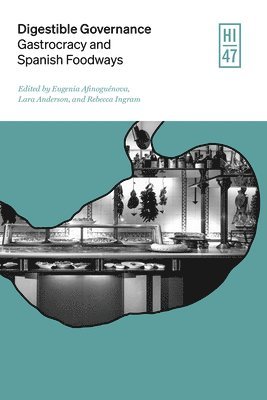
The term “gastrocracy” refers to the appropriation of discourses and practices related to the sourcing, preparation, distribution, and consumption of food for political purposes. The intersections of gastronomy and governance, dating in Spain to the last quarter of the nineteenth century, have become highly visible over the past decade, when political debates around nationalism in its different forms have taken the guise of discussions about regional and local cuisines. Concomitant with the rise of the “slow food” movement and following UNESCO’s addition in 2011 of “Gastronomic Meal of the French” to its list of Intangible Cultural Heritage of Humanity, public and private associations all around Spain have been established with the goal of achieving recognition by UNESCO for Spanish, Catalan, and other national cuisines. In 2016, Gastro Marca EspaÑa—an association and a web portal—was launched to raise the profile of food in Spain’s national brand.Eliciting wide public participation, coopted for political purposes, regarded as a factor of economic development on any scale, and integrated into every so-called banal nationalism, the production, distribution, and consumption of food are highly relevant for historical analysis. Seeking to encourage a broader discussion about Peninsular gastrocracies, this book brings together an interdisciplinary group of scholars from different sides of the Atlantic and the Pacific who have spearheaded research on gastronomy and governance in Spain.
1 451 kr
Skickas inom 5-8 vardagar
The term “gastrocracy” refers to the appropriation of discourses and practices related to the sourcing, preparation, distribution, and consumption of food for political purposes. The intersections of gastronomy and governance, dating in Spain to the last quarter of the nineteenth century, have become highly visible over the past decade, when political debates around nationalism in its different forms have taken the guise of discussions about regional and local cuisines. Concomitant with the rise of the “slow food” movement and following UNESCO’s addition in 2011 of “Gastronomic Meal of the French” to its list of Intangible Cultural Heritage of Humanity, public and private associations all around Spain have been established with the goal of achieving recognition by UNESCO for Spanish, Catalan, and other national cuisines. In 2016, Gastro Marca EspaÑa—an association and a web portal—was launched to raise the profile of food in Spain’s national brand.Eliciting wide public participation, coopted for political purposes, regarded as a factor of economic development on any scale, and integrated into every so-called banal nationalism, the production, distribution, and consumption of food are highly relevant for historical analysis. Seeking to encourage a broader discussion about Peninsular gastrocracies, this book brings together an interdisciplinary group of scholars from different sides of the Atlantic and the Pacific who have spearheaded research on gastronomy and governance in Spain.
Sea Change
Representations of Transformation in the Mediterranean and Caribbean
Inbunden, Engelska, 2026
809 kr
Skickas inom 7-10 vardagar
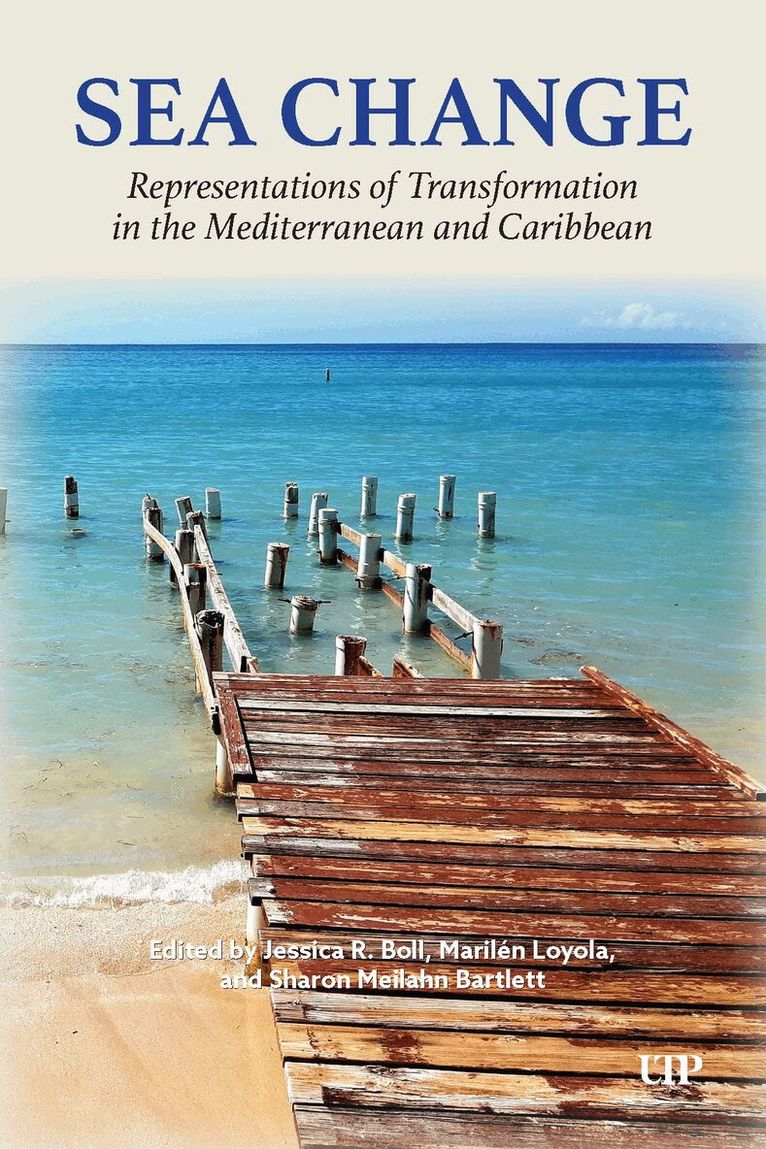
Sea Change investigates cultural texts that reflect the metamorphosis of the Mediterranean and Caribbean regions during the last two centuries. By placing these two seas side by side, this book challenges conventional distinctions between them and highlights their many shared traits and connections, suggesting new ways to understand the economic, political, and environmental challenges both regions face today. While examining the cultural productions that emerge from the Mediterranean and Caribbean, modern languages scholars Jessica R. Boll, Marilén Loyola, and Sharon Meilahn Bartlett adopt a decentralized approach that moves beyond the influence of the United States and Europe. They further challenge traditional narratives by centering the experiences of individuals from historically repressed groups. Through analyses of visual art, puppet shows, songs, graphic fiction, and television, this volume shifts the focus away from the canonical to foreground accessible and popular forms of expression. By highlighting these places, perspectives, and productions, Sea Change underscores the reciprocal influence between the mainstream and the marginalized. It strives to dismantle (post)colonial hegemonies and demonstrate that those often relegated to the periphery can be agents – rather than mere subjects – of change.