Jessica Moss - Böcker
Visar alla böcker från författaren Jessica Moss. Handla med fri frakt och snabb leverans.
10 produkter
10 produkter
442 kr
Skickas inom 5-8 vardagar
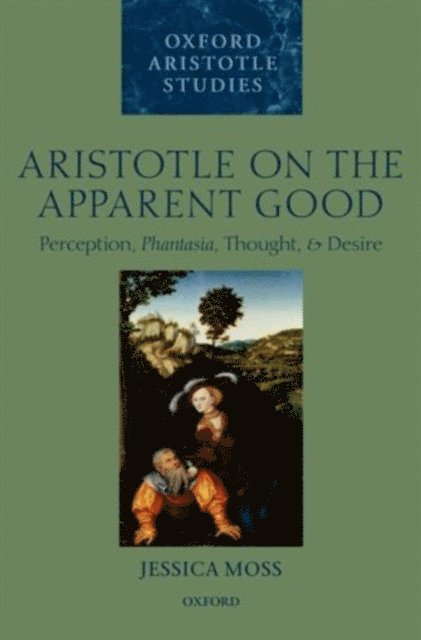
Aristotle holds that we desire things because they appear good to us--a view still dominant in philosophy now. But what is it for something to appear good? Why does pleasure in particular tend to appear good, as Aristotle holds? And how do appearances of goodness motivate desire and action? No sustained study of Aristotle has addressed these questions, or even recognized them as worth asking. Jessica Moss argues that the notion of the apparent good is crucial to understanding both Aristotle's psychological theory and his ethics, and the relation between them. Beginning from the parallels Aristotle draws between appearances of things as good and ordinary perceptual appearances such as those involved in optical illusion, Moss argues that on Aristotle's view things appear good to us, just as things appear round or small, in virtue of a psychological capacity responsible for quasi-perceptual phenomena like dreams and visualization: phantasia ('imagination'). Once we realize that the appearances of goodness which play so major a role in Aristotle's ethics are literal quasi-perceptual appearances, Moss suggests we can use his detailed accounts of phantasia and its relation to perception and thought to gain new insight into some of the most debated areas of Aristotle's philosophy: his accounts of emotions, akrasia, ethical habituation, character, deliberation, and desire. In Aristotle on the Apparent Good, Moss presents a new--and controversial--interpretation of Aristotle's moral psychology: one which greatly restricts the role of reason in ethical matters, and gives an absolutely central role to pleasure.
1 268 kr
Skickas inom 7-10 vardagar
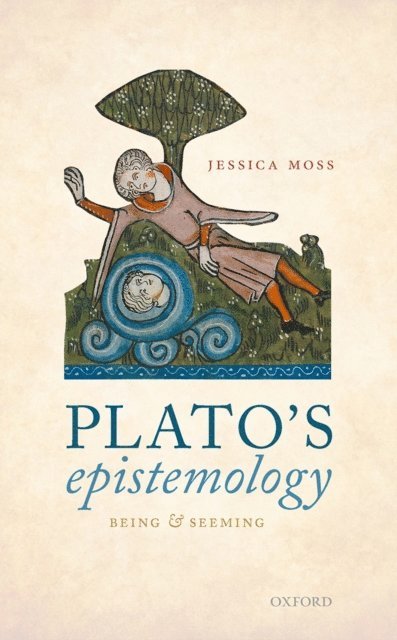
Plato's Epistemology: Being and Seeming presents an original interpretation of one of the central topics in Plato's work: epistemology. Jessica Moss argues that Plato's epistemology is radically different from our own. Going against the grain of recent scholarship, and drawing on ancient interpretations of Plato, Jessica Moss argues that Plato is not best understood as studying what we now call knowledge and belief. Instead, Moss proposes that the central players in his epistemology, epistêmê and doxa, are each essentially to be understood as cognition of a certain kind of object. Epistêmê is cognition of what Is - where this turns out to mean that it is a deep grasp of ultimate reality. Doxa is cognition of what seems - where this turns out to mean that it is atheoretical thought that mistakes images for reality. The book defends these characterizations by arguing that they explain important features of Plato's epistemology. In particular, it shows that they underlie and make sense of a view which was long attributed to Plato but has recently been deemed "outrageous": that there is no doxa of Forms, and no epistêmê of perceptibles. Finally, Moss contends that Plato's epistemology is so different from modern epistemology because it is motivated by his central ethical and metaphysical views. As the Cave allegory illustrates, he holds that the goal of life is to be in contact with genuine Being, and that the greatest obstacle to this goal is our tendency to rest content with appearances. Therefore, when Plato turns to epistemological investigations, the distinction he finds most salient is that between cognition of what Is and cognition of what seems.
938 kr
Skickas inom 5-8 vardagar
Aristotle holds that we desire things because they appear good to us--a view still dominant in philosophy now. But what is it for something to appear good? Why does pleasure in particular tend to appear good, as Aristotle holds? And how do appearances of goodness motivate desire and action? No sustained study of Aristotle has addressed these questions, or even recognized them as worth asking. Jessica Moss argues that the notion of the apparent good is crucial to understanding both Aristotle's psychological theory and his ethics, and the relation between them. Beginning from the parallels Aristotle draws between appearances of things as good and ordinary perceptual appearances such as those involved in optical illusion, Moss argues that on Aristotle's view things appear good to us, just as things appear round or small, in virtue of a psychological capacity responsible for quasi-perceptual phenomena like dreams and visualization: phantasia ('imagination'). Once we realize that the appearances of goodness which play so major a role in Aristotle's ethics are literal quasi-perceptual appearances, Moss suggests we can use his detailed accounts of phantasia and its relation to perception and thought to gain new insight into some of the most debated areas of Aristotle's philosophy: his accounts of emotions, akrasia, ethical habituation, character, deliberation, and desire. In Aristotle on the Apparent Good, Moss presents a new--and controversial--interpretation of Aristotle's moral psychology: one which greatly restricts the role of reason in ethical matters, and gives an absolutely central role to pleasure.
219 kr
Skickas inom 5-8 vardagar
Uh, hi. Yeah.Welcome to... this play that we're doing. Our Town. We're gonna show you some... well, like, I'm just going to show you around our rehearsal. We go up in a month. We're not ready. But here we are.Our Play captures the lives of high school students as they mount a production of Thornton Wilder's Our Town, mirroring the classic's style and structure in three acts: rehearsal, opening night and the tragic school shooting that follows. A beautiful inspection of high school adolescence, community in a high school theatre, and the hopes and fears of growing into a life.
334 kr
Skickas inom 7-10 vardagar
Founded in 1989, the influential Delhi-based artists' organization Sahmat, the Safdar Hashmi Memorial Trust, has offered a platform for artists, writers, poets, musicians, and actors to create and present works that promote artistic freedom and secular, egalitarian values. A companion to an exhibition of the same name at the Smart Museum of Art, "The Sahmat Collective" explores the contemporary art scene in Delhi while meditating on the power of art as a tool for social change. "The Sahmat Collective" documents the history of the organization through a series of case studies, each presenting new scholarship, vivid images, reprints of original articles and essays, and interviews with the artists and organizers of each project. Situating the collective within not only the political sphere in India, but also contemporary art trends from around the world, this beautifully illustrated volume offers both critical essays on the art produced by Sahmat and texts on the political, social, and artistic climate in India by Smart Museum staff members, philosophers, musicians, members of Sahmat, art historians, anthropologists, and artists.
334 kr
Skickas inom 7-10 vardagar
In 2014, the Smart Museum of Art at the University of Chicago received a generous gift from collectors Lester and Betty Guttman: 830 photographs, created by a total of 414 artists, that cover a time period stretching all the way from the early 1800s into our modern moment. This richly illustrated volume, which accompanies an exhibition at the Smart Museum of Art, offers both an intriguing overview of the collection and, with it, a tour through the very history of photography itself.There Was a Whole Collection Made includes an extensive timeline on the medium’s evolution that notes important dates, exhibitions, and texts. Artists and scholars alike contribute personal reflections on and interpretations of the Guttmans’ photographs, which include images by such artists as William Henry Fox Talbot, Man Ray, László Moholy-Nagy, and Carrie Mae Weems. A colorful introduction to a key visual resource, There Was a Whole Collection Made crosses time periods and genres to revel in the enduring power of the camera lens.
659 kr
Skickas inom 10-15 vardagar
Friendship has been a central topic for philosophical reflection ever since philosophy itself was born in the circle of friends who gathered around Socrates to follow his probing examinations of how we should live.In this outstanding collection, which takes its lead from the work of Alexander Nehamas, a distinguished roster of contributors examines the many dimensions of the philosophy of friendship. They broaden the discussion beyond common questions about friendship obligations and their relation to the claims of morality to explore a much wider set of issues, including:friendship in the context of Plato, Aristotle, Montaigne, Kant, Goethe, William James, and Nietzschethe darker side of friendship and “frenemies”friendship in literature and film, including André Aciman’s Call Me by Your Name and Andrey Zvyagintsev’s The Return dogs and friendshipfriendship and aesthetic judgmentNehamas’s own distinctive analogy between the value of friendship and the value of beauty.Friendship: Philosophical Explorations will be of interest to those in philosophy studying and researching ethics and aesthetics, as well as students and scholars in related disciplines such as literature and film.
2 410 kr
Skickas inom 10-15 vardagar
Friendship has been a central topic for philosophical reflection ever since philosophy itself was born in the circle of friends who gathered around Socrates to follow his probing examinations of how we should live.In this outstanding collection, which takes its lead from the work of Alexander Nehamas, a distinguished roster of contributors examines the many dimensions of the philosophy of friendship. They broaden the discussion beyond common questions about friendship obligations and their relation to the claims of morality to explore a much wider set of issues, including:friendship in the context of Plato, Aristotle, Montaigne, Kant, Goethe, William James, and Nietzschethe darker side of friendship and “frenemies”friendship in literature and film, including André Aciman’s Call Me by Your Name and Andrey Zvyagintsev’s The Return dogs and friendshipfriendship and aesthetic judgmentNehamas’s own distinctive analogy between the value of friendship and the value of beauty.Friendship: Philosophical Explorations will be of interest to those in philosophy studying and researching ethics and aesthetics, as well as students and scholars in related disciplines such as literature and film.
603 kr
Skickas inom 10-15 vardagar
SQL Server 2012 Integration Services Design Patterns is a book of recipes for SQL Server Integration Services (SSIS). Design patterns in the book show how to solve common problems encountered when developing data integration solutions. Because you do not have to build the code from scratch each time, using design patterns improves your efficiency as an SSIS developer. In SSIS Design Patterns, we take you through several of these snippets in detail, providing the technical details of the resolution.SQL Server 2012 Integration Services Design Patterns does not focus on the problems to be solved; instead, the book delves into why particular problems should be solved in certain ways. You'll learn more about SSIS as a result, and you'll learn by practical example. Where appropriate, SQL Server 2012 Integration Services Design Patterns provides examples of alternative patterns and discusses when and where they should be used. Highlights of the book include sections on ETL Instrumentation, SSIS Frameworks, and Dependency Services.Takes you through solutions to several common data integration challenges Demonstrates new features in SQL Server 2012 Integration Services Teaches SSIS using practical examples
1 091 kr
Skickas inom 10-15 vardagar
SQL Server Integration Services Design Patterns is newly-revised for SQL Server 2014, and is a book of recipes for SQL Server Integration Services (SSIS). Design patterns in the book help to solve common problems encountered when developing data integration solutions. The patterns and solution examples in the book increase your efficiency as an SSIS developer, because you do not have to design and code from scratch with each new problem you face. The book's team of expert authors take you through numerous design patterns that you'll soon be using every day, providing the thought process and technical details needed to support their solutions. SQL Server Integration Services Design Patterns goes beyond the surface of the immediate problems to be solved, delving into why particular problems should be solved in certain ways. You'll learn more about SSIS as a result, and you'll learn by practical example. Where appropriate, the book provides examples of alternative patterns and discusses when and where they should be used. Highlights of the book include sections on ETL Instrumentation, SSIS Frameworks, Business Intelligence Markup Language, and Dependency Services.Takes you through solutions to common data integration challengesProvides examples involving Business Intelligence Markup LanguageTeaches SSIS using practical examples