R. Lanier Anderson – författare
Visar alla böcker från författaren R. Lanier Anderson. Handla med fri frakt och snabb leverans.
10 produkter
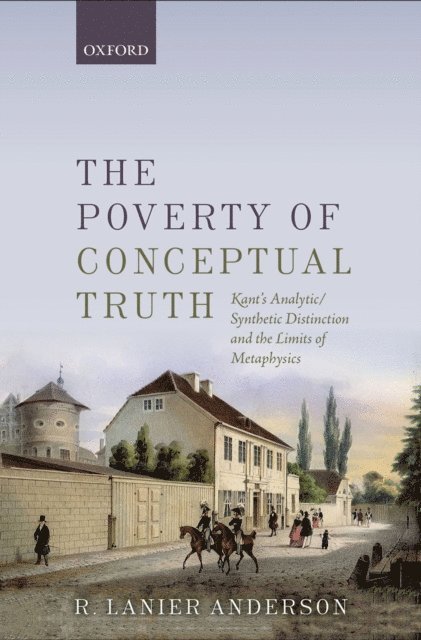
Poverty of Conceptual Truth
Kant's Analytic/Synthetic Distinction and the Limits of Metaphysics
E-bok, 2015
480 kr
Lägg i varukorg
The Poverty of Conceptual Truth is based on a simple idea. Kant''s distinction between analytic and synthetic judgments underwrites a powerful argument against the metaphysical program of his Leibnizian-Wolffian predecessors--an argument from fundamental limits on its expressive power. In that …
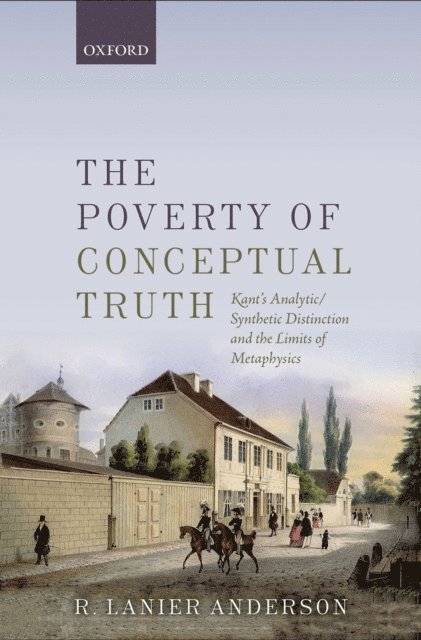
Poverty of Conceptual Truth
Kant's Analytic/Synthetic Distinction and the Limits of Metaphysics
E-bok, 2015
495 kr
Lägg i varukorg
The Poverty of Conceptual Truth is based on a simple idea. Kant''s distinction between analytic and synthetic judgments underwrites a powerful argument against the metaphysical program of his Leibnizian-Wolffian predecessors--an argument from fundamental limits on its expressive power. In that …
The Poverty of Conceptual Truth
Kant's Analytic/Synthetic Distinction and the Limits of Metaphysics
Inbunden, 2015
2108 kr
Lägg i varukorg
The Poverty of Conceptual Truth is based on a simple idea. Kant's distinction between analytic and synthetic judgments underwrites a powerful argument against the metaphysical program of his Leibnizian-Wolffian predecessors--an argument from fundamental limits on its expressive power. In that …
The Poverty of Conceptual Truth
Kant's Analytic/Synthetic Distinction and the Limits of Metaphysics
Häftad, 2017
551 kr
Lägg i varukorg
The Poverty of Conceptual Truth is based on a simple idea. Kant's distinction between analytic and synthetic judgments underwrites a powerful argument against the metaphysical program of his Leibnizian-Wolffian predecessors--an argument from fundamental limits on its expressive power. In that …
Friendship: Philosophical Explorations
Av R. Lanier Anderson, Andrew Huddleston m. fl.
Häftad, 2026
745 kr
Lägg i varukorg
Friendship has been a central topic for philosophical reflection ever since philosophy itself was born in the circle of friends who gathered around Socrates to follow his probing examinations of how we should live.In this outstanding collection, which takes its lead from the work of Alexander …
Friendship: Philosophical Explorations
Av R. Lanier Anderson, Andrew Huddleston m. fl.
Inbunden, 2026
2888 kr
Lägg i varukorg
Friendship has been a central topic for philosophical reflection ever since philosophy itself was born in the circle of friends who gathered around Socrates to follow his probing examinations of how we should live.In this outstanding collection, which takes its lead from the work of Alexander …
Friendship: Philosophical Explorations
Av Jessica Moss, Andrew Huddleston m. fl.
E-bok, 2026
857 kr
Lägg i varukorg
Friendship has been a central topic for philosophical reflection ever since philosophy itself was born in the circle of friends who gathered around Socrates to follow his probing examinations of how we should live.In this outstanding collection, which takes its lead from the work of Alexander …
Friendship: Philosophical Explorations
Av Jessica Moss, Andrew Huddleston m. fl.
E-bok, 2026
857 kr
Lägg i varukorg
Friendship has been a central topic for philosophical reflection ever since philosophy itself was born in the circle of friends who gathered around Socrates to follow his probing examinations of how we should live.In this outstanding collection, which takes its lead from the work of Alexander …
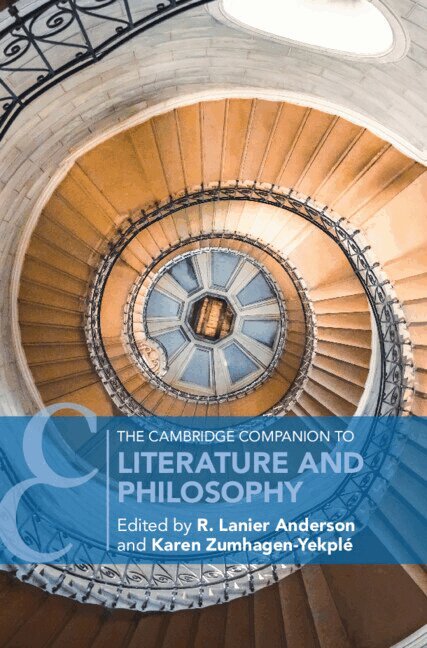
The Cambridge Companion to Literature and Philosophy
Av R. Lanier Anderson, Karen Zumhagen-Yekplé
Häftad, 2027
500 kr
Kommande
This Companion examines the relationship between philosophy and literature. It shows how philosophy, like literature, aims to transform its reader. It maps four shared terrains-Truth, Value, Form, and Being-to show how philosophical argument and literary imagination illuminate one another. Written …
The Cambridge Companion to Literature and Philosophy
Av R. Lanier Anderson, Karen Zumhagen-Yekplé
Inbunden, 2027
1484 kr
Kommande
This Companion examines the relationship between philosophy and literature. It shows how philosophy, like literature, aims to transform its reader. It maps four shared terrains-Truth, Value, Form, and Being-to show how philosophical argument and literary imagination illuminate one another. Written …