Jo-Ann Gross – författare
Visar alla böcker från författaren Jo-Ann Gross. Handla med fri frakt och snabb leverans.
6 produkter
6 produkter
Inbunden, Engelska, 2025
1 164 kr
Skickas inom 5-8 vardagar
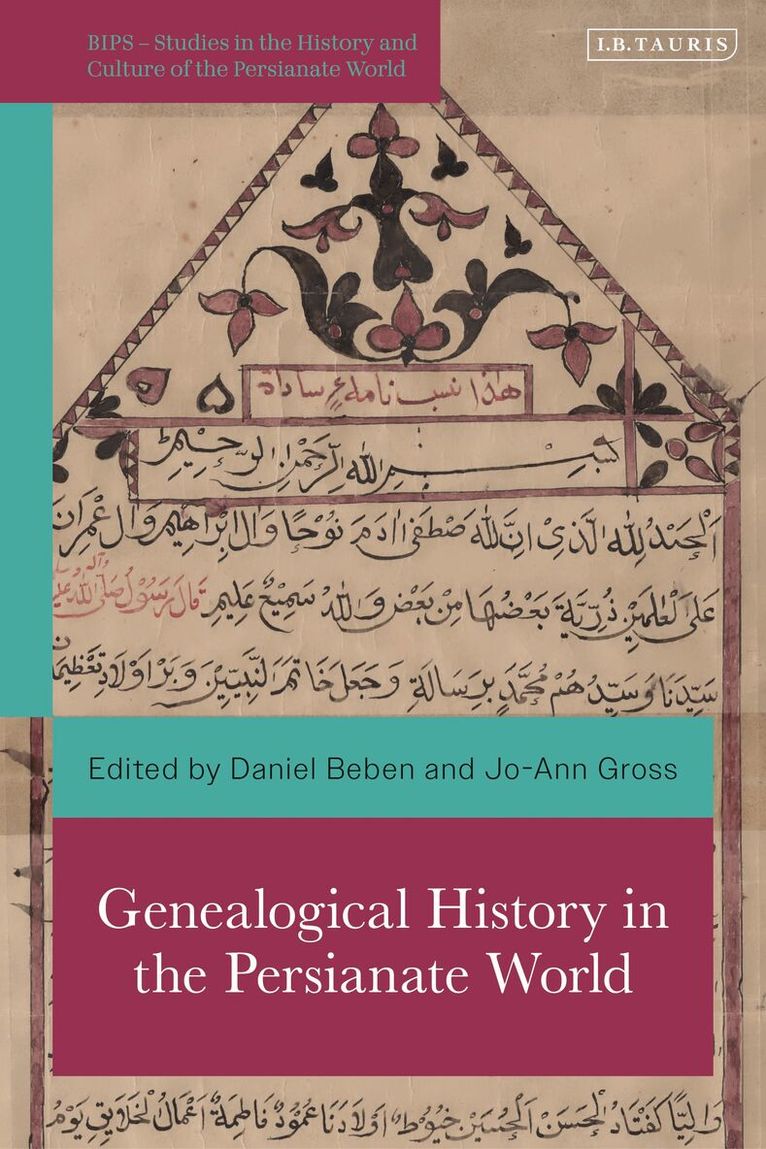
Scholarship on the Muslim world has recently begun to pay increased attention to non-literary genres of documentation as sources for historical research. Genealogical writings are one form of such documentation that has demonstrated significant potential for addressing a wide range of research concerns, particularly for topics that receive little attention in historical chronicles and other state-centered narrative sources. However, while genealogical documentation has received some attention in scholarship on the Arab world, it remains mostly unstudied in scholarship on Persianate societies. The chapters in this book offer reflections on theoretical and methodological issues concerning the study of genealogical documentation, combined with case studies based primarily on previously unpublished, unstudied source materials. The topics explored span the full breadth of the Persianate world, from Anatolia to the Ferghana Valley in Central Asia to the Gujarat region of India, utilizing sources dating from the fourteenth to the twentieth century. The book will be of significant interest to scholars and students of Islamic history and the Persianate ecumene as well as readers in other fields interested in comparative research demonstrating the use of genealogical documentation as historical sources.
E-bok
PDF, Engelska, 20251 241 kr
Läs direkt efter köp
Scholarship on the Muslim world has recently begun to pay increased attention to non-literary genres of documentation as sources for historical research. Genealogical writings are one form of such documentation that has demonstrated significant potential for addressing a wide range of research concerns, particularly for topics that receive little attention in historical chronicles and other state-centered narrative sources. However, while genealogical documentation has received some attention in scholarship on the Arab world, it remains mostly unstudied in scholarship on Persianate societies. The chapters in this book offer reflections on theoretical and methodological issues concerning the study of genealogical documentation, combined with case studies based primarily on previously unpublished, unstudied source materials. The topics explored span the full breadth of the Persianate world, from Anatolia to the Ferghana Valley in Central Asia to the Gujarat region of India, utilizing sources dating from the fourteenth to the twentieth century. The book will be of significant interest to scholars and students of Islamic history and the Persianate ecumene as well as readers in other fields interested in comparative research demonstrating the use of genealogical documentation as historical sources.
E-bok
Engelska, 20251 344 kr
Läs direkt efter köp
Scholarship on the Muslim world has recently begun to pay increased attention to non-literary genres of documentation as sources for historical research. Genealogical writings are one form of such documentation that has demonstrated significant potential for addressing a wide range of research concerns, particularly for topics that receive little attention in historical chronicles and other state-centered narrative sources. However, while genealogical documentation has received some attention in scholarship on the Arab world, it remains mostly unstudied in scholarship on Persianate societies. The chapters in this book offer reflections on theoretical and methodological issues concerning the study of genealogical documentation, combined with case studies based primarily on previously unpublished, unstudied source materials. The topics explored span the full breadth of the Persianate world, from Anatolia to the Ferghana Valley in Central Asia to the Gujarat region of India, utilizing sources dating from the fourteenth to the twentieth century. The book will be of significant interest to scholars and students of Islamic history and the Persianate ecumene as well as readers in other fields interested in comparative research demonstrating the use of genealogical documentation as historical sources.
Häftad, Engelska, 2027
477 kr
Kommande
Scholarship on the Muslim world has recently begun to pay increased attention to non-literary genres of documentation as sources for historical research. Genealogical writings are one form of such documentation that has demonstrated significant potential for addressing a wide range of research concerns, particularly for topics that receive little attention in historical chronicles and other state-centered narrative sources. However, while genealogical documentation has received some attention in scholarship on the Arab world, it remains mostly unstudied in scholarship on Persianate societies. The chapters in this book offer reflections on theoretical and methodological issues concerning the study of genealogical documentation, combined with case studies based primarily on previously unpublished, unstudied source materials. The topics explored span the full breadth of the Persianate world, from Anatolia to the Ferghana Valley in Central Asia to the Gujarat region of India, utilizing sources dating from the fourteenth to the twentieth century. The book will be of significant interest to scholars and students of Islamic history and the Persianate ecumene as well as readers in other fields interested in comparative research demonstrating the use of genealogical documentation as historical sources.
Häftad, Engelska, 1991
334 kr
Skickas inom 5-8 vardagar
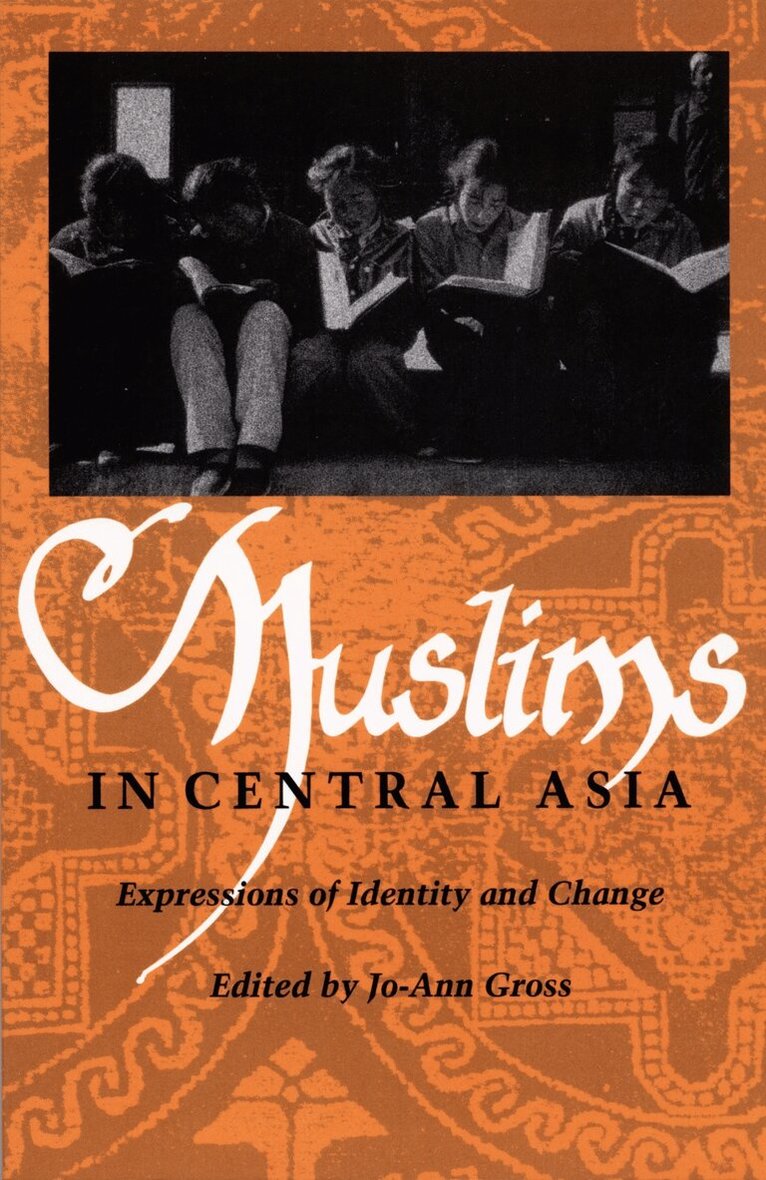
Central Asia is distinctive in its role as a frontier region in which a unique diversity of cultural, religious, and political traditions exist. This collection of essays by expert scholars in a range of disciplines focuses on the formation of ethnic, religious, and national identities in Muslim societies of Central Asia, thus furthering our general understanding of the history and culture of this significant region.This study includes several geopolitical regions-Chinese Central Asia, Soviet Central Asia, Afghanistan, Transoxiana and Khurasan-and covers historical periods from the fifteenth century to the present. Drawing on scholarship in anthropology, religion, history, literature, and language studies, Muslims in Central Asia argues for an interdisciplinary, inter-regional dialog in the development of new approaches to understanding the Muslim societies in Central Asia. The authors creatively examine the social construction of identities as expressed through literature, Islamic discourse, historical texts, ethnic labels, and genealogies, and explore how such identities are formed, changed, and adopted through time.Contributors. Hamid Algar, Muriel Atkin, Walter Feldman, Dru C. Gladney, Edward J. Lazzerini, Beatrice Forbes Manz, Christopher Murphy, Oliver Roy, Isenbike Togan
E-bok
PDF, Engelska, 20213 380 kr
Läs direkt efter köp
This English edition of the correspondence of Khwaja 'Ubayd Allah Ahrar, the fifteenth-century Central Asian Naqshbandi Sufi shaykh, and his associates provides surprising new insights into the sociopolitical and economic history of premodern Central Asia and the influential roles of Sufi leaders of the time. It contains the extraordinary collection of autograph letters from the Majmu'a-yi murasalat, a unique manuscript housed at the Institute of Oriental Studies in Tashkent, Uzbekistan, with petitions to the Timurid court at Herat. The letters cover such topics as internecine conflict, peacemaking, taxation, property and endowments, trade, migration, Islamic piety and law, material support of shaykhs and students, and relief from oppression. Three introductory chapters discuss the Central Asian Naqshbandiya, Khwaja 'Ubayd Allah Ahrar, the social, historical, economic and political significance of the letters, and the manuscript and its authors. With the Persian transcription and a complete facsimile of the manuscript letters reproduced at the end of the work.