Joan E. Strassmann – författare
Visar alla böcker från författaren Joan E. Strassmann. Handla med fri frakt och snabb leverans.
8 produkter
8 produkter
E-bok
Engelska, 2022157 kr
Läs direkt efter köp
Inbunden, Engelska, 1900
217 kr
Skickas
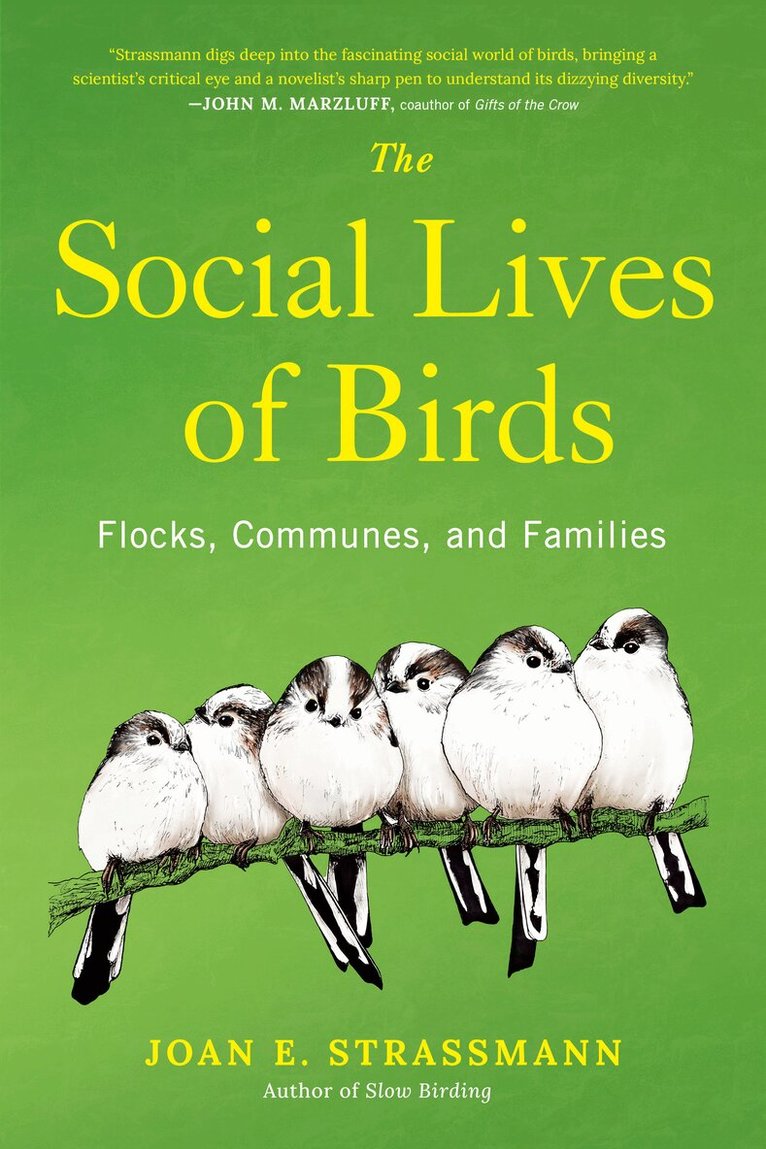
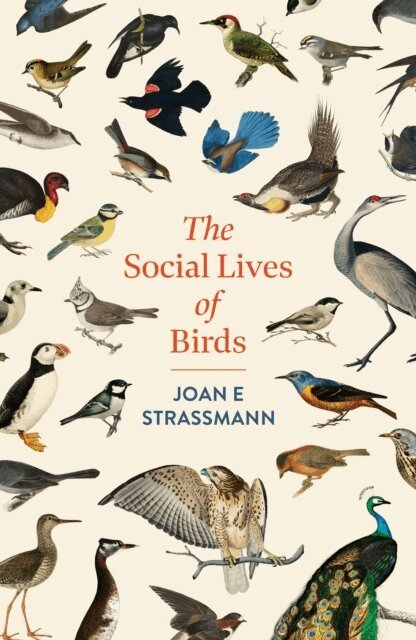
An exploration of all the ways in which birds are social creatures—from breeding to nesting to babysittingIn The Social Lives of Birds, evolutionary biologist and author of Slow Birding Joan Strassmann examines what it means for birds of a feather to flock together. Some birds sleep together. Some join the foraging groups of other species. Some are only social during breeding season, forming nesting colonies in trees, cliffs, and sandbanks. Some are altruistic, helping to rear young that are not their own. Some males perform mating dances together.Strassmann explains how flocks provide safety in numbers, roosts offer warmth and shelter, and colonies allow for protected breeding. But group behavior is not without its costs—including increased competition, tick infestations, and more. Strassmann exposes the conflicts birds face and the many ways in which they resolve these conflicts. With stories of birds from around the world—from broad-winged hawks that migrate south together in the fall, tree swallows that roost together in the thousands, and guira cuckoos that nest in communes—The Social Lives of Birds explores the different kinds of bird groups and what to look for when watching them. Above all, it reveals this fact: solitary life, it seems, is not for the birds.
E-bok
Engelska, 2025242 kr
Läs direkt efter köp
Inbunden, Engelska, 2025
236 kr
Skickas inom 5-8 vardagar
'A tour-de-force survey of how birds live their lives - with all the drama, surprise, humour, sadness and amazement of any human soap-opera' - Stephen Moss, author of Ten Birds That Changed the World'Utterly fascinating . . . Strassmann is the perfect guide to this world: an author as much fascinated by the science and research as she is motivated by the sheer joy and wonder of the birds themselves' - James Macdonald Lockhart, author of Raptor* Highly recommended for bird and nature lovers ** Features beautiful illustrations throughout *In The Social Lives of Birds, evolutionary biologist Joan Strassmann examines what it means for birds of a feather to flock together. Some birds sleep together. Some join the foraging groups of other species. Some are only social during the breeding season, forming nesting colonies in trees, cliffs, and sandbanks. Some are altruistic, helping to rear young that are not their own. Some males perform mating dances together.Strassmann explains how flocks provide safety in numbers, roosts offer warmth and shelter, and colonies allow for protected breeding. But group behavior is not without its costs-including increased competition, infidelities, tick infestations, and more. Strassmann exposes the conflicts birds face and the many ways in which they resolve these conflicts. With stories of birds from around the world-from broad-winged hawks that migrate south together in the fall, tree swallows that roost together in the thousands, and tropical anis that nest in communes-The Social Lives of Birds explores the different kinds of bird groups and what to look for when watching them. Above all, it reveals that solitary life, it seems, is not for the birds.'Delightful and informative' - Lee Dugatkin, author of How to Tame a Fox (and Build a Dog)
Häftad, Engelska, 2025
189 kr
Skickas
'A tour-de-force survey of how birds live their lives - with all the drama, surprise, humour, sadness and amazement of any human soap-opera' - Stephen Moss, author of Ten Birds That Changed the World'Utterly fascinating . . . Strassmann is the perfect guide to this world: an author as much fascinated by the science and research as she is motivated by the sheer joy and wonder of the birds themselves' - James Macdonald Lockhart, author of Raptor* Highly recommended for bird and nature lovers ** Features beautiful illustrations throughout *In The Social Lives of Birds, evolutionary biologist Joan Strassmann examines what it means for birds of a feather to flock together. Some birds sleep together. Some join the foraging groups of other species. Some are only social during the breeding season, forming nesting colonies in trees, cliffs, and sandbanks. Some are altruistic, helping to rear young that are not their own. Some males perform mating dances together.Strassmann explains how flocks provide safety in numbers, roosts offer warmth and shelter, and colonies allow for protected breeding. But group behavior is not without its costs-including increased competition, infidelities, tick infestations, and more. Strassmann exposes the conflicts birds face and the many ways in which they resolve these conflicts. With stories of birds from around the world-from broad-winged hawks that migrate south together in the fall, tree swallows that roost together in the thousands, and tropical anis that nest in communes-The Social Lives of Birds explores the different kinds of bird groups and what to look for when watching them. Above all, it reveals that solitary life, it seems, is not for the birds.'Delightful and informative' - Lee Dugatkin, author of How to Tame a Fox (and Build a Dog)
Häftad, Engelska, 2026
163 kr
Skickas inom 5-8 vardagar
'A tour-de-force survey of how birds live their lives - with all the drama, surprise, humour, sadness and amazement of any human soap-opera' - Stephen Moss, author of Ten Birds That Changed the World'Utterly fascinating . . . Strassmann is the perfect guide to this world: an author as much fascinated by the science and research as she is motivated by the sheer joy and wonder of the birds themselves' - James Macdonald Lockhart, author of RaptorIn The Social Lives of Birds, evolutionary biologist Joan Strassmann examines what it means for birds of a feather to flock together. Some birds sleep together. Some join the foraging groups of other species. Some are only social during the breeding season, forming nesting colonies in trees, cliffs, and sandbanks. Some are altruistic, helping to rear young that are not their own. Some males perform mating dances together.Strassmann explains how flocks provide safety in numbers, roosts offer warmth and shelter, and colonies allow for protected breeding. But group behavior is not without its costs-including increased competition, infidelities, tick infestations, and more. Strassmann exposes the conflicts birds face and the many ways in which they resolve these conflicts. With stories of birds from around the world-from broad-winged hawks that migrate south together in the fall, tree swallows that roost together in the thousands, and tropical anis that nest in communes-The Social Lives of Birds explores the different kinds of bird groups and what to look for when watching them. Above all, it reveals that solitary life, it seems, is not for the birds.'Delightful and informative' - Lee Dugatkin, author of How to Tame a Fox (and Build a Dog)
E-bok
Engelska, 202532 kr
Läs direkt efter köp
'A tour-de-force survey of how birds live their lives - with all the drama, surprise, humour, sadness and amazement of any human soap-opera' - Stephen Moss, author of Ten Birds That Changed the World'Utterly fascinating . . . Strassmann is the perfect guide to this world: an author as much fascinated by the science and research as she is motivated by the sheer joy and wonder of the birds themselves' - James Macdonald Lockhart, author of Raptor* Highly recommended for bird and nature lovers ** Features beautiful illustrations throughout *In The Social Lives of Birds, evolutionary biologist Joan Strassmann examines what it means for birds of a feather to flock together. Some birds sleep together. Some join the foraging groups of other species. Some are only social during the breeding season, forming nesting colonies in trees, cliffs, and sandbanks. Some are altruistic, helping to rear young that are not their own. Some males perform mating dances together.Strassmann explains how flocks provide safety in numbers, roosts offer warmth and shelter, and colonies allow for protected breeding. But group behavior is not without its costs-including increased competition, infidelities, tick infestations, and more. Strassmann exposes the conflicts birds face and the many ways in which they resolve these conflicts. With stories of birds from around the world-from broad-winged hawks that migrate south together in the fall, tree swallows that roost together in the thousands, and tropical anis that nest in communes-The Social Lives of Birds explores the different kinds of bird groups and what to look for when watching them. Above all, it reveals that solitary life, it seems, is not for the birds.'Delightful and informative' - Lee Dugatkin, author of How to Tame a Fox (and Build a Dog)
Inbunden, Engelska, 2012
786 kr
Tillfälligt slut
Biodiversity--the genetic variety of life--is an exuberant product of the evolutionary past, a vast human-supportive resource (aesthetic, intellectual, and material) of the present, and a rich legacy to cherish and preserve for the future. Two urgent challenges, and opportunities, for 21st-century science are to gain deeper insights into the evolutionary processes that foster biotic diversity, and to translate that understanding into workable solutions for the regional and global crises that biodiversity currently faces. A grasp of evolutionary principles and processes is important in other societal arenas as well, such as education, medicine, sociology, and other applied fields including agriculture, pharmacology, and biotechnology. The ramifications of evolutionary thought also extend into learned realms traditionally reserved for philosophy and religion. The central goal of the In the Light of Evolution (ILE) series is to promote the evolutionary sciences through state-of-the-art colloquia--in the series of Arthur M. Sackler colloquia sponsored by the National Academy of Sciences--and their published proceedings.Each installment explores evolutionary perspectives on a particular biological topic that is scientifically intriguing but also has special relevance to contemporary societal issues or challenges. This book is the outgrowth of the Arthur M. Sackler Colloquium "Cooperation and Conflict," which was sponsored by the National Academy of Sciences on January 7-8, 2011, at the Academy's Arnold and Mabel Beckman Center in Irvine, California. It is the fifth in a series of colloquia under the general title "In the Light of Evolution." The current volume explores recent developments in the study of cooperation and conflict, ranging from the level of the gene to societies and symbioses. Humans can be vicious, but paradoxically we are also among nature's great cooperators. Even our great conflicts-wars-are extremely cooperative endeavors on each side. Some of this cooperation is best understood culturally, but we are also products of evolution, with bodies, brains, and behaviors molded by natural selection. How cooperation evolves has been one of the big questions in evolutionary biology, and how it pays or does not pay is a great intellectual puzzle.The puzzle of cooperation was the dominant theme of research in the early years of Darwin's research, whereas recent work has emphasized its importance and ubiquity. Far from being a rare trait shown by social insects and a few others, cooperation is both widespread taxonomically and essential to life. The depth of research on cooperation and conflict has increased greatly, most notably in the direction of small organisms. Although most of In the Light of Evolution V: Cooperation and Conflict is about the new topics that are being treated as part of social evolution, such as genes, microbes, and medicine, the old fundamental subjects still matter and remain the object of vigorous research. The first four chapters revisit some of these standard arenas, including social insects, cooperatively breeding birds, mutualisms, and how to model social evolution.