Francisco J. Ayala – författare
1 440 kr
Skickas inom 10-15 vardagar
On Human Nature: Biology, Psychology, Ethics, Politics, and Religion covers the present state of knowledge on human diversity and its adaptative significance through a broad and eclectic selection of representative chapters. This transdisciplinary work brings together specialists from various fields who rarely interact, including geneticists, evolutionists, physicians, ethologists, psychoanalysts, anthropologists, sociologists, theologians, historians, linguists, and philosophers.
Genomic diversity is covered in several chapters dealing with biology, including the differences in men and apes and the genetic diversity of mankind. Top specialists, known for their open mind and broad knowledge have been carefully selected to cover each topic. The book is therefore at the crossroads between biology and human sciences, going beyond classical science in the Popperian sense.
The book is accessible not only to specialists, but also to students, professors, and the educated public. Glossaries of specialized terms and general public references help nonspecialists understand complex notions, with contributions avoiding technical jargon.
Provides greater understanding of diversity and population structure and history, with crucial foundational knowledge needed to conduct research in a variety of fields, such as genetics and diseaseIncludes three robust sections on biological, psychological, and ethical aspects, with cross-fertilization and reciprocal references between the three sectionsContains contributions by leading experts in their respective fields working under the guidance of internationally recognized and highly respected editors1 406 kr
Läs direkt efter köp
393 kr
Skickas inom 10-15 vardagar
Evolution, Explanation, Ethics and Aesthetics: Towards a Philosophy of Biology focuses on the dominant biological topic of evolution. It deals with the prevailing philosophical themes of how to explain the adaptation of organisms, the interplay of chance and necessity, and the recurrent topics of emergence, reductionism, and progress. In addition, the extensively treated topic of how to explain human nature as a result of natural processes and the encompassed issues of the foundations of morality and the brain-to-mind transformation is discussed.
The philosophy of biology is a rapidly expanding field, not more than half a century old at most, and to a large extent is replacing the interest in the philosophy of physics that prevailed in the first two-thirds of the twentieth century. Few texts available have the benefit of being written by an eminent biologist who happens to be also a philosopher, as in this work.
This book is a useful resource for seminar courses and college courses on the philosophy of biology. Researchers, academics, and students in evolutionary biology, behavior, genetics, and biodiversity will also be interested in this work, as will those in human biology and issues such as ethics, religion, and the human mind, along with professional philosophers of science and those concerned with such issues as whether evolution is compatible with religion and/or where morality comes from.
Presents the unique perspective of a distinguished biologist with extensive experience in the field who has published much about the subject in a wide variety of journals and edited volumes Covers the philosophical issues related to evolution and biology in an approachable and readable style Includes the most up-to-date treatment of this burgeoning, exciting field within biology Provides the ideal guide for researchers, academics, and students in evolutionary biology, behavior, genetics, and biodiversity481 kr
Läs direkt efter köp
807 kr
Läs direkt efter köp
424 kr
Läs direkt efter köp
2 106 kr
Skickas inom 5-8 vardagar
982 kr
Skickas inom 5-8 vardagar
646 kr
Skickas inom 5-8 vardagar
765 kr
Läs direkt efter köp
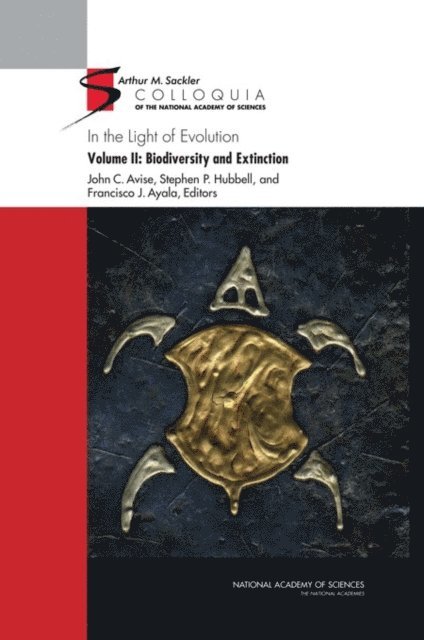
The current extinction crisis is of human making, and any favorable resolution of that biodiversity crisis—among the most dire in the 4-billion-year history of Earth—will have to be initiated by mankind. Little time remains for the public, corporations, and governments to awaken to the magnitude of what is at stake. This book aims to assist that critical educational mission, synthesizing recent scientific information and ideas about threats to biodiversity in the past, present, and projected future.This is the second volume from the In the Light of Evolution series, based on a series of Arthur M. Sackler colloquia, and designed to promote the evolutionary sciences. Each installment explores evolutionary perspectives on a particular biological topic that is scientifically intriguing but also has special relevance to contemporary societal issues or challenges. Individually and collectively, the ILE series aims to interpret phenomena in various areas of biology through the lens of evolution, address some of the most intellectually engaging as well as pragmatically important societal issues of our times, and foster a greater appreciation of evolutionary biology as a consolidating foundation for the life sciences.
956 kr
Skickas
765 kr
Läs direkt efter köp
Two Centuries of Darwin is the outgrowth of an Arthur M. Sackler Colloquium, sponsored by the National Academy of Sciences on January 16-17, 2009. In the chapters of this book, leading evolutionary biologists and science historians reflect on and commemorate the Darwinian Revolution. They canvass modern research approaches and current scientific thought on each of the three main categories of selection (natural, artificial, and sexual) that Darwin addressed during his career. Although Darwin''s legacy is associated primarily with the illumination of natural selection in The Origin, he also contemplated and wrote extensively about what we now term artificial selection and sexual selection. In a concluding section of this book, several science historians comment on Darwin''s seminal contributions. Two Centuries of Darwin is the third book of the In the Light of Evolution series. Each installment in the series explores evolutionary perspectives on a particular biological topic that is scientifically intriguing but also has special relevance to contemporary societal issues or challenges. The ILE series aims to interpret phenomena in various areas of biology through the lens of evolution and address some of the most intellectually engaging, as well as pragmatically important societal issues of our times.
1 093 kr
Läs direkt efter köp
Two Centuries of Darwin is the outgrowth of an Arthur M. Sackler Colloquium, sponsored by the National Academy of Sciences on January 16-17, 2009. In the chapters of this book, leading evolutionary biologists and science historians reflect on and commemorate the Darwinian Revolution. They canvass modern research approaches and current scientific thought on each of the three main categories of selection (natural, artificial, and sexual) that Darwin addressed during his career. Although Darwin''s legacy is associated primarily with the illumination of natural selection in The Origin, he also contemplated and wrote extensively about what we now term artificial selection and sexual selection. In a concluding section of this book, several science historians comment on Darwin''s seminal contributions. Two Centuries of Darwin is the third book of the In the Light of Evolution series. Each installment in the series explores evolutionary perspectives on a particular biological topic that is scientifically intriguing but also has special relevance to contemporary societal issues or challenges. The ILE series aims to interpret phenomena in various areas of biology through the lens of evolution and address some of the most intellectually engaging, as well as pragmatically important societal issues of our times.
765 kr
Läs direkt efter köp
The Human Condition is a collection of papers by leading evolutionary biologists and philosophers of science that reflect on the Darwinian Revolution as it relates to the human condition at levels ranging from the molecular to the theological. The book focuses on understanding the evolutionary origin of humans and their biological and cultural traits. The Human Condition is organized into three parts: Human Phylogenetic History and the Paleontological Record; Structure and Function of the Human Genome; and Cultural Evolution and the Uniqueness of Being Human. This fourth volume from the In the Light of Evolution (ILE) series, based on a series of Arthur M. Sackler colloquia, was designed to promote the evolutionary sciences. Each volume explores evolutionary perspectives on a particular biological topic that is scientifically intriguing but also has special relevance to contemporary societal issues or challenges. Individually and collectively, the ILE series interprets phenomena in various areas of biology through the lens of evolution, addresses some of the most intellectually engaging as well as pragmatically important societal issues of our times, and fosters a greater appreciation of evolutionary biology as a consolidating foundation for the life sciences.
1 093 kr
Läs direkt efter köp
The current extinction crisis is of human making, and any favorable resolution of that biodiversity crisis—among the most dire in the 4-billion-year history of Earth—will have to be initiated by mankind. Little time remains for the public, corporations, and governments to awaken to the magnitude of what is at stake. This book aims to assist that critical educational mission, synthesizing recent scientific information and ideas about threats to biodiversity in the past, present, and projected future.This is the second volume from the In the Light of Evolution series, based on a series of Arthur M. Sackler colloquia, and designed to promote the evolutionary sciences. Each installment explores evolutionary perspectives on a particular biological topic that is scientifically intriguing but also has special relevance to contemporary societal issues or challenges. Individually and collectively, the ILE series aims to interpret phenomena in various areas of biology through the lens of evolution, address some of the most intellectually engaging as well as pragmatically important societal issues of our times, and foster a greater appreciation of evolutionary biology as a consolidating foundation for the life sciences.
723 kr
Läs direkt efter köp
In addition to a preceding essay by Edward O. Wilson, this book includesthe 16 papers presented by distinguished evolutionists at the colloquium.The papers are organized into sections covering the origins of species barriers,the processes of species divergence, the nature of species, the meaningof "species," and genomic approaches for understanding diversity and speciation.
824 kr
Läs direkt efter köp
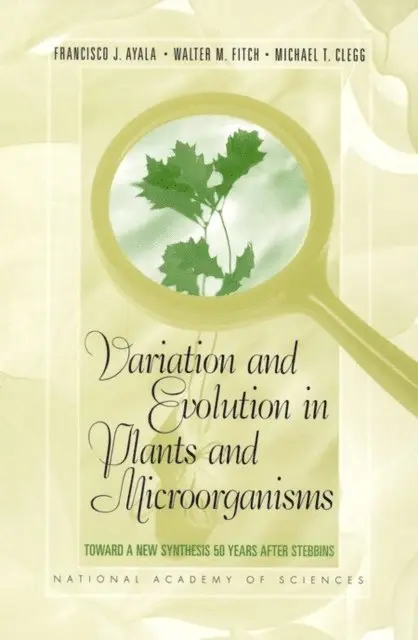
"The present book is intended as a progress report on [the] synthetic approach to evolution as it applies to the plant kingdom." With this simple statement, G. Ledyard Stebbins formulated the objectives of Variation and Evolution in Plants, published in 1950, setting forth for plants what became known as the "synthetic theory of evolution" or "the modern synthesis." The pervading conceit of the book was the molding of Darwin''s evolution by natural selection within the framework of rapidly advancing genetic knowledge.
At the time, Variation and Evolution in Plants significantly extended the scope of the science of plants. Plants, with their unique genetic, physiological, and evolutionary features, had all but been left completely out of the synthesis until that point. Fifty years later, the National Academy of Sciences convened a colloquium to update the advances made by Stebbins.
This collection of 17 papers marks the 50th anniversary of the publication of Stebbins'' classic. Organized into five sections, the book covers: early evolution and the origin of cells, virus and bacterial models, protoctist models, population variation, and trends and patterns in plant evolution.
1 009 kr
Läs direkt efter köp
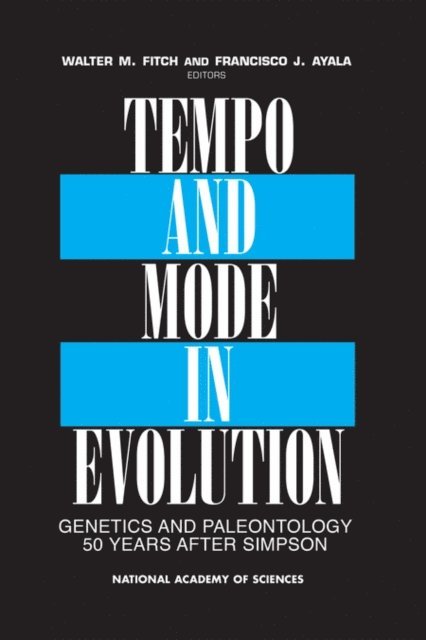
Since George Gaylord Simpson published Tempo and Mode in Evolution in 1944, discoveries in paleontology and genetics have abounded. This volume brings together the findings and insights of today''s leading experts in the study of evolution, including Ayala, W. Ford Doolittle, and Stephen Jay Gould.
The volume examines early cellular evolution, explores changes in the tempo of evolution between the Precambrian and Phanerozoic periods, and reconstructs the Cambrian evolutionary burst. Long-neglected despite Darwin''s interest in it, species extinction is discussed in detail.
Although the absence of data kept Simpson from exploring human evolution in his book, the current volume covers morphological and genetic changes in human populations, contradicting the popular claim that all modern humans descend from a single woman.
This book discusses the role of molecular clocks, the results of evolution in 12 populations of Escherichia coli propagated for 10,000 generations, a physical map of Drosophila chromosomes, and evidence for "hitchhiking" by mutations.
1 009 kr
Läs direkt efter köp
The Human Condition is a collection of papers by leading evolutionary biologists and philosophers of science that reflect on the Darwinian Revolution as it relates to the human condition at levels ranging from the molecular to the theological. The book focuses on understanding the evolutionary origin of humans and their biological and cultural traits. The Human Condition is organized into three parts: Human Phylogenetic History and the Paleontological Record; Structure and Function of the Human Genome; and Cultural Evolution and the Uniqueness of Being Human. This fourth volume from the In the Light of Evolution (ILE) series, based on a series of Arthur M. Sackler colloquia, was designed to promote the evolutionary sciences. Each volume explores evolutionary perspectives on a particular biological topic that is scientifically intriguing but also has special relevance to contemporary societal issues or challenges. Individually and collectively, the ILE series interprets phenomena in various areas of biology through the lens of evolution, addresses some of the most intellectually engaging as well as pragmatically important societal issues of our times, and fosters a greater appreciation of evolutionary biology as a consolidating foundation for the life sciences.
925 kr
Läs direkt efter köp
The central goal of the In the Light of Evolution (ILE) series is to promote the evolutionary sciences through state-of-the-art colloquia—in the series of Arthur M. Sackler colloquia sponsored by the National Academy of Sciences—and their published proceedings. Each installment explores evolutionary perspectives on a particular biological topic that is scientifically intriguing but also has special relevance to contemporary societal issues or challenges.
This book is the outgrowth of the Arthur M. Sackler Colloquium "Brain and Behavior," which was sponsored by the National Academy of Sciences on January 20-21, 2012, at the Academy''s Arnold and Mabel Beckman Center in Irvine, CA. It is the sixth in a series of Colloquia under the general title "In the Light of Evolution." Specifically, In Light of Evolution: Brain and Behavior focuses on the field of evolutionary neuroscience that now includes a vast array of different approaches, data types, and species.
This volume is also available for purchase with the In the Light of Evolution six-volume set.
925 kr
Läs direkt efter köp
Humans possess certain unique mental traits. Self-reflection, as well as ethic and aesthetic values, is among them, constituting an essential part of what we call the human condition. The human mental machinery led our species to have a self-awareness but, at the same time, a sense of justice, willing to punish unfair actions even if the consequences of such outrages harm our own interests. Also, we appreciate searching for novelties, listening to music, viewing beautiful pictures, or living in well-designed houses. But why is this so? What is the meaning of our tendency, among other particularities, to defend and share values, to evaluate the rectitude of our actions and the beauty of our surroundings? What brain mechanisms correlate with the human capacity to maintain inner speech, or to carry out judgments of value? To what extent are they different from other primates'' equivalent behaviors?
In the Light of Evolution Volume VII aims to survey what has been learned about the human "mental machinery." This book is a collection of colloquium papers from the Arthur M. Sackler Colloquium "The Human Mental Machinery," which was sponsored by the National Academy of Sciences on January 11-12, 2013. The colloquium brought together leading scientists who have worked on brain and mental traits. Their 16 contributions focus the objective of better understanding human brain processes, their evolution, and their eventual shared mechanisms with other animals. The articles are grouped into three primary sections: current study of the mind-brain relationships; the primate evolutionary continuity; and the human difference: from ethics to aesthetics. This book offers fresh perspectives coming from interdisciplinary approaches that open new research fields and constitute the state of the art in some important aspects of the mind-brain relationships.
2 017 kr
Läs direkt efter köp
Biodiversity—the genetic variety of life—is an exuberant product of the evolutionary past, a vast human-supportive resource (aesthetic, intellectual, and material) of the present, and a rich legacy to cherish and preserve for the future. Two urgent challenges, and opportunities, for 21st-century science are to gain deeper insights into the evolutionary processes that foster biotic diversity, and to translate that understanding into workable solutions for the regional and global crises that biodiversity currently faces. A grasp of evolutionary principles and processes is important in other societal arenas as well, such as education, medicine, sociology, and other applied fields including agriculture, pharmacology, and biotechnology. The ramifications of evolutionary thought also extend into learned realms traditionally reserved for philosophy and religion.
The central goal of the In the Light of Evolution (ILE) series is to promote the evolutionary sciences through state-of-the-art colloquia—in the series of Arthur M. Sackler colloquia sponsored by the National Academy of Sciences—and their published proceedings. Each installment explores evolutionary perspectives on a particular biological topic that is scientifically intriguing but also has special relevance to contemporary societal issues or challenges. This tenth and final edition of the In the Light of Evolution series focuses on recent developments in phylogeographic research and their relevance to past accomplishments and future research directions.
261 kr
Läs direkt efter köp
"The present book is intended as a progress report on [the] synthetic approach to evolution as it applies to the plant kingdom." With this simple statement, G. Ledyard Stebbins formulated the objectives of Variation and Evolution in Plants, published in 1950, setting forth for plants what became known as the "synthetic theory of evolution" or "the modern synthesis." The pervading conceit of the book was the molding of Darwin''s evolution by natural selection within the framework of rapidly advancing genetic knowledge.
At the time, Variation and Evolution in Plants significantly extended the scope of the science of plants. Plants, with their unique genetic, physiological, and evolutionary features, had all but been left completely out of the synthesis until that point. Fifty years later, the National Academy of Sciences convened a colloquium to update the advances made by Stebbins.
This collection of 17 papers marks the 50th anniversary of the publication of Stebbins'' classic. Organized into five sections, the book covers: early evolution and the origin of cells, virus and bacterial models, protoctist models, population variation, and trends and patterns in plant evolution.
505 kr
Läs direkt efter köp
In addition to a preceding essay by Edward O. Wilson, this book includesthe 16 papers presented by distinguished evolutionists at the colloquium.The papers are organized into sections covering the origins of species barriers,the processes of species divergence, the nature of species, the meaningof "species," and genomic approaches for understanding diversity and speciation.
715 kr
Läs direkt efter köp
Since George Gaylord Simpson published Tempo and Mode in Evolution in 1944, discoveries in paleontology and genetics have abounded. This volume brings together the findings and insights of today''s leading experts in the study of evolution, including Ayala, W. Ford Doolittle, and Stephen Jay Gould.
The volume examines early cellular evolution, explores changes in the tempo of evolution between the Precambrian and Phanerozoic periods, and reconstructs the Cambrian evolutionary burst. Long-neglected despite Darwin''s interest in it, species extinction is discussed in detail.
Although the absence of data kept Simpson from exploring human evolution in his book, the current volume covers morphological and genetic changes in human populations, contradicting the popular claim that all modern humans descend from a single woman.
This book discusses the role of molecular clocks, the results of evolution in 12 populations of Escherichia coli propagated for 10,000 generations, a physical map of Drosophila chromosomes, and evidence for "hitchhiking" by mutations.
774 kr
Läs direkt efter köp
In December 2006, the National Academy of Sciences sponsored a colloquium (featured as part of the Arthur M. Sackler Colloquia series) on "Adaptation and Complex Design" to synthesize recent empirical findings and conceptual approaches toward understanding the evolutionary origins and maintenance of complex adaptations. Darwin''s elucidation of natural selection as a creative natural force was a monumental achievement in the history of science, but a century and a half later some religious believers still contend that biotic complexity registers conscious supernatural design. In this book, modern scientific perspectives are presented on the evolutionary origin and maintenance of complex phenotypes including various behaviors, anatomies, and physiologies. After an introduction by the editors and an opening historical and conceptual essay by Francisco Ayala, this book includes 14 papers presented by distinguished evolutionists at the colloquium. The papers are organized into sections covering epistemological approaches to the study of biocomplexity, a hierarchy of topics on biological complexity ranging from ontogeny to symbiosis, and case studies explaining how complex phenotypes are being dissected in terms of genetics and development.
1 115 kr
Skickas inom 11-20 vardagar
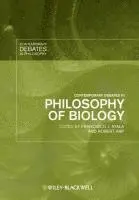
Contemporary Debates in Philosophy of Biology
485 kr
Skickas inom 5-8 vardagar
1 344 kr
Läs direkt efter köp
This collection of specially commissioned essays puts top scholars head to head to debate the central issues in the lively and fast growing field of philosophy of biology
Brings together original essays on ten of the most hotly debated questions in philosophy of biology Lively head-to-head debate format sharply defines the issues and paves the way for further discussion Includes coverage of the new and vital area of evolutionary developmental biology, as well as the concept of a unified species, the role of genes in selection, the differences between micro- and macro-evolution, and much more Each section features an introduction to the topic as well as suggestions for further reading Offers an accessible overview of this fast-growing and dynamic field, whilst also capturing the imagination of professional philosophers and biologists1 459 kr
Läs direkt efter köp