1 544 kr
Läs direkt efter köp
1 544 kr
Läs direkt efter köp
1 544 kr
Läs direkt efter köp
1 440 kr
Skickas inom 10-15 vardagar
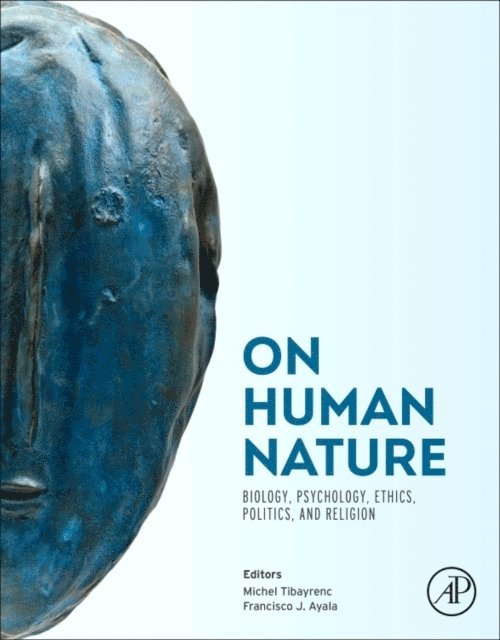
On Human Nature: Biology, Psychology, Ethics, Politics, and Religion covers the present state of knowledge on human diversity and its adaptative significance through a broad and eclectic selection of representative chapters. This transdisciplinary work brings together specialists from various fields who rarely interact, including geneticists, evolutionists, physicians, ethologists, psychoanalysts, anthropologists, sociologists, theologians, historians, linguists, and philosophers.
Genomic diversity is covered in several chapters dealing with biology, including the differences in men and apes and the genetic diversity of mankind. Top specialists, known for their open mind and broad knowledge have been carefully selected to cover each topic. The book is therefore at the crossroads between biology and human sciences, going beyond classical science in the Popperian sense.
The book is accessible not only to specialists, but also to students, professors, and the educated public. Glossaries of specialized terms and general public references help nonspecialists understand complex notions, with contributions avoiding technical jargon.
Provides greater understanding of diversity and population structure and history, with crucial foundational knowledge needed to conduct research in a variety of fields, such as genetics and diseaseIncludes three robust sections on biological, psychological, and ethical aspects, with cross-fertilization and reciprocal references between the three sectionsContains contributions by leading experts in their respective fields working under the guidance of internationally recognized and highly respected editors1 403 kr
Läs direkt efter köp
2 574 kr
Skickas inom 5-8 vardagar
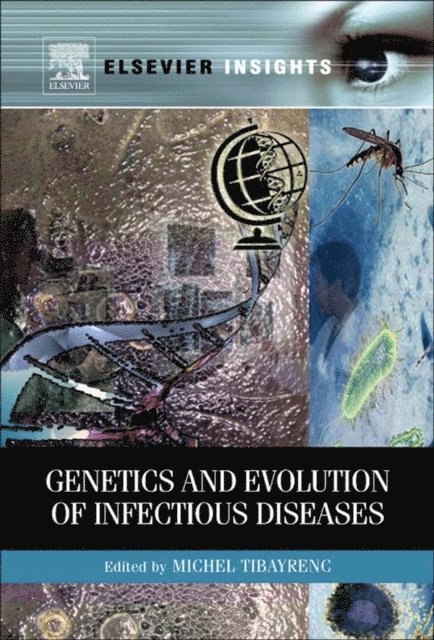
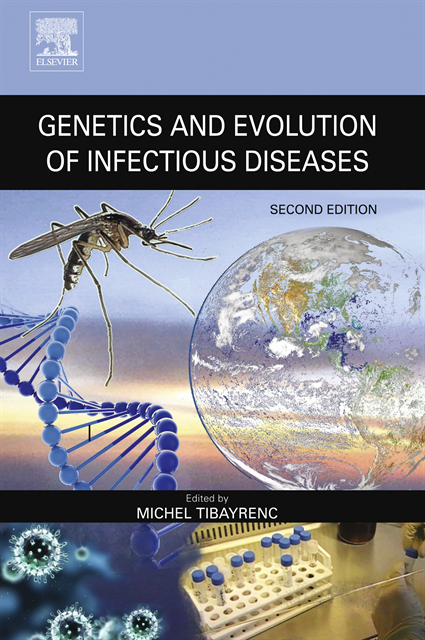
Genetics and Evolution of Infectious Diseases, Second Edition, discusses the constantly evolving field of infectious diseases and their continued impact on the health of populations, especially in resource-limited areas of the world. Students in public health, biomedical professionals, clinicians, public health practitioners, and decisions-makers will find valuable information in this book that is relevant to the control and prevention of neglected and emerging worldwide diseases that are a major cause of global morbidity, disability, and mortality.Although substantial gains have been made in public health interventions for the treatment, prevention, and control of infectious diseases during the last century, in recent decades the world has witnessed a worldwide human immunodeficiency virus (HIV) pandemic, increasing antimicrobial resistance, and the emergence of many new bacterial, fungal, parasitic, and viral pathogens.The economic, social, and political burden of infectious diseases is most evident in developing countries which must confront the dual burden of death and disability due to infectious and chronic illnesses.
Takes an integrated approach to infectious diseasesIncludes contributions from leading authoritiesProvides the latest developments in the field of infectious disease2 194 kr
Läs direkt efter köp
1 555 kr
Skickas inom 10-15 vardagar
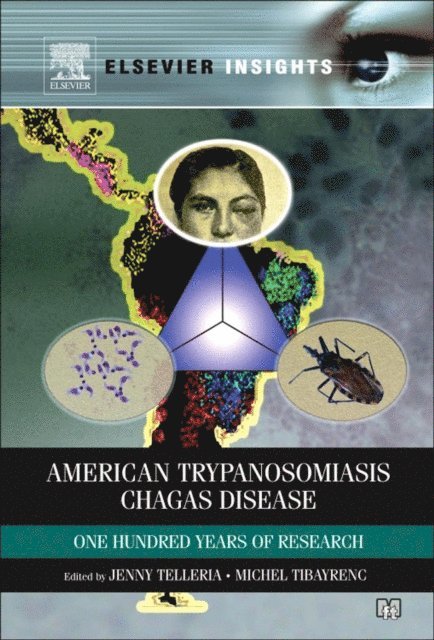
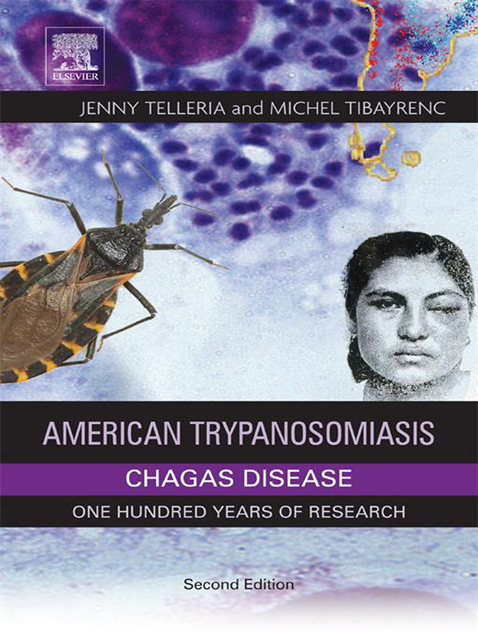
American Trypanosomiasis, Chagas Disease: One Hundred Years of Research, Second Edition, provides a comprehensive overview of Chagas disease and discusses the latest discoveries concerning the three elements that compose the transmission chain of the disease, the host, the insect vectors, and the causative parasite.
In addition, new insights on the molecular biology and diagnostics of Chagas diseases, the persistence of infections in the host, and the interaction of the parasite and host metabolism are now included in this new and updated edition.
Provides a thoroughly revised, updated, and streamlined new edition with contributions from leading authorities and industry experts Informs and updates on all the latest developments of Chagas disease, covering biology, clinical aspects, and human sciences Includes a summarizing chapter that provides key insights of practical significance for prevention efforts2 011 kr
Läs direkt efter köp
2 201 kr
Skickas inom 10-15 vardagar
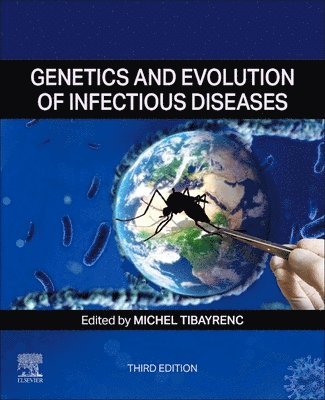
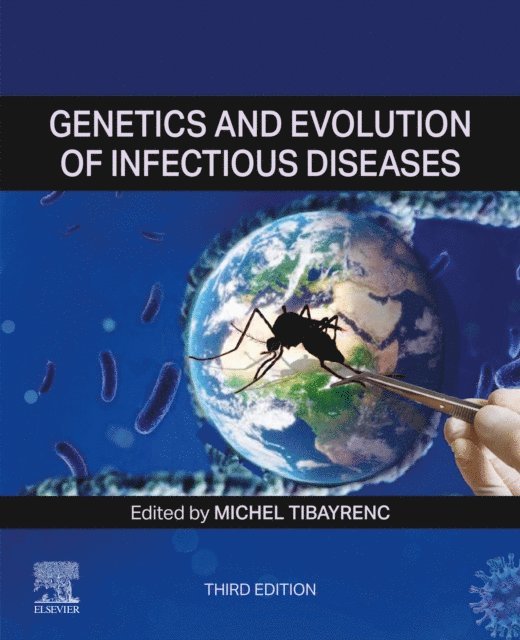
Genetics and Evolution of Infectious Diseases, Third Edition discusses the evolving field of infectious diseases and their continued impact on the health of populations, especially in resource-limited areas of the world where they must confront the dual burden of death and disability due to infectious and chronic illnesses. Although substantial gains have been made in public health interventions for the treatment, prevention, and control of infectious diseases, in recent decades the world has witnessed the emergence of the human immunodeficiency virus (HIV) and the COVID-19 pandemic, increasing antimicrobial resistance, and the emergence of many new bacterial, fungal, parasitic, and viral pathogens.Fully updated and revised, this new edition presents the consequences of such diseases, the evolution of infectious diseases, the genetics of host-pathogen relationship, and the control and prevention strategies that are, or can be, developed. This book offers valuable information to biomedical researchers, clinicians, public health practitioners, decisions-makers, and students and postgraduates studying infectious diseases, microbiology, medicine, and public health that is relevant to the control and prevention of neglected and emerging worldwide diseases.
Takes an integrated approach to infectious diseasesProvides the latest developments in the field of infectious diseasesFocuses on the contribution of evolutionary and genomic studies for the study and control of transmissible diseasesIncludes updated and revised contributions from leading authorities, along with six new chapters3 126 kr
Läs direkt efter köp
1 970 kr
Kommande
3 753 kr
Läs direkt efter köp
The Encyclopedia of Infectious Diseases is organized into five parts. The first part examines current threats such as AIDS, malaria, SARS, and influenza. The second part addresses the evolution of pathogens and the relationship between human genetic diversity and the spread of infectious diseases. The next two parts highlight the most promising uses of molecular identification, vector control, satellite detection, surveillance, modeling, and high-throughput technologies. The final part explores specialized topics of current concern, including bioterrorism, world market and infectious diseases, and antibiotics for public health.
Each article is written by one or more leading experts in the field of infectious diseases. These experts place all the latest findings from various disciplines in context, helping readers understand what is currently known, what the next generation of breakthroughs is likely to be, and where more research is needed. Several features facilitate research and deepen readers'' understanding of infectious diseases:
Illustrations help readers understand the pathogenesis and diagnosis of infectious diseasesLists of Web resources serve as a gateway to important research centers, government agencies, and other sources of information from around the world
Information boxes highlight basic principles and specialized terminology
International contributions offer perspectives on how infectious diseases are viewed by different cultures
A special chapter discusses the representation of infectious diseases in art
With its multidisciplinary approach, this encyclopedia helps point researchers in new promising directions and helps health professionals better understand the nature and treatment of infectious diseases.
3 319 kr
Skickas inom 11-20 vardagar
872 kr
Läs direkt efter köp
Following the last war, after the revelation of Nazi crimes and the Holocaust, a powerful school of thought, championed by “a small but vocal group of researchers†(who have become increasingly numerous and vocal), attempted to definitively discredit racism by arguing that the concept of race had no biological basis and therefore that racism was nonsensical. This has been called “an absolute paradigmatic shiftâ€. However, many scientists today continue to use human continental populations as units of analysis (“proxiesâ€) in numerous studies, particularly in the biomedical field, resorting (not always) to unsatisfactory euphemisms (“ethnic groups,†“ancestry groups,†“geographic populationsâ€) to avoid the term of “raceâ€. A recent trend (David Reich, Harvard University, Pierre-André Taguieff, Centre National de la Recherche Scientifique, France) is to consider that the dismissal of the concept of biological race was premature and could be challenged by current genomic data (“race realistsâ€).
The present book offers a comprehensive overview of the latest advances in biology (genetics, genomics, evolution, epigenetics, paleogenomics) in the study of the biological variability of past and present human populations. I propose that the question of the existence or non-existence of human races is poorly framed, as it is to a large extent a matter of definitions. I emphasize that it is dangerous to base antiracism on scientific data that is inherently provisional and fluctuating. I advocate a mutual respect (“reciprocal sanctuarizationâ€) between science, on the one hand, and ethics and politics, on the other. Ethics and politics should not interfere with the scientific process, which is based on the rational analysis of objective data. It is dangerous to assume that a scientific theory is necessarily false simply because it appears scandalous from the perspective of the prevailing morality, which is notoriously variable depending on time and place. Such an a priori condemnation based on morality, rather than on scientific arguments, was the fate of heliocentrism (Nicolaus Copernicus), the theory of evolution (Charles Darwin), the hypothesis of the antiquity of humankind (Jacques Boucher de Perthes), and the concept of childhood sexuality (Sigmund Freud). Conversely, while scientific data must be open to free discussion, societal choices ultimately rest on ethical and political considerations, regardless of scientific findings, and in accordance with the values of the society in question. Antiracism, in our society, is one of these key values. Rather than a scientific statement, it is a moral stance and a political choice, which decision-makers must enforce with the full force of the law. “Racism is not an opinion, it is a crimeâ€. The principle of mutual respect (“reciprocal sanctuarizationâ€) that I propose can constitute a sound basis for such a renewed antiracism, far more so than a “scientific antiracism†that imprudently relies on scientific data, which is inherently unpredictable and provisional.
872 kr
Läs direkt efter köp
Following the last war, after the revelation of Nazi crimes and the Holocaust, a powerful school of thought, championed by “a small but vocal group of researchers†(who have become increasingly numerous and vocal), attempted to definitively discredit racism by arguing that the concept of race had no biological basis and therefore that racism was nonsensical. This has been called “an absolute paradigmatic shiftâ€. However, many scientists today continue to use human continental populations as units of analysis (“proxiesâ€) in numerous studies, particularly in the biomedical field, resorting (not always) to unsatisfactory euphemisms (“ethnic groups,†“ancestry groups,†“geographic populationsâ€) to avoid the term of “raceâ€. A recent trend (David Reich, Harvard University, Pierre-André Taguieff, Centre National de la Recherche Scientifique, France) is to consider that the dismissal of the concept of biological race was premature and could be challenged by current genomic data (“race realistsâ€).
The present book offers a comprehensive overview of the latest advances in biology (genetics, genomics, evolution, epigenetics, paleogenomics) in the study of the biological variability of past and present human populations. I propose that the question of the existence or non-existence of human races is poorly framed, as it is to a large extent a matter of definitions. I emphasize that it is dangerous to base antiracism on scientific data that is inherently provisional and fluctuating. I advocate a mutual respect (“reciprocal sanctuarizationâ€) between science, on the one hand, and ethics and politics, on the other. Ethics and politics should not interfere with the scientific process, which is based on the rational analysis of objective data. It is dangerous to assume that a scientific theory is necessarily false simply because it appears scandalous from the perspective of the prevailing morality, which is notoriously variable depending on time and place. Such an a priori condemnation based on morality, rather than on scientific arguments, was the fate of heliocentrism (Nicolaus Copernicus), the theory of evolution (Charles Darwin), the hypothesis of the antiquity of humankind (Jacques Boucher de Perthes), and the concept of childhood sexuality (Sigmund Freud). Conversely, while scientific data must be open to free discussion, societal choices ultimately rest on ethical and political considerations, regardless of scientific findings, and in accordance with the values of the society in question. Antiracism, in our society, is one of these key values. Rather than a scientific statement, it is a moral stance and a political choice, which decision-makers must enforce with the full force of the law. “Racism is not an opinion, it is a crimeâ€. The principle of mutual respect (“reciprocal sanctuarizationâ€) that I propose can constitute a sound basis for such a renewed antiracism, far more so than a “scientific antiracism†that imprudently relies on scientific data, which is inherently unpredictable and provisional.
2 073 kr
Skickas inom 10-15 vardagar
3 629 kr
Läs direkt efter köp