Joan Petersilia - Böcker
Visar alla böcker från författaren Joan Petersilia. Handla med fri frakt och snabb leverans.
12 produkter
12 produkter
679 kr
Skickas inom 5-8 vardagar
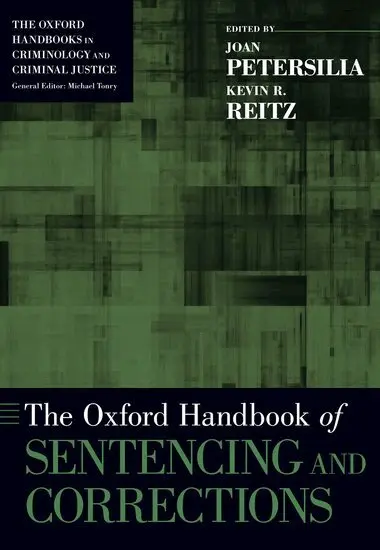
It is no secret that America's sentencing and corrections systems are in crisis, and neither system can be understood or repaired fully without careful consideration of the other. This handbook examines the intertwined and multi-layered fields of American sentencing and corrections from global and historical viewpoints, from theoretical and policy perspectives, and with close attention to many problem-specific arenas. Editors Joan Petersilia and Kevin R. Reitz, both leaders in their respective fields, bring together a group of preeminent scholars to present state-of-the art research, investigate current practices, and explore the implications of new and varied approaches wherever possible. The handbook's contributors bridge the gap between research and policy across a range of topics including an overview of mass incarceration and its collateral effects, explorations of sentencing theories and their applications, analyses of the full spectrum of correctional options, and first-hand accounts of life inside of and outside of prison. Individual chapters reflect expertise and source materials from multiple fields including criminology, law, sociology, psychology, public policy, economics, political science, and history. Proving that the problems of sentencing and corrections, writ large, cannot be addressed effectively or comprehensively within the confines of any one discipline, The Oxford Handbook of Sentencing and Corrections is a vital reference volume on these two related and central components of America's ongoing experiment in mass incarceration.
766 kr
Skickas inom 7-10 vardagar
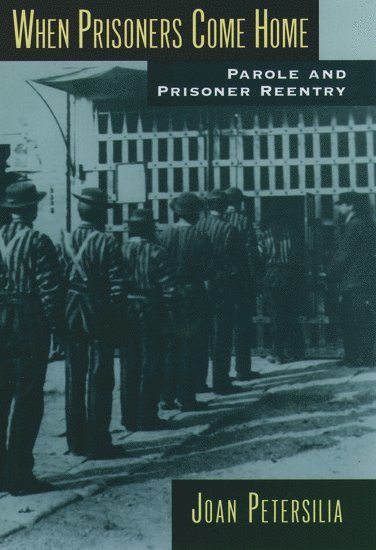
In 2003, well over half a million jailed Americans will leave prison and return to society. Largely uneducated, unskilled, often without family support, and with the stigma of a prison record hanging over them, many if not most will experience serious social and psychological problems after release. Fewer than one in three prisoners receive substance abuse or mental health treatment while incarcerated, and each year fewer and fewer participate in the dwindling number of vocational or educational pre-release programs, leaving many all but unemployable. Not surprisingly, the great majority is rearrested, most within six months of their release. What happens when all those sent down the river come back up--and out?As long as there have been prisons, society has struggled with how best to help prisoners reintegrate once released. But the current situation is unprecedented. As a result of the quadrupling of the American prison population in the last quarter century, the number of returning offenders dwarfs anything in America's history. What happens when a large percentage of inner-city men, mostly Black and Hispanic, are regularly extracted, imprisoned, and then returned a few years later in worse shape and with dimmer prospects than when they committed the crime resulting in their imprisonment? What toll does this constant "churning" exact on a community? And what do these trends portend for public safety? A crisis looms, and the criminal justice and social welfare system is wholly unprepared to confront it.Drawing on dozens of interviews with inmates, former prisoners, and prison officials, Joan Petersilia convincingly shows us how the current system is failing, and failing badly. Unwilling merely to sound the alarm, Petersilia explores the harsh realities of prisoner reentry and offers specific solutions to prepare inmates for release, reduce recidivism, and restore them to full citizenship, while never losing sight of the demands of public safety.As the number of ex-convicts in America continues to grow, their systemic marginalization threatens the very society their imprisonment was meant to protect. America spent the last decade debating who should go to prison and for how long. Now it's time to decide what to do when prisoners come home.
325 kr
Skickas inom 5-8 vardagar
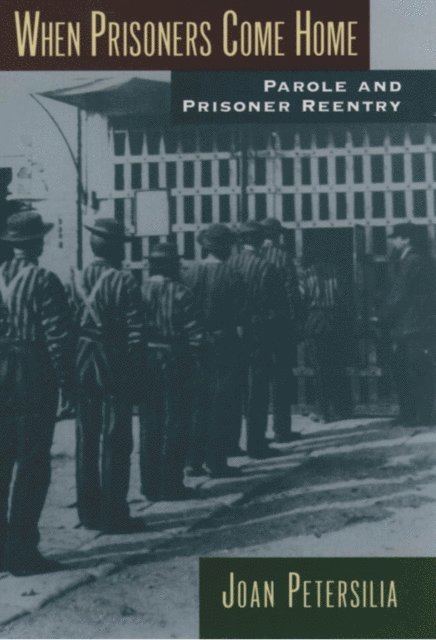
In 2003, well over half a million jailed Americans will leave prison and return to society. Largely uneducated, unskilled, often without family support, and with the stigma of a prison record hanging over them, many if not most will experience serious social and psychological problems after release. Fewer than one in three prisoners receive substance abuse or mental health treatment while incarcerated, and each year fewer and fewer participate in the dwindling number of vocational or educational pre-release programs, leaving many all but unemployable. Not surprisingly, the great majority is rearrested, most within six months of their release. What happens when all those sent down the river come back up--and out?As long as there have been prisons, society has struggled with how best to help prisoners reintegrate once released. But the current situation is unprecedented. As a result of the quadrupling of the American prison population in the last quarter century, the number of returning offenders dwarfs anything in America's history. What happens when a large percentage of inner-city men, mostly Black and Hispanic, are regularly extracted, imprisoned, and then returned a few years later in worse shape and with dimmer prospects than when they committed the crime resulting in their imprisonment? What toll does this constant "churning" exact on a community? And what do these trends portend for public safety? A crisis looms, and the criminal justice and social welfare system is wholly unprepared to confront it.Drawing on dozens of interviews with inmates, former prisoners, and prison officials, Joan Petersilia convincingly shows us how the current system is failing, and failing badly. Unwilling merely to sound the alarm, Petersilia explores the harsh realities of prisoner reentry and offers specific solutions to prepare inmates for release, reduce recidivism, and restore them to full citizenship, while never losing sight of the demands of public safety. As the number of ex-convicts in America continues to grow, their systemic marginalization threatens the very society their imprisonment was meant to protect. America spent the last decade debating who should go to prison and for how long. Now it's time to decide what to do when prisoners come home.
591 kr
Skickas inom 5-8 vardagar
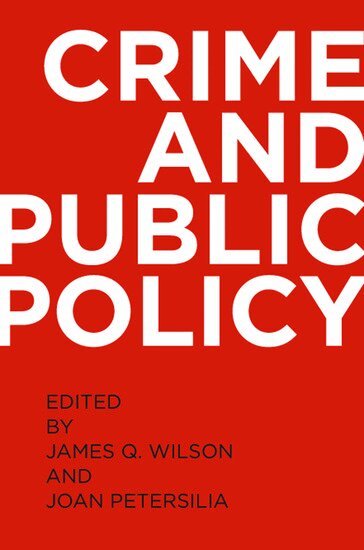
Crime in the United States has fluctuated considerably over the past thirty years, as have the policy approaches to deal with it. During this time criminologists and other scholars have helped to shed light on the role of incarceration, prevention, drugs, guns, policing, and numerous other aspects to crime control. Yet the latest research is rarely heard in public discussions and is often missing from the desks of policymakers. This book accessibly summarizes the latest scientific information on the causes of crime and evidence about what does and does not work to control it. Thoroughly revised and updated, this new edition of Crime and Public Policy will include twenty chapters and five new substantial entries. As with previous editions, each essay reviews the existing literature, discusses the methodological rigor of the studies, identifies what policies and programs the studies suggest, and then points to policies now implemented that fail to reflect the evidence. The chapters cover the principle institutions of the criminal justice system (juvenile justice, police, prisons, probation and parole, sentencing), how broader aspects of social life inhibit or encourage crime (biology, schools, families, communities), and topics currently generating a great deal of attention (criminal activities of gangs, sex offenders, prisoner reentry, changing crime rates). With contributions from trusted, leading scholars, Crime and Public Policy offers the most comprehensive and balanced guide to how the latest and best social science research informs the understanding of crime and its control for policymakers, community leaders, and students of crime and criminal justice.
1 777 kr
Skickas inom 5-8 vardagar
Crime in the United States has fluctuated considerably over the past thirty years, as have the policy approaches to deal with it. During this time criminologists and other scholars have helped to shed light on the role of incarceration, prevention, drugs, guns, policing, and numerous other aspects to crime control. Yet the latest research is rarely heard in public discussions and is often missing from the desks of policymakers. This book accessibly summarizes the latest scientific information on the causes of crime and evidence about what does and does not work to control it. Thoroughly revised and updated, this new edition of Crime and Public Policy will include twenty chapters and five new substantial entries. As with previous editions, each essay reviews the existing literature, discusses the methodological rigor of the studies, identifies what policies and programs the studies suggest, and then points to policies now implemented that fail to reflect the evidence. The chapters cover the principle institutions of the criminal justice system (juvenile justice, police, prisons, probation and parole, sentencing), how broader aspects of social life inhibit or encourage crime (biology, schools, families, communities), and topics currently generating a great deal of attention (criminal activities of gangs, sex offenders, prisoner reentry, changing crime rates). With contributions from trusted, leading scholars, Crime and Public Policy offers the most comprehensive and balanced guide to how the latest and best social science research informs the understanding of crime and its control for policymakers, community leaders, and students of crime and criminal justice.
2 541 kr
Skickas inom 5-8 vardagar
It is no secret that America's sentencing and corrections systems are in crisis, and neither system can be understood or repaired fully without careful consideration of the other. This handbook examines the intertwined and multi-layered fields of American sentencing and corrections from global and historical viewpoints, from theoretical and policy perspectives, and with close attention to many problem-specific arenas. Editors Joan Petersilia and Kevin R. Reitz, both leaders in their respective fields, bring together a group of preeminent scholars to present state-of-the art research, investigate current practices, and explore the implications of new and varied approaches wherever possible. The handbook's contributors bridge the gap between research and policy across a range of topics including an overview of mass incarceration and its collateral effects, explorations of sentencing theories and their applications, analyses of the full spectrum of correctional options, and first-hand accounts of life inside of and outside of prison. Individual chapters reflect expertise and source materials from multiple fields including criminology, law, sociology, psychology, public policy, economics, political science, and history. Proving that the problems of sentencing and corrections, writ large, cannot be addressed effectively or comprehensively within the confines of any one discipline, The Oxford Handbook of Sentencing and Corrections is a vital reference volume on these two related and central components of America's ongoing experiment in mass incarceration.
600 kr
Tillfälligt slut
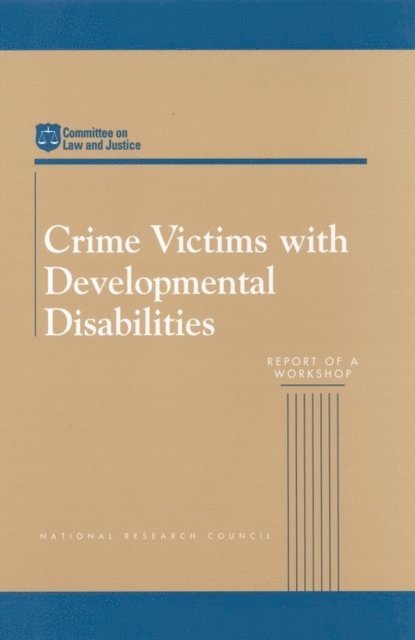
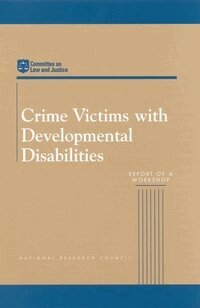
Although violent crime in the United States has declined over the past five years, certain groups appear to remain at disproportionately high risk for violent victimization. In the United States, people with developmental disabilities-such as mental retardation, autism, cerebral palsy, epilepsy, and severe learning disabilities may be included in this group. While the scientific evidence is scanty, a handful of studies from the United States, Canada, Australia, and Great Britain consistently find high rates of violence and abuse affecting people with these kinds of disabilities. A number of social and demographic trends are converging that may worsen the situation considerably over the next several years. The prevalence of developmental disabilities has increased in low-income populations, due to a number of factors, such as poor prenatal nutrition, lack of access to health care or better perinatal care for some fragile babies, and increases in child abuse and substance abuse during pregnancy.For example, a recent report of the California State Council on Developmental Disabilities found that during the past decade, while the state population increased by 20 percent, the number of persons with developmental disabilities in California increased by 52 percent and the population segment with mild mental retardation doubled. Because of a growing concern among parents and advocates regarding possible high rates of crime victimization among persons with developmental disabilities, Congress, through the Crime Victims with Disabilities Awareness Act of 1998, requested that the National Research Council of the National Academy of Sciences conduct a study to increase knowledge and information about crimes against individuals with developmental disabilities that will be useful in developing new strategies to reduce the incidence of crimes against those individuals.Crime Victims with Developmental Disabilities summarizes the workshop and addresses the following issues: (1) the nature and extent of crimes against individuals with developmental disabilities; (2) the risk factors associated with victimization of individuals with developmental disabilities; (3) the manner in which the justice system responds to crimes against individuals with disabilities; and (4) the means by which states may establish and maintain a centralized computer database on the incidence of crimes against individuals with disabilities within a state.
312 kr
Skickas inom 5-8 vardagar
163 kr
Skickas inom 5-8 vardagar
288 kr
Skickas inom 3-6 vardagar
288 kr
Skickas inom 3-6 vardagar
Del 9 - The International Library of Comparative Public Policy series
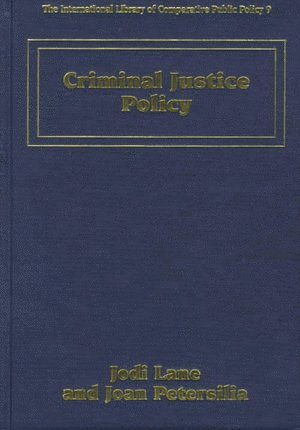
Criminal Justice Policy
Inbunden, Engelska, 1998
4 716 kr
Skickas inom 7-10 vardagar
Criminal Justice Policy is an authoritative collection of previously published writings addressing the most important issues which have dominated the field during the past fifteen years.Topics covered include: international perspectives on the extent and nature of crime; theoretical explanations for the onset, escalation and termination of criminal behaviour; the social context of crime; evaluating alternative crime policy options; crime control policy and the future.Criminal Justice Policy should be required reading for community leaders, for policymakers at all levels of government and for members of the general public actively interested in creating more effective crime policies.