Jochen Bohler – författare
1 521 kr
Läs direkt efter köp
1 535 kr
Läs direkt efter köp
248 kr
Läs direkt efter köp
785 kr
Läs direkt efter köp
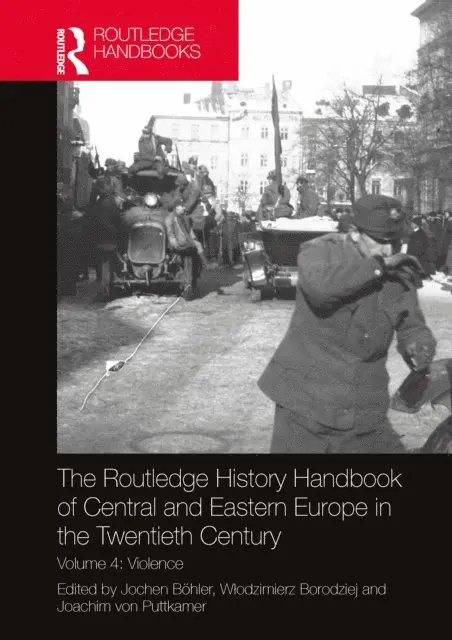
Violence analyzes both the violence exerted on the societies of Central and Eastern Europe during the twentieth century by belligerent powers and authoritarian and/or totalitarian regimes and armed conflicts between ethnic, social and national groups, as well as the interaction between these two phenomena.
Throughout the twentieth century, Central and Eastern Europe was hit particularly hard by war, violence and repression, with armed conflicts in the Balkans at the start and end of the period and two world wars in between. In the shadow of these full-scale wars, ethnic, social and national conflicts were intensified, found new forms and were violently played out. The interwar period witnessed the emergence of authoritarian states who enforced their claim to power through continued violence against political opponents, stigmatized ethnic, national and social groups, and were themselves fought with subversive or terrorist techniques. This volume focuses specifically on physical violence: war and civil war, ethnic cleansing, systematic starvation policies, deportations and expulsions, forced labour and prison camps, persecution by state security – such as intensive surveillance, which had an enormous impact on the lives of those it affected – and other forms of government oppression and militant resistance. Geographically, it considers the western regions of Belarus and Ukraine as sites of extreme violence that had a noticeable impact on neighbouring Central and Eastern European countries as well.
The concluding volume in a four-volume set on Central and Eastern Europe in the twentieth century, it is the go-to resource for those interested in violence in this complex region.
785 kr
Läs direkt efter köp
Violence analyzes both the violence exerted on the societies of Central and Eastern Europe during the twentieth century by belligerent powers and authoritarian and/or totalitarian regimes and armed conflicts between ethnic, social and national groups, as well as the interaction between these two phenomena.
Throughout the twentieth century, Central and Eastern Europe was hit particularly hard by war, violence and repression, with armed conflicts in the Balkans at the start and end of the period and two world wars in between. In the shadow of these full-scale wars, ethnic, social and national conflicts were intensified, found new forms and were violently played out. The interwar period witnessed the emergence of authoritarian states who enforced their claim to power through continued violence against political opponents, stigmatized ethnic, national and social groups, and were themselves fought with subversive or terrorist techniques. This volume focuses specifically on physical violence: war and civil war, ethnic cleansing, systematic starvation policies, deportations and expulsions, forced labour and prison camps, persecution by state security – such as intensive surveillance, which had an enormous impact on the lives of those it affected – and other forms of government oppression and militant resistance. Geographically, it considers the western regions of Belarus and Ukraine as sites of extreme violence that had a noticeable impact on neighbouring Central and Eastern European countries as well.
The concluding volume in a four-volume set on Central and Eastern Europe in the twentieth century, it is the go-to resource for those interested in violence in this complex region.
915 kr
Läs direkt efter köp
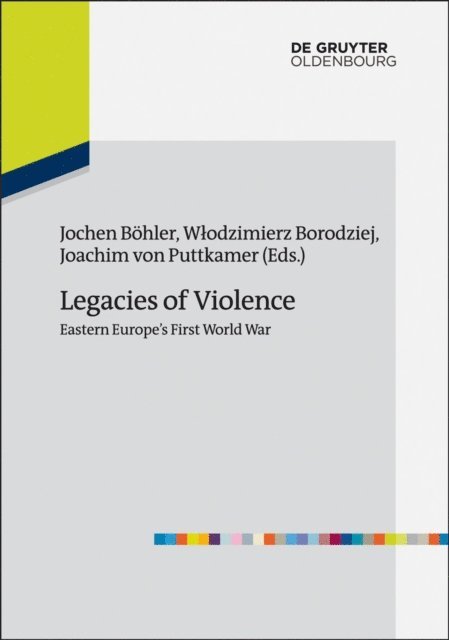
The First World War began in the Balkans, and it was fought as fiercely in the East as it was in the West. Fighting persisted in the East for almost a decade, radically transforming the political and social order of the entire continent. The specifics of the Eastern war such as mass deportations, ethnic cleansing, and the radicalization of military, paramilitary and revolutionary violence have only recently become the focus of historical research. This volume situates the ‘Long First World War’ on the Eastern Front (1912–1923) in the hundred years from the mid-19th to the mid-20th century and explores the legacies of violence within this context.
Content
Jochen Böhler/Włodzimierz Borodziej/Joachim von Puttkamer: Introduction
I. A World in TransitionJoachim von Puttkamer: Collapse and Restoration. Politics and the Strains of War in Eastern EuropeMark Biondich: Eastern Borderlands and Prospective Shatter Zones. Identity and Conflict in East Central and Southeastern Europe on the Eve of the First World WarJochen Böhler: Generals and Warlords, Revolutionaries and Nation-State Builders. The First World War and its Aftermath in Central and Eastern Europe
II. OccupationJonathan E. Gumz: Losing Control. The Norm of Occupation in Eastern Europe during the First World WarStephan Lehnstaedt: Fluctuating between ‘Utilisation’ and Exploitation. Occupied East Central Europe during the First World WarRobert L. Nelson: Utopias of Open Space. Forced Population Transfer Fantasies during the First World War
III. RadicalizationMaciej Górny: War on Paper? Physical Anthropology in the Service of States and NationsPiotr J. Wróbel: Foreshadowing the Holocaust. The Wars of 1914–1921 and Anti-Jewish Violence in Central and Eastern EuropeRobert Gerwarth: Fighting the Red Beast. Counter-Revolutionary Violence in the Defeated States of Central Europe
IV. AftermathJulia Eichenberg: Consent, Coercion and Endurance in Eastern Europe. Poland and the Fluidity of War ExperiencesPhilipp Ther: Pre-negotiated Violence. Ethnic Cleansing in the ‘Long’ First World WarDietrich Beyrau: The Long Shadow of the Revolution. Violence in War and Peace in the Soviet Union
CommentaryJörn Leonhard: Legacies of Violence: Eastern Europe’s First World War – A Commentary from a Comparative Perspective
915 kr
Läs direkt efter köp
The First World War began in the Balkans, and it was fought as fiercely in the East as it was in the West. Fighting persisted in the East for almost a decade, radically transforming the political and social order of the entire continent. The specifics of the Eastern war such as mass deportations, ethnic cleansing, and the radicalization of military, paramilitary and revolutionary violence have only recently become the focus of historical research. This volume situates the ‘Long First World War’ on the Eastern Front (1912–1923) in the hundred years from the mid-19th to the mid-20th century and explores the legacies of violence within this context.
Content
Jochen Böhler/Włodzimierz Borodziej/Joachim von Puttkamer: Introduction
I. A World in TransitionJoachim von Puttkamer: Collapse and Restoration. Politics and the Strains of War in Eastern EuropeMark Biondich: Eastern Borderlands and Prospective Shatter Zones. Identity and Conflict in East Central and Southeastern Europe on the Eve of the First World WarJochen Böhler: Generals and Warlords, Revolutionaries and Nation-State Builders. The First World War and its Aftermath in Central and Eastern Europe
II. OccupationJonathan E. Gumz: Losing Control. The Norm of Occupation in Eastern Europe during the First World WarStephan Lehnstaedt: Fluctuating between ‘Utilisation’ and Exploitation. Occupied East Central Europe during the First World WarRobert L. Nelson: Utopias of Open Space. Forced Population Transfer Fantasies during the First World War
III. RadicalizationMaciej Górny: War on Paper? Physical Anthropology in the Service of States and NationsPiotr J. Wróbel: Foreshadowing the Holocaust. The Wars of 1914–1921 and Anti-Jewish Violence in Central and Eastern EuropeRobert Gerwarth: Fighting the Red Beast. Counter-Revolutionary Violence in the Defeated States of Central Europe
IV. AftermathJulia Eichenberg: Consent, Coercion and Endurance in Eastern Europe. Poland and the Fluidity of War ExperiencesPhilipp Ther: Pre-negotiated Violence. Ethnic Cleansing in the ‘Long’ First World WarDietrich Beyrau: The Long Shadow of the Revolution. Violence in War and Peace in the Soviet Union
CommentaryJörn Leonhard: Legacies of Violence: Eastern Europe’s First World War – A Commentary from a Comparative Perspective