Joe Whittaker – författare
Visar alla böcker från författaren Joe Whittaker. Handla med fri frakt och snabb leverans.
6 produkter
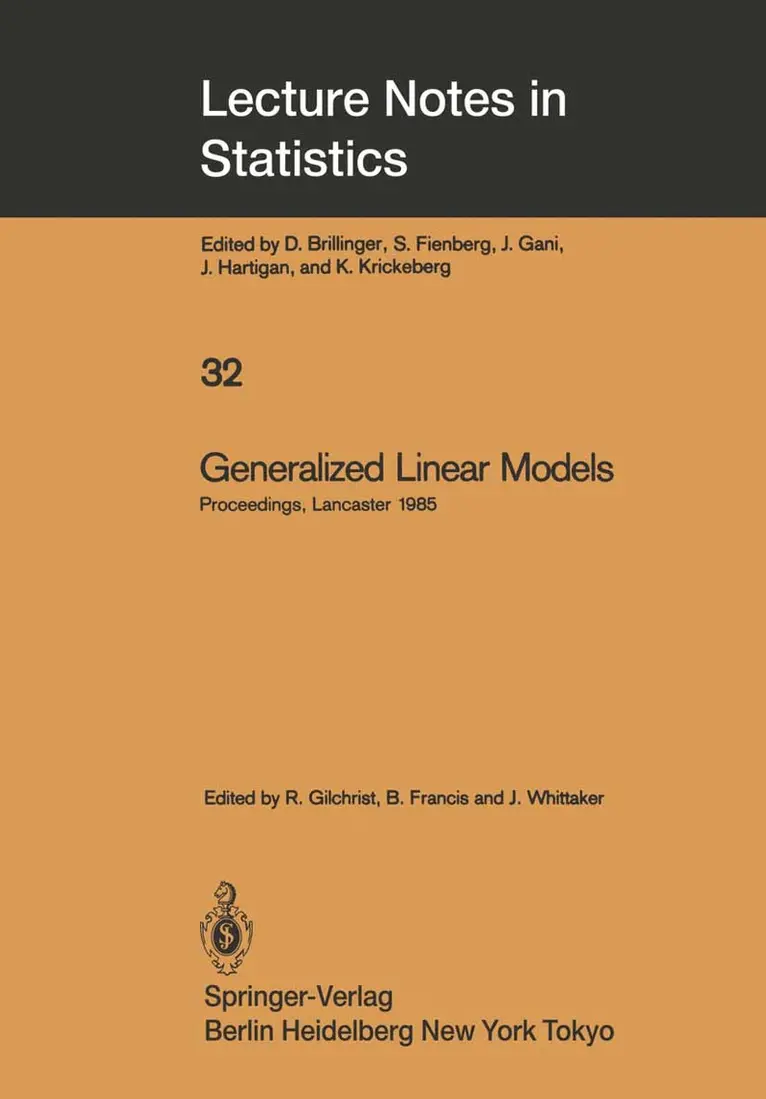
Generalized Linear Models
Proceedings of the GLIM 85 Conference held at Lancaster, UK, Sept. 16–19, 1985
Av Robert Gilchrist, Brian Francis m. fl.
Häftad, 1985
1094 kr
Lägg i varukorg
This volume consists of the published proceedings of the GLIM 95 Conference, held at Lancaster University, UK, from 16-19 September 1995. This is the second of such proceedings, the first of which was published as No 14 of the Springer-Verlag Lecture Notes in Statistics (Gilchrist,ed,1992). Since …
Generalized Linear Models
Proceedings of the GLIM 85 Conference held at Lancaster, UK, Sept. 16–19, 1985
Av Joe Whittaker, Brian Francis m. fl.
E-bok, 2012
1459 kr
Lägg i varukorg
Computational Statistics
Volume 2: Proceedings of the 10th Symposium on Computational Statistics, COMPSTAT, Neuchâtel, Switzerland, August 1992
Av Joe Whittaker, Yadolah Dodge
E-bok, 2012
734 kr
Lägg i varukorg
The papers assembled in this book were presented at the biannual symposium of Inter national Association for Statistical Computing in Neuchcitel, Switzerland, in August of 1992. This congress marked the tenth such meeting from its inception in 1974 at Vienna and maintained the tradition of …
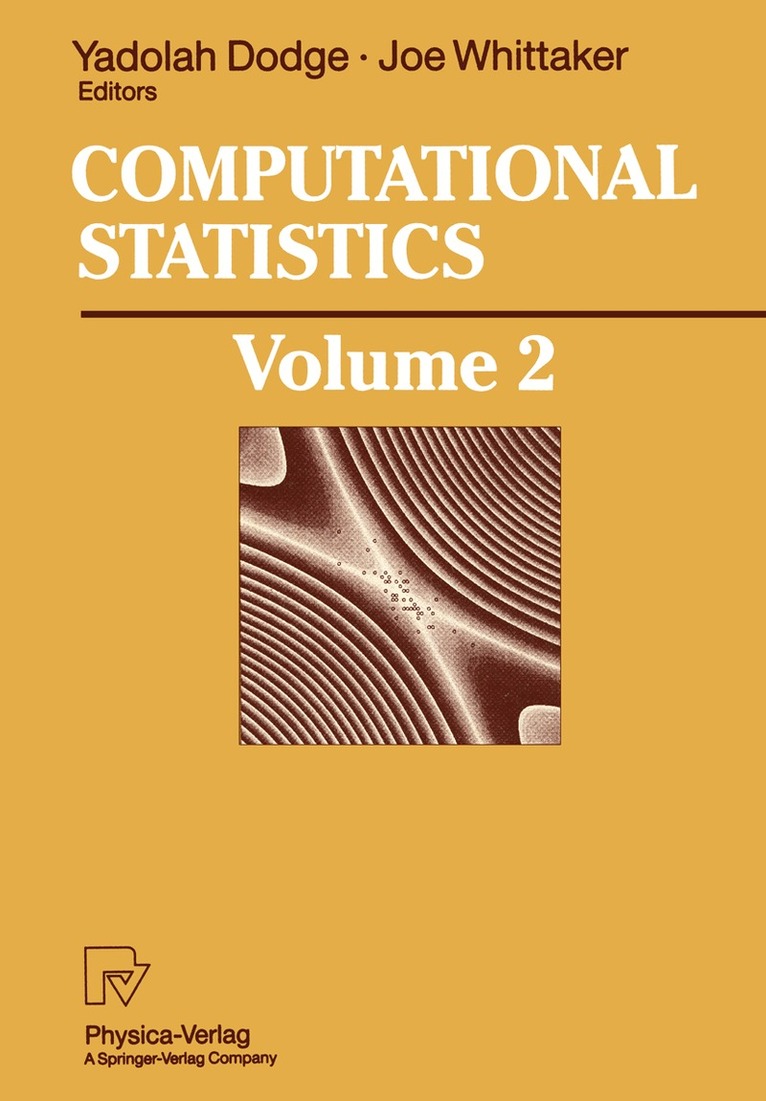
Computational Statistics
Volume 2: Proceedings of the 10th Symposium on Computational Statistics, COMPSTAT, Neuchâtel, Switzerland, August 1992
Av Yadolah Dodge, Joe Whittaker
Häftad, 2012
552 kr
Lägg i varukorg
The papers assembled in this book were presented at the biannual symposium of Inter national Association for Statistical Computing in Neuchcitel, Switzerland, in August of 1992. This congress marked the tenth such meeting from its inception in 1974 at Vienna and maintained the tradition of …
Computational Statistics
Volume 1: Proceedings of the 10th Symposium on Computational Statistics
Av Joe Whittaker, Yadolah Dodge
E-bok, 2013
734 kr
Lägg i varukorg
The Role of the Computer in Statistics David Cox Nuffield College, Oxford OXIINF, U.K. A classification of statistical problems via their computational demands hinges on four components (I) the amount and complexity of the data, (il) the specificity of the objectives of the analysis, (iii) the …
Computational Statistics
Volume 1: Proceedings of the 10th Symposium on Computational Statistics
Av Yadolah Dodge, Joe Whittaker
Häftad, 2013
552 kr
Lägg i varukorg
The Role of the Computer in Statistics David Cox Nuffield College, Oxford OXIINF, U.K. A classification of statistical problems via their computational demands hinges on four components (I) the amount and complexity of the data, (il) the specificity of the objectives of the analysis, (iii) the …