Johanna Turunen - Böcker
Visar alla böcker från författaren Johanna Turunen. Handla med fri frakt och snabb leverans.
3 produkter
3 produkter
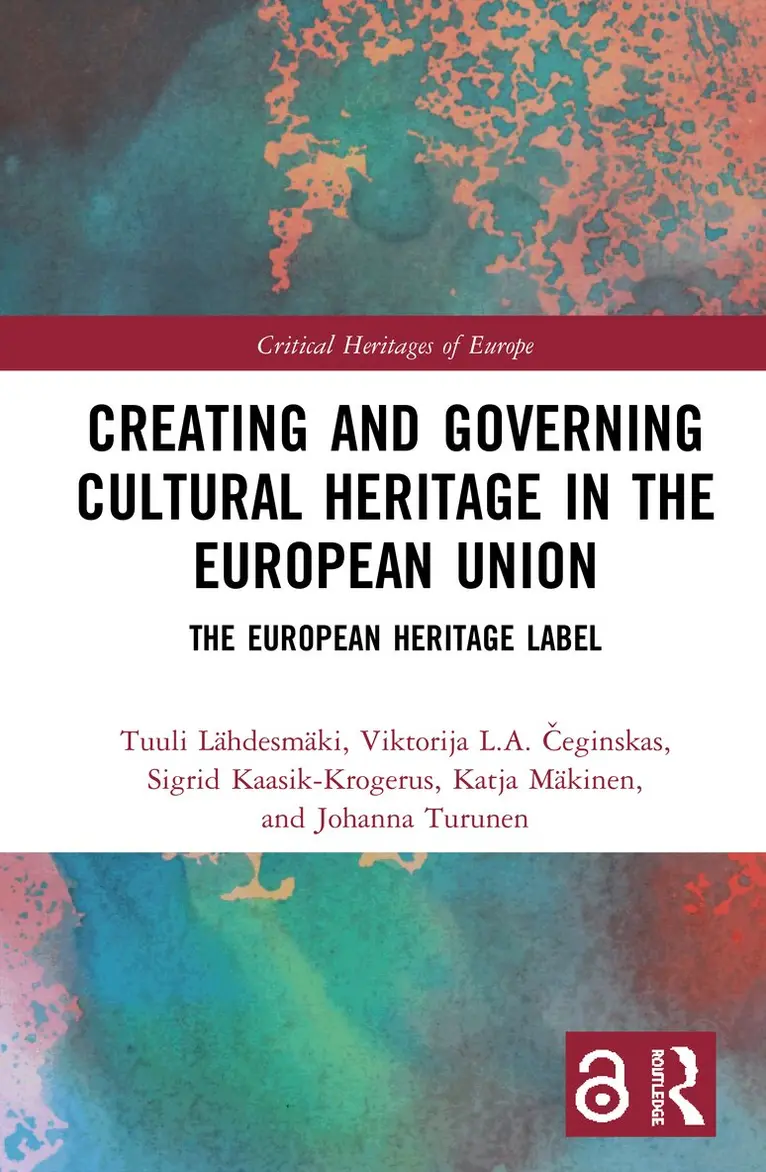
Creating and Governing Cultural Heritage in the European Union
The European Heritage Label
Inbunden, Engelska, 2020
2 103 kr
Skickas inom 10-15 vardagar
Creating and Governing Cultural Heritage in the European Union: The European Heritage Label provides an interdisciplinary examination of the ways in which European cultural heritage is created, communicated, and governed via the new European Heritage Label scheme.Drawing on ethnographic field research conducted across ten countries at sites that have been awarded with the European Heritage Label, the authors of the book approach heritage as an entangled social, spatial, temporal, discursive, narrative, performative, and embodied process. Recognising that heritage is inherently political and used by diverse actors as a tool for re-imagining communities, identities, and borders, and for generating notions of inclusion and exclusion in Europe, the book also considers the idea of Europe itself as a narrative. Chapters tackle issues such as multilevel governance of heritage; geopolitics of border-crossings and border-making; participation and non-participation; and embodiment and affective experience of heritage.Creating and Governing Cultural Heritage in the European Union advances heritage studies with an interdisciplinary approach that utilises and combines theories and conceptualizations from critical geopolitics, political studies, EU and European studies, cultural policy research, and cultural studies. As such, the volume will be of interest to scholars and students engaged in the study of heritage, politics, belonging, the EU, ideas, and narratives of Europe.
Creating and Governing Cultural Heritage in the European Union
The European Heritage Label
Häftad, Engelska, 2021
648 kr
Skickas inom 10-15 vardagar
Creating and Governing Cultural Heritage in the European Union: The European Heritage Label provides an interdisciplinary examination of the ways in which European cultural heritage is created, communicated, and governed via the new European Heritage Label scheme.Drawing on ethnographic field research conducted across ten countries at sites that have been awarded with the European Heritage Label, the authors of the book approach heritage as an entangled social, spatial, temporal, discursive, narrative, performative, and embodied process. Recognising that heritage is inherently political and used by diverse actors as a tool for re-imagining communities, identities, and borders, and for generating notions of inclusion and exclusion in Europe, the book also considers the idea of Europe itself as a narrative. Chapters tackle issues such as multilevel governance of heritage; geopolitics of border-crossings and border-making; participation and non-participation; and embodiment and affective experience of heritage.Creating and Governing Cultural Heritage in the European Union advances heritage studies with an interdisciplinary approach that utilises and combines theories and conceptualizations from critical geopolitics, political studies, EU and European studies, cultural policy research, and cultural studies. As such, the volume will be of interest to scholars and students engaged in the study of heritage, politics, belonging, the EU, ideas, and narratives of Europe.
2 103 kr
Skickas inom 10-15 vardagar
This book explores the concepts and practices of participation and community engagement in cultural heritage, examining the impact of the participatory turn in the heritage sector and the key opportunities and challenges it presents.Participation has become a widely used umbrella term in the discourses of heritage institutions, practitioners, and scholars alike. This participatory turn represents a shift towards the active involvement of communities, stakeholders, and the public in decision-making processes, moving away from traditional top-down approaches towards more inclusive and collaborative models in which diverse voices contribute to cultural heritage. While the pluralisation of heritage narratives, meanings, and practices can sometimes give rise to societal tensions, this book argues that broader participation is essential for unlocking heritage’s transformative potential and future-oriented impetus. The book explores these issues through 15 case studies drawn from across the globe and organised into three thematic sections: social inclusion in heritage practices, the role of digital tools in heritage participation, and participatory heritage management and governance. These case studies contribute to emerging debates on expanding the spaces where heritage participation and community engagement take place.Interdisciplinary in nature, this book is intended for scholars and professionals working on cultural heritage, participation, social inclusion, digitisation, management, and community and audience engagement. It is also well-suited for undergraduate and graduate courses that critically examine heritage participation and community engagement in today’s pluralistic societies.