Andrei Terian - Böcker
Visar alla böcker från författaren Andrei Terian. Handla med fri frakt och snabb leverans.
7 produkter
7 produkter
2 088 kr
Skickas inom 10-15 vardagar
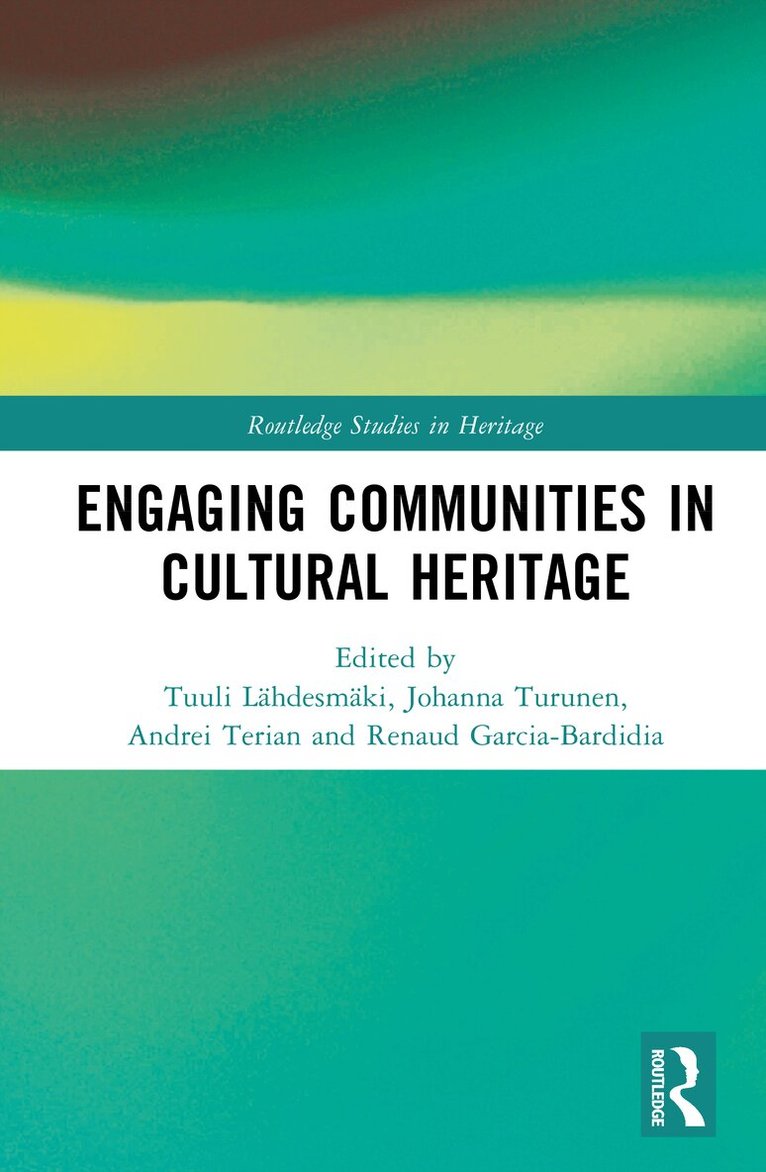
This book explores the concepts and practices of participation and community engagement in cultural heritage, examining the impact of the participatory turn in the heritage sector and the key opportunities and challenges it presents.Participation has become a widely used umbrella term in the discourses of heritage institutions, practitioners, and scholars alike. This participatory turn represents a shift towards the active involvement of communities, stakeholders, and the public in decision-making processes, moving away from traditional top-down approaches towards more inclusive and collaborative models in which diverse voices contribute to cultural heritage. While the pluralisation of heritage narratives, meanings, and practices can sometimes give rise to societal tensions, this book argues that broader participation is essential for unlocking heritage’s transformative potential and future-oriented impetus. The book explores these issues through 15 case studies drawn from across the globe and organised into three thematic sections: social inclusion in heritage practices, the role of digital tools in heritage participation, and participatory heritage management and governance. These case studies contribute to emerging debates on expanding the spaces where heritage participation and community engagement take place.Interdisciplinary in nature, this book is intended for scholars and professionals working on cultural heritage, participation, social inclusion, digitisation, management, and community and audience engagement. It is also well-suited for undergraduate and graduate courses that critically examine heritage participation and community engagement in today’s pluralistic societies.
1 958 kr
Skickas inom 10-15 vardagar
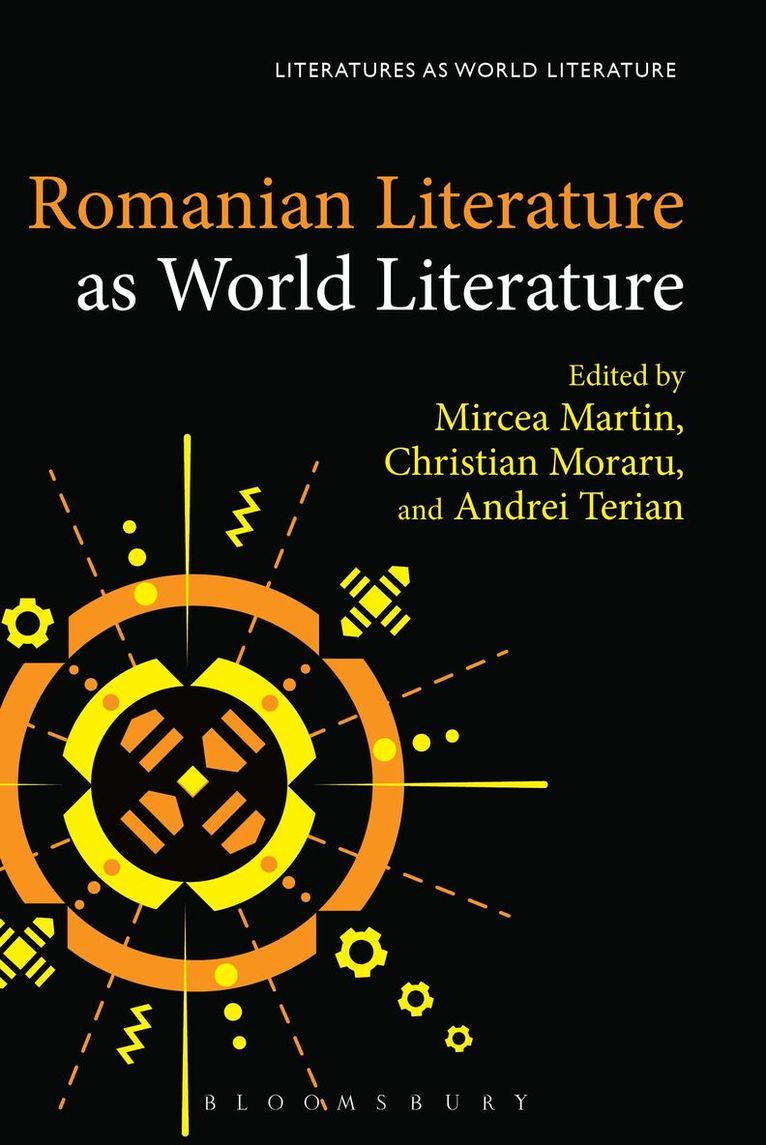
Approaching Romanian literature as world literature, this book is a critical-theoretical manifesto that places its object at the crossroads of empires, regions, and influences and draws conclusions whose relevance extends beyond the Romanian, Romance, and East European cultural systems. This “intersectional” revisiting of Romanian literature is organized into three parts. Opening with a fresh look at the literary ideology of Romania’s “national poet,” Mihai Eminescu, part I dwells primarily on literary-cultural history as process and discipline. Here, the focus is on cross-cultural mimesis, the role of strategic imitation in the production of a distinct literature in modern Romania, and the shortcomings marking traditional literary historiography’s handling of these issues. Part II examines the ethno-linguistic and territorial complexity of Romanian literatures or “Romanian literature in the plural.” Part III takes up the trans-systemic rise of Romanian, Jewish Romanian, and Romanian-European avant-garde and modernism, Socialist Realism, exile and émigré literature, and translation.
546 kr
Skickas inom 10-15 vardagar
Approaching Romanian literature as world literature, this book is a critical-theoretical manifesto that places its object at the crossroads of empires, regions, and influences and draws conclusions whose relevance extends beyond the Romanian, Romance, and East European cultural systems. This “intersectional” revisiting of Romanian literature is organized into three parts. Opening with a fresh look at the literary ideology of Romania’s “national poet,” Mihai Eminescu, part I dwells primarily on literary-cultural history as process and discipline. Here, the focus is on cross-cultural mimesis, the role of strategic imitation in the production of a distinct literature in modern Romania, and the shortcomings marking traditional literary historiography’s handling of these issues. Part II examines the ethno-linguistic and territorial complexity of Romanian literatures or “Romanian literature in the plural.” Part III takes up the trans-systemic rise of Romanian, Jewish Romanian, and Romanian-European avant-garde and modernism, Socialist Realism, exile and émigré literature, and translation.
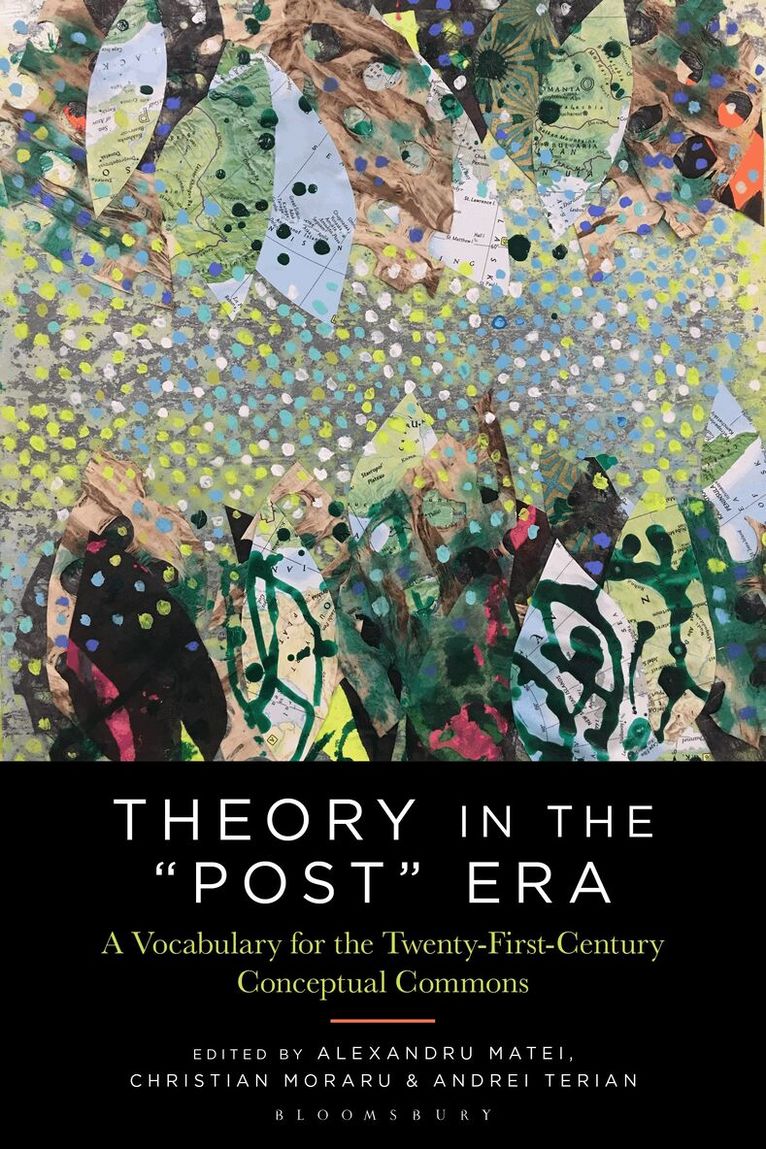
Theory in the "Post" Era
A Vocabulary for the 21st-Century Conceptual Commons
Inbunden, Engelska, 2021
1 544 kr
Skickas inom 10-15 vardagar
Shortlisted for the AATSEEL 2022 Award for Best Edited Multi-Author Scholarly Volume (AATSEEL is The American Association of Teachers of Slavic and East European Languages) Theory in the "Post" Era brings together the work and perspectives of a group of Romanian theorists who discuss the morphings of contemporary theory in what the editors call the “post” era. Since the Cold War's end and especially in the third millennium, theorists have been exploring the aftermath - and sometimes just the “after” - of whole paradigms, the crisis or “passing” of anthropocentrism, the twilight of an entire ontological and cultural “condition,” as well as the corresponding rise of an antagonist model, of an “anti,” “meta,” or “neo” alternative, with examples ranging from “posthumanism” and “post-postmodernism” to “post-aesthetics,” “postanalog” interpretation or “digicriticism,” “post-presentism,” “post-memory,” “post-“ or “neo-critique,” and so forth. It is no coincidence, the contributors to this volume argue, that this “post” moment is also a time when theory is practiced as a world genre. If theory has always been a “worlded” enterprise, a quintessentially communal, cross-cultural and international project, this is truer at present than ever. Perhaps more than other humanist constituencies, today's theorists work and belong in a theory commons that is transnational if still uneven economically, politically, and otherwise. Theory in the "Post" Era reports the results of Romanian theory experiments that join efforts made in other places to foster a theory for the “post” age.
469 kr
Skickas inom 10-15 vardagar
Shortlisted for the AATSEEL 2022 Award for Best Edited Multi-Author Scholarly Volume (AATSEEL is The American Association of Teachers of Slavic and East European Languages) Theory in the "Post" Era brings together the work and perspectives of a group of Romanian theorists who discuss the morphings of contemporary theory in what the editors call the “post” era. Since the Cold War's end and especially in the third millennium, theorists have been exploring the aftermath - and sometimes just the “after” - of whole paradigms, the crisis or “passing” of anthropocentrism, the twilight of an entire ontological and cultural “condition,” as well as the corresponding rise of an antagonist model, of an “anti,” “meta,” or “neo” alternative, with examples ranging from “posthumanism” and “post-postmodernism” to “post-aesthetics,” “postanalog” interpretation or “digicriticism,” “post-presentism,” “post-memory,” “post-“ or “neo-critique,” and so forth. It is no coincidence, the contributors to this volume argue, that this “post” moment is also a time when theory is practiced as a world genre. If theory has always been a “worlded” enterprise, a quintessentially communal, cross-cultural and international project, this is truer at present than ever. Perhaps more than other humanist constituencies, today's theorists work and belong in a theory commons that is transnational if still uneven economically, politically, and otherwise. Theory in the "Post" Era reports the results of Romanian theory experiments that join efforts made in other places to foster a theory for the “post” age.
754 kr
Skickas inom 5-8 vardagar
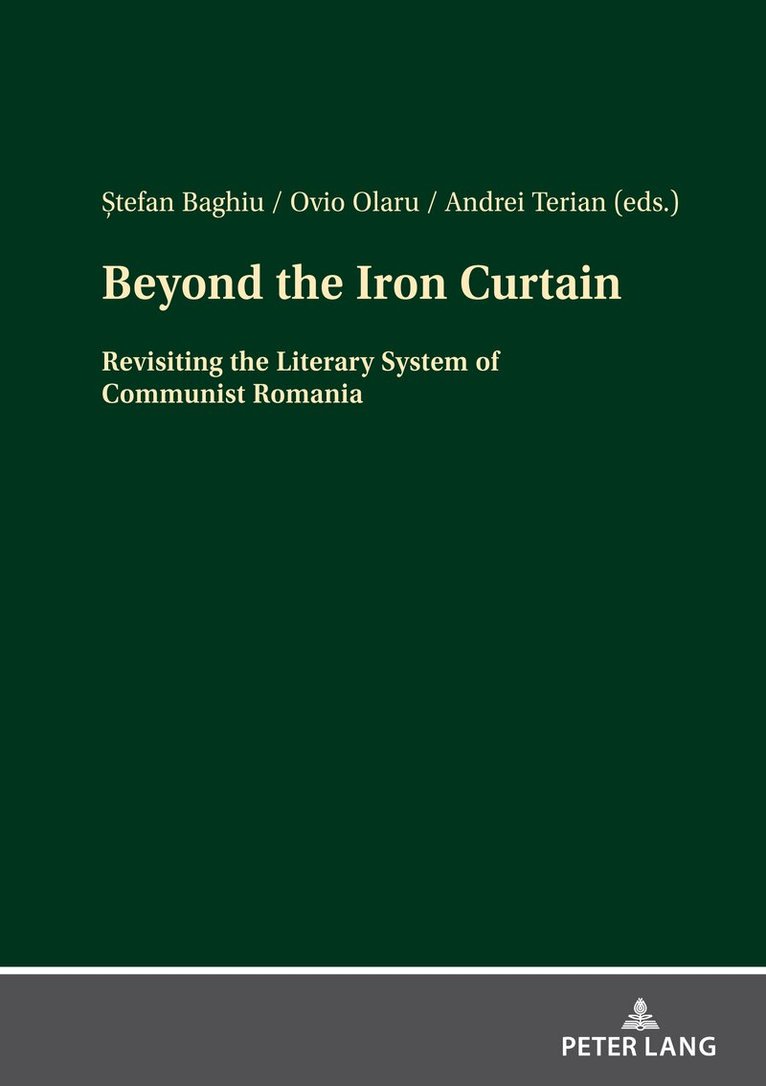
Drawing on methodologies pertaining to Digital Humanities, World Literature, and Comparative Literature, the volume aims to challenge some of the enduring clichés regarding the literary production of Romanian communism. The first section focuses on socialist realism, socialist modernism, representations of the rural, and rural modernity. The second section deals with literary cosmopolitanism, literary dissidence, countercultural literary production, minority literatures in Romania, and the relationship between genre fiction and state politics. The third section looks at the communist literary production from a transnational perspective, exploring the Romanian polysystem during the ideological thaw, as well as forms of literary dissidence across the Soviet bloc.
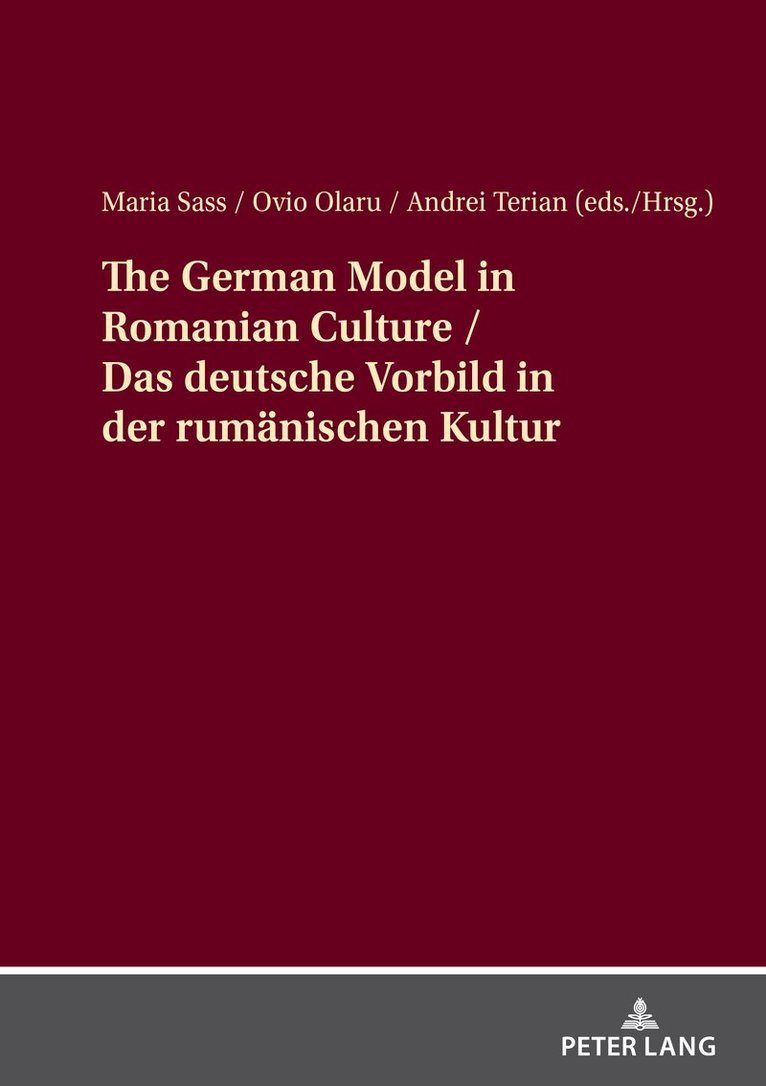
German Model in Romanian Culture / Das deutsche Vorbild in der rumaenischen Kultur
Inbunden, Engelska, 2023
758 kr
Skickas inom 5-8 vardagar
The book contains contributions on the significance of German culture for Romanian art, language, and literature. Not only will the direct influence of German role models on Romanian culture be discussed, but it will also show how this influence set in motion a whole series of socio-cultural and artistic shifts that allowed Romanian culture to better understand its position in the European world.Das Buch enthält Beiträge zur Bedeutung der deutschen Kultur für die rumänische Kunst, Sprache und Literatur. Erörtert wird nicht nur der direkte Einfluss deutscher Vorbilder auf die rumänische Kultur, sondern es wird auch aufgezeigt, wie dieser Einfluss eine ganze Reihe soziokultureller und künstlerischer Veränderungen in Gang gesetzt hat, die der rumänischen Kultur ermöglichten, ihren Platz in der europäischen Welt besser zu verstehen.