Christian Moraru – författare
Visar alla böcker från författaren Christian Moraru. Handla med fri frakt och snabb leverans.
16 produkter
16 produkter
Häftad, Engelska, 2010
539 kr
Skickas inom 5-8 vardagar
"Christian Moraru is an especially dynamic and brilliant scholar who works at a high level of critical and theoretical sophistication. I've never seen anything quite so exhaustive, so magisterial. Readers of Cosmodernism will think of the Keats line about an astronomer's exhilaration when a new planet swims into his ken."---David Cowart, University of South Carolina"Cosmodernism has the potential to become foundational for the study of a whole period. Christian Moraru undertakes here to establish a new basis for thinking about the era of cultural history in which we have found ourselves, in the United States but also around the world, since the end of the Cold War. The strength of Moraru's work lies in its intellectual ambition and scope; its polymathic range and breadth of learning; its confident mastery of a variety of disciplinary discourses; its fresh and thoughtful selection of texts for discussion; the sharpness and insight of its textual analyses; and, animating everything, its fervent commitment to a new and better way of understanding our relationship to others and the world at large."---Brian McHale, The Ohio State UniversityA sweeping inquiry into post–Cold War American literature and theory, Cosmodernism argues, cautiously but persuasively, for the rise of a new cultural paradigm against the backdrop of accelerating globalization. Moraru calls this paradigm "cosmodern." He uses the term to account for what seems to be gradually challenging the postmodern over the last twenty-odd years. Not so much a well-structured movement yet, cosmodernism is chiefly a critical construct enabling Moraru to articulate representative literary-theoretical interventions of the past two decades into a reasonably coherent model. The coherence inheres, he shows, in a certain "relational" imaginary, which the critic canvasses by placing a wide range of authors and works in, across, and against the material-conceptual networks of globalization, cosmopolitanism, modernism, postmodernism, postcolonialism, multiculturalism, and other areas of contemporary U.S. intellectual history.Christian Moraru is Professor of English at the University of North Carolina, Greensboro. His latest books include Rewriting: Postmodern Narrative and Cultural Critique in the Age of Cloning (2001), Memorious Discourse: Reprise and Representation in Postmodernism (2005), and the edited collection Postcommunism, Postmodernism, and the Global Imagination (2009).Cover art: Earth, oil and acrylic on canvas, 48" × 36", 2008. Painting courtesy of Rebecca Darlington.
Häftad, Engelska, 2015
556 kr
Skickas inom 5-8 vardagar
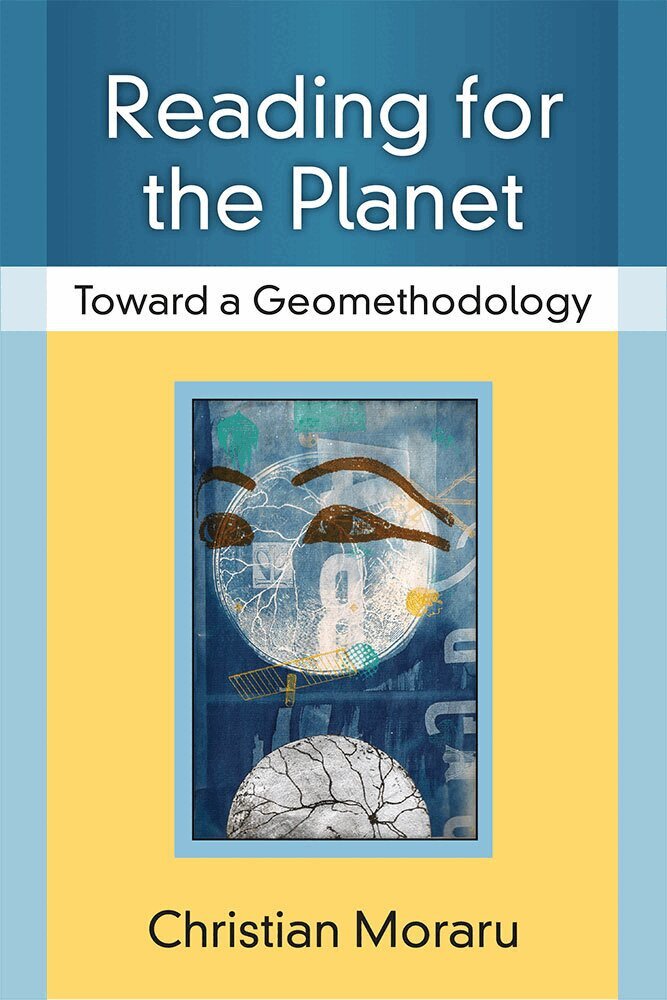
In his new book, Christian Moraru argues that post-Cold War culture in general and, in particular, the literature, philosophy, and theory produced since 9/11 foreground an emergent “planetary” imaginary—a “planetarism”—binding in unprecedented ways the world’s peoples, traditions, and aesthetic practices. This imaginary, Moraru further contends, speaks to a world condition (“planetarity”) increasingly exhibited by human expression worldwide. Grappling with the symptoms of planetarity in the arts and the human sciences, the author insists, is a major challenge for today’s scholars—a challenge Reading for the Planet means to address. Thus, Moraru takes decisive steps toward a critical methodology—a “geomethodology”—for dealing with planetarism’s aesthetic and philosophical projections. Here, Moraru analyzes novels by Joseph O’Neill, Mircea Cartarescu, Sorj Chalandon, Zadie Smith, Orhan Pamuk, and Dai Sijie, among others, as demonstration of his paradigm.
Inbunden, Engelska, 2015
1 511 kr
Skickas inom 10-15 vardagar
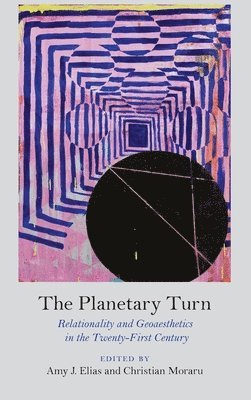
A groundbreaking essay collection that pursues the rise of geo-culture as an essential framework for arts criticism, The Planetary Turn shows how the planet—as a territory, a sociopolitical arena, a natural space of interaction for all earthly life, and an artistic theme—is increasingly the conceptual and political dimension in which twenty-first-century writers and artists picture themselves and their work. In an introduction that comprehensively defines the planetary model of art, culture, and cultural-aesthetic interpretation, the editors explain how the living planet is emerging as distinct from older concepts of globalization, cosmopolitan-ism, and environmentalism and is becoming a new ground for exciting work in contemporary literature, visual and media arts, and social humanities. Written by internationally recognized scholars, the twelve essays that follow illustrate the unfolding of a new vision of potential planetary community that retools earlier models based on the nation-state or political “blocs” and reimagines cultural, political, aesthetic, and ethical relationships for the post–Cold War era.
Inbunden, Engelska, 2010
346 kr
Skickas inom 5-8 vardagar
Contributors follow the impact of post-Cold War globalization on Central-East European literatures, cultures, and theoretical-ideological debates, particularly literary and cultural-artistic trends such as experimentalism, the neo-avant-garde, and postmodernism. Essays investigate the new configurations of theme, form, and ideology that emerged in these former communist countries after 1989 and the ways artists, critics, and intellectuals have imagined themselves, their countries, and their world as it globalizes. Contributors combine literary-aesthetic and cultural-historical approaches while remaining sensitive to transnational developments.
Inbunden, Engelska, 2017
2 043 kr
Skickas inom 10-15 vardagar
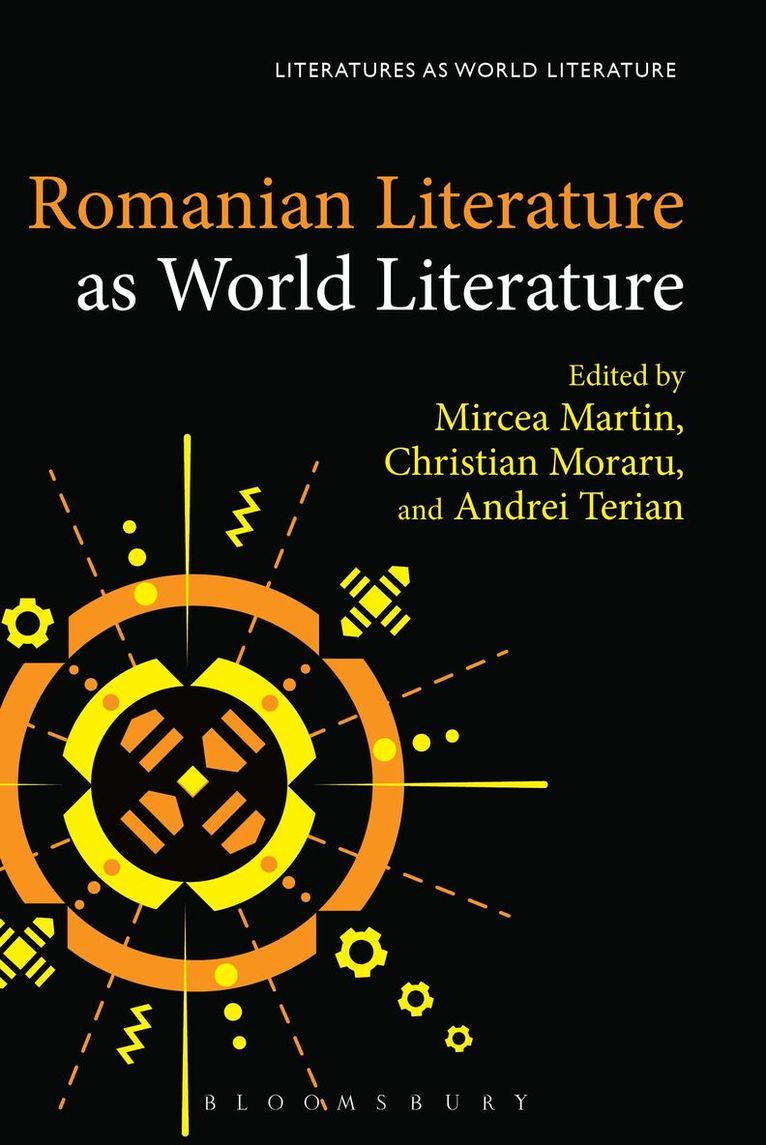
Approaching Romanian literature as world literature, this book is a critical-theoretical manifesto that places its object at the crossroads of empires, regions, and influences and draws conclusions whose relevance extends beyond the Romanian, Romance, and East European cultural systems. This “intersectional” revisiting of Romanian literature is organized into three parts. Opening with a fresh look at the literary ideology of Romania’s “national poet,” Mihai Eminescu, part I dwells primarily on literary-cultural history as process and discipline. Here, the focus is on cross-cultural mimesis, the role of strategic imitation in the production of a distinct literature in modern Romania, and the shortcomings marking traditional literary historiography’s handling of these issues. Part II examines the ethno-linguistic and territorial complexity of Romanian literatures or “Romanian literature in the plural.” Part III takes up the trans-systemic rise of Romanian, Jewish Romanian, and Romanian-European avant-garde and modernism, Socialist Realism, exile and émigré literature, and translation.
Inbunden, Engelska, 2020
2 043 kr
Skickas inom 10-15 vardagar
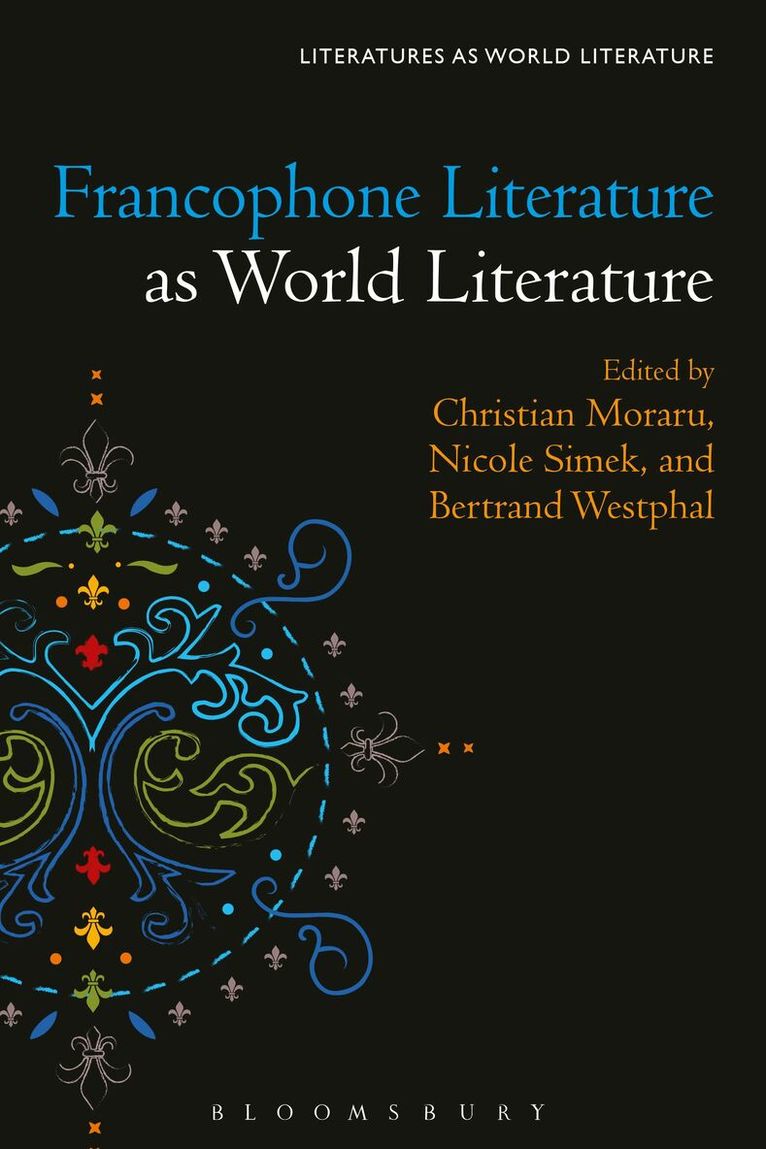
Francophone Literature as World Literature examines French-language works from a range of global traditions and shows how these literary practices draw individuals, communities, and their cultures and idioms into a planetary web of tension and cross-fertilization. The Francophone corpus under scrutiny here comes about in the evolving, markedly relational context provided by these processes and their developments during and after the French empire. The 15 chapters of this collection delve into key aspects, moments, and sites of the literature flourishing throughout the francosphere after World War II and especially since the 1980s, from the French Hexagon to the Caribbean and India, and from Québec to the Maghreb and Romania. Understood and practiced as World Literature, Francophone literature claims--with particular force in the wake of the littérature-monde debate--its place in a more democratic world republic of letters, where writers, critics, publishers, and audiences are no longer beholden to traditional centers of cultural authority.
Häftad, Engelska, 2019
556 kr
Skickas inom 10-15 vardagar
Approaching Romanian literature as world literature, this book is a critical-theoretical manifesto that places its object at the crossroads of empires, regions, and influences and draws conclusions whose relevance extends beyond the Romanian, Romance, and East European cultural systems. This “intersectional” revisiting of Romanian literature is organized into three parts. Opening with a fresh look at the literary ideology of Romania’s “national poet,” Mihai Eminescu, part I dwells primarily on literary-cultural history as process and discipline. Here, the focus is on cross-cultural mimesis, the role of strategic imitation in the production of a distinct literature in modern Romania, and the shortcomings marking traditional literary historiography’s handling of these issues. Part II examines the ethno-linguistic and territorial complexity of Romanian literatures or “Romanian literature in the plural.” Part III takes up the trans-systemic rise of Romanian, Jewish Romanian, and Romanian-European avant-garde and modernism, Socialist Realism, exile and émigré literature, and translation.
Inbunden, Engelska, 2023
1 573 kr
Skickas inom 10-15 vardagar
Flat Aesthetics seeks to secure a more granular and ontologically demotic handle on the contemporary in American literature. While contemporaneity can be viewed as “our” period, Christian Moraru approaches the contemporary as some-thing made by things themselves. The making of the contemporary is variously restaged by the body of fictional prose under scrutiny here. Thus, this corpus itself participates in the making of contemporaneity.In dialogue with object-oriented ontology and various new materialisms, Moraru contends that the contemporary does not preexist objects or the novels featuring them; it is not their background but an outcome of things’ self-presentation. As objects, beings, or existents present themselves in the present, in our “now,” they foster thing-configurations that together compose the form of, and essentially make, the contemporary — the present’s cultural-material signature, as Moraru calls it.To decipher this signature, Flat Aesthetics provides a cross-sectional reading of postmillennial American fiction. Discussed are solely post-2000 works by writers who have also established themselves over the past two decades or so, from Nicole Krauss, Michael Chabon, and Ben Lerner to Colson Whitehead and Emily St. John Mandel. Their output, Moraru claims, bears witness to the onset of a “flat” aesthetics in American letters after September 11, 2001. Organized into five parts, the books canvases objectual constellations of contemporaneity shaped by material dynamics of language, museality and display, spatiality, zombification and thing-rhetoric, and post-anthropocentric kinship.
Inbunden, Engelska, 2021
1 573 kr
Skickas inom 10-15 vardagar
Shortlisted for the AATSEEL 2022 Award for Best Edited Multi-Author Scholarly Volume (AATSEEL is The American Association of Teachers of Slavic and East European Languages) Theory in the "Post" Era brings together the work and perspectives of a group of Romanian theorists who discuss the morphings of contemporary theory in what the editors call the “post” era. Since the Cold War's end and especially in the third millennium, theorists have been exploring the aftermath - and sometimes just the “after” - of whole paradigms, the crisis or “passing” of anthropocentrism, the twilight of an entire ontological and cultural “condition,” as well as the corresponding rise of an antagonist model, of an “anti,” “meta,” or “neo” alternative, with examples ranging from “posthumanism” and “post-postmodernism” to “post-aesthetics,” “postanalog” interpretation or “digicriticism,” “post-presentism,” “post-memory,” “post-“ or “neo-critique,” and so forth. It is no coincidence, the contributors to this volume argue, that this “post” moment is also a time when theory is practiced as a world genre. If theory has always been a “worlded” enterprise, a quintessentially communal, cross-cultural and international project, this is truer at present than ever. Perhaps more than other humanist constituencies, today's theorists work and belong in a theory commons that is transnational if still uneven economically, politically, and otherwise. Theory in the "Post" Era reports the results of Romanian theory experiments that join efforts made in other places to foster a theory for the “post” age.
Inbunden, Engelska, 2022
2 512 kr
Skickas inom 10-15 vardagar
Disciplines from literary studies to environmentalism have recently undergone a spectacular reorientation that has refocused entire fields, methodologies, and vocabularies on the world and its sister terms such as globe, planet, and earth. The Bloomsbury Handbook of World Theory examines what “world” means and what it accomplishes in different zones of academic study. The contributors raise questions such as: What happens when “world” is appended to a particular form of humanistic or scientific inquiry? How exactly does “worlding” bear on the theoretical operating system and the history of that field? What is the theory or theoretical model that allows “world” to function in a meaningful way in coordination with that knowledge domain?With contributions from 38 leading theorists from a vast range of fields, including queer studies, religion, and pop culture, this is the first large reference work to consider the profound effect, both within and outside the academy, of the worlding of discourse in the 21st century.
Häftad, Engelska, 2022
509 kr
Skickas inom 10-15 vardagar
Francophone Literature as World Literature examines French-language works from a range of global traditions and shows how these literary practices draw individuals, communities, and their cultures and idioms into a planetary web of tension and cross-fertilization. The Francophone corpus under scrutiny here comes about in the evolving, markedly relational context provided by these processes and their developments during and after the French empire. The 15 chapters of this collection delve into key aspects, moments, and sites of the literature flourishing throughout the francosphere after World War II and especially since the 1980s, from the French Hexagon to the Caribbean and India, and from Québec to the Maghreb and Romania. Understood and practiced as World Literature, Francophone literature claims--with particular force in the wake of the littérature-monde debate--its place in a more democratic world republic of letters, where writers, critics, publishers, and audiences are no longer beholden to traditional centers of cultural authority.
Häftad, Engelska, 2024
665 kr
Skickas inom 10-15 vardagar
Disciplines from literary studies to environmentalism have recently undergone a spectacular reorientation that has refocused entire fields, methodologies, and vocabularies on the world and its sister terms such as globe, planet, and earth. The Bloomsbury Handbook of World Theory examines what “world” means and what it accomplishes in different zones of academic study. The contributors raise questions such as: What happens when “world” is appended to a particular form of humanistic or scientific inquiry? How exactly does “worlding” bear on the theoretical operating system and the history of that field? What is the theory or theoretical model that allows “world” to function in a meaningful way in coordination with that knowledge domain?With contributions from 38 leading theorists from a vast range of fields, including queer studies, religion, and pop culture, this is the first large reference work to consider the profound effect, both within and outside the academy, of the worlding of discourse in the 21st century.
Häftad, Engelska, 2023
478 kr
Skickas inom 10-15 vardagar
Shortlisted for the AATSEEL 2022 Award for Best Edited Multi-Author Scholarly Volume (AATSEEL is The American Association of Teachers of Slavic and East European Languages) Theory in the "Post" Era brings together the work and perspectives of a group of Romanian theorists who discuss the morphings of contemporary theory in what the editors call the “post” era. Since the Cold War's end and especially in the third millennium, theorists have been exploring the aftermath - and sometimes just the “after” - of whole paradigms, the crisis or “passing” of anthropocentrism, the twilight of an entire ontological and cultural “condition,” as well as the corresponding rise of an antagonist model, of an “anti,” “meta,” or “neo” alternative, with examples ranging from “posthumanism” and “post-postmodernism” to “post-aesthetics,” “postanalog” interpretation or “digicriticism,” “post-presentism,” “post-memory,” “post-“ or “neo-critique,” and so forth. It is no coincidence, the contributors to this volume argue, that this “post” moment is also a time when theory is practiced as a world genre. If theory has always been a “worlded” enterprise, a quintessentially communal, cross-cultural and international project, this is truer at present than ever. Perhaps more than other humanist constituencies, today's theorists work and belong in a theory commons that is transnational if still uneven economically, politically, and otherwise. Theory in the "Post" Era reports the results of Romanian theory experiments that join efforts made in other places to foster a theory for the “post” age.
Häftad, Engelska, 2024
452 kr
Skickas inom 10-15 vardagar
Flat Aesthetics seeks to secure a more granular and ontologically demotic handle on the contemporary in American literature. While contemporaneity can be viewed as “our” period, Christian Moraru approaches the contemporary as some-thing made by things themselves. The making of the contemporary is variously restaged by the body of fictional prose under scrutiny here. Thus, this corpus itself participates in the making of contemporaneity.In dialogue with object-oriented ontology and various new materialisms, Moraru contends that the contemporary does not preexist objects or the novels featuring them; it is not their background but an outcome of things’ self-presentation. As objects, beings, or existents present themselves in the present, in our “now,” they foster thing-configurations that together compose the form of, and essentially make, the contemporary — the present’s cultural-material signature, as Moraru calls it.To decipher this signature, Flat Aesthetics provides a cross-sectional reading of postmillennial American fiction. Discussed are solely post-2000 works by writers who have also established themselves over the past two decades or so, from Nicole Krauss, Michael Chabon, and Ben Lerner to Colson Whitehead and Emily St. John Mandel. Their output, Moraru claims, bears witness to the onset of a “flat” aesthetics in American letters after September 11, 2001. Organized into five parts, the books canvases objectual constellations of contemporaneity shaped by material dynamics of language, museality and display, spatiality, zombification and thing-rhetoric, and post-anthropocentric kinship.
Inbunden, Engelska, 2001
1 198 kr
Tillfälligt slut
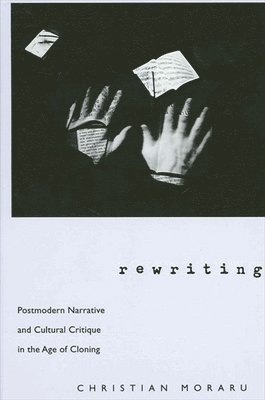
Examines the tendency of post-World War II writers to rewrite earlier narratives by Poe, Melville, Hawthorne, and others.Does the postmodern process of rewriting stories by earlier writers point to a crisis of originality in our cloning culture? In Rewriting, the first systematic examination of this tendency in late twentieth-century American fiction, Christian Moraru answers this question with a "no" by examining a wide range of representative writers including E. L. Doctorow, Robert Coover, Paul Auster, Charles Johnson, Ishmael Reed, Trey Ellis, Kathy Acker, Mark Leyner, and Bharati Mukherjee, among others. Moraru shows that in reworking the emblematic nineteenth-century short stories and novels of Hawthorne, Poe, Melville, Alger, Stowe, Thoreau, Twain, and others, postmodern American writers take on-and critically revise-a whole set of values and notions that shape our cultural mythology. Accordingly, Moraru redefines postmodernism in general, and postmodern rewriting in particular, as a culturally innovative and politically enabling phenomenon.
Häftad, Engelska, 2001
433 kr
Tillfälligt slut
Examines the tendency of post-World War II writers to rewrite earlier narratives by Poe, Melville, Hawthorne, and others.Does the postmodern process of rewriting stories by earlier writers point to a crisis of originality in our cloning culture? In Rewriting, the first systematic examination of this tendency in late twentieth-century American fiction, Christian Moraru answers this question with a "no" by examining a wide range of representative writers including E. L. Doctorow, Robert Coover, Paul Auster, Charles Johnson, Ishmael Reed, Trey Ellis, Kathy Acker, Mark Leyner, and Bharati Mukherjee, among others. Moraru shows that in reworking the emblematic nineteenth-century short stories and novels of Hawthorne, Poe, Melville, Alger, Stowe, Thoreau, Twain, and others, postmodern American writers take on-and critically revise-a whole set of values and notions that shape our cultural mythology. Accordingly, Moraru redefines postmodernism in general, and postmodern rewriting in particular, as a culturally innovative and politically enabling phenomenon.