Johannes Wheeldon - Böcker
Visar alla böcker från författaren Johannes Wheeldon. Handla med fri frakt och snabb leverans.
5 produkter
5 produkter
1 440 kr
Skickas inom 5-8 vardagar
Visions of Cannabis Control argues that cannabis prohibition is the result of moral panic that has been instigated, perpetuated, and sustained in ways that are difficult to dislodge. The book documents the history of these cannabis policies and explores the impact of issues such as racism, labelling, and stigmatization. Stan Cohen argued that reforms designed to replace carceral tendencies within correctional institutions can instead extend such approaches into our communities. The idea that criminal justice reforms often reproduce what they were intended to disrupt can be applied to the cannabis revolution currently underway around the world. Racial disparities in arrests persist, exacerbated by laws that make it legal to possess cannabis but illegal to consume it anywhere but in your home. In this book, the authors argue that too often, cannabis liberalization comes at the cost of expanding paternalistic public health models and abstention-based diversion programs. The goal of dismantling and disrupting illicit markets has undermined onerous regulations, anaemic marketing efforts, and failure to promote consumer-centred approaches. Emphasizing public health goals ahead of market conditions complicates legal cannabis as an industry. To understand the future of cannabis policy, Visions of Cannabis Control examines the experience of six countries and several US states through the lens of criminological theory, recent research, and practice. The book presents several solutions for responsible regulation concluding that sustaining reform will require a more inclusive approach ensuring those affected by cannabis policies are consulted, respected, and involved.
659 kr
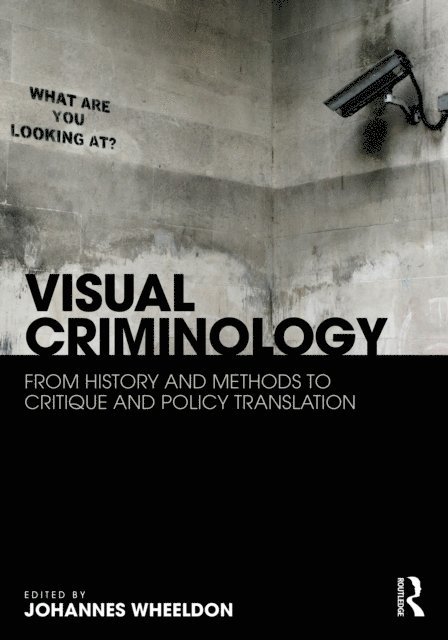
This edited collection captures the expertise of scholars from the US, the UK, Australia, and Canada to catalog the rise in visual approaches in criminology. It presents examples of visual methods, uses, and approaches in criminology; assesses the potential for new graphic approaches to collect, analyze, and present data; and provides some analysis of the use of images in teaching, to spur social critique, and guide policy translation.The collection visually connects theory and practice by highlighting the work of criminologists who have embraced the visual turn. Contributors explore the use of cognitive maps, concept and mind maps, life history calendars, CCTV, life plots, GIS and hot spot research, policy graphs, visual abstracts and research summaries,and other visual tools in the context of criminology. Approaches building on visual sociology are also featured, including a discussion of developments in documentary photography and film, visual ethnography, and sensory phenomenology. The book is organized thematically, with each chapter following logically upon the last, introducing readers to a variety of visual approaches and their application in criminology. The goals of this collected volume are three-fold. The first is to highlight how the visual has been used in criminology historically to present data, contest meaning and complicate social control, and make more transparent the research process. The second is to work toward some sort of definitional consistency. While a worthy endeavor, this remains elusive given the assortment of uses and varying traditions from which visual criminology has emerged. The third is to try to think clearly about the role of humility. This means a willingness to acknowledge an epistemological framework and note the variety of limitations associated with trying to understand in deep and meaningful ways. For visual criminology specifically, it involves the recognition that part of the power of images (whatever their construction), comes from whether we think they are beautiful or whether and/or to what extent they disrupt our understanding in one way or another.This interdisciplinary book will be of interest to criminologists, sociologists, visual ethnographers, historians and those engaged with media studies. It is a valuable supplementary text for courses in introductory criminology and criminal justice, criminological theory, research methods, and other upper-level and senior capstone courses.
Visual Criminology
From History and Methods to Critique and Policy Translation
Inbunden, Engelska, 2021
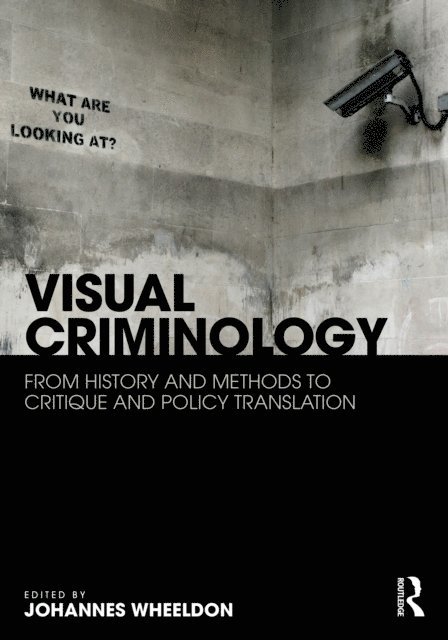
2 113 kr
Skickas inom 10-15 vardagar
This edited collection captures the expertise of scholars from the US, the UK, Australia, and Canada to catalog the rise in visual approaches in criminology. It presents examples of visual methods, uses, and approaches in criminology; assesses the potential for new graphic approaches to collect, analyze, and present data; and provides some analysis of the use of images in teaching, to spur social critique, and guide policy translation.The collection visually connects theory and practice by highlighting the work of criminologists who have embraced the visual turn. Contributors explore the use of cognitive maps, concept and mind maps, life history calendars, CCTV, life plots, GIS and hot spot research, policy graphs, visual abstracts and research summaries,and other visual tools in the context of criminology. Approaches building on visual sociology are also featured, including a discussion of developments in documentary photography and film, visual ethnography, and sensory phenomenology. The book is organized thematically, with each chapter following logically upon the last, introducing readers to a variety of visual approaches and their application in criminology. The goals of this collected volume are three-fold. The first is to highlight how the visual has been used in criminology historically to present data, contest meaning and complicate social control, and make more transparent the research process. The second is to work toward some sort of definitional consistency. While a worthy endeavor, this remains elusive given the assortment of uses and varying traditions from which visual criminology has emerged. The third is to try to think clearly about the role of humility. This means a willingness to acknowledge an epistemological framework and note the variety of limitations associated with trying to understand in deep and meaningful ways. For visual criminology specifically, it involves the recognition that part of the power of images (whatever their construction), comes from whether we think they are beautiful or whether and/or to what extent they disrupt our understanding in one way or another.This interdisciplinary book will be of interest to criminologists, sociologists, visual ethnographers, historians and those engaged with media studies. It is a valuable supplementary text for courses in introductory criminology and criminal justice, criminological theory, research methods, and other upper-level and senior capstone courses.
506 kr
Skickas inom 10-15 vardagar
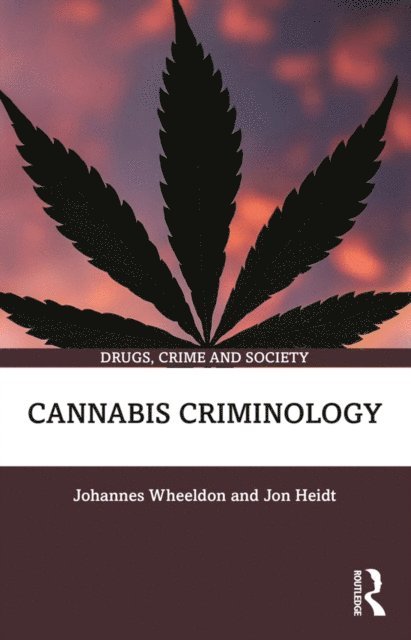
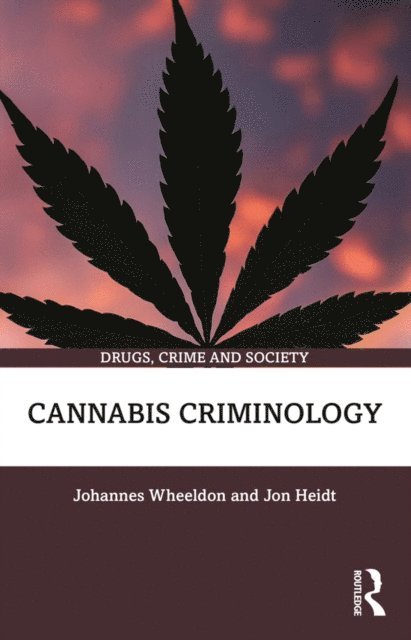
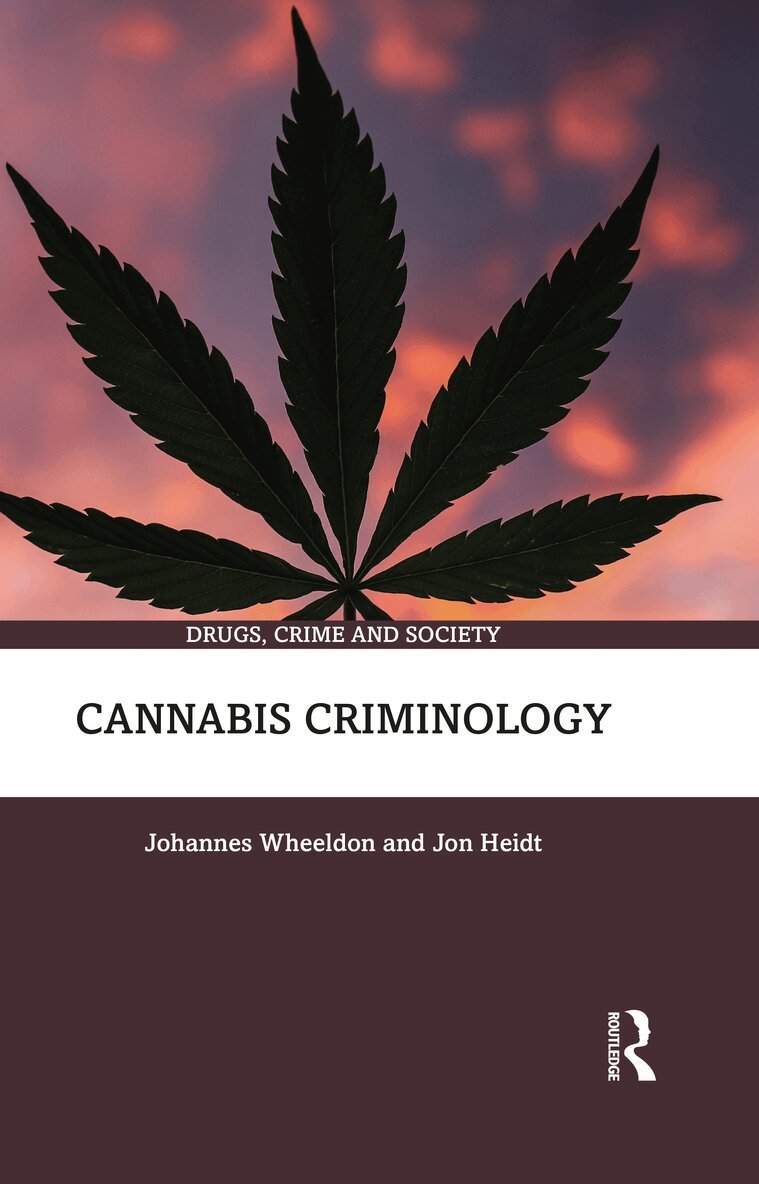
Cannabis Criminology explores the prohibition, decriminalization, and liberalization of cannabis policy through the lens of criminological and sociological theory, essential concepts, and cannabis research. It does so by focusing on five thematic areas: law, society, and social control; police and policing; race, ethnicity, and criminalization; the economics of cannabis; and cannabis use and crime. It is the first book on cannabis since President Joe Biden signed an executive order in 2022 to pardon citizens and lawful permanent residents convicted of simple cannabis possession under federal law and DC statute. Cannabis is now legal in some form in 37 US states. To understand the reform of cannabis policy and the challenges to come, we first need to understand the connections between cannabis and criminology. The book links key areas in past and contemporary cannabis research to criminological and sociological theories, including key concepts, emergent concerns, and new directions. Based on an up-to-date review of this growing area of research, the book outlines a research program based on five essential thematic areas. Introducing cannabis as a critical case study in moral-legal re-negotiation, it outlines how cannabis prohibition has influenced cannabis around the world. Five discrete chapters focus on thematic areas, criminological and sociological theories, define essential concepts, and provide research focused on law, society, and social control (Chapter 2), police and policing cannabis (Chapter 3), race, ethnicity, and criminalization (Chapter 4), the economics of cannabis (Chapter 5), and cannabis and crime (Chapter 6). The book concludes by presenting new ways to engage prohibitionist thinking, by challenging myths, embracing social media, and developing a duty of care to guide future cannabis researchers and explicitly involve people who use cannabis.Cannabis Criminology will be of interest to a variety of readers, including students and scholars from a range of backgrounds studying drug use, drug policy, cannabis legalization, and other drug-related issues. It will also appeal to policymakers who want to know more about cannabis legalization and drug prohibition, those working in the criminal justice system, and social work professionals. Due to its accessible style, people involved in the cannabis industry, as well as cannabis users may also find the book interesting.
1 756 kr
Skickas inom 10-15 vardagar
Cannabis Criminology explores the prohibition, decriminalization, and liberalization of cannabis policy through the lens of criminological and sociological theory, essential concepts, and cannabis research. It does so by focusing on five thematic areas: law, society, and social control; police and policing; race, ethnicity, and criminalization; the economics of cannabis; and cannabis use and crime. It is the first book on cannabis since President Joe Biden signed an executive order in 2022 to pardon citizens and lawful permanent residents convicted of simple cannabis possession under federal law and DC statute. Cannabis is now legal in some form in 37 US states. To understand the reform of cannabis policy and the challenges to come, we first need to understand the connections between cannabis and criminology. The book links key areas in past and contemporary cannabis research to criminological and sociological theories, including key concepts, emergent concerns, and new directions. Based on an up-to-date review of this growing area of research, the book outlines a research program based on five essential thematic areas. Introducing cannabis as a critical case study in moral-legal re-negotiation, it outlines how cannabis prohibition has influenced cannabis around the world. Five discrete chapters focus on thematic areas, criminological and sociological theories, define essential concepts, and provide research focused on law, society, and social control (Chapter 2), police and policing cannabis (Chapter 3), race, ethnicity, and criminalization (Chapter 4), the economics of cannabis (Chapter 5), and cannabis and crime (Chapter 6). The book concludes by presenting new ways to engage prohibitionist thinking, by challenging myths, embracing social media, and developing a duty of care to guide future cannabis researchers and explicitly involve people who use cannabis.Cannabis Criminology will be of interest to a variety of readers, including students and scholars from a range of backgrounds studying drug use, drug policy, cannabis legalization, and other drug-related issues. It will also appeal to policymakers who want to know more about cannabis legalization and drug prohibition, those working in the criminal justice system, and social work professionals. Due to its accessible style, people involved in the cannabis industry, as well as cannabis users may also find the book interesting.