John A. Dearborn - Böcker
Visar alla böcker från författaren John A. Dearborn. Handla med fri frakt och snabb leverans.
6 produkter
6 produkter
327 kr
Skickas inom 5-8 vardagar
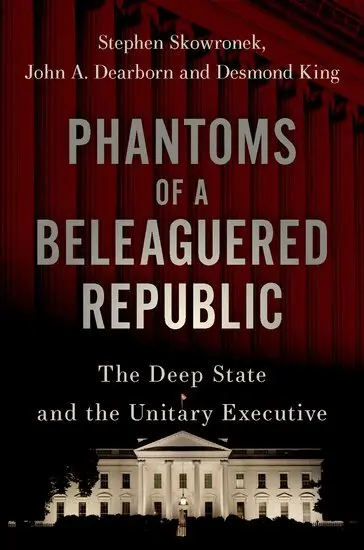
A powerful dissection of one of the fundamental problems in American governance today: the clash between presidents determined to redirect the nation through ever-tighter control of administration and an executive branch still organized to promote shared interests in steady hands, due deliberation, and expertise.President Trump pitted himself repeatedly against the institutions and personnel of the executive branch. In the process, two once-obscure concepts came center stage in an eerie faceoff. On one side was the specter of a "Deep State" conspiracy—administrators threatening to thwart the will of the people and undercut the constitutional authority of the president they elected to lead them. On the other side was a raw personalization of presidential power, one that a theory of "the unitary executive" gussied up and allowed to run roughshod over reason and the rule of law. The Deep State and the unitary executive framed every major contest of the Trump presidency. Like phantom twins, they drew each other out.These conflicts are not new. Stephen Skowronek, John A. Dearborn, and Desmond King trace the tensions between presidential power and the depth of the American state back through the decades and forward through the various settlements arrived at in previous eras. Phantoms of a Beleaguered Republic is about the breakdown of settlements and the abiding vulnerabilities of a Constitution that gave scant attention to administrative power. Rather than simply dump on Trump, the authors provide a richly historical perspective on the conflicts that rocked his presidency, and they explain why, if left untamed, the phantom twins will continue to pull the American government apart.
455 kr
Skickas inom 3-6 vardagar
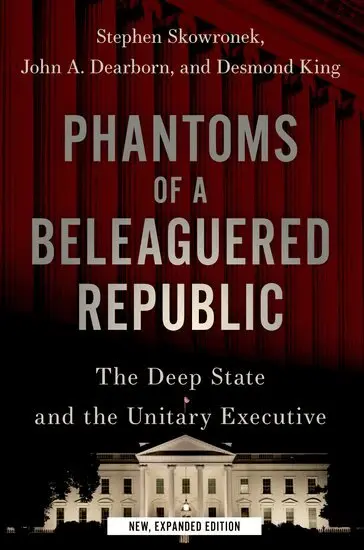
A powerful dissection of one of the fundamental problems in American governance today: the clash between presidents determined to redirect the nation through ever-tighter control of administration and an executive branch still organized to promote shared interests in steady hands, due deliberation, and expertise.President Trump pitted himself repeatedly against the institutions and personnel of the executive branch. In the process, two once-obscure concepts came center stage in an eerie faceoff. On one side was the specter of a "Deep State" conspiracy--administrators threatening to thwart the will of the people and undercut the constitutional authority of the president they elected to lead them. On the other side was a raw personalization of presidential power, one that a theory of "the unitary executive" gussied up and allowed to run roughshod over reason and the rule of law. The Deep State and the unitary executive framed every major contest of the Trump presidency. Like phantom twins, they drew each other out.These conflicts are not new. Stephen Skowronek, John A. Dearborn, and Desmond King trace the tensions between presidential power and the depth of the American state back through the decades and forward through the various settlements arrived at in previous eras. Phantoms of a Beleaguered Republic is about the breakdown of settlements and the abiding vulnerabilities of a Constitution that gave scant attention to administrative power. Rather than simply dump on Trump, the authors provide a richly historical perspective on the conflicts that rocked his presidency, and they explain why, if left untamed, the phantom twins will continue to pull the American government apart. Now, in this expanded paperback edition, they address the tumultuous Trump-Biden transition and reflect more broadly on the problems of presidential democracy in America today.
1 020 kr
Skickas inom 7-10 vardagar
The emergence of the modern presidency in the first half of the twentieth century transformed the American government. But surprisingly, presidents were not the primary driving force of this change—it was Congress. Through a series of statutes, lawmakers endorsed presidential leadership in the legislative process and augmented the chief executive’s organizational capacities. But why did Congress grant presidents this power? In Power Shifts, John A. Dearborn shows that legislators acted on the idea of presidential representation. Congress subordinated its own claims to stand as the nation’s primary representative institution and designed reforms that assumed the president, selected by the country rather than states or districts, was the superior steward of national interest. In the process, Congress recast the nation’s chief executive as its chief representative. As Dearborn demonstrates, the full extent to which Congress’s reforms rested on the idea of presidential representation was revealed when that notion’s validity was thrown into doubt. In the 1970s, Congress sought to restore its place in a rebalanced system, but legislators also found that their earlier success at institutional reinvention constrained their efforts to reclaim authority. Chronicling the evolving relationship between the presidency and Congress across a range of policy areas, Power Shifts exposes a fundamental dilemma in an otherwise proud tradition of constitutional adaptation.
315 kr
Skickas inom 7-10 vardagar
The emergence of the modern presidency in the first half of the twentieth century transformed the American government. But surprisingly, presidents were not the primary driving force of this change—it was Congress. Through a series of statutes, lawmakers endorsed presidential leadership in the legislative process and augmented the chief executive’s organizational capacities. But why did Congress grant presidents this power? In Power Shifts, John A. Dearborn shows that legislators acted on the idea of presidential representation. Congress subordinated its own claims to stand as the nation’s primary representative institution and designed reforms that assumed the president, selected by the country rather than states or districts, was the superior steward of national interest. In the process, Congress recast the nation’s chief executive as its chief representative. As Dearborn demonstrates, the full extent to which Congress’s reforms rested on the idea of presidential representation was revealed when that notion’s validity was thrown into doubt. In the 1970s, Congress sought to restore its place in a rebalanced system, but legislators also found that their earlier success at institutional reinvention constrained their efforts to reclaim authority. Chronicling the evolving relationship between the presidency and Congress across a range of policy areas, Power Shifts exposes a fundamental dilemma in an otherwise proud tradition of constitutional adaptation.
221 kr
Skickas inom 7-10 vardagar
This Element explores how Congress has designed laws reliant on an assumption of presidential self-restraint, an expectation that presidents would respect statutory goals by declining to use their formal powers in ways that were legally permissible but contrary to stated congressional intent. Examining several laws addressing political appointments since the 1970s - statutes involving the FBI director, Office of Personnel Management director, chairman of the Joint Chiefs of Staff, director of national intelligence, Federal Emergency Management Agency administrator, inspectors general, Senior Executive Service, vacancies, Social Security Administration commissioner, and Consumer Financial Protection Bureau director - the authors demonstrate lawmakers' reliance on presidential self-restraint in statutory design and identify a variety of institutional tools used to signal those expectations. Furthermore, the authors identify a developmental dilemma: the combined rise of polarization, presidentialism, and constitutional formalism threatens to leave Congress more dependent on presidential self-restraint, even as that norm's reliability is increasingly questionable.
685 kr
Skickas inom 7-10 vardagar
This Element explores how Congress has designed laws reliant on an assumption of presidential self-restraint, an expectation that presidents would respect statutory goals by declining to use their formal powers in ways that were legally permissible but contrary to stated congressional intent. Examining several laws addressing political appointments since the 1970s - statutes involving the FBI director, Office of Personnel Management director, chairman of the Joint Chiefs of Staff, director of national intelligence, Federal Emergency Management Agency administrator, inspectors general, Senior Executive Service, vacancies, Social Security Administration commissioner, and Consumer Financial Protection Bureau director - the authors demonstrate lawmakers' reliance on presidential self-restraint in statutory design and identify a variety of institutional tools used to signal those expectations. Furthermore, the authors identify a developmental dilemma: the combined rise of polarization, presidentialism, and constitutional formalism threatens to leave Congress more dependent on presidential self-restraint, even as that norm's reliability is increasingly questionable.