John A. Dussinger – författare
Visar alla böcker från författaren John A. Dussinger. Handla med fri frakt och snabb leverans.
8 produkter
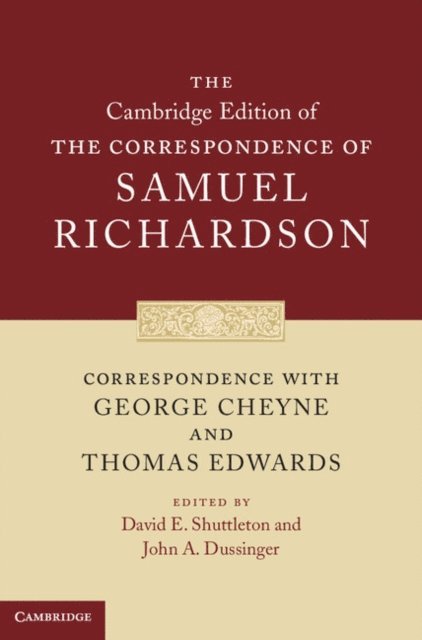
Correspondence with George Cheyne and Thomas Edwards
Av Samuel Richardson, David E. Shuttleton m. fl.
Inbunden, 2013
2320 kr
Lägg i varukorg
Samuel Richardson (1689-1761), among the most important and influential English novelists, was also a prolific letter writer. Beyond its extraordinary range, his correspondence holds special interest as that of a practising epistolary novelist, who thought long and hard about the letter as a form. …
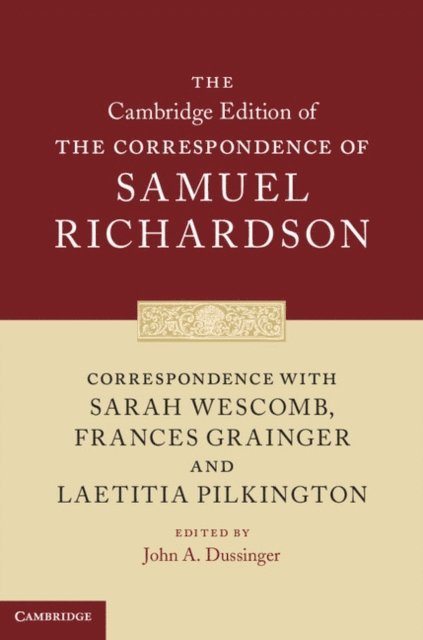
Correspondence with Sarah Wescomb, Frances Grainger and Laetitia Pilkington
Av Samuel Richardson, John A. Dussinger
Inbunden, 2014
1910 kr
Lägg i varukorg
Samuel Richardson (1689-1761), renowned master printer and celebrated English novelist, wrote hundreds of letters during his lifetime. The Cambridge Edition of the Correspondence of Samuel Richardson is the first complete edition of these letters. This volume contains his correspondences, many …
Correspondence with George Cheyne and Thomas Edwards
Av Samuel Richardson, John A. Dussinger m. fl.
E-bok, 2013
2586 kr
Lägg i varukorg
Samuel Richardson (1689–1761), among the most important and influential English novelists, was also a prolific letter writer. Beyond its extraordinary range, his correspondence holds special interest as that of a practising epistolary novelist, who thought long and hard about the letter as a form. …
Correspondence with George Cheyne and Thomas Edwards
Av Samuel Richardson, John A. Dussinger m. fl.
E-bok, 2013
2643 kr
Lägg i varukorg
Samuel Richardson (1689–1761), among the most important and influential English novelists, was also a prolific letter writer. Beyond its extraordinary range, his correspondence holds special interest as that of a practising epistolary novelist, who thought long and hard about the letter as a form. …
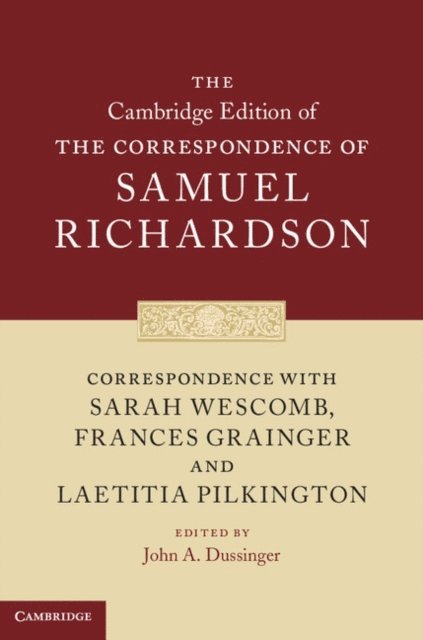
Correspondence with Sarah Wescomb, Frances Grainger and Laetitia Pilkington
Av Samuel Richardson, John A. Dussinger
E-bok, 2014
2174 kr
Lägg i varukorg
Samuel Richardson (1689–1761), renowned master printer and celebrated English novelist, wrote hundreds of letters during his lifetime. The Cambridge Edition of the Correspondence of Samuel Richardson is the first complete edition of these letters. This volume contains his correspondences, many …
Correspondence with Sarah Wescomb, Frances Grainger and Laetitia Pilkington
Av Samuel Richardson, John A. Dussinger
E-bok, 2014
2174 kr
Lägg i varukorg
Samuel Richardson (1689–1761), renowned master printer and celebrated English novelist, wrote hundreds of letters during his lifetime. The Cambridge Edition of the Correspondence of Samuel Richardson is the first complete edition of these letters. This volume contains his correspondences, many …
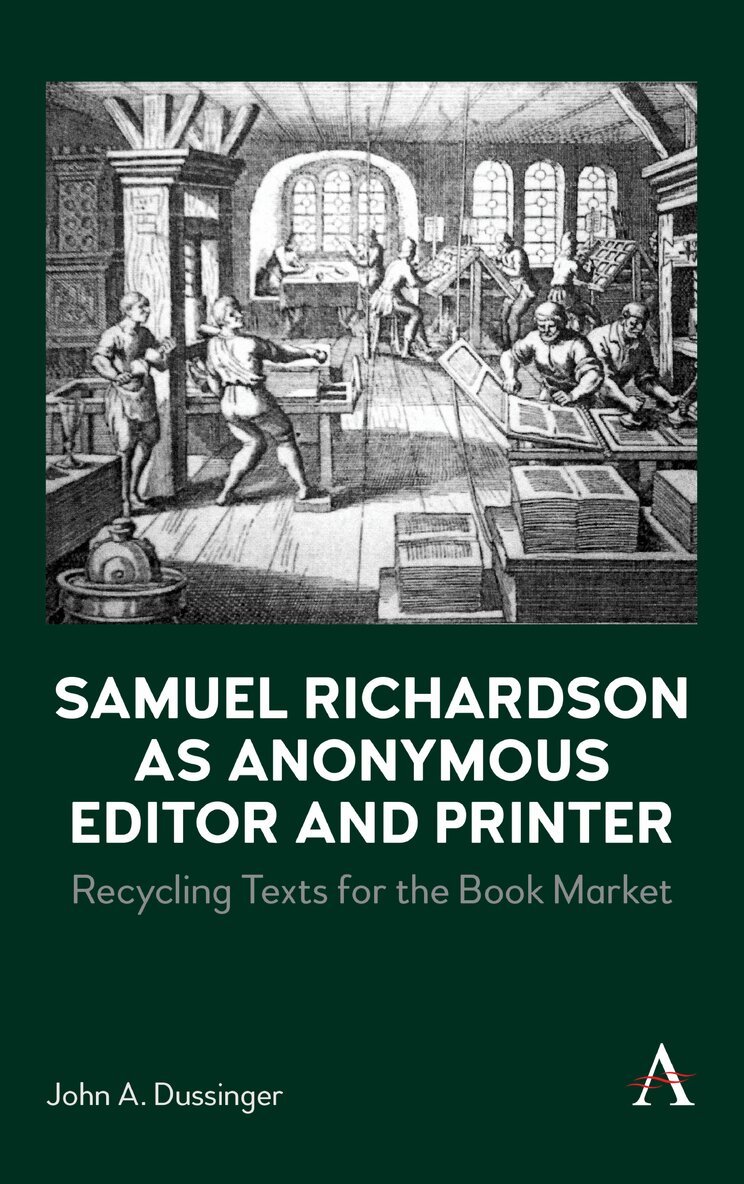
Samuel Richardson as Anonymous Editor and Printer
Recycling Texts for the Book Market
Inbunden, 2024
1516 kr
Lägg i varukorg
During the first two decades of his career, Richardson’s role as printer was hardly limited to setting the type for the periodicals that issued from his shop. Perhaps the most glaring evidence of his intervention in producing text is the fact that both The True Briton (1723-24) and The Weekly …