John Bryden - Böcker
Visar alla böcker från författaren John Bryden. Handla med fri frakt och snabb leverans.
3 produkter
3 produkter
1 266 kr
Skickas inom 7-10 vardagar
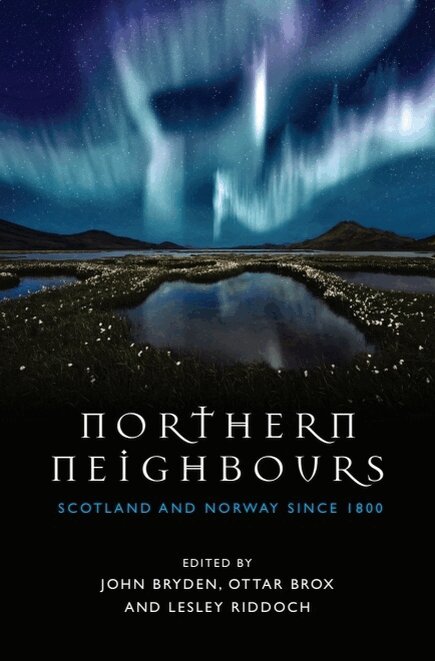
BCC approved (with endorsements)"How is it that two broadly similar countries, neighbours with roughly equal populations and similar natural conditions, can follow two very different development paths? The authors of Northern Neighbours claim that ‘politics matter’. In their comparative history of Scotland and Norway, key factors in each county’s development are thrown into relief. The result is a convincing explanation for their divergence and a significant contribution to development theory in general." Matthew Hoffman, Cornell University"In this important book we can read another exciting attempt to examine through the comparative lens the modern histories of Norway and Scotland. A team of interdisciplinary experts drawn from both countries and elsewhere in the UK have been assembled to consider the radically different historical paths of two small nations and the social, political and economic consequences." Professor Sir Tom M. Devine A topical, comparative study of the economic, social and political development of Norway and Scotland Northern Neighbours explores the reasons for, and outcomes of, the social, political and economic divergence between Scotland and Norway over a period encompassing 500 years, in an engaging and comprehensive way. This accessible comparative study takes a closer look at the links between suffrage, property ownership and the process of democratisation and distribution of political power, land use and reform, the relative movement of populations, the process of industrialization, and rights of access. It offers a thorough analysis of the history of religion, education and finance in both countries, and explores the exploitation of their rich natural resources, and the resulting contrast in their fortunes. The authors also pose timely questions about the future of both countries; whether the economic and social disparities between the two can be addressed, and if the Nordic model could provide a basis for a realistic and effective development strategy for Scotland, were it to become an independent nation.John Bryden is Emeritus Professor of Human Geography at the University of AberdeenOttar Brox is former research director of the Norwegian Institute for Urban and Regional ResearchLesley Riddoch is a freelance journalist, commentator and broadcaster
Fighting to Lose
How the German Secret Intelligence Service Helped the Allies Win the Second World War
Häftad, Engelska, 2014
220 kr
Skickas inom 5-8 vardagar
Startling new revelations about collaboration between the Allies and the German Secret Service. Based on extensive primary source research, John Bryden’s Fighting to Lose presents compelling evidence that the German intelligence service — the Abwehr — undertook to rescue Britain from certain defeat in 1941. Recently opened secret intelligence files indicate that the famed British double-cross or double-agent system was in fact a German triple-cross system. These files also reveal that British intelligence secretly appealed to the Abwehr for help during the war, and that the Abwehr’s chief, Admiral Canaris, responded by providing Churchill with the ammunition needed in order to persuade Roosevelt to lure the Japanese into attacking Pearl Harbor. These findings and others like them make John Bryden’s Fighting to Lose one of the most fascinating books about World War II to be published for many years.
344 kr
Skickas inom 7-10 vardagar
A topical, comparative study of the economic, social and political development of Norway and Scotland since 1800Northern Neighbours explores the reasons for, and outcomes of, the social, political and economic divergence between Scotland and Norway over a period encompassing 500 years, in an engaging and comprehensive way. This accessible comparative study takes a closer look at the links between suffrage, property ownership and the process of democratisation and distribution of political power, land use and reform, the relative movement of populations, the process of industrialization, and rights of access. It offers a thorough analysis of the history of religion, education and finance in both countries, and explores the exploitation of their rich natural resources, and the resulting contrast in their fortunes. The authors also pose timely questions about the future of both countries; whether the economic and social disparities between the two can be addressed, and if the Nordic model could provide a basis for a realistic and effective development strategy for Scotland, were it to become an independent nation.ContributorsArne Bugge Amundsen, University of OsloEberhard ‘Paddy’ Bort, University of EdinburghNik. Brandal, University of OsloØivind Bratberg, University of OsloOttar Brox, Norwegian Institute for Regional ResearchJohn Bryden, Norwegian Agricultural Economics Research Institute in Oslo and Emeritus at the University of AberdeenBronwen Cohen, University of EdinburghKeith Hart, London School of EconomicsAgnar Hegrenes, Norwegian Agricultural Economics Research InstituteMary Hilson, University College LondonAndrew G. Newby, University of HelsinkiErik Opsahl, Norwegian University of Science and Technology (NTNU), TrondheimTore T. Petersen, Norwegian University of Science and Technology (NTNU), TrondheimKaren Refsgaard, University of Copenhagen and the University of Life Sciences at Ås, NorwayLesley Riddoch, journalist, author and broadcasterWenche Rønning, University of NordlandMichael Rosie, University of Edinburgh