John Dudeney - Böcker
Visar alla böcker från författaren John Dudeney. Handla med fri frakt och snabb leverans.
3 produkter
3 produkter
221 kr
Tillfälligt slut
William Speirs Bruce was a Scottish nationalist and naturalist who led the Scottish National Antarctic Expedition (1902–04) as well as participating in or leading many other polar expeditions from 1892 through to 1919, particularly to Spitsbergen. He is now largely forgotten compared with the ‘greats’, Shackleton, Scott and Amundsen. This biography returns to primary sources to provide a new and controversial view of the relationship between Bruce and the then President of the Royal Geographical Society, Sir Clements Markham, and also draws conclusions about Bruce’s personality, in particular suggesting that he was probably on the autistic spectrum.Bruce was ahead of his time in dreaming of a network of cooperating meteorological stations in the south. He handed over the Laurie Island observatory to the Argentinians. He can be considered the Father of Meteorology in the South Atlantic. He had a lasting impact, publishing his work, under great difficulties, in six scientific volumes. His endeavours in the Arctic were notable for the extensive new surveys he undertook. The British Antarctic Survey is an enduring testament to his scientific vision and has named its laboratory in the South Orkney Islands in his honour. Despite being a strong nationalist – or perhaps because he was – his outlook was internationalist. Bruce was never awarded the Polar Medal; this book explains why.
899 kr
Skickas inom 7-10 vardagar
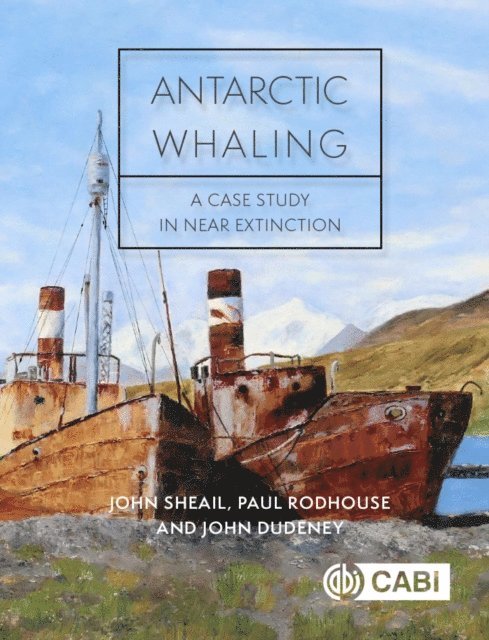
Antarctic Whaling explores how British whalers came to claim so large a share of the whales taken from the Southern Ocean in the first half of the twentieth century, and, more particularly, where, when, how and why the British Government came to play so large a part in whaling history through its endeavour to regulate the whaling grounds.
242 kr
Skickas
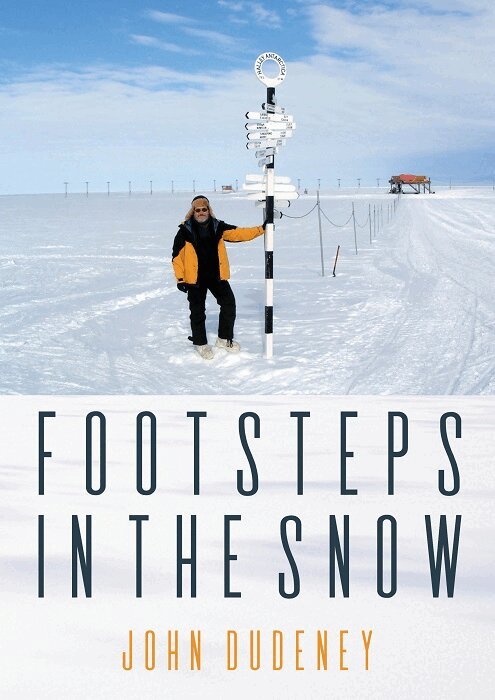
Footsteps in the Snow recounts a life shaped and dominated by Antarctica, a multi-facetted account of a life dedicated to Antarctic science, policy and governance. It is also the story of growth from callow youth to Antarctic professional in the most challenging of environments.Joining the British Antarctic Survey (BAS) straight from university in 1966 meant two years as a scientist at an isolated British research station with all the challenges of wintering in the hostile environment half a century ago. After just two years he became one of the youngest men to be made a base commander, and as Sir Vivian Fuchs (then Director of BAS) recounts ‘proved himself one of the best we ever had under the most testing conditions’. The story recounts the many challenges of those testing conditions, while developing scientific ideas and accomplishing engineering feats with his team and on occasion looking death in the face and surviving. There were new developments in building research stations on the ice shelf, and the discovery of the ozone hole that gripped the world.Then followed the transition from research scientist to policy maker and diplomat when he became Deputy Director of BAS and advisor to the British delegation at the Antarctic Treaty. Tragedy struck at a base resulting in the author leading the first ever British midwinter flight into Antarctica. Since retiral, the author has become a polar historian “of repute”, and his efforts have been directed to writing and being a guide for Antarctic tourism. This book allows the reader to feel the wonder, awe, excitement and passion for Antarctica which drove John Dudeney throughout his career, and which is as fresh today as it was on first encounter half a century ago.