John E. Murray – författare
Visar alla böcker från författaren John E. Murray. Handla med fri frakt och snabb leverans.
3 produkter
3 produkter
1 019 kr
Skickas inom 11-20 vardagar
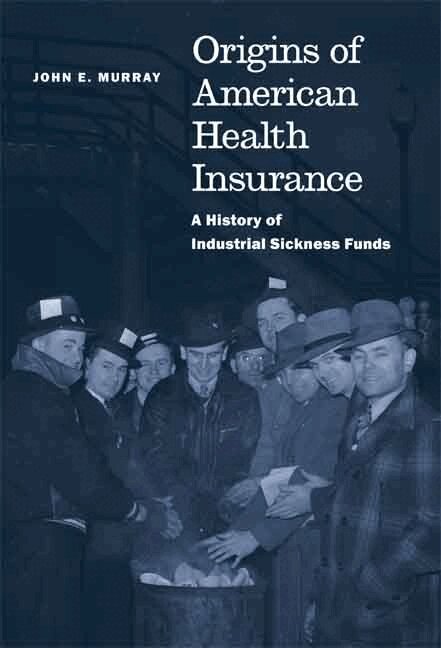
How did the United States come to have its distinctive workplace-based health insurance system? Why did Progressive initiatives to establish a government system fail? This book explores the history of health insurance in the United States from its roots in the nineteenth-century sickness funds offered by industrial employers, fraternal organizations, and labor unions to the rise of such group plans as Blue Cross and Blue Shield in the mid-twentieth century. Historians generally view the failure to establish universal health insurance during the first half of the twentieth century as an indicator of the political clout of insurers, employers, unions, and physicians who thwarted Progressive efforts. But the explanation is actually simpler, John Murray contends in this book. Careful analysis of the workings of industrial sickness funds suggests that workers rejected plans for compulsory state insurance because they were largely content with existing private plans. Murray revises our understanding of the evolution of health care insurance in the United States and discusses the implications of that history for the ongoing debates of today.
1 609 kr
Skickas inom 10-15 vardagar
The history of early America cannot be told without considering unfree labor. At the center of this history are African and Native American adults forced into slavery; the children born to these unfree persons usually inherited their parents' status. Immigrant indentured servants, many of whom were young people, are widely recognized as part of early American society. Less familiar is the idea of free children being taken from the homes where they were born and put into bondage. As Children Bound to Labor makes clear, pauper apprenticeship was an important source of labor in early America. The economic, social, and political development of the colonies and then the states cannot be told properly without taking them into account. Binding out pauper apprentices was a widespread practice throughout the colonies from Massachusetts to South Carolina-poor, illegitimate, orphaned, abandoned, or abused children were raised to adulthood in a legal condition of indentured servitude. Most of these children were without resources and often without advocates. Local officials undertook the responsibility for putting such children in family situations where the child was expected to work, while the master provided education and basic living needs. The authors of Children Bound to Labor show the various ways in which pauper apprentices were important to the economic, social, and political structure of early America, and how the practice shaped such key relations as master-servant, parent-child, and family-state in the young republic. In considering the practice in English, Dutch, and French communities in North America from the mid-seventeenth century to the mid-nineteenth century, Children Bound to Labor even suggests that this widespread practice was notable as a positive means of maintaining social stability and encouraging economic development.
449 kr
Skickas inom 10-15 vardagar
The history of early America cannot be told without considering unfree labor. At the center of this history are African and Native American adults forced into slavery; the children born to these unfree persons usually inherited their parents' status. Immigrant indentured servants, many of whom were young people, are widely recognized as part of early American society. Less familiar is the idea of free children being taken from the homes where they were born and put into bondage. As Children Bound to Labor makes clear, pauper apprenticeship was an important source of labor in early America. The economic, social, and political development of the colonies and then the states cannot be told properly without taking them into account. Binding out pauper apprentices was a widespread practice throughout the colonies from Massachusetts to South Carolina-poor, illegitimate, orphaned, abandoned, or abused children were raised to adulthood in a legal condition of indentured servitude. Most of these children were without resources and often without advocates. Local officials undertook the responsibility for putting such children in family situations where the child was expected to work, while the master provided education and basic living needs. The authors of Children Bound to Labor show the various ways in which pauper apprentices were important to the economic, social, and political structure of early America, and how the practice shaped such key relations as master-servant, parent-child, and family-state in the young republic. In considering the practice in English, Dutch, and French communities in North America from the mid-seventeenth century to the mid-nineteenth century, Children Bound to Labor even suggests that this widespread practice was notable as a positive means of maintaining social stability and encouraging economic development.