Ruth Wallis Herndon - Böcker
Visar alla böcker från författaren Ruth Wallis Herndon. Handla med fri frakt och snabb leverans.
5 produkter
5 produkter
1 563 kr
Skickas inom 10-15 vardagar
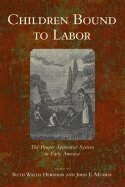
The history of early America cannot be told without considering unfree labor. At the center of this history are African and Native American adults forced into slavery; the children born to these unfree persons usually inherited their parents' status. Immigrant indentured servants, many of whom were young people, are widely recognized as part of early American society. Less familiar is the idea of free children being taken from the homes where they were born and put into bondage. As Children Bound to Labor makes clear, pauper apprenticeship was an important source of labor in early America. The economic, social, and political development of the colonies and then the states cannot be told properly without taking them into account. Binding out pauper apprentices was a widespread practice throughout the colonies from Massachusetts to South Carolina-poor, illegitimate, orphaned, abandoned, or abused children were raised to adulthood in a legal condition of indentured servitude. Most of these children were without resources and often without advocates. Local officials undertook the responsibility for putting such children in family situations where the child was expected to work, while the master provided education and basic living needs. The authors of Children Bound to Labor show the various ways in which pauper apprentices were important to the economic, social, and political structure of early America, and how the practice shaped such key relations as master-servant, parent-child, and family-state in the young republic. In considering the practice in English, Dutch, and French communities in North America from the mid-seventeenth century to the mid-nineteenth century, Children Bound to Labor even suggests that this widespread practice was notable as a positive means of maintaining social stability and encouraging economic development.
323 kr
Skickas inom 10-15 vardagar
The history of early America cannot be told without considering unfree labor. At the center of this history are African and Native American adults forced into slavery; the children born to these unfree persons usually inherited their parents' status. Immigrant indentured servants, many of whom were young people, are widely recognized as part of early American society. Less familiar is the idea of free children being taken from the homes where they were born and put into bondage. As Children Bound to Labor makes clear, pauper apprenticeship was an important source of labor in early America. The economic, social, and political development of the colonies and then the states cannot be told properly without taking them into account. Binding out pauper apprentices was a widespread practice throughout the colonies from Massachusetts to South Carolina-poor, illegitimate, orphaned, abandoned, or abused children were raised to adulthood in a legal condition of indentured servitude. Most of these children were without resources and often without advocates. Local officials undertook the responsibility for putting such children in family situations where the child was expected to work, while the master provided education and basic living needs. The authors of Children Bound to Labor show the various ways in which pauper apprentices were important to the economic, social, and political structure of early America, and how the practice shaped such key relations as master-servant, parent-child, and family-state in the young republic. In considering the practice in English, Dutch, and French communities in North America from the mid-seventeenth century to the mid-nineteenth century, Children Bound to Labor even suggests that this widespread practice was notable as a positive means of maintaining social stability and encouraging economic development.
314 kr
Skickas inom 10-15 vardagar
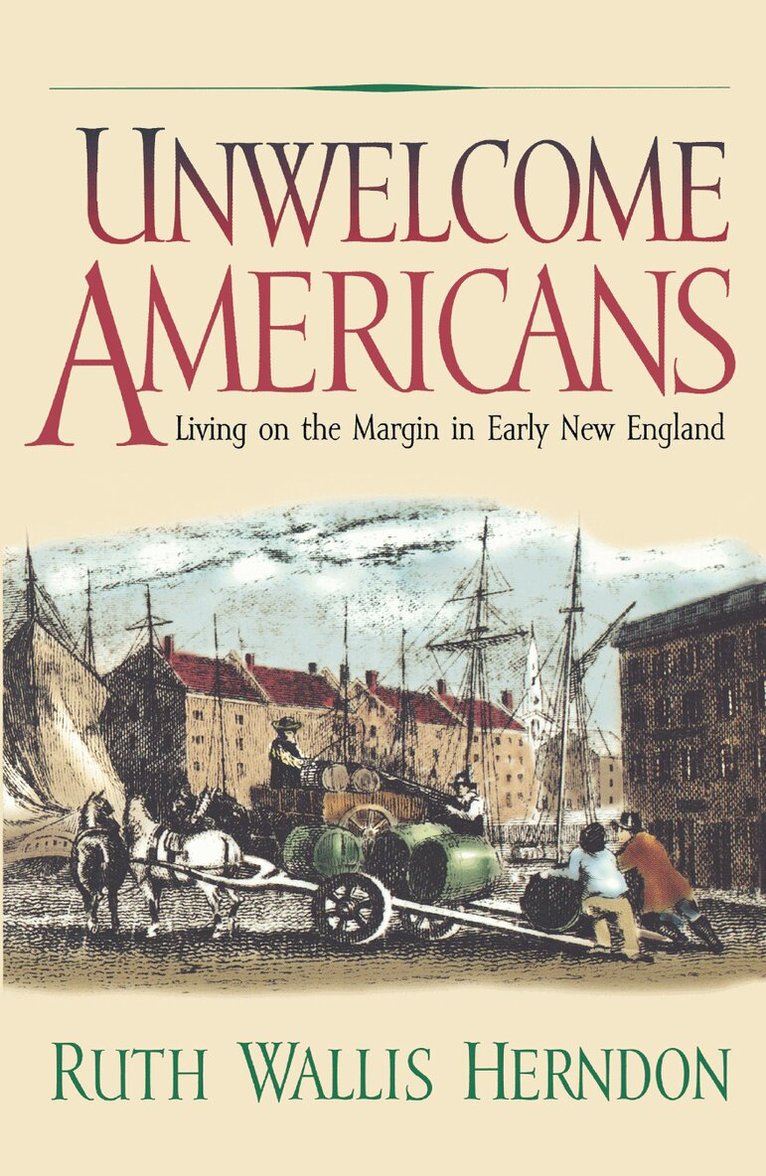
Selected by Choice magazine as an Outstanding Academic TitleIn eighteenth-century America, no centralized system of welfare existed to assist people who found themselves without food, medical care, or shelter. Any poor relief available was provided through local taxes, and these funds were quickly exhausted. By the end of the century, state and national taxes levied to help pay for the Revolutionary War further strained municipal budgets. In order to control homelessness, vagrancy, and poverty, New England towns relied heavily on the "warning out" system inherited from English law. This was a process in which community leaders determined the legitimate hometown of unwanted persons or families in order to force them to leave, ostensibly to return to where they could receive care. The warning-out system alleviated the expense and responsibility for the general welfare of the poor in any community, and placed the burden on each town to look after its own.But homelessness and poverty were problems as onerous in early America as they are today, and the system of warning out did little to address the fundamental causes of social disorder. Ultimately the warning-out system gave way to the establishment of general poorhouses and other charities. But the documents that recorded details about the lives of those who were warned out provide an extraordinary-and until now forgotten-history of people on the margin.Unwelcome Americans puts a human face on poverty in early America by recovering the stories of forty New Englanders who were forced to leave various communities in Rhode Island. Rhode Island towns kept better and more complete warning-out records than other areas in New England, and because the official records include those who had migrated to Rhode Island from other places, these documents can be relied upon to describe the experiences of poor people across the region.The stories are organized from birth to death, beginning with the lives of poor children and young adults, followed by families and single adults, and ending with the testimonies of the elderly and dying. Through meticulous research of historical records, Herndon has managed to recover voices that have not been heard for more than two hundred years, in the process painting a dramatically different picture of family and community life in early New England. These life stories tell us that those who were warned out were predominantly unmarried women with or without children, Native Americans, African Americans, and destitute families. Through this remarkable reconstruction, Herndon provides a corrective to the narratives of the privileged that have dominated the conversation in this crucial period of American history, and the lives she chronicles give greater depth and a richer dimension to our understanding of the growth of American social responsibility.
Standard of Living
Essays on Economics, History, and Religion in Honor of John E. Murray
Inbunden, Engelska, 2022
1 578 kr
Skickas inom 10-15 vardagar
This volume will be of use to scholars and students interested in economic history, cliometrics, labor economics, and American and European history, as well as the history of religion.
Standard of Living
Essays on Economics, History, and Religion in Honor of John E. Murray
Häftad, Engelska, 2023
1 578 kr
Skickas inom 10-15 vardagar
This volume will be of use to scholars and students interested in economic history, cliometrics, labor economics, and American and European history, as well as the history of religion.