John E. Schwarz - Böcker
Visar alla böcker från författaren John E. Schwarz. Handla med fri frakt och snabb leverans.
6 produkter
6 produkter
211 kr
Skickas inom 5-8 vardagar
266 kr
Skickas inom 5-8 vardagar
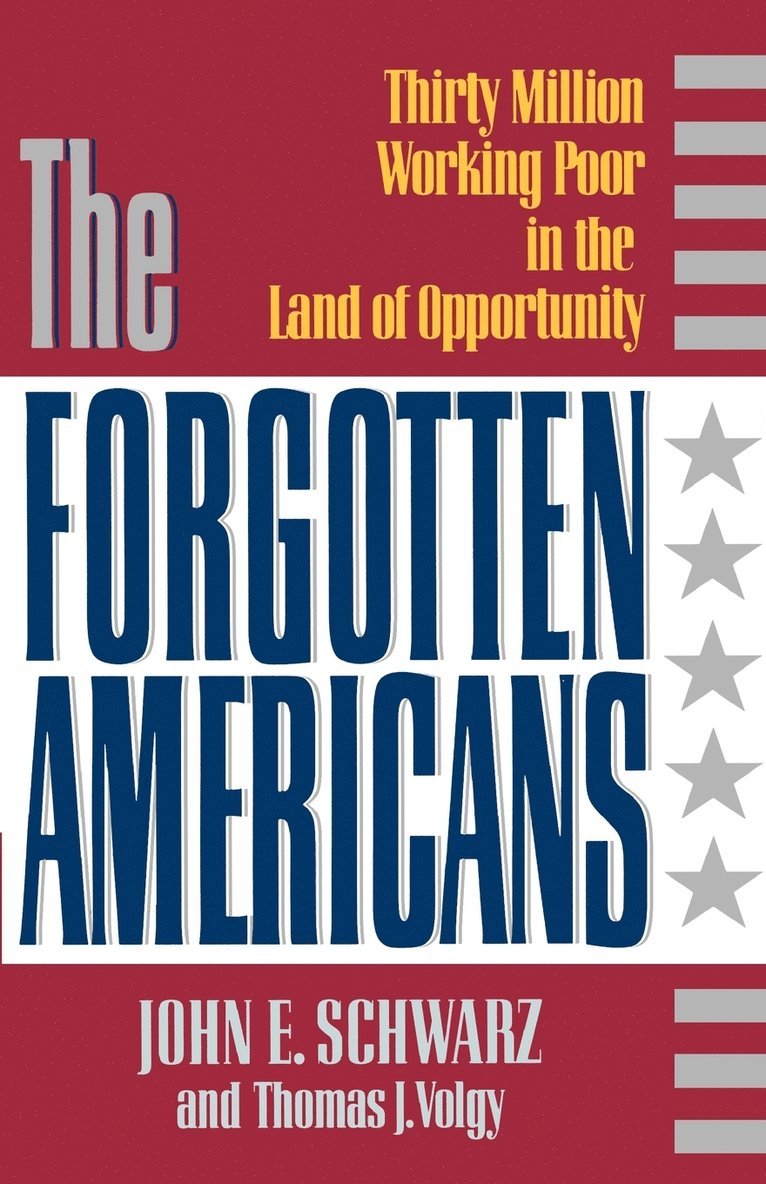
Does the American Dream still exist when nearly 30 million Americans live in families in which workers find a paycheck and poverty in the same envelope? Just as Michael Harrington's The Other America shocked the nation with its disclosure of poverty in the 1960s, John E. Schwarz and Thomas J. Volgy's The Forgotten Americans exposes the breadth of poverty that exists today among responsible, hardworking Americans. At the end of the prosperous 1980s, the number of Americans living in working-poor families equaled the combined populations of the nation's 25 largest cities. Contrary to conventional wisdom, this situation is not largely confined to minorities, women, the undereducated or young adults. It is commonplace for workers from nearly all segments of society to be employed in low-paying jobs even during good economic times. The Forgotten Americans reveals the betrayal of the hopes and expectations of these industrious people through broad-based factual evidence and the real-life stories of individual families. Their hardship has been ignored at enormous cost to them and the country. Numerous problems at the forefront of national debate—welfare dependency, crime, and the inadequate performance of many American school children—are closely connected to the existence of working poverty on a large scale. Unless corrective action is taken, the country risks the creation of a deeply fractured society arising from the despair of millions of employed people who have discovered that practicing the work ethic yields little reward. The problem is staggering and often misunderstood by politicians, the media, and the public. Once Schwarz and Volgy have outlined the implications of this social and economic tragedy, they propose effective solutions that require simple changes to existing policies—solutions that are politically feasible and can be accomplished without new taxes.
286 kr
Skickas inom 5-8 vardagar
Does the American Dream still exist when nearly 30 million Americans live in families in which workers find a paycheck and poverty in the same envelope? Just as Michael Harrington's The Other America shocked the nation with its disclosure of poverty in the 1960s, John E. Schwarz and Thomas J. Volgy's The Forgotten Americans exposes the breadth of poverty that exists today among responsible, hardworking Americans. At the end of the prosperous 1980s, the number of Americans living in working-poor families equaled the combined populations of the nation's 25 largest cities. Contrary to conventional wisdom, this situation is not largely confined to minorities, women, the undereducated or young adults. It is commonplace for workers from nearly all segments of society to be employed in low-paying jobs even during good economic times. The Forgotten Americans reveals the betrayal of the hopes and expectations of these industrious people through broad-based factual evidence and the real-life stories of individual families. Their hardship has been ignored at enormous cost to them and the country. Numerous problems at the forefront of national debate—welfare dependency, crime, and the inadequate performance of many American school children—are closely connected to the existence of working poverty on a large scale. Unless corrective action is taken, the country risks the creation of a deeply fractured society arising from the despair of millions of employed people who have discovered that practicing the work ethic yields little reward. The problem is staggering and often misunderstood by politicians, the media, and the public. Once Schwarz and Volgy have outlined the implications of this social and economic tragedy, they propose effective solutions that require simple changes to existing policies—solutions that are politically feasible and can be accomplished without new taxes.
352 kr
Tillfälligt slut
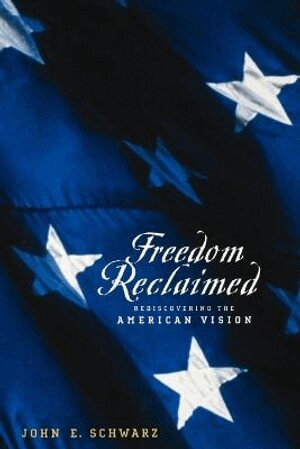
Has the nation's infatuation with the free market warped the true meaning of American freedom by its emphasis on the self-serving individual in a "looking out for Number One" world? Freedom is America's most treasured value. In Freedom Reclaimed, John E. Schwarz examines the profound implications of the difference between the vision of American freedom that the Founders enshrined in the Declaration of Independence and the free-market idea of freedom that is ascendant today. Schwarz shows how the three-decade shift toward free-market freedom has brought economic hardship to the majority of Americans and suffering to the political life of the nation. As the nation moves further away from its impelling original commitment, most Americans now have only limited access to the freedom the Founders envisioned. Schwarz sets forth a program that can help America return to its ennobling vision and resume its historic journey. In policy discussions on employment, education, social issues, and health care, Schwarz recasts our understanding of what freedom means and involves. In so doing, he transforms the way we see our world and revitalizes our ability to change it for the better.
333 kr
Skickas inom 7-10 vardagar
Has the nation's infatuation with the free market warped the true meaning of American freedom by its emphasis on the self-serving individual in a "looking out for Number One" world? Freedom is America's most treasured value. In Freedom Reclaimed, John E. Schwarz examines the profound implications of the difference between the vision of American freedom that the Founders enshrined in the Declaration of Independence and the free-market idea of freedom that is ascendant today. Schwarz shows how the three-decade shift toward free-market freedom has brought economic hardship to the majority of Americans and suffering to the political life of the nation. As the nation moves further away from its impelling original commitment, most Americans now have only limited access to the freedom the Founders envisioned. Schwarz sets forth a program that can help America return to its ennobling vision and resume its historic journey. In policy discussions on employment, education, social issues, and health care, Schwarz recasts our understanding of what freedom means and involves. In so doing, he transforms the way we see our world and revitalizes our ability to change it for the better.
241 kr
Tillfälligt slut
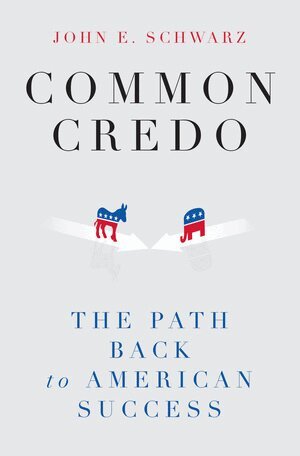
Today, bitter partisanship has sunk our politics into unending stalemate, millions of Americans are struggling to get ahead financially, and cynicism about the effectiveness and fairness of our political processes grows continually deeper. The country needs practical, principled, and unifying solutions, rather than continued finger-pointing across the aisle.In Common Credo, acclaimed author John E. Schwarz charts a highly original path out of this morass, one that both liberals and conservatives can rally around. Delving deeply into the words and actions of the Founders themselves, he uncovers a set of core principles involving freedom, equality, and other key values that, despite our surface ideological differences, nearly all Americans still endorse today. When implemented, the principles provide a specific model for how our politics and economy should operate—one that fulfills both conservatives' call for individual liberty with strictly limited government and liberals’ emphasis on collective responsibility and truly sufficient opportunity for all. Schwarz calls this powerful model the "Common Credo."Schwarz then illustrates how this Credo has been abandoned over the past four decades by Democrats and Republicans alike, leading to the political and economic marginalization of a majority of Americans and nearly every political and economic problem we currently face, from the economy’s collapse to the partisan gridlock in Congress. By misunderstanding the Founders’ basic principles, both present-day liberalism and conservatism have helped create the problems and will continue to do so if we don’t find an alternative approach.The Common Credo is that alternative. Only by re-engaging it can we arrive at precise and innovative policy solutions to our most pressing challenges—attaining sustainable economic growth and widespread prosperity; re-empowering the middle class; successfully reforming our health care, education, and campaign finance systems; curbing government waste; and reducing national deficits and debt, among others. Schwarz shows, for example, how applying the logic behind our 1950s tax structure to today's compensation policy can boost middle-class wage gains without raising taxes or spending one cent. Or how combining a carbon-fee plan with targeted rebates can underpin a climate control policy that pays for itself. Laying out these and other solutions in accessible, step-by-step detail, Schwarz engagingly demonstrates how the Common Credo alone holds the key to reuniting Americans and getting us back on the path to success.