John F. Cogan - Böcker
Visar alla böcker från författaren John F. Cogan. Handla med fri frakt och snabb leverans.
5 produkter
5 produkter
744 kr
Skickas inom 7-10 vardagar
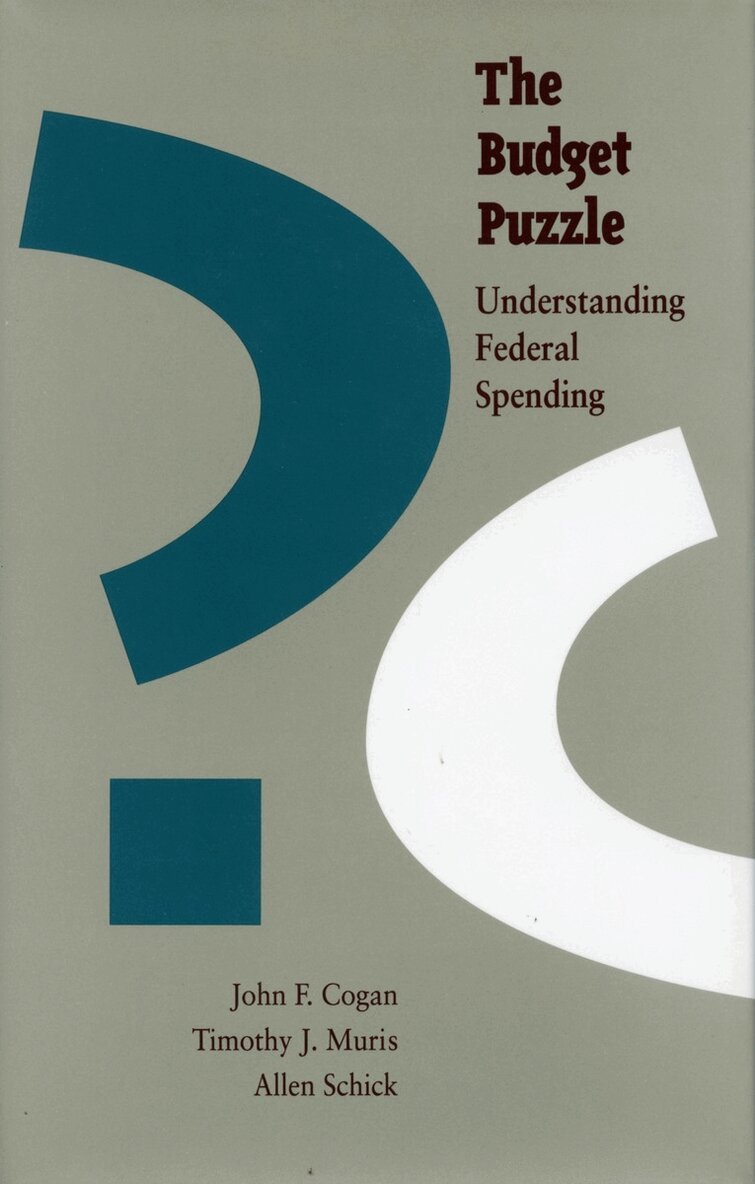
In the United States, the size and composition of the federal budget is arguably the most important single issue of the 1990's, yet most debates and commentaries on the subject are largely uninformed. Virtually no one - whether government official, member of Congress, journalist, or taxpayer - seems to understand how the budget is put together and what it means. This is hardly surprising, since the budget has become extraordinarily complicated. The structure of the budget reform act of 1911 has been maintained, with the changes of additional reforms (1974, 1986, and 1990) piled on top of it, while virtually nothing has been discarded. Most people are distressed at the enormous size of the federal deficit and perplexed because highly touted plans and agreements to bring the deficit down result in an even higher deficit. Why does this happen? Why is there a growing deficit amid cries of underfunding? Why is there general agreement on a format that has proved so misleading? This book comprises a series of essays about the federal budget - how and why it has grown so large, why most "deficit-reduction" measures are either shams or predestined to fail, and why understanding budget issues is so difficult. The authors offer a new perspective, a microbudgeting approach, which requires examining in detail how the federal government makes its budget decisions. Macrobudgeting, which is concerned with totals rather than parts, has prevailed for more than a generation in both Democratic and Republican administrations; the deficit-reduction drives of the 1980's, for example, failed because the parts added up to more than the targeted totals. By contrast, microbudgeting breaks the budget down into its basic elements, carefully reviews the assumptions underlying each program or account, and critically examines the methods by which savings are computed. Using this approach, the authors demonstrate that it is possible to understand the budget process and to make informed decisions on issues of public policy. Individual essays focus on such topics as: the changing Congressional budget processes that have been critically important in contributing to the federal budget deficits that have persisted since World War II; the origins, uses, and abuses of budget baselines; and the myth of the budget reductions of the Reagan presidency.
1 466 kr
Skickas inom 10-15 vardagar
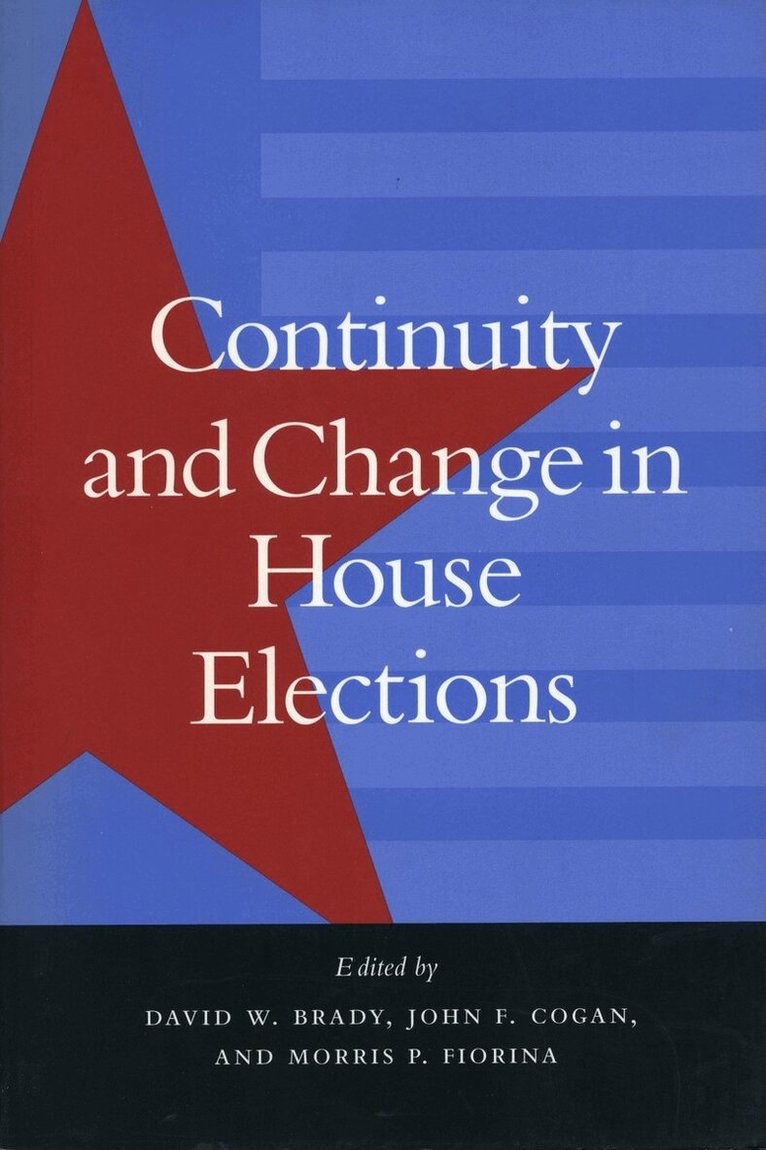
For two decades, extending from the early 1970s to the early 1990s, elections to the U.S. House of Representatives were highly predictable. More than 90 percent of incumbents would seek reelection and more than 90 percent of those incumbents would win—by larger vote margins than in earlier decades. The once-dependable presidential coattail effect diminished, as one-quarter to one-third of all voters split their tickets, supporting presidential and House candidates of different parties. These trends helped the Democrats retain control of the House even while Republican presidential candidates won five of six elections beginning in 1968. An era of "incumbency and insulation" seemed firmly in place.Then came the 1994 midterm elections. The Republicans gained 52 seats in the House, taking control for the first time in 40 years. Incumbency appeared to have lost its semi-magical status as three dozen incumbents fell. Insulation, too, appeared to have failed, with all the losing incumbents being Democrats, most of them from districts where President Clinton had run poorly in 1992. But did 1994 herald a new era, or was it an aberration?In some ways, the 1996 elections, which reelected President Clinton, ratified the 1994 upheaval. Republicans retained control of the House, despite the decline of ticket-splitting as more voters aligned their presidential and House voting decisions. The 1998 election results added to the picture of a new era in congressional elections as the presidential party gained seats in a midterm election for the first time since 1934.Most of the essays in this volume closely examine these recent elections, documenting the erosion of incumbency and insulation, but pointing out important continuities as well. Other essays address the electoral consequences of political change in the South, majority-minority redistricting, PAC contributions, and the changing image of Congress.
362 kr
Skickas inom 7-10 vardagar
For two decades, extending from the early 1970s to the early 1990s, elections to the U.S. House of Representatives were highly predictable. More than 90 percent of incumbents would seek reelection and more than 90 percent of those incumbents would win—by larger vote margins than in earlier decades. The once-dependable presidential coattail effect diminished, as one-quarter to one-third of all voters split their tickets, supporting presidential and House candidates of different parties. These trends helped the Democrats retain control of the House even while Republican presidential candidates won five of six elections beginning in 1968. An era of "incumbency and insulation" seemed firmly in place.Then came the 1994 midterm elections. The Republicans gained 52 seats in the House, taking control for the first time in 40 years. Incumbency appeared to have lost its semi-magical status as three dozen incumbents fell. Insulation, too, appeared to have failed, with all the losing incumbents being Democrats, most of them from districts where President Clinton had run poorly in 1992. But did 1994 herald a new era, or was it an aberration?In some ways, the 1996 elections, which reelected President Clinton, ratified the 1994 upheaval. Republicans retained control of the House, despite the decline of ticket-splitting as more voters aligned their presidential and House voting decisions. The 1998 election results added to the picture of a new era in congressional elections as the presidential party gained seats in a midterm election for the first time since 1934.Most of the essays in this volume closely examine these recent elections, documenting the erosion of incumbency and insulation, but pointing out important continuities as well. Other essays address the electoral consequences of political change in the South, majority-minority redistricting, PAC contributions, and the changing image of Congress.
487 kr
Skickas inom 10-15 vardagar
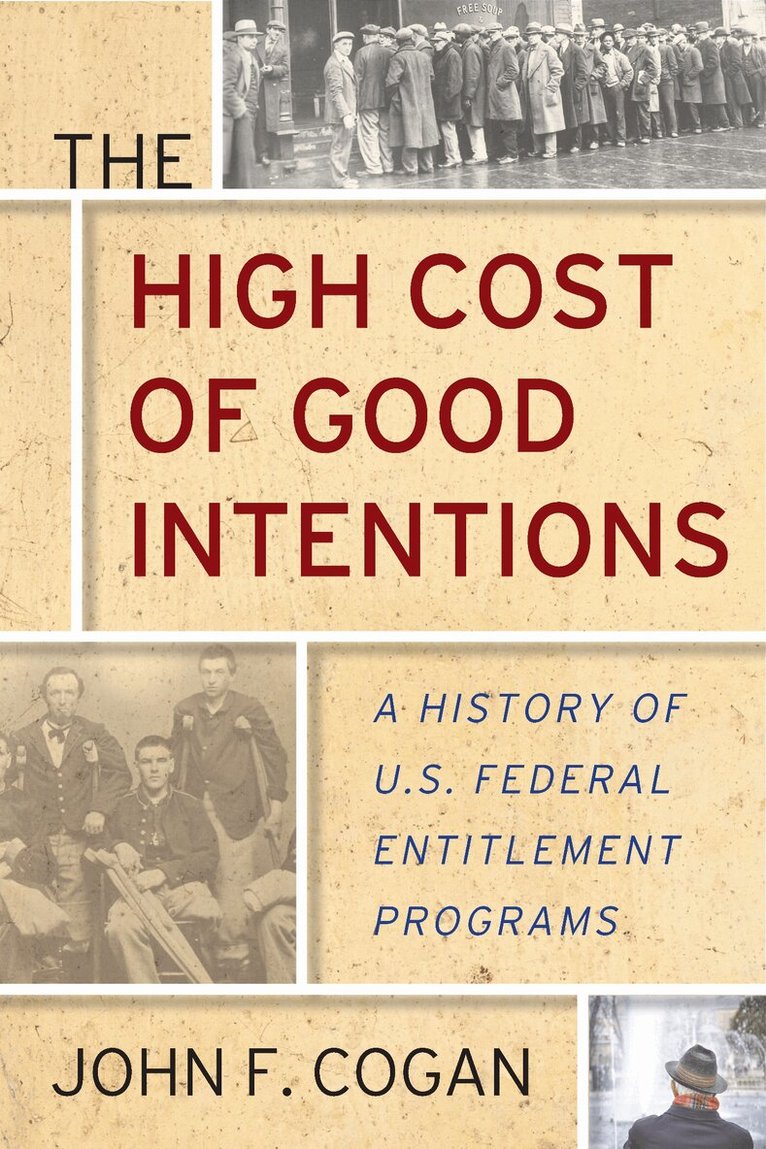
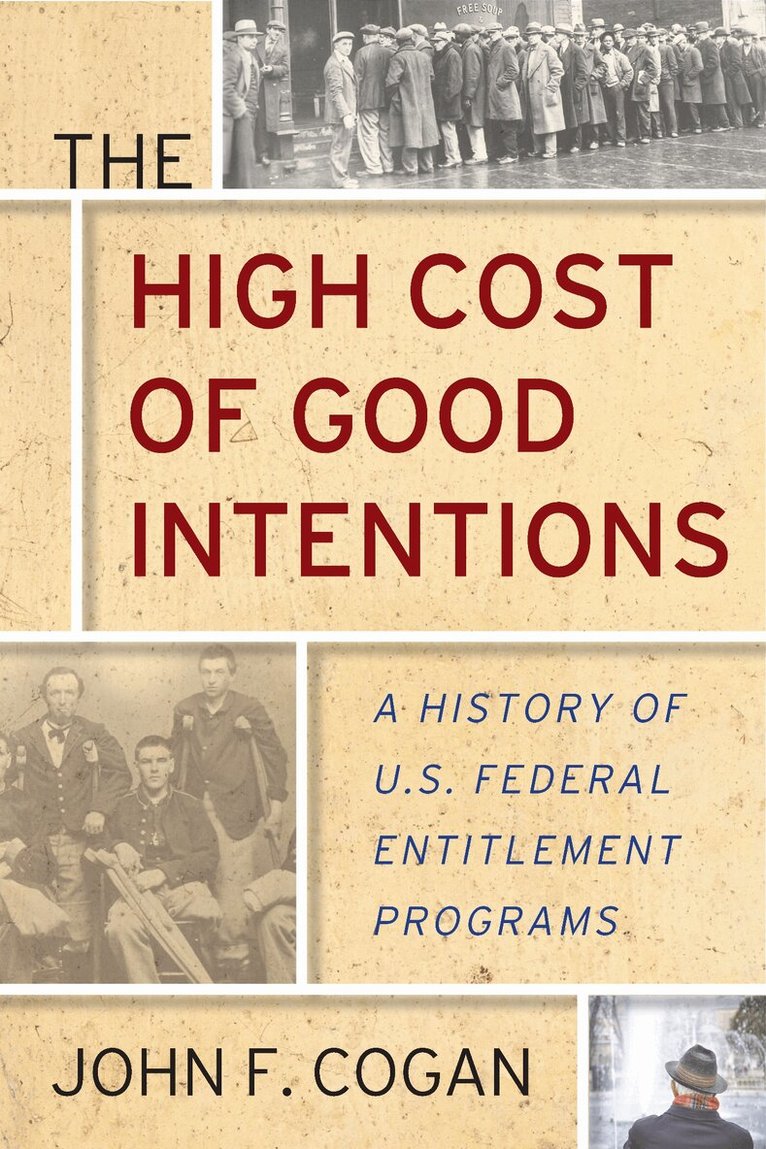
Federal entitlement programs are strewn throughout the pages of U.S. history, springing from the noble purpose of assisting people who are destitute through no fault of their own. Yet as federal entitlement programs have grown, so too have their inefficiency and their cost. Neither tax revenues nor revenues generated by the national economy have been able to keep pace with their rising growth, bringing the national debt to a record peacetime level.The High Cost of Good Intentions is the first comprehensive history of these federal entitlement programs. Combining economics, history, political science, and law, John F. Cogan reveals how the creation of entitlements brings forth a steady march of liberalizing forces that cause entitlement programs to expand. This process—as visible in the eighteenth and nineteenth centuries as in the present day—is repeated until benefits are extended to nearly all who could be considered eligible, and in turn establishes a new base for future expansions. His work provides a unifying explanation for the evolutionary path that nearly all federal entitlement programs have followed over the past two hundred years, tracing both their shared past and the financial risks they pose for future generations.
270 kr
Skickas inom 7-10 vardagar
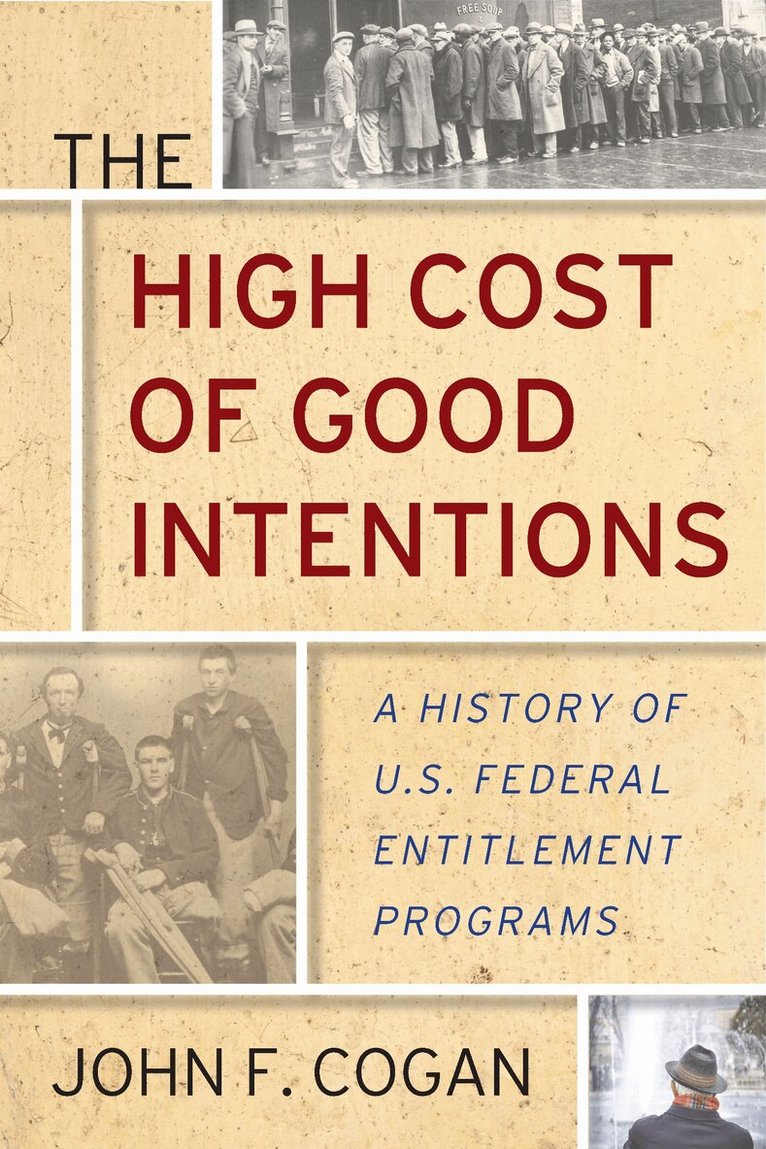
Federal entitlement programs are strewn throughout the pages of U.S. history, springing from the noble purpose of assisting people who are destitute through no fault of their own. Yet as federal entitlement programs have grown, so too have their inefficiency and their cost. Neither tax revenues nor revenues generated by the national economy have been able to keep pace with their rising growth, bringing the national debt to a record peacetime level.The High Cost of Good Intentions is the first comprehensive history of these federal entitlement programs. Combining economics, history, political science, and law, John F. Cogan reveals how the creation of entitlements brings forth a steady march of liberalizing forces that cause entitlement programs to expand. This process—as visible in the eighteenth and nineteenth centuries as in the present day—is repeated until benefits are extended to nearly all who could be considered eligible, and in turn establishes a new base for future expansions. His work provides a unifying explanation for the evolutionary path that nearly all federal entitlement programs have followed over the past two hundred years, tracing both their shared past and the financial risks they pose for future generations.