John F. Moffitt - Böcker
Visar alla böcker från författaren John F. Moffitt. Handla med fri frakt och snabb leverans.
8 produkter
8 produkter
294 kr
Skickas inom 3-6 vardagar
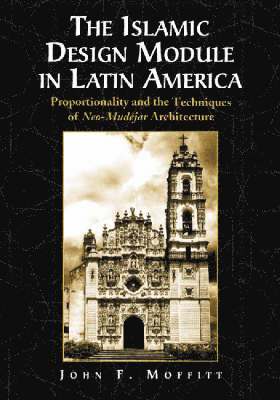
Islamic Design Module in Latin America
Proportionality and the Techniques of Neo-Mudejar Architecture
Häftad, Engelska, 2004
510 kr
Tillfälligt slut
This study analyzes the distinctive look of Hispanic architecture. Its triangulate format, originated in Islamic Spain, was based on workshop techniques once used by journeyman designers and simple artisans. Spain was the only European transatlantic colonial power to have once been occupied by Islamic overlords. Spain's conquistadors took their traditional building methods to Latin America.Formal analyses of the facades of various Latin American churches reveal them to reiterate procedures worked out in Andalusia by Islamic builders in the ninth and tenth centuries. Though widely separated by time and place, both share a proportionate system determining abstract ratios; in both cases, this regulating format was derived from manipulations of the Pythagorean triangles. This "trazado regulador" is only expressed in ratios, with no numbers, and is illustrated here with 85 visual examples including measured drawings of Egyptian, Greek, Roman, and medieval European prototypes. Grounded in historical and physical data, the research is partially drawn from four practical builders' manuals: two seventeenth-century Spanish ones and two Mexican ones from ca. 1640 and 1800. In an appendix, Viollet-le-Duc (a major nineteenth-century architect) explains architectural proportionality and the design function of the Pythagorean Triangle.
589 kr
Skickas inom 5-8 vardagar
Michelangelo Merisi da Caravaggio (1571-1610) has long been recognized as one of the great innovators in the history of art. Through detailed analysis of paintings from his early Roman period, 1594-1602, this study now situates his art firmly within both its humanistic and its scientific context. Here, both his revolutionary painterly techniques--pronounced naturalism and dramatic chiaroscuro--and his novel subject matter--still-life compositions and genre scenes--are finally put into their proper cultural and contemporary environment.This environment included the contemporary rise of empirical scientific observation, a procedure--like Caravaggio's naturalism--committed to a close study of the phenomenal world. It also included the interests of his erudite, aristocratic patrons, influential Romans whose tastes reflected the Renaissance commitment to humanistic studies, emblematic literature and classical lore. The historical evidence entered into the record here includes both contemporary writings addressing the instructive purposes of art and the ancient literary sources commonly manipulated in Caravaggio's time that sanctioned a socially realistic art. The overall result of this investigation is characterize the work of the painter as an expression of "learned naturalism."
355 kr
Skickas inom 5-8 vardagar
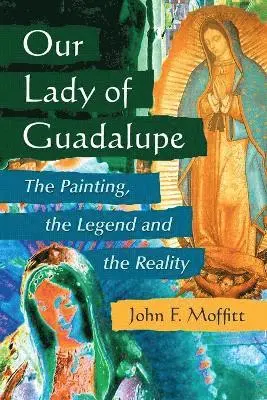
According to legend, on December 8, 1531, the Virgin Mary appeared to the newly Christianized Juan Diego on the Mexican hill of Tepeyacac. As proof of her divine visit, she miraculously imprinted her image upon his mantle. That image, known as Our Lady of Guadalupe, has become a symbol of national consciousness in Mexico and a talisman for Mexican Americans. Yet its notable features include obviously European artistic techniques. How is it that Renaissance styles are employed in a 16th century Mexican icon supposedly not made by human hands? Looking beyond the divine explanation for the Lady's existence, author John Moffitt uses historical and artistic detective work to determine the work's earthly origin.Originally published in Spanish, this volume provides an in-depth study of Our Lady of Guadalupe. It places the work within the context of art history as well as local contemporary events. The mundane origin of the painting is fully traced and investigated as well as the proliferation of the legend which led to the eventual canonization of Juan Diego as the first native Mexican saint. Appendices provide crucial related Spanish-language texts by Miguel Sanchez (1648) and Luis Laso de la Vega (1649, originally published in Nahuatl). Numerous illustrations are included.
Enthroned Corpse of Charlemagne
The Lord-in-Majesty Theme in Early Medieval Art and Life
Häftad, Engelska, 2006
478 kr
Skickas inom 5-8 vardagar
The corpse of Charlemagne was found in the year 1000 by the emperor Otto III, nearly two centuries after it had been hastily interred. All those present marveled at the corpse's striking appearance, for the revered emperor looked as though he were still living. Fully clothed in ceremonial garb and wearing his imperial crown, Charlemagne was found seated upright on a gilded chair; thus he appeared to the spectators in the then-conventional guise of a Maiestas Domini, or "Lord-in-Majesty."This work focuses on a wholly new explanation for the dramatic appearance of Charlemagne's body by studying various historical traditions and cultural contexts (most largely unexplored by medievalists). The secular sources and applications of the persistent medieval theme of the Maiestas Domini are also explored. Chapters examine such topics as Charlemagne's legacy and its role in Alfred Rethel's mural paintings (Karlsfresken); the early medieval "Lord in Majesty" and the example of Saint Foy at Conques; Saint Foy as both an imperial effigy and an apocryphal figure; a study of Charlemagne and Constantine; Roman-Imperial funerary ceremonies with wax "body replicas"; contexts for and the meaning of Charlemagne's Karlsgrab; and the Carolingian and Ottonian "Lords-in-Majesty." Numerous illustrations are included.
Painterly Perspective and Piety
Religious Uses of the Vanishing Point, from the 15th to the 18th Century
Häftad, Engelska, 2008
589 kr
Skickas inom 5-8 vardagar
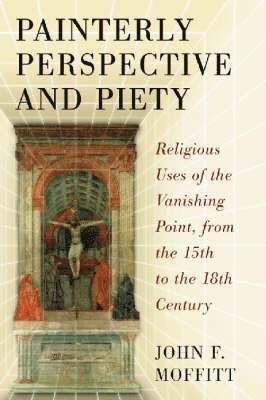
While the Renaissance is generally perceived to be a secular movement, the majority of large artworks executed in 15th century Italy were from ecclesiastical commissions. Because of the nature of primarily basilica-plan churches, a parishioner's view was directed by the diminishing parallel lines formed by the walls of the structure. Appearing to converge upon a mutual point, this resulted in an artistic phenomenon known as the vanishing point. As applied to ecclesiastical artwork, the Catholic Vanishing Point (CVP) was deliberately situated upon or aligned with a given object--such as the Eucharist wafer or Host, the head of Christ or the womb of the Virgin Mary--possessing great symbolic significance in Roman liturgy. Masaccio's fresco painting of the Trinity (circa 1427) in the Florentine church of Santa Maria Novella, analyzed in physical and symbolic detail, provides the first illustration of a consistently employed linear perspective within an ecclesiastical setting. Leonardo's Last Supper, Venaziano's St. Lucy Altarpiece, and Tome's Transparente illustrate the continuation of this use of liturgical perspective.
356 kr
Tillfälligt slut
A fascinating book demonstrating the influence of alchemy and esoteric traditions on the mature art of Marcel Duchamp.Acknowledged as the "Artist of the Century," Marcel Duchamp (1887–1968) left a legacy that dominates the art world to this day. Inventing the ironically dégagé attitude of "ready-made" art-making, Duchamp heralded the postmodern era and replaced Pablo Picasso as the role model for avant-garde artists. John F. Moffitt challenges commonly accepted interpretations of Duchamp's art and persona by showing that his mature art, after 1910, is largely drawn from the influence of the occult traditions. Moffitt demonstrates that the key to understanding the cryptic meaning of Duchamp's diverse artworks and writings is alchemy, the most pictorial of all the occult philosophies and sciences.
380 kr
Skickas inom 3-6 vardagar
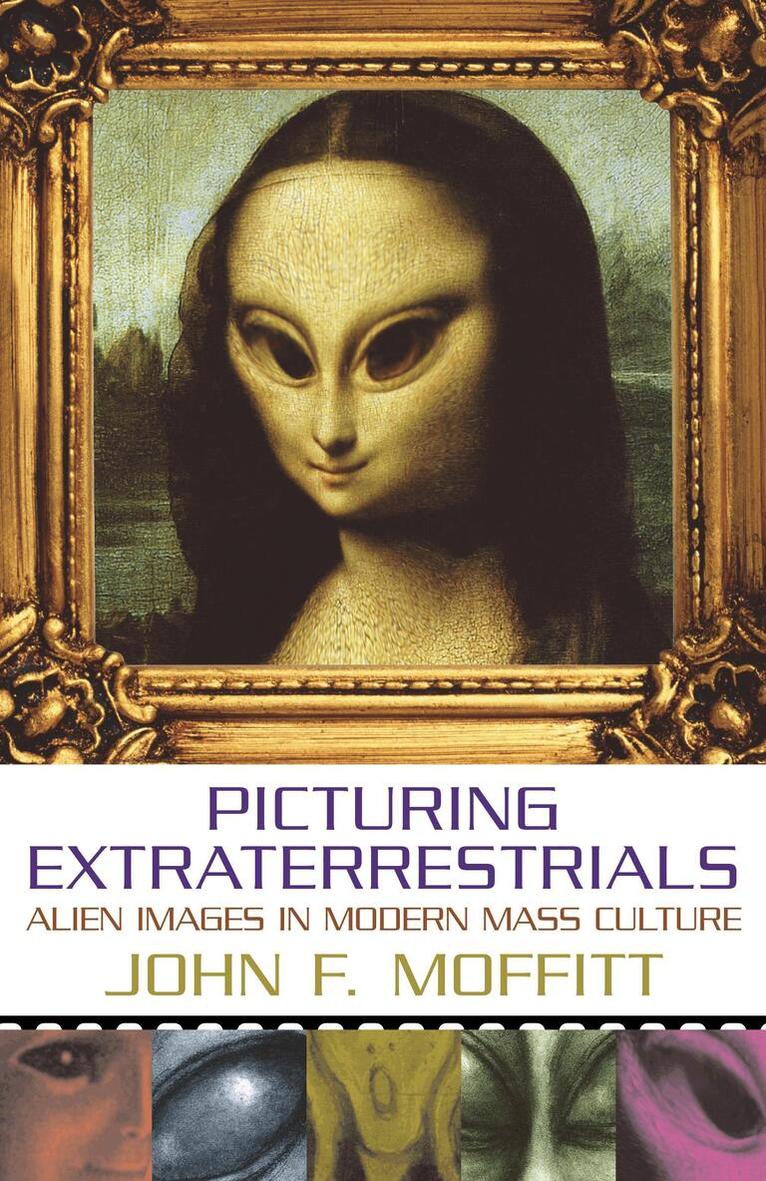
In this witty, erudite, and thoroughly researched book, art historian, John Moffitt discusses the popular iconography depicting alleged extraterrestrial (ET) visitors and the widespread appeal of this New Age craze as a mass cultural phenomenon. A thorough sceptic, Moffitt is interested in kitschy ET portraiture, not as evidence of aliens among us, but for what this imagery reveals about contemporary culture. By brilliantly placing the present cultural moment in historical context, he demonstrates how typical portrayals of aliens reflect long-running (even ancient) cultural motifs. This sweeping and, above all, entertaining perusal of popular culture presents a sophisticated, yet very accessible and often funny dissection of our current obsession with the possibility that we are not alone.