John Farley – författare
Visar alla böcker från författaren John Farley. Handla med fri frakt och snabb leverans.
17 produkter
17 produkter
Inbunden, Engelska, 2003
953 kr
Skickas inom 5-8 vardagar
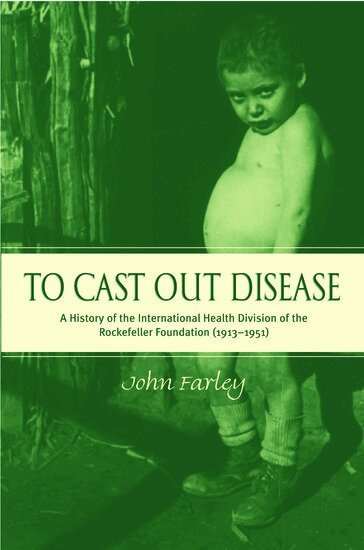
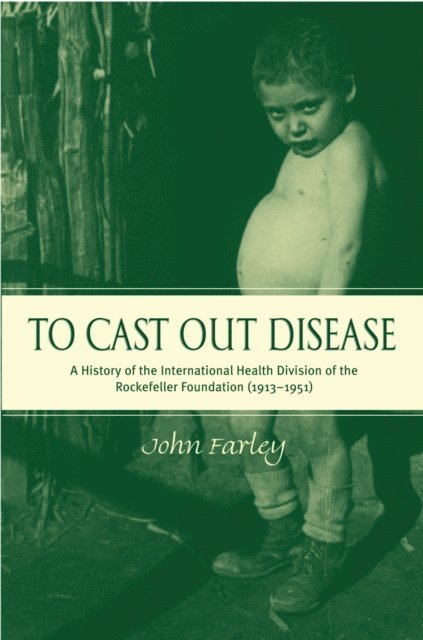
Though one of the most important public health agencies of the 20th century and the most powerful and richest branch of the Rockefeller Foundation, the International Health Division's history (1913-1951) has never been told before. This original work is based on a vast multitude of letters, reports and photographs the author uncovered in the Rockefeller Archives. Farley describes the internal struggles and the conflicts with foreign and US governments of the "medical barons" who ran the organization as they set its goals and tried to eradicate some of the world's most serious diseases. He also describes the first testing of DDT and the preparation for the US army of a yellow fever vaccine that turned out to be contaminated. He takes the reader into the often byzantine world where the organization endowed schools of public health and nursing in such diverse places as London, Toronto, fascist Rome, militaristic Tokyo, and Calcutta in the dying days of the British Raj.Farley enlivens the book with sketches of the personalities and prejudices of those who worked in the Division and of the scandals that rocked it from time to time. He shows that in the continuing debate between those who believe that disease is the root cause of ill health and poverty and those who see poverty as the primary cause, the Division remained firmly in the former position. He also shows that after it closed, former members exerted considerable influence on the development of the World Health Organization. Opposing some recent historians, Farley argues against the view that the Health Division served as an advance guard for American capitalism. His lively book will be welcomed by all who are interested in the history of public health, tropical disease, and medical institutions.
E-bok
PDF, Engelska, 2003732 kr
Läs direkt efter köp
Though one of the most important public health agencies of the 20th century and the most powerful and richest branch of the Rockefeller Foundation, the International Health Division''s history (1913-1951) has never been told before. This original work is based on a vast multitude of letters, reports and photographs the author uncovered in the Rockefeller Archives. Farley describes the internal struggles and the conflicts with foreign and US governments of the "medical barons" who ran the organization as they set its goals and tried to eradicate some of the world''s most serious diseases. He also describes the first testing of DDT and the preparation for the US army of a yellow fever vaccine that turned out to be contaminated. He takes the reader into the often byzantine world where the organization endowed schools of public health and nursing in such diverse places as London, Toronto, fascist Rome, militaristic Tokyo, and Calcutta in the dying days of the British Raj. Farley enlivens the book with sketches of the personalities and prejudices of those who worked in the Division and of the scandals that rocked it from time to time. He shows that in the continuing debate between those who believe that disease is the root cause of ill health and poverty and those who see poverty as the primary cause, the Division remained firmly in the former position. He also shows that after it closed, former members exerted considerable influence on the development of the World Health Organization. Opposing some recent historians, Farley argues against the view that the Health Division served as an advance guard for American capitalism. His lively book will be welcomed by all who are interested in the history of public health, tropical disease, and medical institutions.
Inbunden, Engelska, 1988
1 546 kr
Skickas inom 3-6 vardagar
Inbunden, Engelska, 1991
1 531 kr
Skickas inom 7-10 vardagar
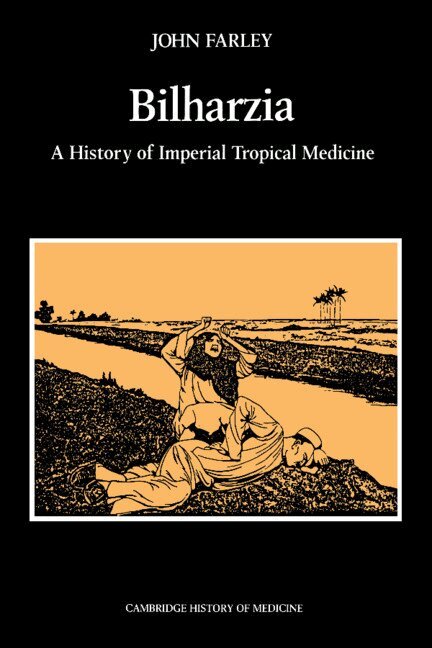
The advent of tropical medicine was a direct consequence of European and American imperialism, when military personnel, colonial administrators, businessmen, and settlers encountered a new set of diseases endemic to the tropics. Professor Farley describes how governments and organizations in Britain, the British colonies, the United States, Central and South America, South Africa, China, and the World Health Organization faced one particular tropical disease, bilharzia or schistosomiasis. Bilharzia is caused by a species of blood vessel-inhabiting parasitic worms and today afflicts over 200 million people in seventy-four countries. John Farley demonstrates that British and American imperial policies and attitudes largely determined the nature of tropical medicine. Western medical practitioners defined the type of medical system that was imposed on the indigenous populations; they dictated which diseases were important and worthy of study, which diseases were to be controlled, and which control methods were to be used.
Häftad, Engelska, 2003
609 kr
Skickas inom 7-10 vardagar
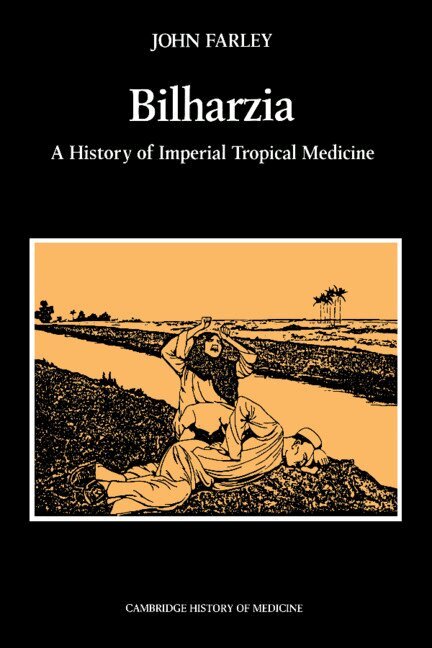
The advent of tropical medicine was a direct consequence of European and American imperialism, when military personnel, colonial administrators, businessmen, and settlers encountered a new set of diseases endemic to the tropics. Professor Farley describes how governments and organizations in Britain, the British colonies, the United States, Central and South America, South Africa, China, and the World Health Organization faced one particular tropical disease, bilharzia or schistosomiasis. Bilharzia is caused by a species of blood vessel-inhabiting parasitic worms and today afflicts over 200 million people in seventy-four countries. John Farley demonstrates that British and American imperial policies and attitudes largely determined the nature of tropical medicine. Western medical practitioners defined the type of medical system that was imposed on the indigenous populations; they dictated which diseases were important and worthy of study, which diseases were to be controlled, and which control methods were to be used.
Inbunden, Engelska, 2008
491 kr
Skickas inom 5-8 vardagar
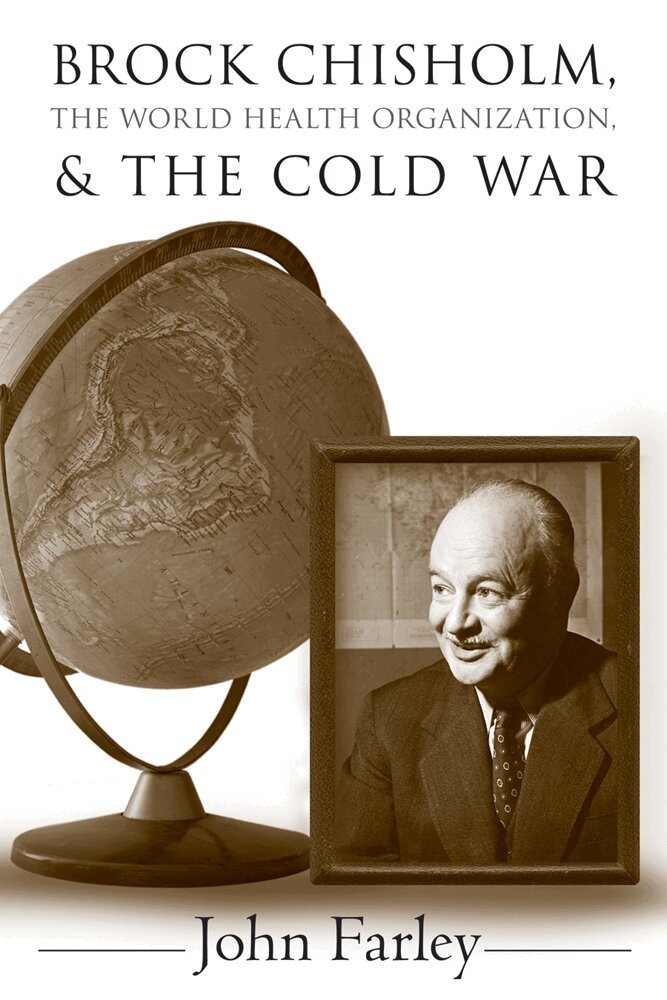
This is the story of a man and an institution. Brock Chisholm wasone of the most influential Canadians of the twentieth century. Aworld-renowned psychiatrist, he was the first director-general of theWorld Health Organization, and built it up against overwhelmingpolitical odds in the years immediately following the Second WorldWar.During Chisholm's lifetime, the only other Canadians asinternationally prominent were Lester B. Pearson and Marshall McLuhan.Yet today he has been largely forgotten – perhaps because he wasso controversial. An atheist and a fierce critic of jingoisticnationalism, he supported world peace and world government and became achampion of the United Nations and the WHO.Official histories of the WHO place the organization in a politicalvacuum, but John Farley focuses on the battles Chisholm and his allieswaged during the early Cold War, as the United States and the SovietUnion eyed each other warily and the Roman Catholic Church flexed itsmuscle on morally sensitive medical issues. Post-1945 internationalpolitics, global health issues, and medical history intersect in thishighly readable account of a remarkable Canadian.
Häftad, Engelska
247 kr
Skickas inom 3-6 vardagar
Inbunden, Engelska, 2022
440 kr
Skickas inom 5-8 vardagar
Häftad, Engelska, 2022
304 kr
Skickas inom 5-8 vardagar
Häftad, Engelska, 2010
331 kr
Skickas inom 5-8 vardagar
Häftad, Engelska, 2010
318 kr
Skickas inom 5-8 vardagar
Inbunden, Engelska, 2018
455 kr
Skickas inom 5-8 vardagar
Inbunden, Engelska, 2018
441 kr
Skickas inom 5-8 vardagar
Inbunden, Engelska, 2018
442 kr
Skickas inom 5-8 vardagar