John H. Cameron - Böcker
Visar alla böcker från författaren John H. Cameron. Handla med fri frakt och snabb leverans.
5 produkter
5 produkter
2 632 kr
Skickas inom 10-15 vardagar
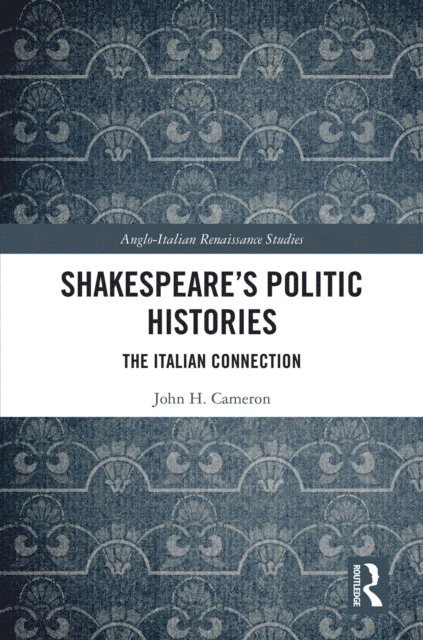
This book posits that Shakespeare’s First Tetralogy draws inspiration from the Italian “politic histories” of the early modern period. These works of history, influenced by the Roman historian Tacitus, delve into the exploration of the machinations of power politics in governance and the shaping of historical events. The argument is that closely analysing these Italian “politic histories” can significantly enhance our understanding of the “politic” aspects dramatized in Shakespeare’s early English History plays. Specifically, the writings of Niccolo Machiavelli are highlighted as contributing to this understanding. These “politic histories” were accessible (in a variety of forms) to many English early modern writers, including Shakespeare. Thus, they serve as foundation for political and strategic analogies, enriching our interpretation of Shakespeare’s politic histories.While delving into the Italian “politic” historians can illuminate Shakespeare’s achievement, it is suggested that we should regard the English History plays as “politic histories” in their own right. In essence, they are dramatized versions of precisely the same kinds of “politic” historical writing, with its emphasis on ragion di Stato or raison d’état. This emphasis on what the Elizabethans called “stratagems” introduces new approaches to interpreting the plays. Considering the motivation and action of its characters entails novel approaches that challenge the established reading of the plays’ ‘Machiavellian’ characters (particularly Richard III) and shed light on previously overlooked characters (particularly Buckingham and Stanley), revealing their considerably greater strategic acumen. This exploration provides fresh avenues for reading the Shakespeare’s politic histories and better appreciate their Italian connection.
725 kr
Skickas inom 10-15 vardagar
This book posits that Shakespeare’s First Tetralogy draws inspiration from the Italian “politic histories” of the early modern period. These works of history, influenced by the Roman historian Tacitus, delve into the exploration of the machinations of power politics in governance and the shaping of historical events. The argument is that closely analysing these Italian “politic histories” can significantly enhance our understanding of the “politic” aspects dramatized in Shakespeare’s early English History plays. Specifically, the writings of Niccolo Machiavelli are highlighted as contributing to this understanding. These “politic histories” were accessible (in a variety of forms) to many English early modern writers, including Shakespeare. Thus, they serve as foundation for political and strategic analogies, enriching our interpretation of Shakespeare’s politic histories.While delving into the Italian “politic” historians can illuminate Shakespeare’s achievement, it is suggested that we should regard the English History plays as “politic histories” in their own right. In essence, they are dramatized versions of precisely the same kinds of “politic” historical writing, with its emphasis on ragion di Stato or raison d’état. This emphasis on what the Elizabethans called “stratagems” introduces new approaches to interpreting the plays. Considering the motivation and action of its characters entails novel approaches that challenge the established reading of the plays’ ‘Machiavellian’ characters (particularly Richard III) and shed light on previously overlooked characters (particularly Buckingham and Stanley), revealing their considerably greater strategic acumen. This exploration provides fresh avenues for reading the Shakespeare’s politic histories and better appreciate their Italian connection.
1 850 kr
Kommande
2 089 kr
Skickas inom 3-6 vardagar
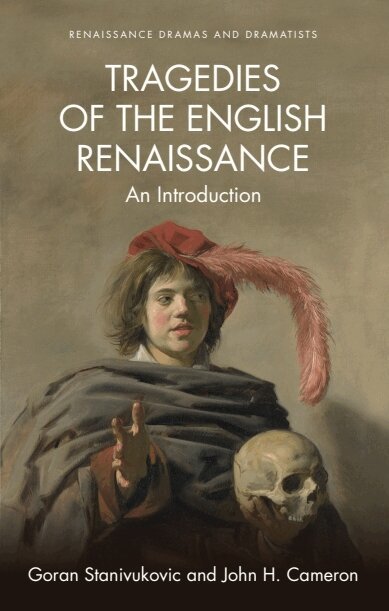
Explores popular Renaissance tragedies through a chronological commentary of political, social, cultural and aesthetic factorsThis book covers the development of tragedy as a dramatic genre from its earliest examples in the 1560's until the closure of the theatres in 1642. It traces the astonishingly diverse range of tragedies as they were influenced by the growth of public and private theatre venues in London. Tragedy was the most popular and the most diverse of theatrical genres during the English Renaissance; it was also the most disruptive and subversive. For Shakespeare and his contemporaries, tragedy reaches kings and queens and everyday person alike. Tragedy has rules, but these were rules that playwrights were ready to trouble and transform to meet changes in society and politics, in theatre venue, and in audience demand.Key FeaturesPlays and their authors are discussed alongside each other against the background of the socio-cultural and political conditions of their timesShows the degree to which theatre history can be connected with other significant contextual factors and critical ideas in analysis of the tragedies of the English RenaissanceReflects the latest scholarship of early modern theatre history (especially London theatres), the history of performance and acting and the print history of stage playsInspects the sub-genres associated with the form, such as revenge tragedy, historical tragedy, domestic tragedy, tragicomedy and closet drama
283 kr
Skickas inom 7-10 vardagar
Explores popular Renaissance tragedies through a chronological commentary of political, social, cultural and aesthetic factorsThis book covers the development of tragedy as a dramatic genre from its earliest examples in the 1560's until the closure of the theatres in 1642. It traces the astonishingly diverse range of tragedies as they were influenced by the growth of public and private theatre venues in London. Tragedy was the most popular and the most diverse of theatrical genres during the English Renaissance; it was also the most disruptive and subversive. For Shakespeare and his contemporaries, tragedy reaches kings and queens and everyday person alike. Tragedy has rules, but these were rules that playwrights were ready to trouble and transform to meet changes in society and politics, in theatre venue, and in audience demand.Key FeaturesPlays and their authors are discussed alongside each other against the background of the socio-cultural and political conditions of their timesShows the degree to which theatre history can be connected with other significant contextual factors and critical ideas in analysis of the tragedies of the English RenaissanceReflects the latest scholarship of early modern theatre history (especially London theatres), the history of performance and acting and the print history of stage playsInspects the sub-genres associated with the form, such as revenge tragedy, historical tragedy, domestic tragedy, tragicomedy and closet drama