John Kay – författare
Visar alla böcker från författaren John Kay. Handla med fri frakt och snabb leverans.
55 produkter
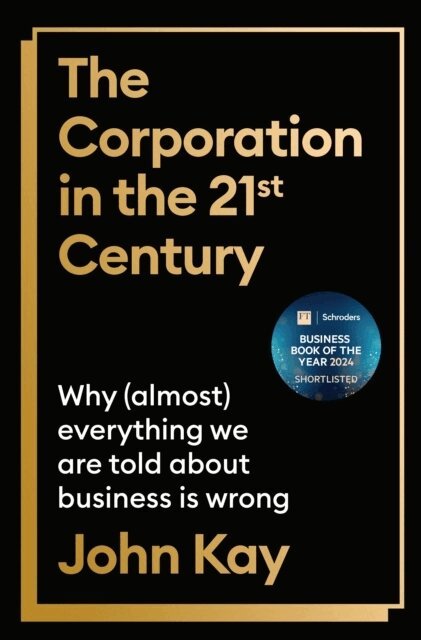
Corporation in the Twenty-First Century
AN ECONOMIST BEST BOOK OF 2025
Av John Kay
Häftad, 2025
178 kr
Lägg i varukorg
SHORTLISTED FOR THE FINANCIAL TIMES AND SCHRODERS BUSINESS BOOK OF THE YEAR 2024A NEW STATESMAN BOOK OF THE YEAR 2024 A FINANCIAL TIMES BEST BUSINESS BOOK OF THE YEAR 2024'Original and thought-provoking... A brilliantly erudite account of the major waves in the theory and practice of management' …
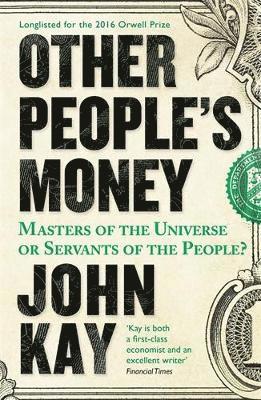
Other People's Money
Masters of the Universe or Servants of the People?
Av John Kay
Häftad, 2016
125 kr
Lägg i varukorg
Shortlisted for the Orwell Prize 2016We all depend on the finance sector. We need it to store our money, manage our payments, finance housing stock, restore infrastructure, fund retirement and support new business. But these roles comprise only a tiny sliver of the sector's activity: the vast …
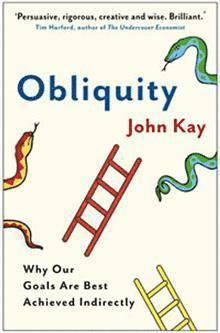
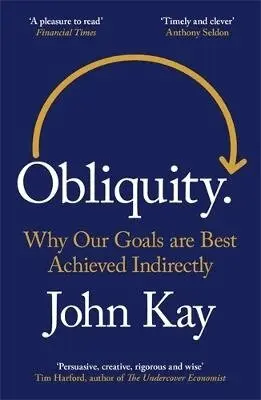
Obliquity
Why our goals are best achieved indirectly
Av John Kay
Häftad, 2011
157 kr
Lägg i varukorg
If you want to go in one direction, the best route may involve going in another. This is the concept of 'obliquity': paradoxical as it sounds, many goals are more likely to be achieved when pursued indirectly. The richest men and women are not the most materialistic; the happiest people are not …
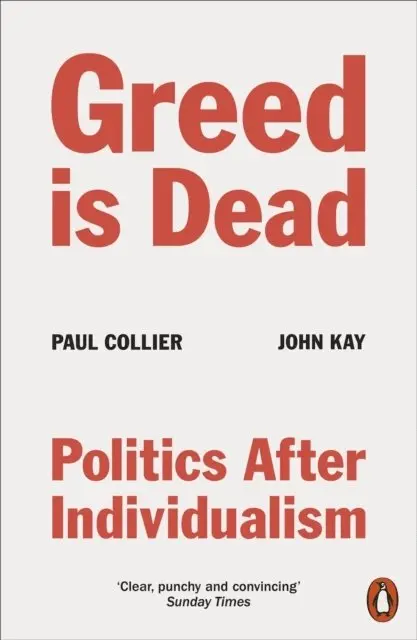
Greed Is Dead
Politics After Individualism
Av Paul Collier, John Kay
Häftad, 2021
121 kr
Lägg i varukorg
Two of the UK's leading economists call for an end to extreme individualism as the engine of prosperity 'provocative but thought-provoking and nuanced' TelegraphThroughout history, successful societies have created institutions which channel both competition and co-operation to achieve complex …
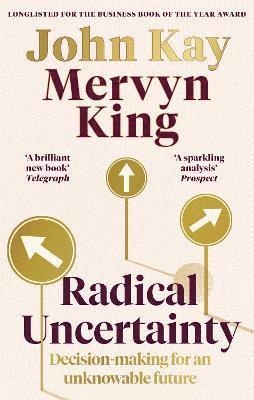
Radical Uncertainty
Decision-making for an unknowable future
Av Mervyn King, John Kay
Häftad, 2021
168 kr
Lägg i varukorg
'A brilliant new book' Daily Telegraph'Well written . . . and often entertaining'The Times'A sparkling analysis'ProspectWhen uncertainty is all around us, and the facts are not clear, how can we make good decisions?We do not know what the future will hold, particularly in the midst of a crisis, but …
Obliquity
Why our goals are best achieved indirectly
Av John Kay
Häftad, 2026
115 kr
Kommande
'Persuasive, rigorous, creative and wise. Brilliant' TIM HARFORD'Kay is both a first-class economist and an excellent writer' FINANCIAL TIMESIt may feel paradoxical, but in business and in life, our goals are often best achieved when approaching them indirectly. In a traffic jam, the quickest route …
Culture and Prosperity: Why Some Nations Are Rich But Most Remain Poor
Av John Kay
Häftad, 2005
225 kr
Lägg i varukorg
Truth About Markets
Why Some Nations are Rich But Most Remain Poor
Av John Kay
Häftad, 2004
171 kr
Lägg i varukorg
Capitalism faltered at the end of the 1990s as corporations were rocked by fraud, the stock-market bubble burst and the American business model – unfettered self-interest, privatization and low tax – faced a storm of protest. But what are the alternatives to the mantras of market …
Truth About Markets
Why Some Nations are Rich But Most Remain Poor
Av John Kay
E-bok, 2004
136 kr
Lägg i varukorg
Capitalism faltered at the end of the 1990s as corporations were rocked by fraud, the stock-market bubble burst and the American business model – unfettered self-interest, privatization and low tax – faced a storm of protest. But what are the alternatives to the mantras of market …
Greed Is Dead
Politics After Individualism
Av Paul Collier, John Kay
E-bok, 2020
108 kr
Lägg i varukorg
Two of the UK's leading economists call for an end to extreme individualism as the engine of prosperity 'provocative but thought-provoking and nuanced' TelegraphThroughout history, successful societies have created institutions which channel both competition and co-operation to achieve complex …
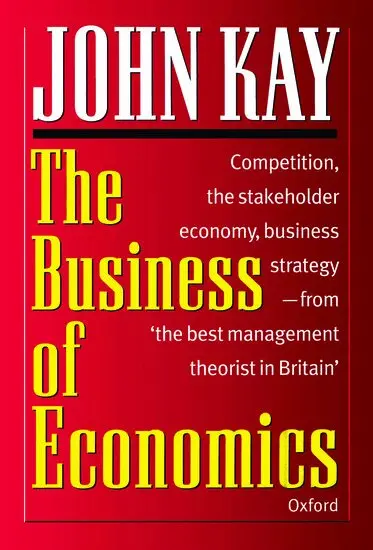
Business of Economics
Av John Kay
E-bok, 1996
1171 kr
Lägg i varukorg
John Kay has been described as the `most important business analyst in Britain bar none'', and this book shows why.Here he combines common sense and rigorous economic thinking in a number of essays on business and economic issues—-the competitiveness of UK plc, the stakeholder economy, business …
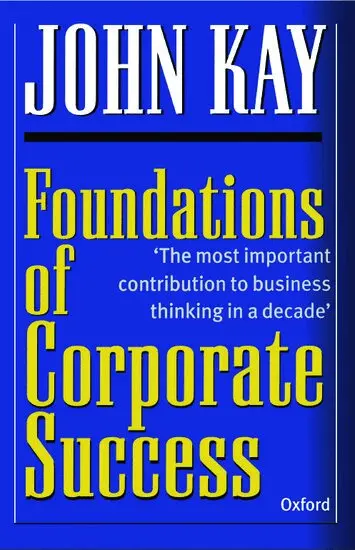
Foundations of Corporate Success
How Business Strategies Add Value
Av John Kay
E-bok, 1995
2622 kr
Lägg i varukorg
How did BMW recover from the edge of bankruptcy to become on of Europe''s strongest companies? Why did Saatchi and Saatchi''s global strategy bring the company to its knees? Why has Philips''s outstanding record in innovation not been translated into success in the market? What can be learnt from …
Why Firms Succeed
Av John Kay
Inbunden, 1996
686 kr
Lägg i varukorg
Applies modern economic theories to guide managers in creating successful corporate strategies.This is a book on corporate strategy that uses of the most modern theories in economics to show managers how to succeed in the markets in which they compete. The author takes the position that firms have …
Why Firms Succeed
Av John Kay
E-bok, 1995
340 kr
Lägg i varukorg
When John Kay''s Foundations of Corporate Success first appeared in the U.K., it commanded the attention of the corporate world--and drew widespread praise. The Financial Times hailed it as "a powerfully argued book, which casts a fresh light on a range of practical business challenges." And …
The Market for Energy
Av Helm, Dieter Helm m. fl.
Inbunden, 1989
1242 kr
Lägg i varukorg
This is an up-to-date account of economic aspects of the energy markets, dealing with recent advances in the economics of energy and the implications for regulation, privatization, and international competition in each of the major markets - electricity, gas, coal, and oil.
Foundations of Corporate Success
How Business Strategies Add Value
Av John Kay
Inbunden, 1993
3907 kr
Lägg i varukorg
How did BMW recover from the verge of bankruptcy to become one of Europe's strongest companies? Why did Saatchi and Saatchi's global strategy bring the company to its knees? Why has Philips' outstanding record in innovation not been translated into success in the market? What can be learned from …
Foundations of Corporate Success
How Business Strategies Add Value
Av John Kay
Häftad, 1995
989 kr
Lägg i varukorg
How did BMW recover from the edge of bankruptcy to become on of Europe's strongest companies? Why did Saatchi and Saatchi's global strategy bring the company to its knees? Why has Philips's outstanding record in innovation not been translated into success in the market? What can be learnt from the …
The Business of Economics
Av John Kay
Inbunden, 1996
2092 kr
Lägg i varukorg
John Kay has been described as the `most important business analyst in Britain bar none', and this book shows why. Here he combines common sense and rigorous economic thinking in a number of essays on business and economic issues---the competitiveness of UK plc, the stakeholder economy, business …
Privatization and Economic Performance
Av Bishop, Matthew Bishop m. fl.
Inbunden, 1994
3555 kr
Lägg i varukorg
One of the most enduring legacies of the 1980s has been the programme of privatizations that the Thatcher government set in train in the first half of the decade. Whole sectors of the UK economy which were formerly part of the public sector were sold off to the private sector. Some were bought out …
Privatization and Economic Performance
Av Matthew Bishop, John Kay m. fl.
Häftad, 1994
1110 kr
Lägg i varukorg
One of the most enduring legacies of the 1980s has been the programme of privatizations that the Thatcher government set in train in the first half of the decade. Whole sectors of the UK economy which were formerly part of the public sector were sold off to the private sector. Some were bought out …
Greed Is Dead
Politics After Individualism
Av John Kay, Paul Collier
Ljudbok, 2020
166 kr
Lägg i varukorg
Brought to you by Penguin. The idea that people are basically driven by individualism and economic incentives, and that prosperity and good societies come from top-down leadership, has dominated politics for the last thirty years (from some perspectives, much longer). This book shows that the age …
The Corporation in the Twenty-First Century: Why (Almost) Everything We Are Told about Business Is Wrong
Av John Kay
Inbunden, 2025
403 kr
Lägg i varukorg
The Corporation in the Twenty-First Century: Why (Almost) Everything We Are Told about Business Is Wrong
Av John Kay
Häftad, 2025
259 kr
Lägg i varukorg
Kay's Edinburgh Portraits; A Series of Anecdotal Biographies Chiefly of Scotchmen
Av James Maidment, James Paterson m. fl.
Inbunden, 2022
398 kr
Lägg i varukorg
Kay's Edinburgh Portraits; A Series of Anecdotal Biographies Chiefly of Scotchmen
Av James Maidment, James Paterson m. fl.
Häftad, 2022
273 kr
Lägg i varukorg
Memoir of John Kay of Bury, Together With a Brief Memoir of the Author by W. Lord
Inbunden, 2022
443 kr
Lägg i varukorg
Memoir of John Kay of Bury, Together With a Brief Memoir of the Author by W. Lord
Häftad, 2022
279 kr
Lägg i varukorg
Kay's Edinburgh Portraits
A Series Of Anecdotal Biographies Chiefly Of Scotchmen; Volume 2
Av James Paterson, John Kay m. fl.
Inbunden, 2022
398 kr
Lägg i varukorg
Kay's Edinburgh Portraits
A Series Of Anecdotal Biographies Chiefly Of Scotchmen; Volume 2
Av James Paterson, John Kay m. fl.
Häftad, 2022
288 kr
Lägg i varukorg






![Hugh Paton, John Kay - series of original Portraits and Caricature Etchings by J. Kay; with biographical sketches and illustrative anecdotes. [Edited by H. P.] VOL. II, NEW EDITION, Häftad. Tillgänglighet: Lägg i varukorg](https://image.bokus.com/images2/9781241522018_766)