• Fri frakt över 249 kr
  • •
  • Snabba leveranser
  • •
  • Billiga böcker
Kundservice

Du är på sajten för privatpersoner.

Företag, bibliotek eller offentlig verksamhet?

Du handlar på classic.bokus.com, där alla dina funktioner finns intakta.
Till classic.bokus.com
Bokus logotyp. Gå till startsidan.
  • Erbjudanden
  • Student
  • Topplistor
  • Barn & ungdom
  • Bokus Play
  • E-böcker
  • Ljudböcker
  • Pocketböcker
  • Spel & pussel

Upp till 25% på utvalda nyheter →

Sidfot

Mina sidor

    Hjälp

    • Kundservice
    • Vanliga frågor och svar
    • Frakt och leverans
    • Retur vid ångerrätt
    • Reklamera vara
    • Betalning
    • Köpvillkor
    • Allmänna villkor
    • Information om webbplatsens tillgänglighet

    Om Bokus

    • Om oss
    • Pressrum
    • För studenter
    • För företag
    • För bibliotek och offentlig verksamhet
    • För leverantörer
    • Hållbarhet

    Populärt

    • Aktuella erbjudanden
    • Presentkort
    • Studentlitteratur
    • Nya böcker
    • Topplistor
    • Signerade böcker
    • Engelska böcker

    Inspiration

    • Boktips
    • BookTok
    • Populära bokserier
    • Barnbokskaraktärer
    • Populära författare
    Logotyp för Bokus
    Följ oss på Facebook (extern länk)Följ oss på Instagram (extern länk)Följ oss på YouTube (extern länk)Följ oss på TikTok (extern länk)
    bokus @ CookiesAnpassa cookiesIntegritetspolicyKöpvillkor
    Till Citymail hemsida (extern länk)Till Budbee hemsida (extern länk)Till Postnord hemsida (extern länk)Till Schenker hemsida (extern länk)Till Early Bird hemsida (extern länk)Till Walleys hemsida (extern länk)
    1. Ekonomi och Ledarskap
    2. Företagsekonomi

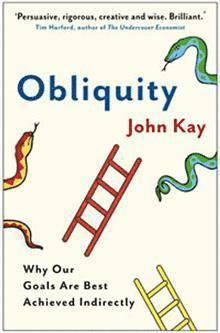
    Obliquity

    Why our goals are best achieved indirectly

    AvJohn Kay

    Häftad, Engelska, 2011

    116 kr

    Skickas . Fri frakt över 249 kr.

    Fler format och utgåvor

    Häftad

    Kommande

    E-bok

    117 kr

    Beskrivning

    If you want to go in one direction, the best route may involve going in another. This is the concept of 'obliquity': paradoxical as it sounds, many goals are more likely to be achieved when pursued indirectly. The richest men and women are not the most materialistic; the happiest people are not necessarily those who focus on happiness, and the most profitable companies are not always the most profit-oriented as the recent financial crisis showed us.Whether overcoming geographical obstacles, winning decisive battles or meeting sales targets, history shows that oblique approaches are the most successful, especially in difficult terrain. John Kay applies his provocative, universal theory to everything from international business to town planning and from football to managing forest fire.

    Produktinformation

    • Utgivningsdatum:2011-02-03
    • Mått:128 x 196 x 14 mm
    • Vikt:163 g
    • Format:Häftad
    • Språk:Engelska
    • Antal sidor:224
    • Förlag:Profile Books Ltd
    • ISBN:9781846682896

    Utforska kategorier

    • Företagsekonomi inom Ekonomi och Ledarskap
    • Personlig utveckling inom Psykologi och pedagogik

    Mer om författaren

    John Kay is a visiting professor at the London School of Economics and a fellow of St John's College, Oxford. As research director and director of the Institute for Fiscal Studies he established it as one of Britain's most respected think tanks. Since then he has been a professor at the London Business School and the University of Oxford, where he was the first director of the Said Business School. He is a regular columnist for the Financial Times and the author of numerous books, including The Truth About Markets (9781848296723) and The Long and the Short of It (9780954809324).

    Recensioner i media

    This is an elegant, simple book and, rarely for a business book, is written by a man who actually understands the academics and philosophers he quotes. The best nine quid you'll spend this year