John L.R. Proops – författare
Visar alla böcker från författaren John L.R. Proops. Handla med fri frakt och snabb leverans.
4 produkter
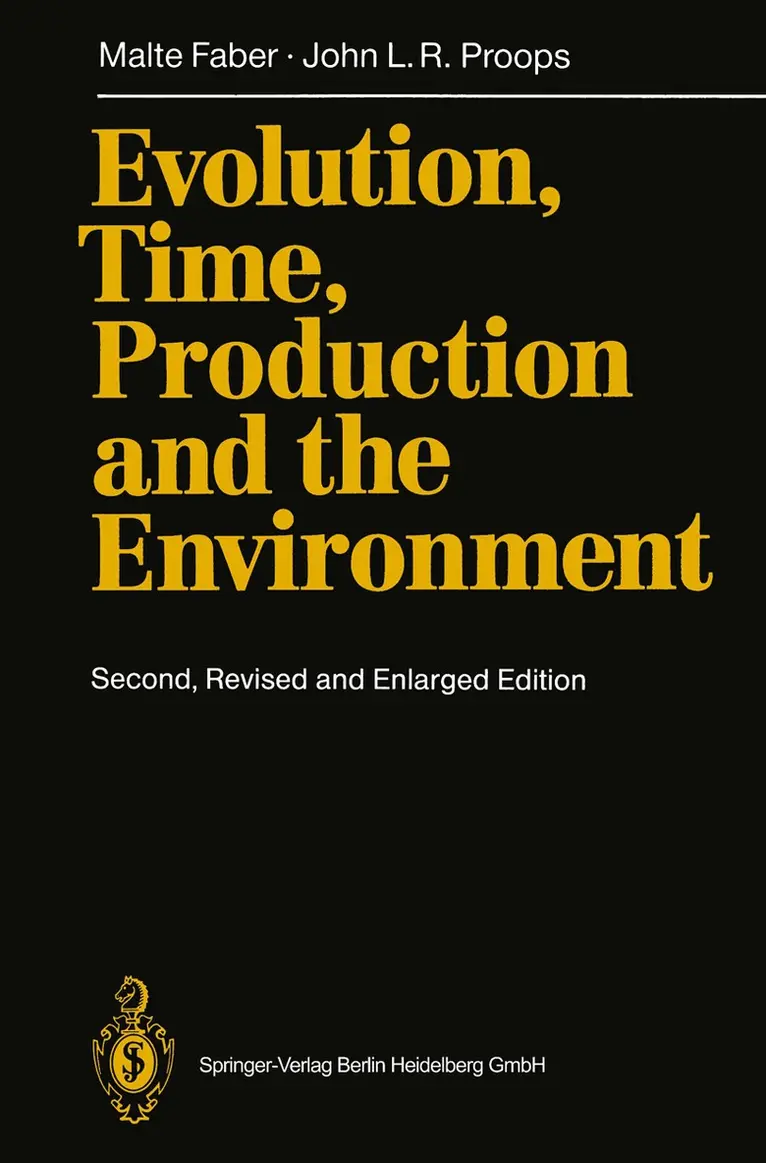
Evolution, Time, Production and the Environment
Av Malte Faber, John L.R. Proops
Häftad, 1994
568 kr
Lägg i varukorg
This second edition is brought about by two factors. First, the initial printing sold out much more rapidly than we expected. Second, several colleagues have been kind enough to suggest that this book not only has a contribution to make to ecological economics, but also has relevance to economics …
Reducing CO2 Emissions
A Comparative Input-Output-Study for Germany and the UK
Av Gerhard Wagenhals, Malte Faber m. fl.
E-bok, 2012
734 kr
Lägg i varukorg
The global greenhouse effect may be one of the greatest challenges ever to face humankind. If fossil fuel use, and the consequent CO emissions, 2 continue to increase at their current trend, there is the possibility that over the next century there will be massive climate change and the flooding of …
Reducing CO2 Emissions
A Comparative Input-Output-Study for Germany and the UK
Av John L.R. Proops, Malte Faber m. fl.
Häftad, 2011
552 kr
Lägg i varukorg
The global greenhouse effect may be one of the greatest challenges ever to face humankind. If fossil fuel use, and the consequent CO emissions, 2 continue to increase at their current trend, there is the possibility that over the next century there will be massive climate change and the flooding of …
Evolution, Time, Production and the Environment
Av John L.R. Proops, Malte Faber
E-bok, 2013
1174 kr
Lägg i varukorg
Long-run interactions between the economy and the natural environment are studied from all points of view. First, the aims of this overview are illustrated in Part I. Part II then explores and develops the concept of evolution, in particular distinguishing between evolution which does not involve …