John M Lambert – författare
Visar alla böcker från författaren John M Lambert. Handla med fri frakt och snabb leverans.
4 produkter
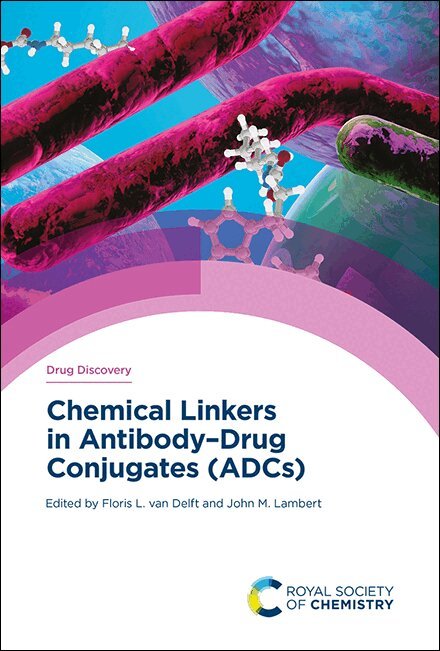
Chemical Linkers in Antibody–Drug Conjugates (ADCs)
Av Floris van Delft, John M Lambert
Inbunden, 2021
3206 kr
Lägg i varukorg
The covalent conjugation of potent cytotoxic agents to monoclonal antibodies, known as antibody-drug conjugates (ADCs) is a powerful approach in the field of targeted treatment of cancer. Clearly, both monoclonal antibody and cytotoxic payload are crucial elements in determining the clinical value …
Chemical Linkers in Antibody-Drug Conjugates (ADCs)
Av John M Lambert, Floris van Delft
E-bok, 2021
3004 kr
Lägg i varukorg
The covalent conjugation of potent cytotoxic agents to monoclonal antibodies, known as antibody-drug conjugates (ADCs) is a powerful approach in the field of targeted treatment of cancer. Clearly, both monoclonal antibody and cytotoxic payload are crucial elements in determining the clinical value …
Chemical Linkers in Antibody-Drug Conjugates (ADCs)
Av John M Lambert, Floris van Delft
E-bok, 2021
3004 kr
Lägg i varukorg
The covalent conjugation of potent cytotoxic agents to monoclonal antibodies, known as antibody-drug conjugates (ADCs) is a powerful approach in the field of targeted treatment of cancer. Clearly, both monoclonal antibody and cytotoxic payload are crucial elements in determining the clinical value …
Trends in Antibody Drug Discovery for Cancer Therapy
Av Christian Klein, John M. Lambert
Inbunden, 2027
1581 kr
Kommande
Drug developers share strategies for next-generation antibody-based cancer therapeuticsCancer immunotherapy has produced two transformative drug classes: bispecific antibodies and antibody-drug conjugates. Trends in Antibody Drug Discovery for Cancer Therapy brings together drug developers from …