John N. Miksic - Böcker
Visar alla böcker från författaren John N. Miksic. Handla med fri frakt och snabb leverans.
5 produkter
5 produkter
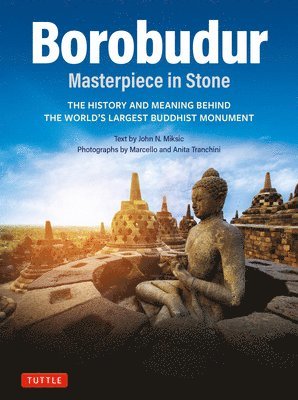
Borobudur: Masterpiece in Stone
The History and Meaning Behind the World's Largest Buddhist Monument (Revised Third Edition)
Häftad, Engelska, 2025
208 kr
Skickas
"This is simply the best book ever written on the single largest Buddhist monument in the world" —Patricia Welch, author and lecturer on Asian artBorobudur is the largest Buddhist monument in the world—a masterpiece containing thousands of intricately carved panels and sculptures blending Indian art with local Javanese culture. The panels retell the lives of the Buddhas along with dozens of other tales of worldly desire and the heroics feats of enlightened beings. After viewing these, visitors ascend to open terraces at the top to enjoy majestic vistas of the surrounding landscape—an experience designed to evoke the eternal bliss of Buddhist nirvana.This book presents a detailed history of the monument as well as a description of its art and design. Author John Miksic recounts Borobudur's history from its construction in the 9th century to its rediscovery in the 19th century and multiple restorations by the Dutch colonial government, the Indonesian Government and UNESCO in the 20th century. Surveying ancient Javanese texts and contemporary scholarship, Miksic walks us through the temples main features, honing in on important details. The book includes chapters on:History and Archaeology — How Buddhism came to Indonesia, the monument's history and construction, and what it tells us about ancient Javanese societyArchitecture and Symbolism — The unique design of the monument and how it was used in ancient timesThe Reliefs — The fables and stories beautifully told in hundreds of artfully-carved panels lining Borobudur's lower terraces, including the Jataka tales, the Life of Gautama Buddha and the Gandavyuha taleBorobudur: Masterpiece in Stone is sure to be treasured by anyone intending to visit Borobudur as well as all those with an interest in Buddhist art and history.
695 kr
Skickas inom 10-15 vardagar
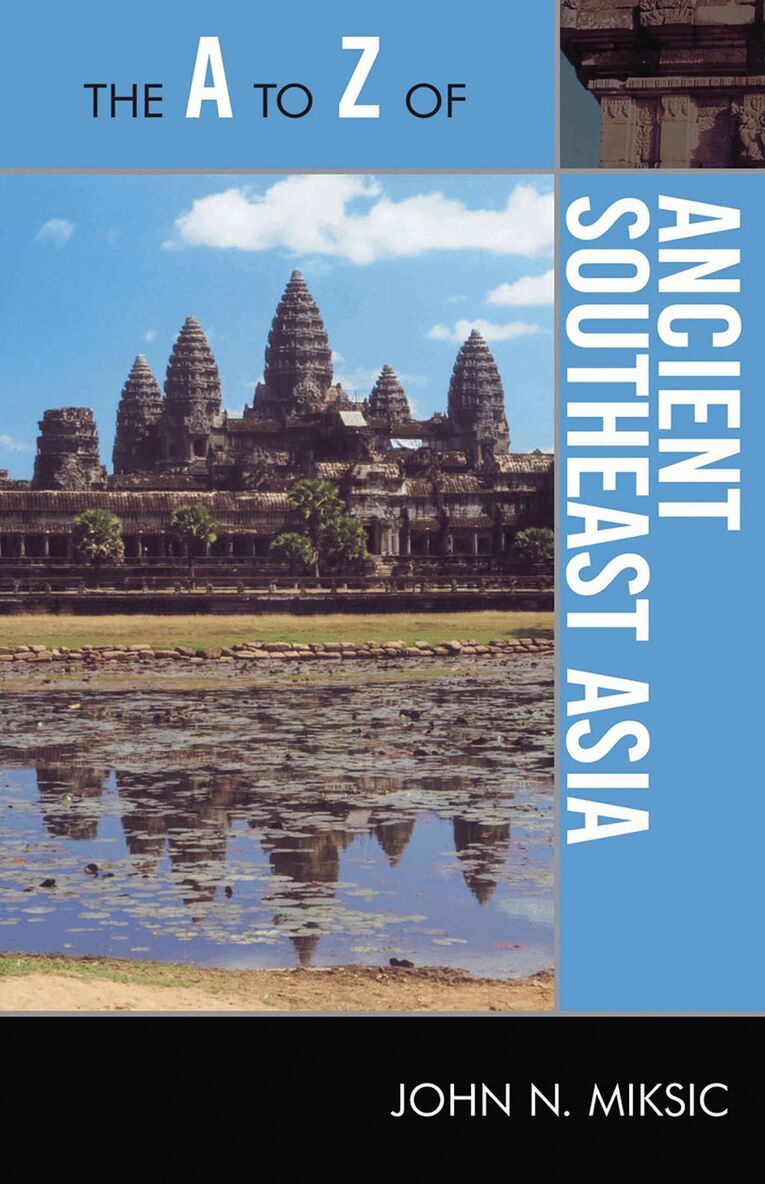
Anyone who has seen the stunning ruins at Angkor, Bagan, and Barabudur will readily understand why Southeast Asia is the host of so many United Nations Educational, Scientific, and Cultural Organization World Heritage Sites. As beautiful as the spiraling towers, intricate carvings, and delicate bas-reliefs adorning these monuments are, however, they just barely scratch the surface of the immense historical and cultural heritage of the region.Covering the countries of Brunei, Cambodia, Indonesia, Laos, Malaysia, Myanmar, the Philippines, Singapore, Thailand, and Vietnam during the period from the first to the fifteenth century, The A to Z of Ancient Southeast Asia helps us comprehend the vast and complex history of the region through a chronology, a glossary, a bibliography, an introduction, appendixes, maps, photographs, diagrams, and hundreds of cross-referenced dictionary entries on the major (and many minor) sites, the more significant historical figures, the kingdoms they ruled over, the economic and social relations between them, and the artistic, cultural, and religious context.
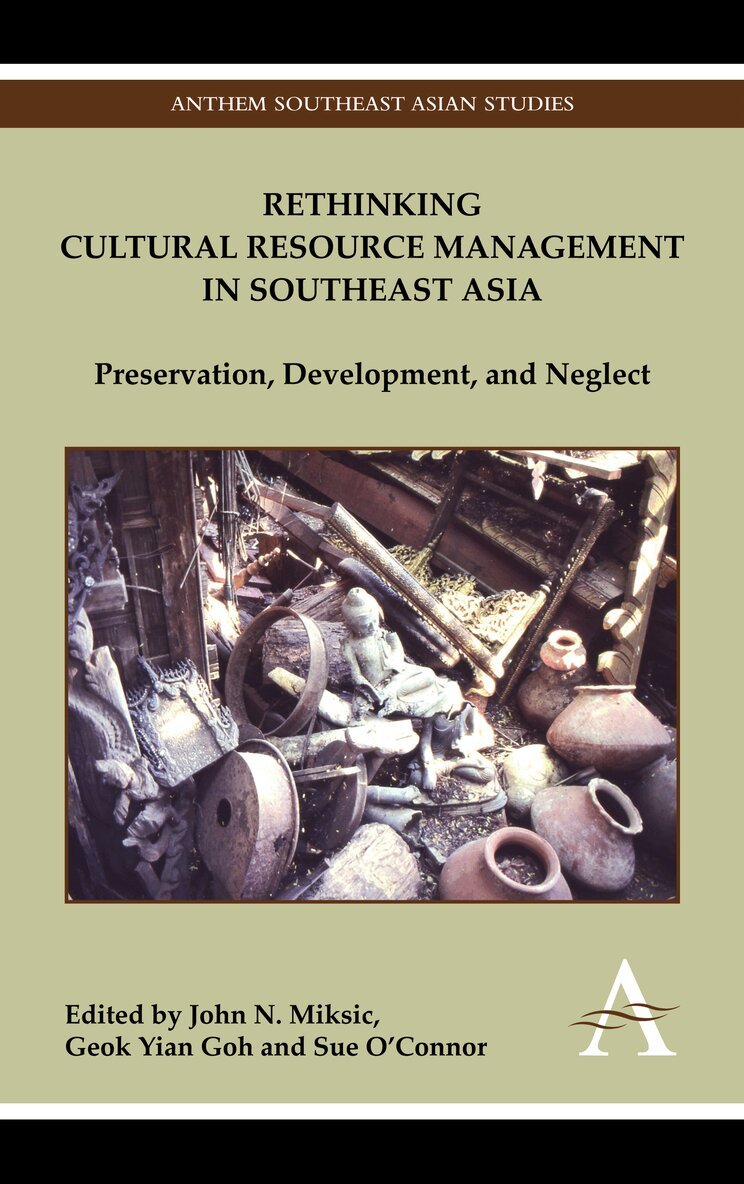
Rethinking Cultural Resource Management in Southeast Asia
Preservation, Development, and Neglect
Inbunden, Engelska, 2011
1 132 kr
Skickas inom 5-8 vardagar
Presenting both the need for – and difficulty of – introducing effective cultural resource management (CRM) in the region, ‘Rethinking Cultural Resource Management’ in Southeast Asia explores the challenges facing efforts to protect Southeast Asia’s indigenous cultures and archaeological sites from the ravages of tourism and economic development. Recognising the inapplicability of Euro-American solutions to this part of the world, the essays of this volume investigate their own set of region-specific CRM strategies, and acknowledge both the necessity and possibility of mediating between the conflicting interests of short-term profitability and long-term sustainability.
339 kr
Skickas inom 10-15 vardagar
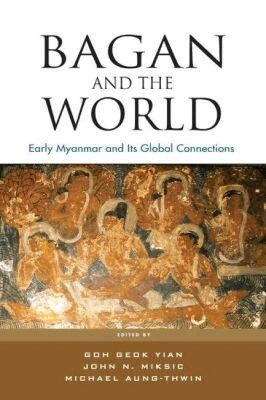
The archaeological site of Bagan and the kingdom which bore its name contains one of the greatest concentrations of ancient architecture and art in Asia. Much of what is visible today consists of ruins of Buddhist monasteries. While these monuments are a major tourist attraction, recent advances in archaeology and textual history have added considerable new understanding of this kingdom, which flourished between the 11th and 14th centuries. Bagan was not an isolated monastic site; its inhabitants participated actively in networks of Buddhist religious activity and commerce, abetted by the sites location near the junction where South Asia, China and Southeast Asia meet. This volume presents the result of recent research by scholars from around the world, including indigenous Myanmar people, whose work deserves to be known among the international community. The perspective on Myanmar's role as an integral part of the intellectual, artistic and economic framework found in this volume yields a glimpse of new themes which future studies of Asian history will no doubt explore.
512 kr
Skickas inom 7-10 vardagar
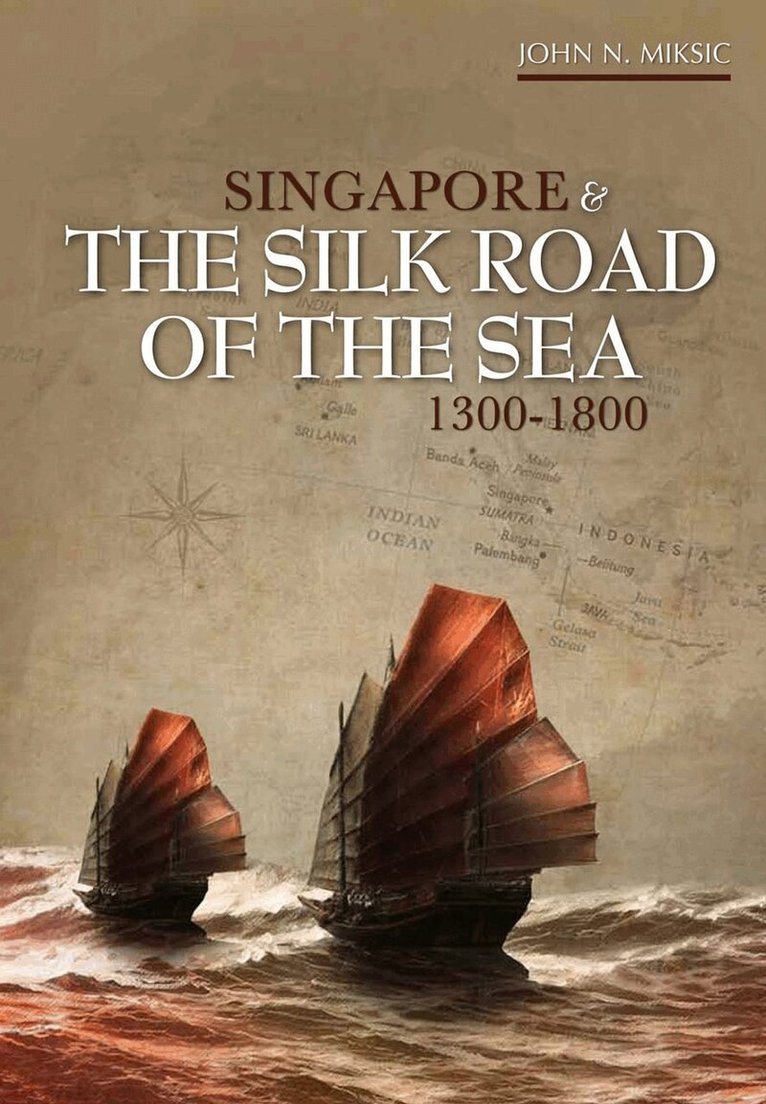
The overland Silk Road linking China with West Asia and Europe is a famous and fabled trade route. The sea route that was its alternative was arguably more significant, both historically and economically, and holds the greatest potential for understanding the great movements of people, ideas and goods in Asia. With its teeming port cities and huge vessels carrying exotic luxuries along with everyday commodities such as iron and fish oil, the Silk Road of the Sea is equally glamorous but has attracted much less attention that its overland counterpart.Temasik, an early name for Singapore, is the first Chinese settlement in Southeast Asia that is mentioned in a written historical source, an account prepared in 1349. Situated at the southern end of the Straits of Melaka, Temasik was a logical stopping-off point between east and west for sailing ships, which could not travel through from India to China in a single monsoon. Archaeological research in Singapore has confirmed that a 14th-century settlement existed near the mouth of the Singapore River, and excavations there have recovered large quantities of local and imported artefacts. Thanks to twenty-five years of archaeological research, combined with written accounts, scholars can reconstruct the 14th-century port of Singapore in greater detail than is possible for any other early Southeast Asian city. The picture of ancient Singapore that emerges is of a port where people processed raw materials, used money, and had specialised occupations. Within its defensive wall, the city was well organised and prosperous, with a cosmopolitan population made up of local residents along with foreigners from China, other parts of Southeast Asia, and the Indian Ocean.Shortlisted for the 2015 Best Study in the Humanities from the International Convention of Asia Scholars. The ICAS jury described the book as “a ground-breaking study of Singapore and its role in the regional long-distance maritime trade during the pre-colonial period … It is a work of lasting scholarship."