John Orman - Böcker
Visar alla böcker från författaren John Orman. Handla med fri frakt och snabb leverans.
3 produkter
3 produkter
1 009 kr
Skickas inom 10-15 vardagar
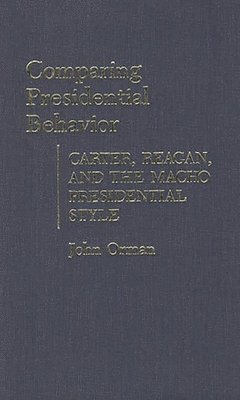
Comparing Presidential Behavior
Carter, Reagan, and the Macho Presidential Style
Inbunden, Engelska, 1987
568 kr
Skickas inom 10-15 vardagar
Orman's Comparing Presidential Power is an important and insightful study of the American Presidency. The macho model of presidential leadership is developed well and supported by both primary and secondary research. In fact, a brief overview of the book cannot do justice to the detailed analysis and support provided in the work. The text is well documented and every assumption is illustrated by several specific examples. The humanistic study is written from an audience perspective providing a socio-psychological orientation of how the public interprets the office. Thus, the lasting value of the book is not so much in the comparison of the Carter and Reagan presidencies or the defense of the Carter administration but in the provision of a complete model or theory of the contemporary institutional presidency. The book is a valuable contribution to the literature and thus a must for scholars and students of the American presidency. Presidential Studies QuarterlyThe president of the United States may be considered the quintessential symbol of the country, and, as such, a reflection of society's dominent values. His actions and decisions are influenced by a number of factors, including the prevailing environment, bureaucratic policies, and the incumbent's personality. Over and above the abilities and opportunities of the person who holds the office, John Orman argues that success of a president's policy endeavors is ultimately dependent in luck and good timing. His hypothesis is that a president's success depends on the ability to align actions with a society that places a premium on machismo. Using this theory, he analyzes the presidencies of Jimmy Carter and Ronald Reagan.
809 kr
Skickas inom 10-15 vardagar
This book assesses the state of presidential accountability in the post-Reagan era. It looks at five major areas of concern for students of the presidency. These problem areas concern (1.) presidents, national security, and civil liberties; (2.) controlling the intelligence community; (3.) the politized nature of the Justice Department; (4.) celebrity politics and symbolic manipulation; and (5.) the popularity of the Reagan administration and its implications for accountability. The research concludes that in the post- modern presidency, we have lost the desire and power to keep presidents accountable for their actions.After discussing the problem of presidential accountability in the opening chapter, the book turns to the checkered pasts of American presidents with respect to protecting civil liberties. It then examines the problems of presidential accountability that are posed by the intelligence community. Next, it looks at the exercises of the president's discretionary power in the criminal justice policy arena. The newer phenomenon of Celebrity Politics is explored next in terms of the consequences it has on citizens who want to keep the American president in check. Following this, the lessons of the popular Reagan presidency on presidential accountability are outlined. Finally, it concludes by lamenting the loss of presidential accountability in the American political system. This book should appeal to presidential researchers and anyone interested in the American presidency.