John P. Burgess – författare
Visar alla böcker från författaren John P. Burgess. Handla med fri frakt och snabb leverans.
33 produkter
Rigor and Structure
E-bok, 2015
422 kr
Lägg i varukorg
While we are commonly told that the distinctive method of mathematics is rigorous proof, and that the special topic of mathematics is abstract structure, there has been no agreement among mathematicians, logicians, or philosophers as to just what either of these assertions means. John P. Burgess …
Rigor and Structure
E-bok, 2015
422 kr
Lägg i varukorg
While we are commonly told that the distinctive method of mathematics is rigorous proof, and that the special topic of mathematics is abstract structure, there has been no agreement among mathematicians, logicians, or philosophers as to just what either of these assertions means. John P. Burgess …
The East German Church and the End of Communism
Inbunden, 1998
770 kr
Lägg i varukorg
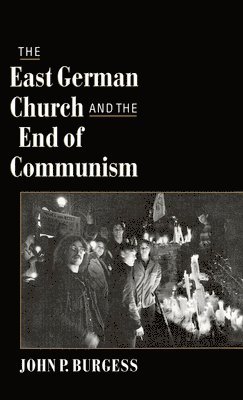
Burgess addresses the role of religion in the massive political changes that took place in Eastern Europe in 1989, focusing particularly on the role played by the East German Church in that country's bloodless revolution.
East German Church and the End of Communism
E-bok, 1997
435 kr
Lägg i varukorg
This book addresses the role of religion in the massive political changes that took place in Eastern Europe in 1989. In particular, it examines the role played by the East German church in that country''s bloodless revolution. Although some scholars and political commentators have noted that the …
A Subject With No Object
Strategies for Nominalistic Interpretation of Mathematics
Av John P. Burgess, Gideon Rosen
Inbunden, 1997
2119 kr
Lägg i varukorg
Numbers and other mathematical objects are exceptional in having no locations in space or time or relations of cause and effect. This makes it difficult to account for the possibility of the knowledge of such objects, leading many philosophers to embrace nominalism, the doctrine that there are no …
A Subject With No Object
Strategies for Nominalistic Interpretation of Mathematics
Av John P. Burgess, Gideon Rosen
Häftad, 1999
1206 kr
Lägg i varukorg
Numbers and other mathematical objects are exceptional in having no locations in space or time or relations of cause and effect. This makes it difficult to account for the possibility of the knowledge of such objects, leading many philosophers to embrace nominalism, the doctrine that there are no …
Rigor and Structure
Inbunden, 2015
1191 kr
Lägg i varukorg
While we are commonly told that the distinctive method of mathematics is rigorous proof, and that the special topic of mathematics is abstract structure, there has been no agreement among mathematicians, logicians, or philosophers as to just what either of these assertions means. John P. Burgess …
Rigor and Structure
Häftad, 2020
478 kr
Lägg i varukorg
While we are commonly told that the distinctive method of mathematics is rigorous proof, and that the special topic of mathematics is abstract structure, there has been no agreement among mathematicians, logicians, or philosophers as to just what either of these assertions means. John P. Burgess …
Holy Rus'
The Rebirth of Orthodoxy in the New Russia
Inbunden, 2017
317 kr
Lägg i varukorg
A fascinating, vivid, and on-the-ground account of Russian Orthodoxy’s resurgence “A compelling picture.”—Irina Papkova, Russian Review “Powerful.”—Philip Jenkins, Christian Century A bold experiment is taking place in Russia. After a century of being scarred by militant, atheistic communism, the …
Mathematics, Models, and Modality
Selected Philosophical Essays
Häftad, 2011
732 kr
Lägg i varukorg
John Burgess is the author of a rich and creative body of work which seeks to defend classical logic and mathematics through counter-criticism of their nominalist, intuitionist, relevantist, and other critics. This selection of his essays, which spans twenty-five years, addresses key topics …
Computability and Logic
Av George S. Boolos, John P. Burgess m. fl.
Häftad, 2007
569 kr
Lägg i varukorg
Computability and Logic has become a classic because of its accessibility to students without a mathematical background and because it covers not simply the staple topics of an intermediate logic course, such as Godel's incompleteness theorems, but also a large number of optional topics, from …
Computability and Logic
Av George S. Boolos, John P. Burgess m. fl.
Inbunden, 2007
1563 kr
Lägg i varukorg
Computability and Logic has become a classic because of its accessibility to students without a mathematical background and because it covers not simply the staple topics of an intermediate logic course, such as Godel's incompleteness theorems, but also a large number of optional topics, from …
Mathematics, Models, and Modality
Selected Philosophical Essays
Inbunden, 2008
1628 kr
Lägg i varukorg
John Burgess is the author of a rich and creative body of work which seeks to defend classical logic and mathematics through counter-criticism of their nominalist, intuitionist, relevantist, and other critics. This selection of his essays, which spans twenty-five years, addresses key topics …
After Baptism
Shaping the Christian Life
Häftad, 2005
365 kr
Lägg i varukorg
John Burgess explores the distinctive qualities of Christian identity by demonstrating how baptism, the Eucharist, and the Commandments are basic points of orientation for Christians. He challenges the church and its members to identify and claim key practices and disciplines of faith to deepen …
Encounters with Orthodoxy
How Protestant Churches Can Reform Themselves Again
Häftad, 2013
347 kr
Lägg i varukorg
When author and theologian John P. Burgess first travelled to Russia, he was hoping to expand his theological horizons and explore the rebirth of the Orthodox Church since the fall of Communism. But what he found changed some fundamental assumptions about his own tradition of North American …
Why Scripture Matters
Reading the Bible in a Time of Church Conflict
Häftad, 1998
427 kr
Lägg i varukorg
"John Burgess has written a book of immense help to the church in this time of great conflict and division. It is wise, probing, and highly readable. . . . A combination of authentic piety and remarkable scholarship characterize this book, which is full of concrete suggestions for persons and and …
In Whose Image?
Faith, Science, and the New Genetics
Häftad, 1998
347 kr
Lägg i varukorg
Recent developments in the biological sciences pose challenging questions to its theology and to the church's understanding of what it means to be human--that is, made in the image of God. These essays by pastors, scientists, and theologians establish a dialogue between science and faith. Study …
Fixing Frege
Inbunden, 2005
815 kr
Lägg i varukorg
The great logician Gottlob Frege attempted to provide a purely logical foundation for mathematics. His system collapsed when Bertrand Russell discovered a contradiction in it. Thereafter, mathematicians and logicians, beginning with Russell himself, turned in other directions to look for a …
Philosophical Logic
Häftad, 2012
261 kr
Lägg i varukorg
Philosophical Logic is a clear and concise critical survey of nonclassical logics of philosophical interest written by one of the world's leading authorities on the subject. After giving an overview of classical logic, John Burgess introduces five central branches of nonclassical logic (temporal, …
Truth
Av Alexis G. Burgess, John P. Burgess
Häftad, 2014
261 kr
Lägg i varukorg
This is a concise introduction to current philosophical debates about truth. Combining philosophical and technical material, the book is organized around, but not limited to, the view known as deflationism. In clear language, Burgess and Burgess cover a wide range of issues, including the nature of …
Fixing Frege
E-bok, 2018
1141 kr
Lägg i varukorg
The great logician Gottlob Frege attempted to provide a purely logical foundation for mathematics. His system collapsed when Bertrand Russell discovered a contradiction in it. Thereafter, mathematicians and logicians, beginning with Russell himself, turned in other directions to look for a …
Kripke
Inbunden, 2012
778 kr
Lägg i varukorg
Saul Kripke has been a major influence on analytic philosophy and allied fields for a half-century and more. His early masterpiece, Naming and Necessity, reversed the pattern of two centuries of philosophizing about the necessary and the contingent. Although much of his work remains unpublished, …
Kripke
Häftad, 2012
259 kr
Lägg i varukorg
Saul Kripke has been a major influence on analytic philosophy and allied fields for a half-century and more. His early masterpiece, Naming and Necessity, reversed the pattern of two centuries of philosophizing about the necessary and the contingent. Although much of his work remains unpublished, …
Kripke
E-bok, 2013
294 kr
Lägg i varukorg
Saul Kripke has been a major influence on analytic philosophy and allied fields for a half-century and more. His early masterpiece, Naming and Necessity , reversed the pattern of two centuries of philosophizing about the necessary and the contingent. Although much of his work remains unpublished, …
What is Justification About?
Reformed Contributions to an Ecumenical Theme
Av Michael Weinrich, John P. Burgess
Häftad, 2009
293 kr
Lägg i varukorg
This book offers a Reformed perspective on contemporary ecumenical discussion by carefully exploring the biblical message of justification and then demonstrating how justification as a doctrine functions as an integrative theological principle. Written by an international group of distinguished …
Pastoral Rule for Today – Reviving an Ancient Practice
Av John P. Burgess, Jerry Andrews m. fl.
Häftad, 2019
320 kr
Lägg i varukorg
Formal Logic
Its Scope and Limits
Av Richard Jeffrey, John P. Burgess
Inbunden, 2006
537 kr
Lägg i varukorg
The first beginning logic text to employ the tree method--a complete formal system of first-order logic that is remarkably easy to understand and use--this text allows students to take control of the nuts and bolts of formal logic quickly, and to move on to more complex and abstract problems.The …
Set Theory
Häftad, 2022
308 kr
Lägg i varukorg
Set theory is a branch of mathematics with a special subject matter, the infinite, but also a general framework for all modern mathematics, whose notions figure in every branch, pure and applied. This Element will offer a concise introduction, treating the origins of the subject, the basic notion …
Set Theory
E-bok, 2022
294 kr
Lägg i varukorg
Set theory is a branch of mathematics with a special subject matter, the infinite, but also a general framework for all modern mathematics, whose notions figure in every branch, pure and applied. This Element will offer a concise introduction, treating the origins of the subject, the basic notion …
Philosophical Logic
E-bok, 2009
357 kr
Lägg i varukorg
A brief account of philosophical logic from one of the world''s leading authorities Philosophical Logic is a clear and concise critical survey of nonclassical logics of philosophical interest written by one of the world''s leading authorities on the subject. After giving an overview of classical …