John Rundell – författare
Visar alla böcker från författaren John Rundell. Handla med fri frakt och snabb leverans.
20 produkter
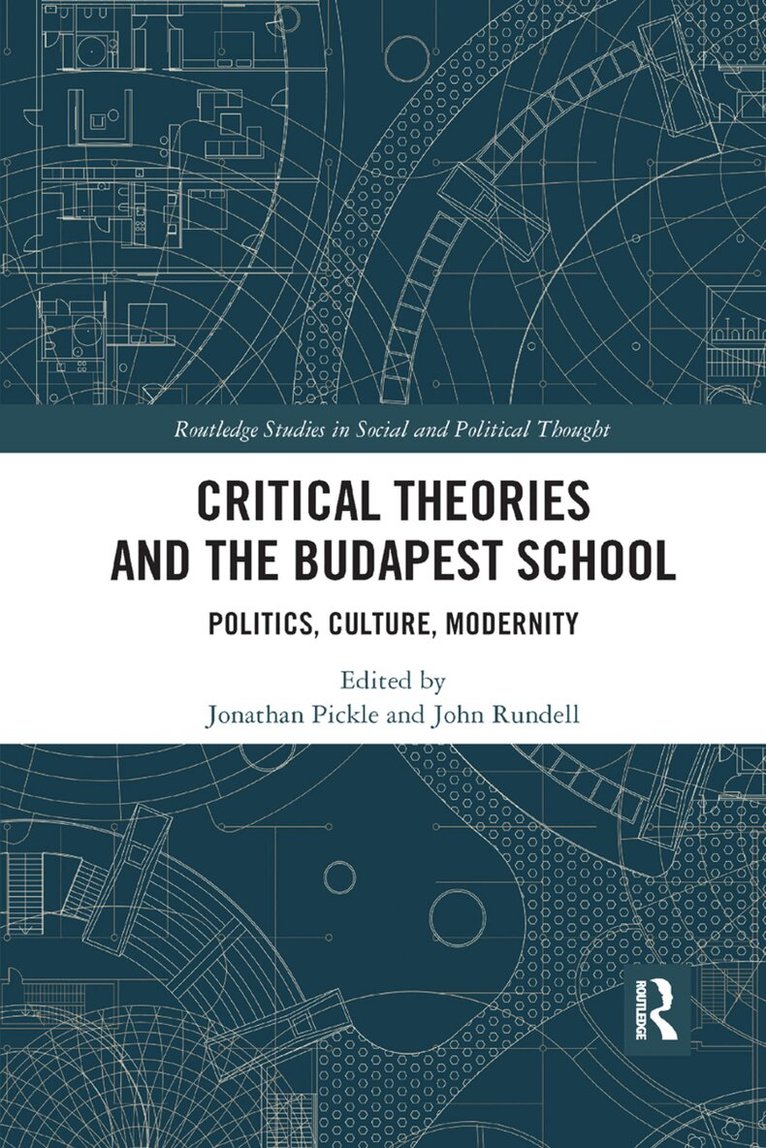
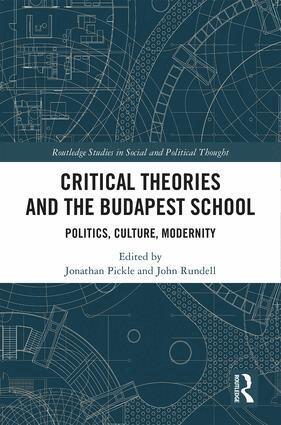
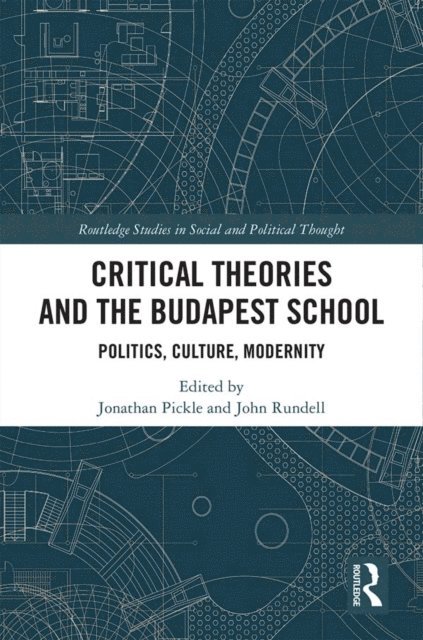
Critical Theories and the Budapest School
Politics, Culture, Modernity
Av John Rundell, Jonathan Pickle
Häftad, 2019
720 kr
Lägg i varukorg
Critical Theories and the Budapest School brings together new perspectives on the Budapest School in the context of contemporary developments in critical theory. Engaging with the work of the prominent group of figures associated with Georg Lukács, this book sheds new light on the unique and …
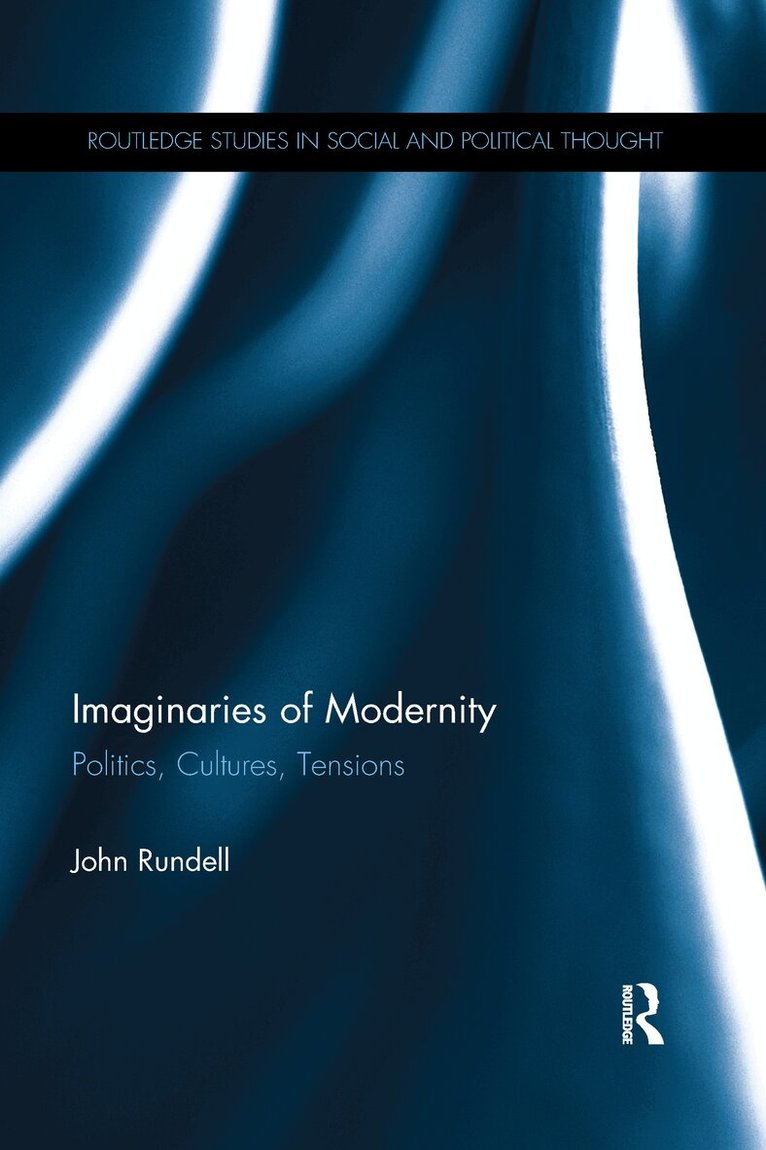
Imaginaries of Modernity
Politics, Cultures, Tensions
Av John Rundell
Häftad, 2020
691 kr
Lägg i varukorg
This book offers a new perspective on the issue of modernity through a series of interconnected essays. Drawing centrally on the works of Castoriadis, Luhmann, Heller and Lefort, and in critical discussion with Weber, Durkheim, Simmel, Adorno, Habermas and Taylor, the author argues that modernity …
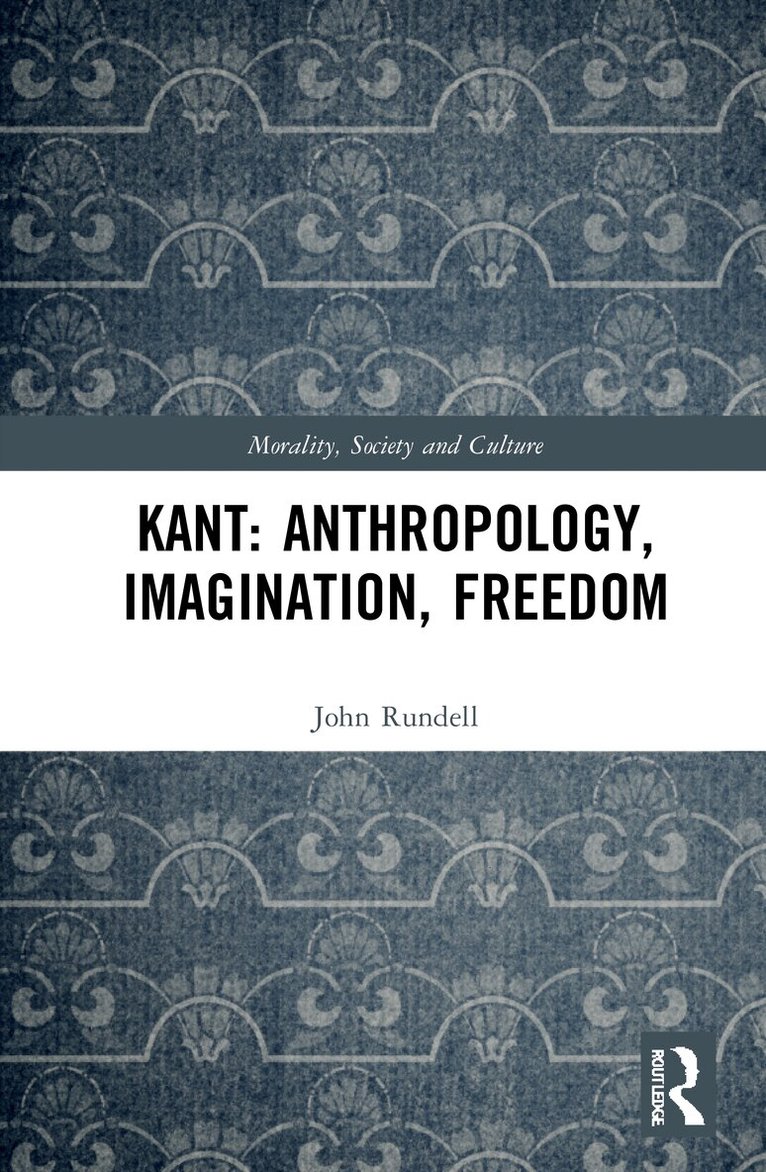
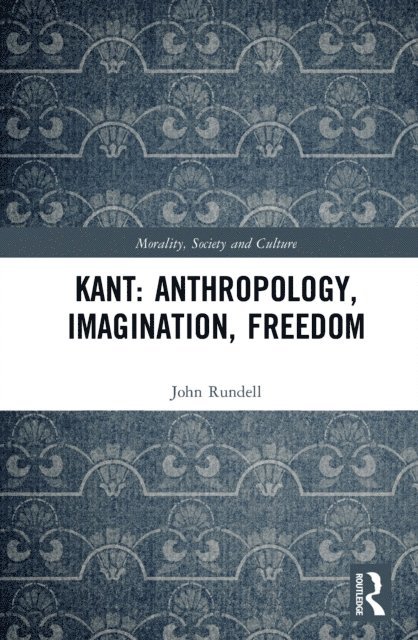
Kant: Anthropology, Imagination, Freedom
Av John Rundell
Inbunden, 2020
2512 kr
Lägg i varukorg
In a new reading of Immanuel Kant’s work, this book interrogates his notions of the imagination and anthropology, identifying these – rather than the problem of reason – as the two central pivoting orientations of his work. Such an approach allows a more complex understanding of his …
Kant: Anthropology, Imagination, Freedom
Av John Rundell
Häftad, 2022
691 kr
Lägg i varukorg
In a new reading of Immanuel Kant’s work, this book interrogates his notions of the imagination and anthropology, identifying these – rather than the problem of reason – as the two central pivoting orientations of his work. Such an approach allows a more complex understanding of his …
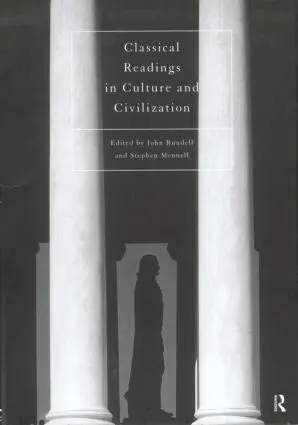
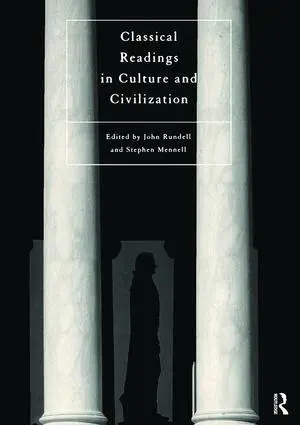
Classical Readings on Culture and Civilization
Av John Rundell, Stephen Mennell
Häftad, 1998
560 kr
Lägg i varukorg
In recent times, especially under the influence of postmodernism, culture has often been construed as a critique of modernity. This wide-ranging and comprehensive collection of readings shows that such issues have always been at the centre of thought about the relationship between culture and …
Blurred Boundaries
Migration, Ethnicity, Citizenship
Av John Rundell, Rainer Baubock
E-bok, 2018
658 kr
Lägg i varukorg
First published in 1999, this volume examines new forms of cultural diversity which result from migration and globalization. Historically, most liberal democracies have developed on the basis of national cultures – either a single one, or a dominant one, or a federation of several ones. However, …
Blurred Boundaries
Migration, Ethnicity, Citizenship
Av John Rundell, Rainer Baubock
E-bok, 2018
658 kr
Lägg i varukorg
First published in 1999, this volume examines new forms of cultural diversity which result from migration and globalization. Historically, most liberal democracies have developed on the basis of national cultures – either a single one, or a dominant one, or a federation of several ones. However, …
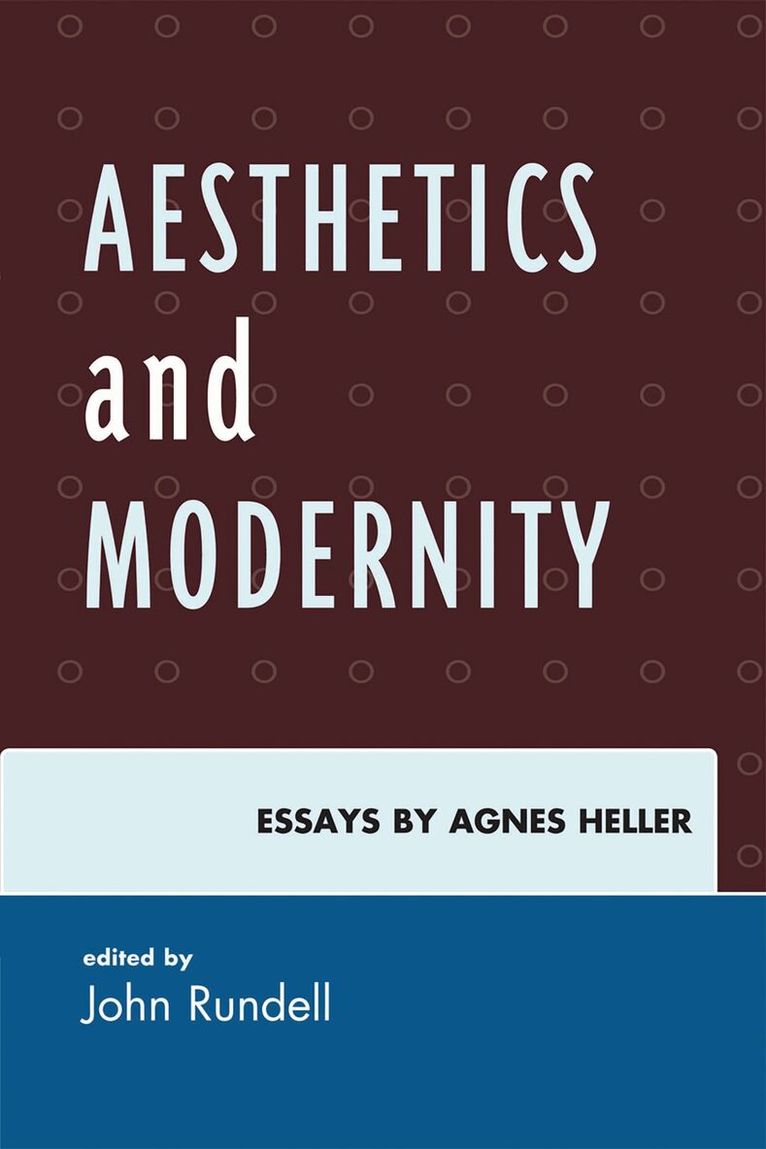
Aesthetics and Modernity
Essays by Agnes Heller
Av John Rundell
Inbunden, 2010
1349 kr
Lägg i varukorg
Aesthetics and Modernity brings together Agnes Heller's most recent essays around the topics of aesthetic genres such as painting, music, literature and comedy, aesthetic reception, and embodiment. The essays draw on Heller's deep appreciation of aesthetics in all its forms from the classical to …
Aesthetics and Modernity
Essays by Agnes Heller
Av John Rundell
Häftad, 2010
643 kr
Lägg i varukorg
Aesthetics and Modernity brings together Agnes Heller's most recent essays around the topics of aesthetic genres such as painting, music, literature and comedy, aesthetic reception, and embodiment. The essays draw on Heller's deep appreciation of aesthetics in all its forms from the classical to …
Kant: Anthropology, Imagination, Freedom
Av John Rundell
E-bok, 2020
814 kr
Lägg i varukorg
In a new reading of Immanuel Kant’s work, this book interrogates his notions of the imagination and anthropology, identifying these – rather than the problem of reason – as the two central pivoting orientations of his work. Such an approach allows a more complex understanding of his …
Kant: Anthropology, Imagination, Freedom
Av John Rundell
E-bok, 2020
814 kr
Lägg i varukorg
In a new reading of Immanuel Kant’s work, this book interrogates his notions of the imagination and anthropology, identifying these – rather than the problem of reason – as the two central pivoting orientations of his work. Such an approach allows a more complex understanding of his …
Critical Theories and the Budapest School
Politics, Culture, Modernity
Av John Rundell, Jonathan Pickle
Inbunden, 2017
2512 kr
Lägg i varukorg
Critical Theories and the Budapest School brings together new perspectives on the Budapest School in the context of contemporary developments in critical theory. Engaging with the work of the prominent group of figures associated with Georg Lukács, this book sheds new light on the unique and …
Classical Readings on Culture and Civilization
Av John Rundell, Stephen Mennell
Inbunden, 2017
2133 kr
Lägg i varukorg
In recent times, especially under the influence of postmodernism, culture has often been construed as a critique of modernity. This wide-ranging and comprehensive collection of readings shows that such issues have always been at the centre of thought about the relationship between culture and …
Blurred Boundaries
Migration, Ethnicity, Citizenship
Av Rainer Bauböck, John Rundell
Inbunden, 2018
2133 kr
Lägg i varukorg
First published in 1999, this volume examines new forms of cultural diversity which result from migration and globalization. Historically, most liberal democracies have developed on the basis of national cultures – either a single one, or a dominant one, or a federation of several ones. However, …
Blurred Boundaries
Migration, Ethnicity, Citizenship
Av Rainer Bauböck, John Rundell
Häftad, 2020
560 kr
Lägg i varukorg
First published in 1999, this volume examines new forms of cultural diversity which result from migration and globalization. Historically, most liberal democracies have developed on the basis of national cultures – either a single one, or a dominant one, or a federation of several ones. However, …
Critical Theories and the Budapest School
Politics, Culture, Modernity
Av Jonathan Pickle, John Rundell
E-bok, 2017
830 kr
Lägg i varukorg
Critical Theories and the Budapest School brings together new perspectives on the Budapest School in the context of contemporary developments in critical theory. Engaging with the work of the prominent group of figures associated with Georg Lukács, this book sheds new light on the unique and …
Critical Theories and the Budapest School
Politics, Culture, Modernity
Av Jonathan Pickle, John Rundell
E-bok, 2017
849 kr
Lägg i varukorg
Critical Theories and the Budapest School brings together new perspectives on the Budapest School in the context of contemporary developments in critical theory. Engaging with the work of the prominent group of figures associated with Georg Lukács, this book sheds new light on the unique and …
Imaginaries of Modernity
Politics, Cultures, Tensions
Av John Rundell
E-bok, 2016
814 kr
Lägg i varukorg
This book offers a new perspective on the issue of modernity through a series of interconnected essays. Drawing centrally on the works of Castoriadis, Luhmann, Heller and Lefort, and in critical discussion with Weber, Durkheim, Simmel, Adorno, Habermas and Taylor, the author argues that modernity …
Imaginaries of Modernity
Politics, Cultures, Tensions
Av John Rundell
E-bok, 2016
796 kr
Lägg i varukorg
This book offers a new perspective on the issue of modernity through a series of interconnected essays. Drawing centrally on the works of Castoriadis, Luhmann, Heller and Lefort, and in critical discussion with Weber, Durkheim, Simmel, Adorno, Habermas and Taylor, the author argues that modernity …
Imaginaries of Modernity
Politics, Cultures, Tensions
Av John Rundell
Inbunden, 2016
2520 kr
Lägg i varukorg
This book offers a new perspective on the issue of modernity through a series of interconnected essays. Drawing centrally on the works of Castoriadis, Luhmann, Heller and Lefort, and in critical discussion with Weber, Durkheim, Simmel, Adorno, Habermas and Taylor, the author argues that modernity …