John S. Duncan – författare
Visar alla böcker från författaren John S. Duncan. Handla med fri frakt och snabb leverans.
8 produkter
8 produkter
E-bok
PDF, Engelska, 2026635 kr
Läs direkt efter köp
This title contains foreword by Ian Maddocks, formerly Foundation President, Australian Association of Hospice and Palliative Care and Foundation President, Australian and New Zealand Society of Palliative Medicine. This book is a practical and pragmatic distillation of the psychiatry of relevance to the terminally ill. It reviews the major psychiatric syndromes encountered in palliative care - depression, anxiety, delirium - and examines psychopharmacological and psychological interventions in detail. It considers the psychiatric aspects of pain, sleep, cognitive impairment, terminal neurodegenerative diseases, sedation and artificial feeding. The dying chronically ill psychiatric patient is also discussed. The author has drawn on his great experience in both consultation-liaison psychiatry and palliative medicine to produce an essential guide for all healthcare professionals involved in palliative care, including consultants and senior nurses, as well as psychiatrists, especially consultation-liaison psychiatrists, and trainees. 'Illness that threatens imminent death challenges the mental and social well-being of affected individuals and their families. Consistent specialist psychiatric care has nevertheless not been readily available to the dying. Because there may never be sufficient numbers of psychiatrists interested in bringing their expertise to this field, working with the dying mind depends on staff with limited training in behavioural medicine and psychiatry. To redress the inadequate engagement of psychiatry, Sandy Macleod has concentrated on those important areas in palliative medicine where a pragmatic knowledge of psychiatry can make a difference. Here is sensible guidance that will enable staff to serve their client patients and families more adequately. I find this an immensely sympathetic book, beautifully written. It is a testimony to the summation of specialist psychiatric knowledge, broad scholarship and a rich personal practice in bedside palliation.' - Ian Maddocks in the Foreword.
658 kr
Läs direkt efter köp
This title contains foreword by Ian Maddocks, formerly Foundation President, Australian Association of Hospice and Palliative Care and Foundation President, Australian and New Zealand Society of Palliative Medicine. This book is a practical and pragmatic distillation of the psychiatry of relevance to the terminally ill. It reviews the major psychiatric syndromes encountered in palliative care - depression, anxiety, delirium - and examines psychopharmacological and psychological interventions in detail. It considers the psychiatric aspects of pain, sleep, cognitive impairment, terminal neurodegenerative diseases, sedation and artificial feeding. The dying chronically ill psychiatric patient is also discussed. The author has drawn on his great experience in both consultation-liaison psychiatry and palliative medicine to produce an essential guide for all healthcare professionals involved in palliative care, including consultants and senior nurses, as well as psychiatrists, especially consultation-liaison psychiatrists, and trainees. 'Illness that threatens imminent death challenges the mental and social well-being of affected individuals and their families. Consistent specialist psychiatric care has nevertheless not been readily available to the dying. Because there may never be sufficient numbers of psychiatrists interested in bringing their expertise to this field, working with the dying mind depends on staff with limited training in behavioural medicine and psychiatry. To redress the inadequate engagement of psychiatry, Sandy Macleod has concentrated on those important areas in palliative medicine where a pragmatic knowledge of psychiatry can make a difference. Here is sensible guidance that will enable staff to serve their client patients and families more adequately. I find this an immensely sympathetic book, beautifully written. It is a testimony to the summation of specialist psychiatric knowledge, broad scholarship and a rich personal practice in bedside palliation.' - Ian Maddocks in the Foreword.
Inbunden, Engelska, 2026
1 410 kr
Skickas
Comprehensive, cutting-edge guide to adult epilepsy from the renowned Queen Square specialists Epilepsy: A Queen Square Textbook delivers an authoritative and up-to-date overview of the causes, consequences, diagnosis, and treatment of epilepsy in adults. Written by the distinguished Queen Square Epilepsy group, this complete resource synthesises the relevant evidence and applies the latest knowledge to clinical practice, with points of practical importance highlighted throughout. This essential reference covers: Fundamental aspects: The neurosciences of epilepsy and epileptogenesis, neurophysiology, medical imaging, epidemiology, genetics and the spectrum of epileptic seizures and epilepsiesClinical management: Diagnosis, medical and surgical treatment, neuropsychology, non-pharmacological therapies, status epilepticus, reproduction, epilepsy in older people, sleep, and neurodegenerationCurrent challenges: Psychiatric and somatic comorbidities, sudden unexpected death in epilepsy (SUDEP), functional dissociative seizures, driving and the lawContemporary issues and emerging technologies: Climate change impacts, the role of artificial intelligence in diagnosis and treatment, and future perspectives in epilepsy managementEpilepsy: A Queen Square Textbook is an indispensable resource for healthcare professionals involved in epilepsy care and research, including neurologists, nurses, neuroscientists, and psychologists—from trainees through to established specialists.
E-bok
Engelska, 20261 603 kr
Läs direkt efter köp
Comprehensive, cutting-edge guide to adult epilepsy from the renowned Queen Square specialists Epilepsy: A Queen Square Textbook delivers an authoritative and up-to-date overview of the causes, consequences, diagnosis, and treatment of epilepsy in adults. Written by the distinguished Queen Square Epilepsy group, this complete resource synthesises the relevant evidence and applies the latest knowledge to clinical practice, with points of practical importance highlighted throughout. This essential reference covers: Fundamental aspects: The neurosciences of epilepsy and epileptogenesis, neurophysiology, medical imaging, epidemiology, genetics and the spectrum of epileptic seizures and epilepsiesClinical management: Diagnosis, medical and surgical treatment, neuropsychology, non-pharmacological therapies, status epilepticus, reproduction, epilepsy in older people, sleep, and neurodegenerationCurrent challenges: Psychiatric and somatic comorbidities, sudden unexpected death in epilepsy (SUDEP), functional dissociative seizures, driving and the lawContemporary issues and emerging technologies: Climate change impacts, the role of artificial intelligence in diagnosis and treatment, and future perspectives in epilepsy management Epilepsy: A Queen Square Textbook is an indispensable resource for healthcare professionals involved in epilepsy care and research, including neurologists, nurses, neuroscientists, and psychologists from trainees through to established specialists.
E-bok
PDF, Engelska, 20261 603 kr
Läs direkt efter köp
Comprehensive, cutting-edge guide to adult epilepsy from the renowned Queen Square specialists Epilepsy: A Queen Square Textbook delivers an authoritative and up-to-date overview of the causes, consequences, diagnosis, and treatment of epilepsy in adults. Written by the distinguished Queen Square Epilepsy group, this complete resource synthesises the relevant evidence and applies the latest knowledge to clinical practice, with points of practical importance highlighted throughout. This essential reference covers: Fundamental aspects: The neurosciences of epilepsy and epileptogenesis, neurophysiology, medical imaging, epidemiology, genetics and the spectrum of epileptic seizures and epilepsiesClinical management: Diagnosis, medical and surgical treatment, neuropsychology, non-pharmacological therapies, status epilepticus, reproduction, epilepsy in older people, sleep, and neurodegenerationCurrent challenges: Psychiatric and somatic comorbidities, sudden unexpected death in epilepsy (SUDEP), functional dissociative seizures, driving and the lawContemporary issues and emerging technologies: Climate change impacts, the role of artificial intelligence in diagnosis and treatment, and future perspectives in epilepsy management Epilepsy: A Queen Square Textbook is an indispensable resource for healthcare professionals involved in epilepsy care and research, including neurologists, nurses, neuroscientists, and psychologists from trainees through to established specialists.
9 221 kr
Skickas inom 10-15 vardagar
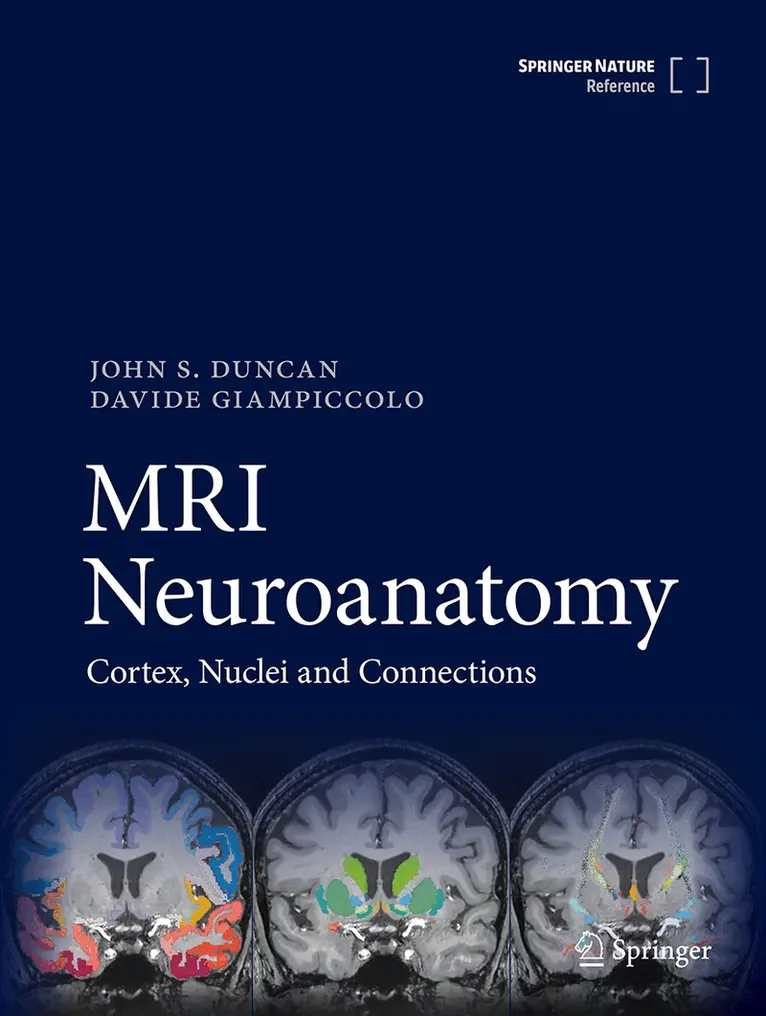
The dogma that brain function relied on the cortex has dominated clinical neurology, neurosurgery and psychiatry for the last 100 years. Since the start of the 2000s, it has become evident that brain function is orchestrated as a network through white matter connections. This framework provides an understanding of brain function and dysfunction, and has radically changed how neurosurgical resections are performed. There is currently no manual for clinicians to visualize this functional anatomy in a fast, easy and user-friendly way. This is particularly important for senior clinicians who may have an understanding of cortical anatomy but may struggle with newly described white matter connections as they may now be visualized with MRI, and also for trainees who are learning the subject of applied neuro-anatomy. With this book, we aim to bridge this gap. In 1995 Jackson and Duncan produced “MRI Neuroanatomy: a new angle on the brain” using the best clinical MRI available at the time and did not demonstrate white matter tracts. This was very well received, and it is time now to produce an atlas that shows the 3D anatomy of gray and white matter to contemporary standards. This atlas is based on a high-quality MRI of a healthy subject which resembles the type of imaging is regularly available to clinicians. It is structured in sections (cortical anatomy, subcortical anatomy, and network anatomy) that are intended to guide clinicians from the classical cortical paradigms into a network neuroscience perspective. The 2D orthogonal slices are organized in two orientations: (A) following the plane of the anterior and posterior commissure, as has been traditionally used in stereotactic atlases(B) following the plane of the hippocampus, as is commonly used in clinical epilepsy practice. The first part shows the 3D anatomy of the cerebral hemisphere, deep nuclei, brainstem and cerebellum. The second part shows the same brain cut in 2D orthogonal slices (axial, coronal, sagittal) with a raw T1-weighted image, accompanied by a labelled image showing the gross anatomy of the brain and grey matter structures and, also, the labelled white matter tracts in that slice. This is particularly relevant for neurosurgeons, who will be able to appreciate before planning a resection the relationship between each tract’s trajectory and the gray matter. This will also benefit neurologists, enabling clarity as to how single lesions can cause multiple disconnection and impact on different functions and behaviours. The third part demonstrates the 3D anatomy of the major white matter tracts in the brain, to indicate how distant lesions can impact the same function.
E-bok
Engelska, 20269 433 kr
Läs direkt efter köp
The dogma that brain function relied on the cortex has dominated clinical neurology, neurosurgery and psychiatry for the last 100 years. Since the start of the 2000s, it has become evident that brain function is orchestrated as a network through white matter connections. This framework provides an understanding of brain function and dysfunction, and has radically changed how neurosurgical resections are performed. There is currently no manual for clinicians to visualize this functional anatomy in a fast, easy and user-friendly way. This is particularly important for senior clinicians who may have an understanding of cortical anatomy but may struggle with newly described white matter connections as they may now be visualized with MRI, and also for trainees who are learning the subject of applied neuro-anatomy. With this book, we aim to bridge this gap. In 1995 Jackson and Duncan produced MRI Neuroanatomy: a new angle on the brain using the best clinical MRI available at the time and did not demonstrate white matter tracts. This was very well received, and it is time now to produce an atlas that shows the 3D anatomy of gray and white matter to contemporary standards. This atlas is based on a high-quality MRI of a healthy subject which resembles the type of imaging is regularly available to clinicians. It is structured in sections (cortical anatomy, subcortical anatomy, and network anatomy) that are intended to guide clinicians from the classical cortical paradigms into a network neuroscience perspective. The 2D orthogonal slices are organized in two orientations: (A) following the plane of the anterior and posterior commissure, as has been traditionally used in stereotactic atlases(B) following the plane of the hippocampus, as is commonly used in clinical epilepsy practice. The first part shows the 3D anatomy of the cerebral hemisphere, deep nuclei, brainstem and cerebellum. The second part shows the same brain cut in 2D orthogonal slices (axial, coronal, sagittal) with a raw T1-weighted image, accompanied by a labelled image showing the gross anatomy of the brain and grey matter structures and, also, the labelled white matter tracts in that slice. This is particularly relevant for neurosurgeons, who will be able to appreciate before planning a resection the relationship between each tract s trajectory and the gray matter. This will also benefit neurologists, enabling clarity as to how single lesions can cause multiple disconnection and impact on different functions and behaviours. The third part demonstrates the 3D anatomy of the major white matter tracts in the brain, to indicate how distant lesions can impact the same function.
Häftad, Engelska, 2007
510 kr
Tillfälligt slut
This title contains foreword by Ian Maddocks, formerly Foundation President, Australian Association of Hospice and Palliative Care and Foundation President, Australian and New Zealand Society of Palliative Medicine. This book is a practical and pragmatic distillation of the psychiatry of relevance to the terminally ill. It reviews the major psychiatric syndromes encountered in palliative care - depression, anxiety, delirium - and examines psychopharmacological and psychological interventions in detail. It considers the psychiatric aspects of pain, sleep, cognitive impairment, terminal neurodegenerative diseases, sedation and artificial feeding. The dying chronically ill psychiatric patient is also discussed. The author has drawn on his great experience in both consultation-liaison psychiatry and palliative medicine to produce an essential guide for all healthcare professionals involved in palliative care, including consultants and senior nurses, as well as psychiatrists, especially consultation-liaison psychiatrists, and trainees. 'Illness that threatens imminent death challenges the mental and social well-being of affected individuals and their families. Consistent specialist psychiatric care has nevertheless not been readily available to the dying. Because there may never be sufficient numbers of psychiatrists interested in bringing their expertise to this field, working with the dying mind depends on staff with limited training in behavioural medicine and psychiatry. To redress the inadequate engagement of psychiatry, Sandy Macleod has concentrated on those important areas in palliative medicine where a pragmatic knowledge of psychiatry can make a difference. Here is sensible guidance that will enable staff to serve their client patients and families more adequately. I find this an immensely sympathetic book, beautifully written. It is a testimony to the summation of specialist psychiatric knowledge, broad scholarship and a rich personal practice in bedside palliation.' - Ian Maddocks in the Foreword.