John Shovlin – författare
Visar alla böcker från författaren John Shovlin. Handla med fri frakt och snabb leverans.
6 produkter
6 produkter
Inbunden, Engelska, 2013
1 408 kr
Skickas
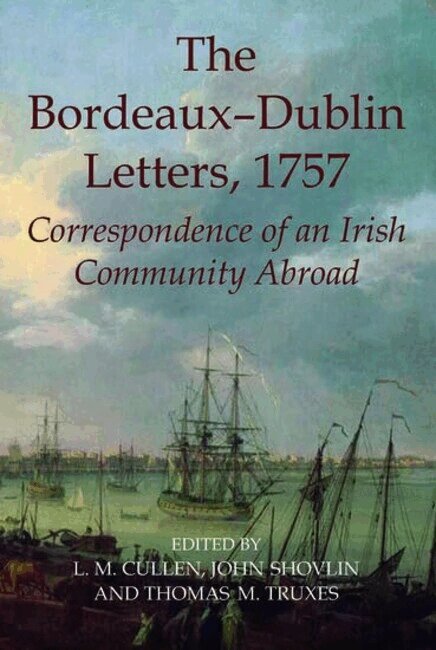
The book presents 125 letters carried aboard a ship, the Two Sisters of Dublin, captured at sea in 1757, in the midst of the Seven Years War (1756-1763). Most of the letters lay unopened for 250 years until they were rediscovered in the UK National Archives in 2011.The letters from members of the Irish community in Bordeaux and their relatives, friends and trading partners in Ireland communicate the concerns and understandings of ordinary people in a diasporic community during wartime. Written by sailors, merchants, servants, prisoners of war, priests, clerks, and many women, the letters vividly illustrate social and economic structures familiar to historians of early modern trade and the expatriate communities of the Atlantic world. They underline the central role of familial relationships in structuring commerce, and illustrate how communities were sustained across wide expanses of ocean by streams of correspondence, by favours asked and received, and by a flow of commodities, gifts, money and patronage. The letters offer access to eighteenth-century advice on parenting and glimpses of family conflict; insights on the food history of the period; a window on Irish clerical education in France; and impressions of the links sustained by members of the Huguenot community in France with relations abroad. The 125 letters, plus translations of the twenty-five letters in French, are presented together with illustrations, maps, annotations, a comprehensive index, and a substantial critical introduction, to assist readers in contextualizing and interpreting the letters.
Del 68 - Records of Social and Economic History
The Amity Papers, 1690
The Siege of Limerick and Franco-Irish Mercantile Networks
Inbunden, Engelska, 2025
2 475 kr
Skickas inom 5-8 vardagar
The Amity Papers, 1690 reproduces 74 documents seized from the Irish vessel Amity trading with France at the height of the Williamite War (1689-1691). Mostly letters written by merchants (with a smaller number penned by Jacobite soldiers), the ship's papers illustrate particularly the plight of civilians during the 1690 siege of Limerick, which ended just weeks before the Amity sailed. The writers and their correspondents–mostly living in France–were part of two mercantile networks, one Catholic and the other Quaker. The collaboration between the two enabled Franco-Irish trade to continue despite wartime challenges. The letters also illuminate the economic consequences of wartime conditions in Ireland: requisitioning, the forced circulation of rapidly depreciating brass money, and the risks of buying or selling goods in this context.
Inbunden, Engelska, 2021
320 kr
Skickas inom 5-8 vardagar
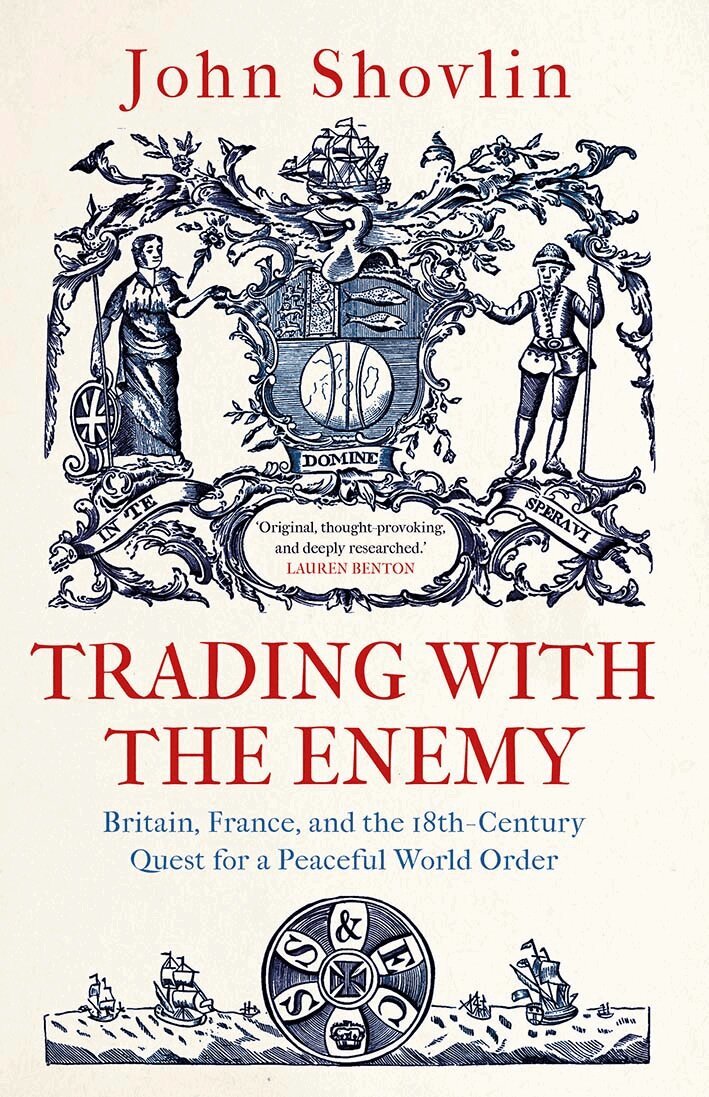
A groundbreaking account of British and French efforts to channel their eighteenth-century geopolitical rivalry into peaceful commercial competition Britain and France waged war eight times in the century following the Glorious Revolution, a mutual antagonism long regarded as a “Second Hundred Years’ War.” Yet officials on both sides also initiated ententes, free trade schemes, and colonial bargains intended to avert future conflict. What drove this quest for a more peaceful order? In this highly original account, John Shovlin reveals the extent to which Britain and France sought to divert their rivalry away from war and into commercial competition. The two powers worked to end future conflict over trade in Spanish America, the Caribbean, and India, and imagined forms of empire-building that would be more collaborative than competitive. They negotiated to cut cross-channel tariffs, recognizing that free trade could foster national power while muting enmity. This account shows that eighteenth-century capitalism drove not only repeated wars and overseas imperialism but spurred political leaders to strive for global stability.
Inbunden, Engelska, 2026
2 292 kr
Kommande
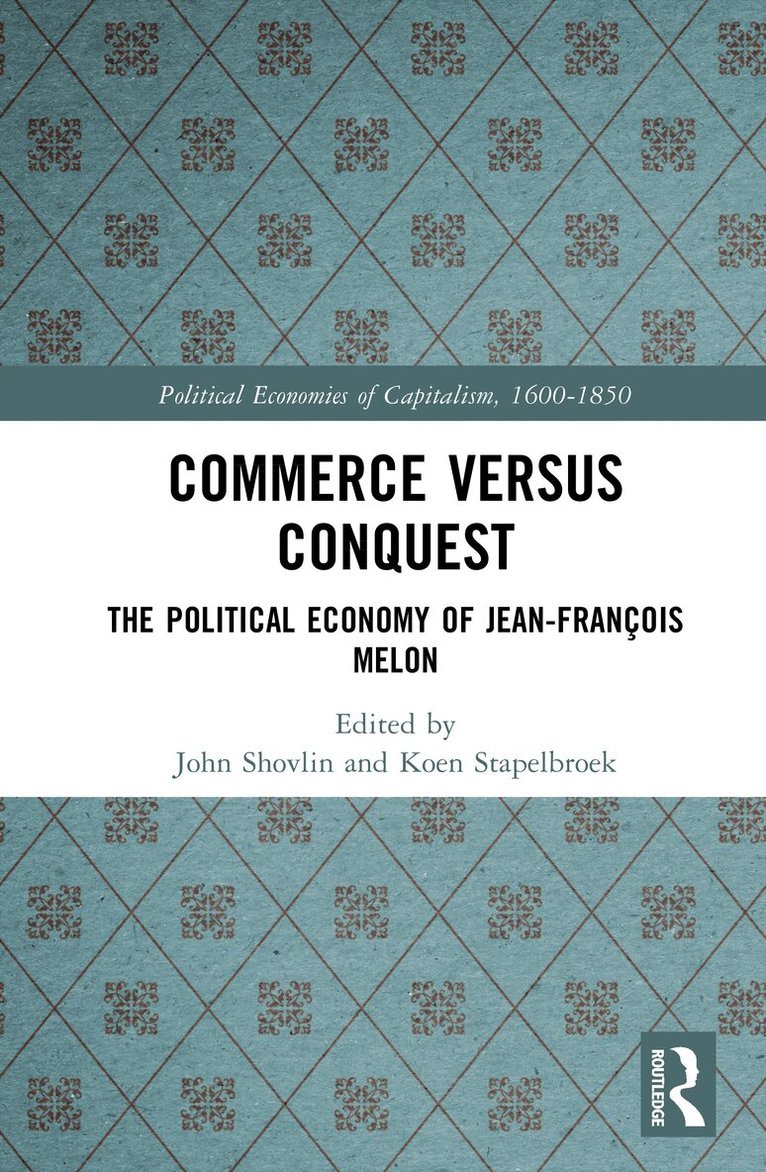
Jean-François Melon (1675–1738) was the most widely read European political economist before Adam Smith. This book is the first collection dedicated to exploring the context, message, and reach of Melon’s work.The leitmotif of commerce versus conquest offers a key to Melon’s vision. He argued that a new kind of commercial state must displace the war-oriented regimes of the past. The vitality of commerce was the crowning achievement and natural outcome of well-conceived statecraft, not simply a means to other ends. His Essai politique sur le commerce (1734, rev. 1736), which circulated in ten French-language editions and was translated into eight other languages, was the first comprehensive outline of a political economy appropriate for the modern state, overturning many contemporary conventions. Commerce versus Conquest explores the settings in which Melon wrote and the debates his work generated both within the French context and in translation. It also offers the first English translations of several key works by Melon including three new chapters of the expanded 1736 edition of the Essai.This volume is intended for scholars and students of the history of economic thought, the history of political thought, French intellectual history, Enlightenment studies, and the history of capitalism.
Inbunden, Engelska, 2006
710 kr
Skickas inom 10-15 vardagar
Political economy, John Shovlin asserts, can illuminate the social and economic contexts out of which a revolutionary impulse developed in France. Beyond the role of political economy in political life, massive public engagement with problems of economic order mediated an enduring cultural transformation. Economic activity was reimagined as a patriotic pursuit, and economic agents—farmers, merchants, and manufacturers—came to be viewed as potential citizens.Drawing on hundreds of political economic tracts published in France between the 1740s and the early nineteenth century, Shovlin shows how mid-level French elites (magistrates, clerics, lawyers, soldiers, landed gentlemen) sought to balance their interests and values with the need to regenerate a nation that had seemingly entered a period of decline. In their view, France's moral, political, and economic power depended not simply on expanding the national wealth but also on reviving civic spirit. The "political economy of virtue" held that luxury was the cause of the nation's economic and moral degeneration. When the monarchy failed to reform its political economic structures in the 1760s and 1770s, mid-level elites sought to eliminate the stranglehold of the plutocracy.Shovlin argues that the Revolution grew out of a debate on how to establish a commercial society capable of fostering both wealth and virtue, and the revolutionaries sought to create such a society by destroying the institutions that channeled modern wealth into the hands of courtiers and financiers.
Häftad, Engelska, 2007
306 kr
Skickas inom 10-15 vardagar
Political economy, John Shovlin asserts, can illuminate the social and economic contexts out of which a revolutionary impulse developed in France. Beyond the role of political economy in political life, massive public engagement with problems of economic order mediated an enduring cultural transformation. Economic activity was reimagined as a patriotic pursuit, and economic agents—farmers, merchants, and manufacturers—came to be viewed as potential citizens.Drawing on hundreds of political economic tracts published in France between the 1740s and the early nineteenth century, Shovlin shows how mid-level French elites (magistrates, clerics, lawyers, soldiers, landed gentlemen) sought to balance their interests and values with the need to regenerate a nation that had seemingly entered a period of decline. In their view, France's moral, political, and economic power depended not simply on expanding the national wealth but also on reviving civic spirit. The "political economy of virtue" held that luxury was the cause of the nation's economic and moral degeneration. When the monarchy failed to reform its political economic structures in the 1760s and 1770s, mid-level elites sought to eliminate the stranglehold of the plutocracy.Shovlin argues that the Revolution grew out of a debate on how to establish a commercial society capable of fostering both wealth and virtue, and the revolutionaries sought to create such a society by destroying the institutions that channeled modern wealth into the hands of courtiers and financiers.