Koen Stapelbroek – författare
Visar alla böcker från författaren Koen Stapelbroek. Handla med fri frakt och snabb leverans.
15 produkter
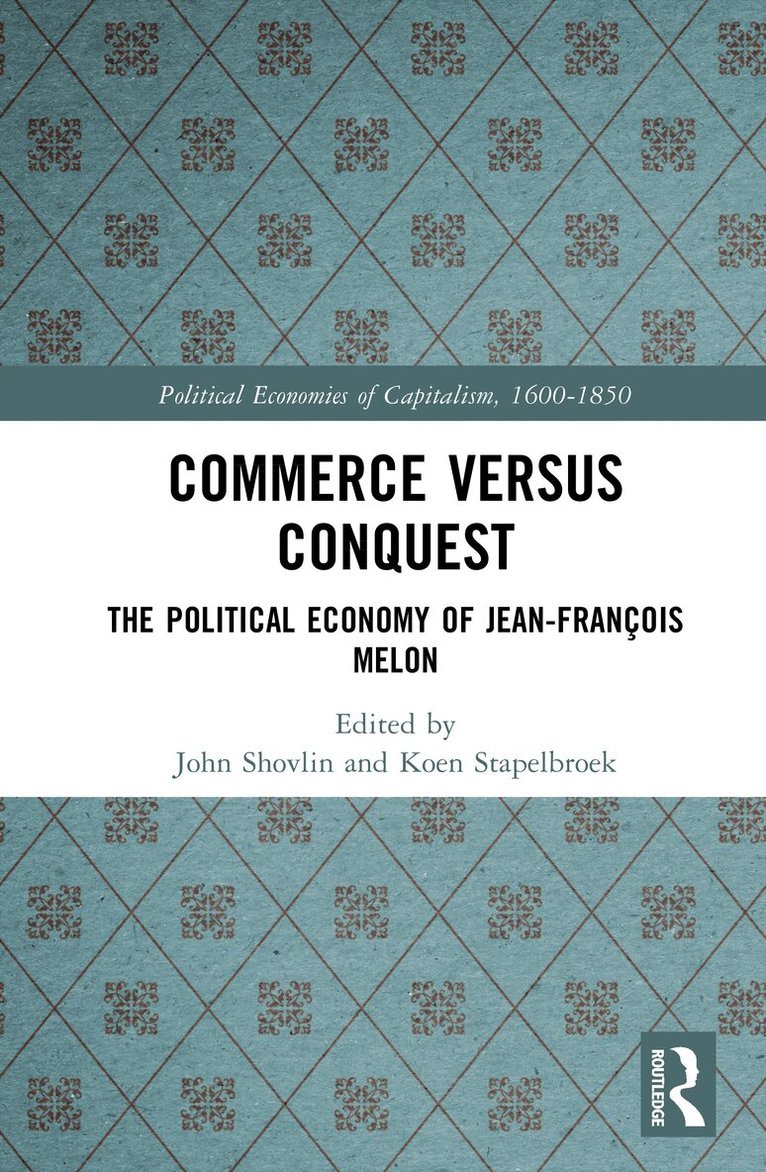
Commerce versus Conquest
The Political Economy of Jean-François Melon
Av John Shovlin, Koen Stapelbroek
Inbunden, 2026
2542 kr
Kommande
Jean-François Melon (1675–1738) was the most widely read European political economist before Adam Smith. This book is the first collection dedicated to exploring the context, message, and reach of Melon’s work.The leitmotif of commerce versus conquest offers a key to Melon’s vision. He argued that …
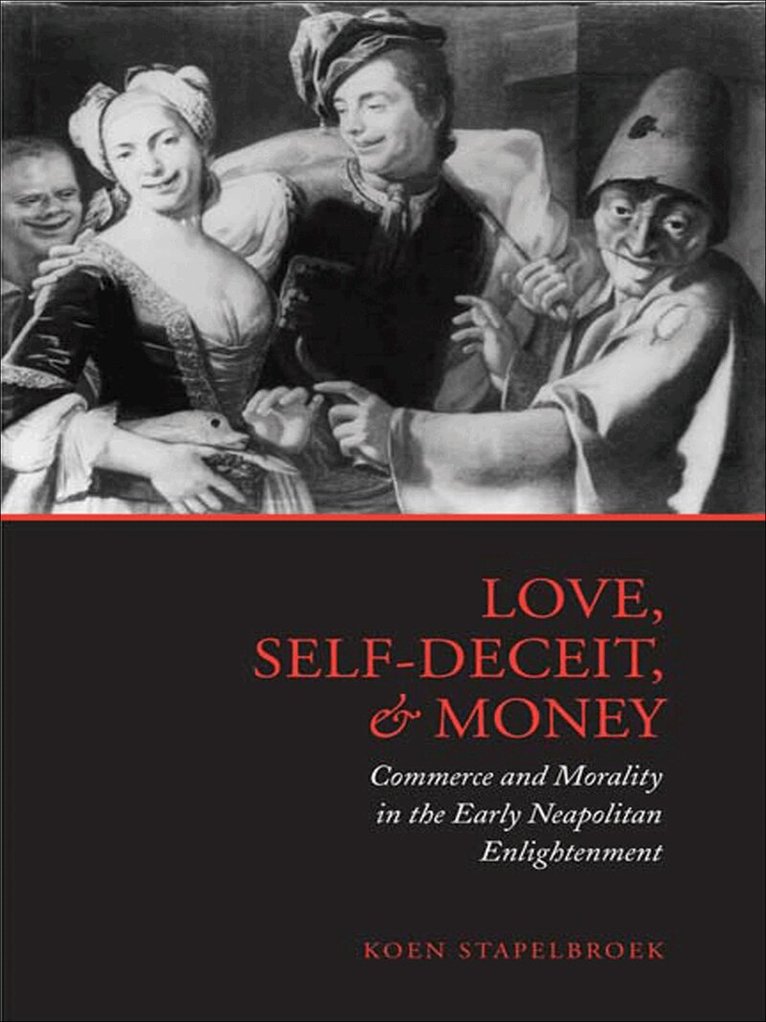
Love, Self-Deceit and Money
Commerce and Morality in the Early Neapolitan Enlightenment
Inbunden, 2008
826 kr
Lägg i varukorg
"Love drives and gives life to the commerce of mankind." Thus, the sixteen year old Ferdinando Galiani (1728-1787) presented his project to understand the sociable nature of man. This observation, a reflection of his own position on the relation between trade and virtue, hinted at what the mature …
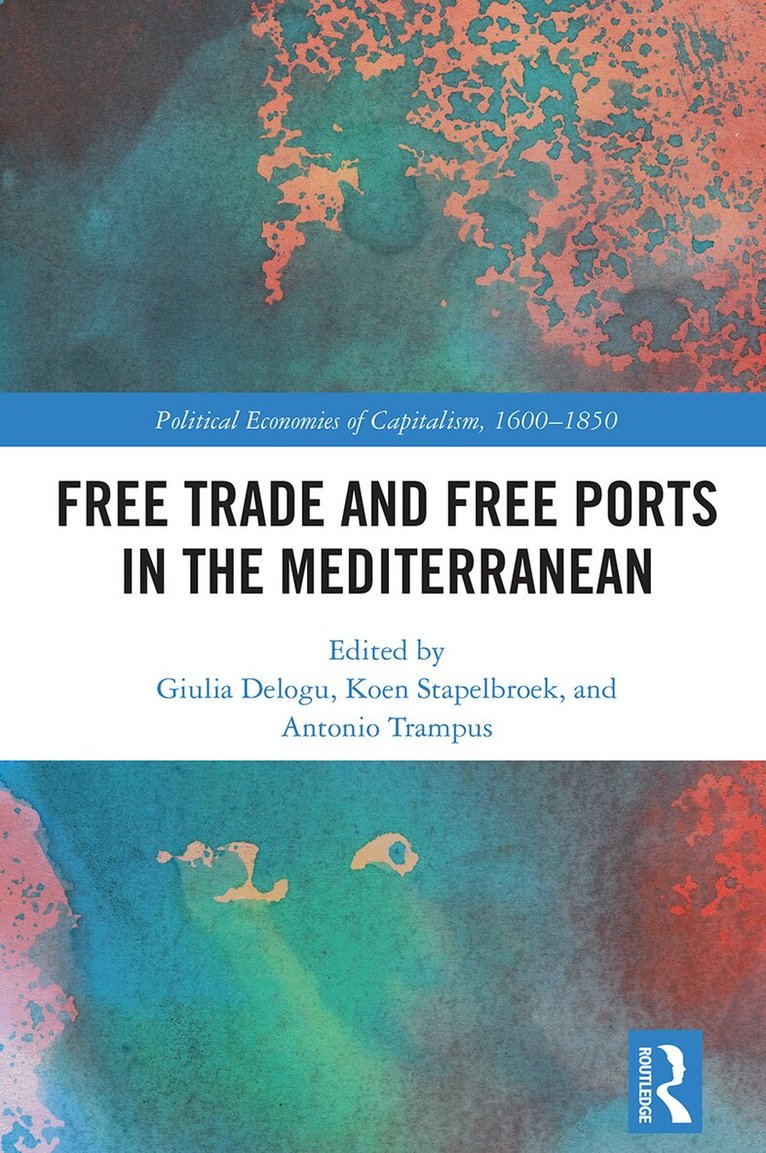
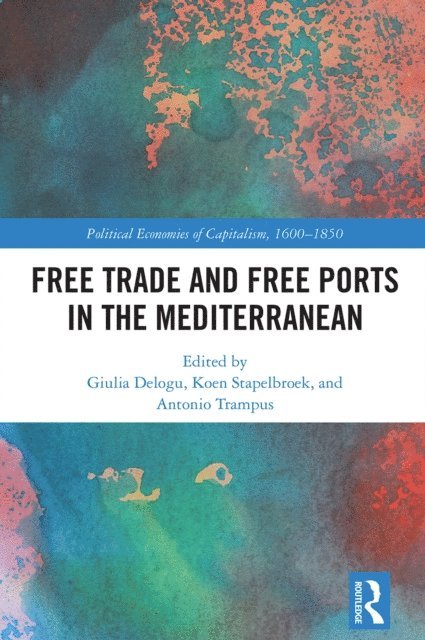
Free Trade and Free Ports in the Mediterranean
Av Giulia Delogu, Koen Stapelbroek m. fl.
Inbunden, 2024
2197 kr
Lägg i varukorg
How did free trade emerge in early-modern times? How did the Mediterranean as a specific region – with its own historical characteristics – produce a culture in which the free port appeared? What was the relation between the type of free trade created in early-modern Italy and the development of …
Free Trade and Free Ports in the Mediterranean
Av Giulia Delogu, Koen Stapelbroek m. fl.
Häftad, 2026
727 kr
Lägg i varukorg
How did free trade emerge in early-modern times? How did the Mediterranean as a specific region – with its own historical characteristics – produce a culture in which the free port appeared? What was the relation between the type of free trade created in early-modern Italy and the development of …
Free Trade and Free Ports in the Mediterranean
Av Antonio Trampus, Koen Stapelbroek m. fl.
E-bok, 2024
856 kr
Lägg i varukorg
How did free trade emerge in early-modern times? How did the Mediterranean as a specific region – with its own historical characteristics – produce a culture in which the free port appeared? What was the relation between the type of free trade created in early-modern Italy and the development of …
Free Trade and Free Ports in the Mediterranean
Av Antonio Trampus, Koen Stapelbroek m. fl.
E-bok, 2024
838 kr
Lägg i varukorg
How did free trade emerge in early-modern times? How did the Mediterranean as a specific region – with its own historical characteristics – produce a culture in which the free port appeared? What was the relation between the type of free trade created in early-modern Italy and the development of …
Love, Self-Deceit and Money
Commerce and Morality in the Early Neapolitan Enlightenment
E-bok, 2008
936 kr
Lägg i varukorg
"Love drives and gives life to the commerce of mankind." Thus, the sixteen year old Ferdinando Galiani (1728-1787) presented his project to understand the sociable nature of man. This observation, a reflection of his own position on the relation between trade and virtue, hinted at what the mature …
Love, Self-Deceit and Money
Commerce and Morality in the Early Neapolitan Enlightenment
E-bok, 2008
1074 kr
Lägg i varukorg
"Love drives and gives life to the commerce of mankind." Thus, the sixteen year old Ferdinando Galiani (1728-1787) presented his project to understand the sociable nature of man. This observation, a reflection of his own position on the relation between trade and virtue, hinted at what the mature …
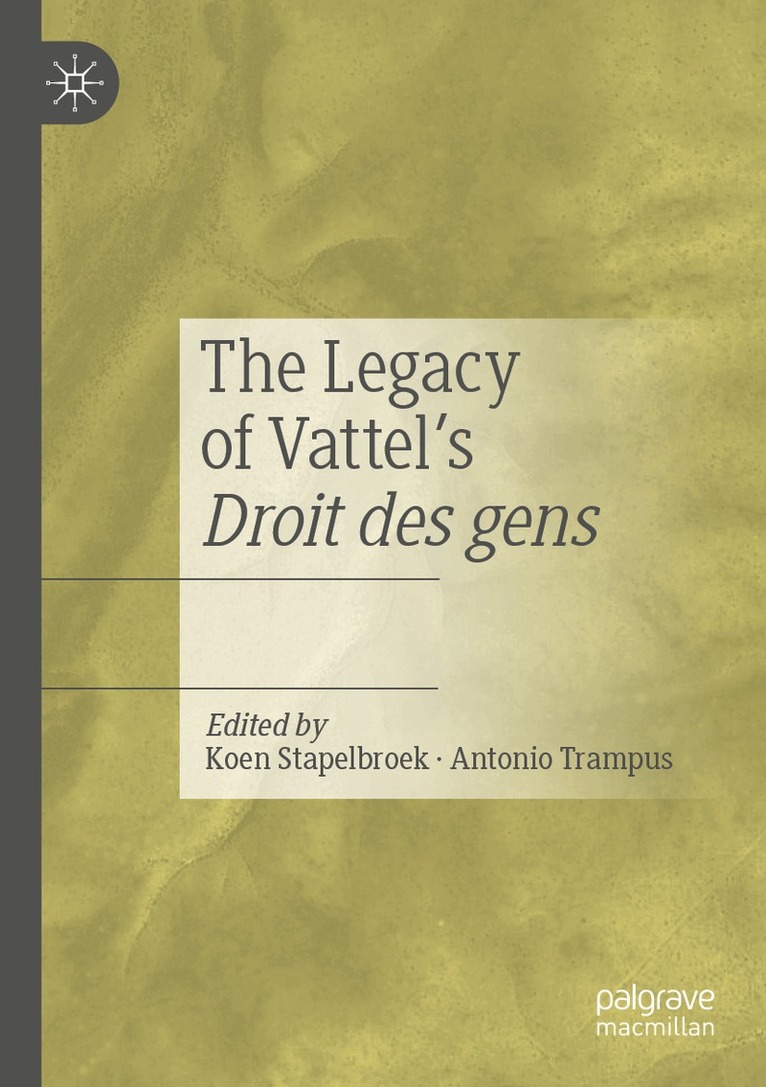
Legacy of Vattel's Droit des gens
Av Koen Stapelbroek, Antonio Trampus
Inbunden, 2019
906 kr
Lägg i varukorg
This edited collection offers a reassessment of the complicated legacy of Emer de Vattel’s Droit des gens, first published in 1758. One of the most influential books in the history of international law and a major reference point in the fields of international relations theory and political …
Legacy of Vattel's Droit des gens
Av Antonio Trampus, Koen Stapelbroek
E-bok, 2019
750 kr
Lägg i varukorg
This edited collection offers a reassessment of the complicated legacy of Emer de Vattel’s Droit des gens , first published in 1758. One of the most influential books in the history of international law and a major reference point in the fields of international relations theory and political …
Legacy of Vattel's Droit des gens
Av Koen Stapelbroek, Antonio Trampus
Häftad, 2020
647 kr
Lägg i varukorg
This edited collection offers a reassessment of the complicated legacy of Emer de Vattel’s Droit des gens, first published in 1758. One of the most influential books in the history of international law and a major reference point in the fields of international relations theory and political …
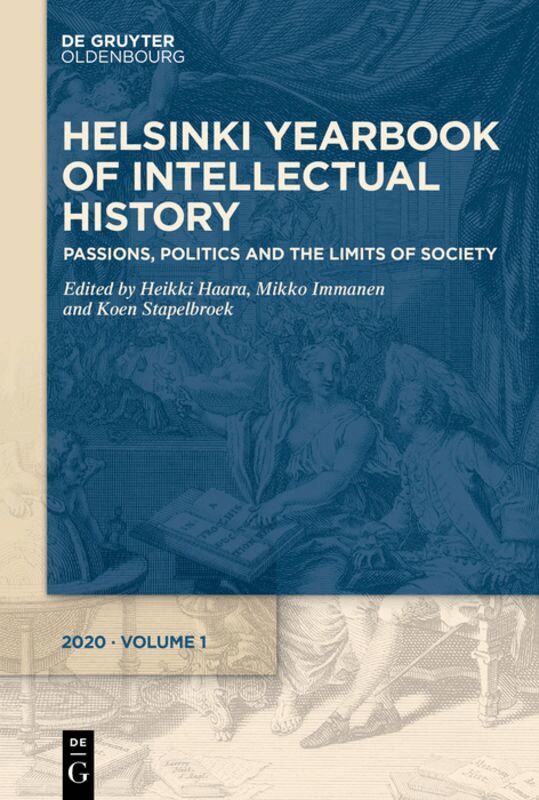
Passions, Politics and the Limits of Society
Av Heikki Haara, Koen Stapelbroek m. fl.
Häftad, 2020
1329 kr
Lägg i varukorg
The 1st part of the volume engages with the theme of inclusion and exclusion in the history of ideas from different perspectives. The 2nd part of the volume discusses debates on natural law, human nature and political economy in early-modern Europe. Its contributions explore the sorts of political …
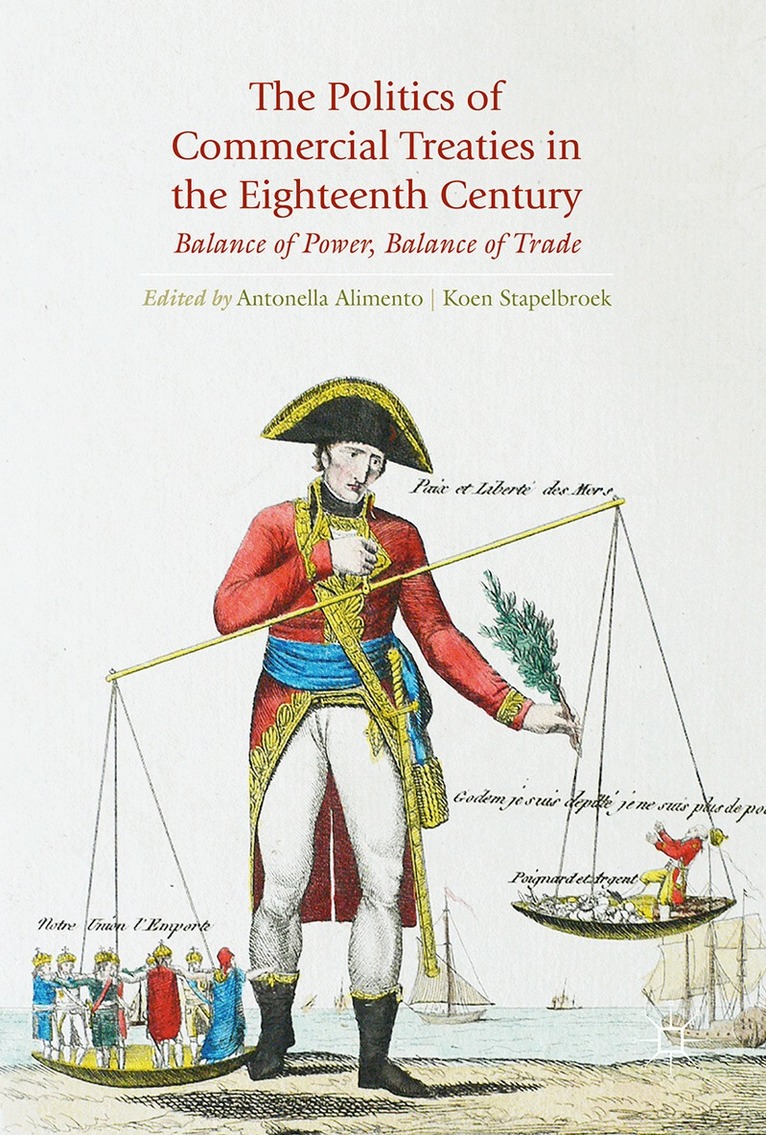
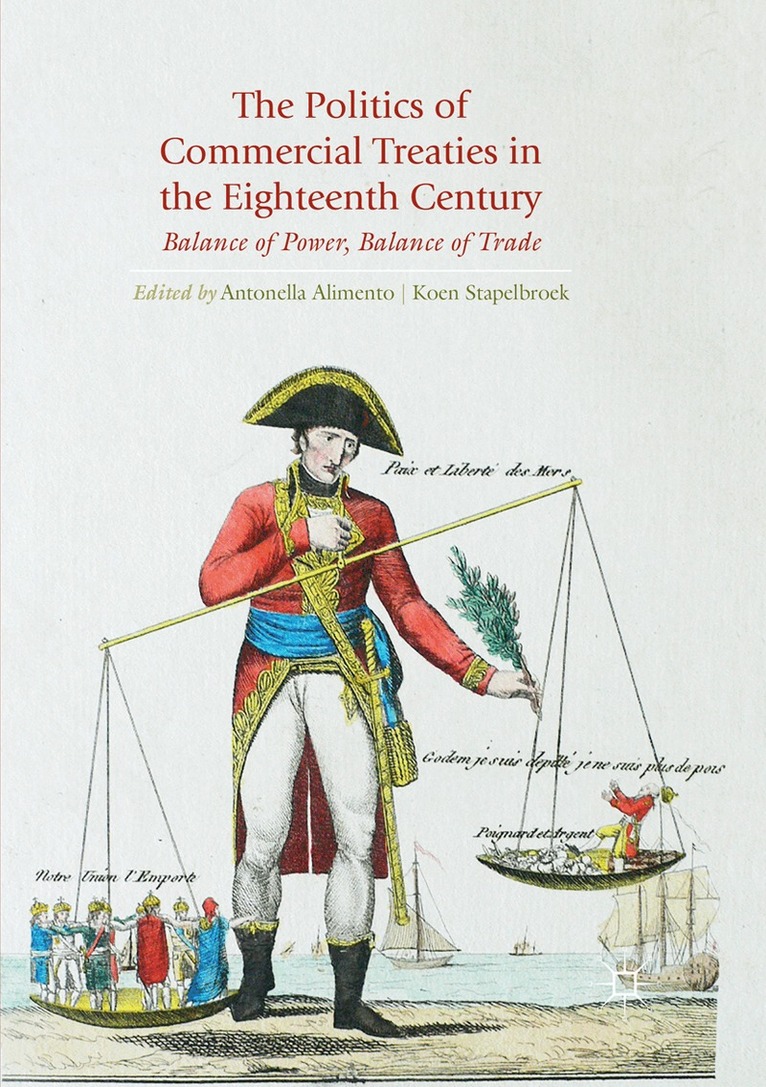
Politics of Commercial Treaties in the Eighteenth Century
Balance of Power, Balance of Trade
Av Antonella Alimento, Koen Stapelbroek
Inbunden, 2017
1580 kr
Lägg i varukorg
This book is the first study that analyses bilateral commercial treaties as instruments of peace and trade comparatively and over time. The work focuses on commercial treaties as an index of the challenges of eighteenth-century European politics, shaping a new understanding of these challenges and …
Politics of Commercial Treaties in the Eighteenth Century
Balance of Power, Balance of Trade
Av Koen Stapelbroek, Antonella Alimento
E-bok, 2017
1962 kr
Lägg i varukorg
This book is the first study that analyses bilateral commercial treaties as instruments of peace and trade comparatively and over time. The work focuses on commercial treaties as an index of the challenges of eighteenth-century European politics, shaping a new understanding of these challenges and …
Politics of Commercial Treaties in the Eighteenth Century
Balance of Power, Balance of Trade
Av Antonella Alimento, Koen Stapelbroek
Häftad, 2018
1580 kr
Lägg i varukorg
This book is the first study that analyses bilateral commercial treaties as instruments of peace and trade comparatively and over time. The work focuses on commercial treaties as an index of the challenges of eighteenth-century European politics, shaping a new understanding of these challenges and …