Antonio Trampus – författare
Visar alla böcker från författaren Antonio Trampus. Handla med fri frakt och snabb leverans.
12 produkter
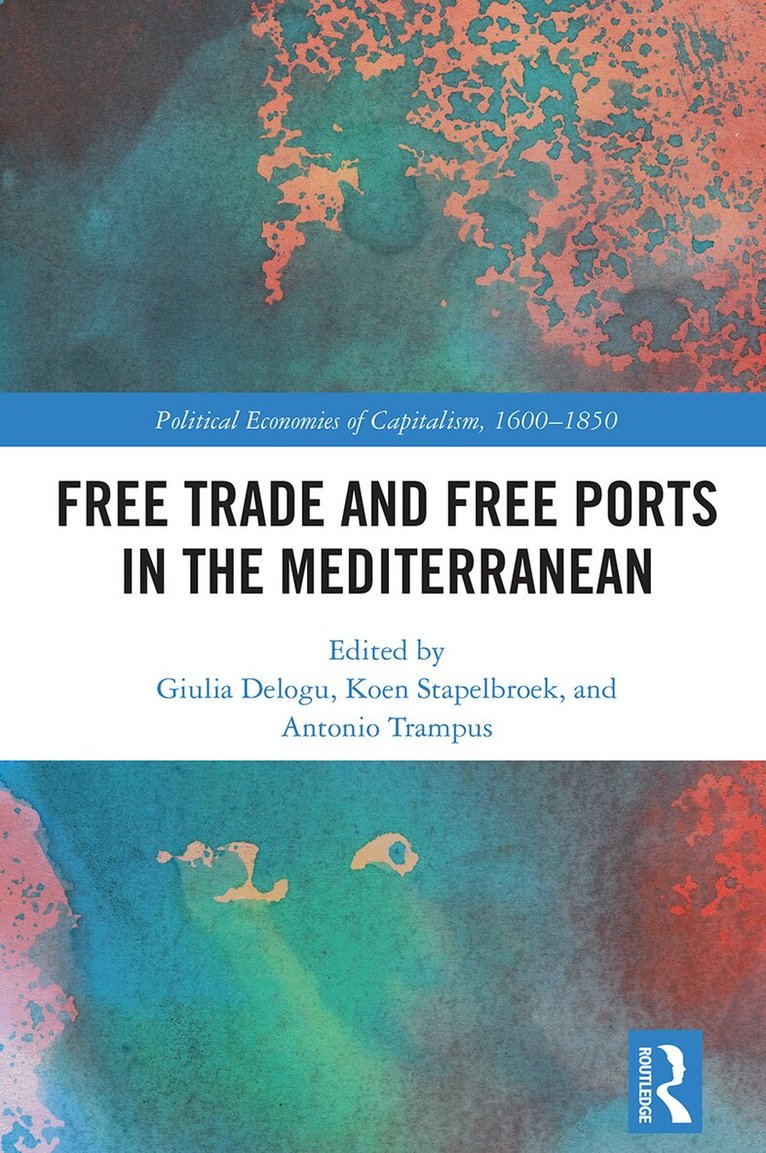
Free Trade and Free Ports in the Mediterranean
Av Giulia Delogu, Koen Stapelbroek m. fl.
Inbunden, 2024
2190 kr
Lägg i varukorg
How did free trade emerge in early-modern times? How did the Mediterranean as a specific region – with its own historical characteristics – produce a culture in which the free port appeared? What was the relation between the type of free trade created in early-modern Italy and the development of …
Free Trade and Free Ports in the Mediterranean
Av Giulia Delogu, Koen Stapelbroek m. fl.
Häftad, 2026
725 kr
Lägg i varukorg
How did free trade emerge in early-modern times? How did the Mediterranean as a specific region – with its own historical characteristics – produce a culture in which the free port appeared? What was the relation between the type of free trade created in early-modern Italy and the development of …
Free Trade and Free Ports in the Mediterranean
Av Antonio Trampus, Koen Stapelbroek m. fl.
E-bok, 2024
856 kr
Lägg i varukorg
How did free trade emerge in early-modern times? How did the Mediterranean as a specific region – with its own historical characteristics – produce a culture in which the free port appeared? What was the relation between the type of free trade created in early-modern Italy and the development of …
Free Trade and Free Ports in the Mediterranean
Av Antonio Trampus, Koen Stapelbroek m. fl.
E-bok, 2024
838 kr
Lägg i varukorg
How did free trade emerge in early-modern times? How did the Mediterranean as a specific region – with its own historical characteristics – produce a culture in which the free port appeared? What was the relation between the type of free trade created in early-modern Italy and the development of …
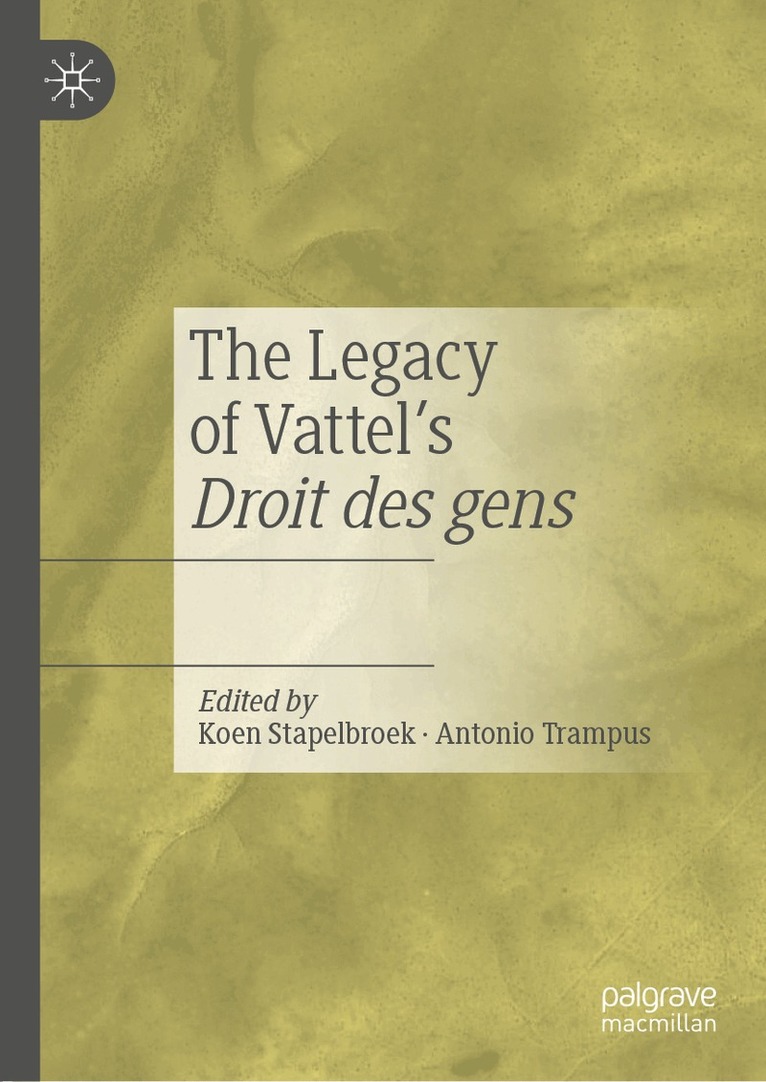
Legacy of Vattel's Droit des gens
Av Koen Stapelbroek, Antonio Trampus
Inbunden, 2019
906 kr
Lägg i varukorg
This edited collection offers a reassessment of the complicated legacy of Emer de Vattel’s Droit des gens, first published in 1758. One of the most influential books in the history of international law and a major reference point in the fields of international relations theory and political …
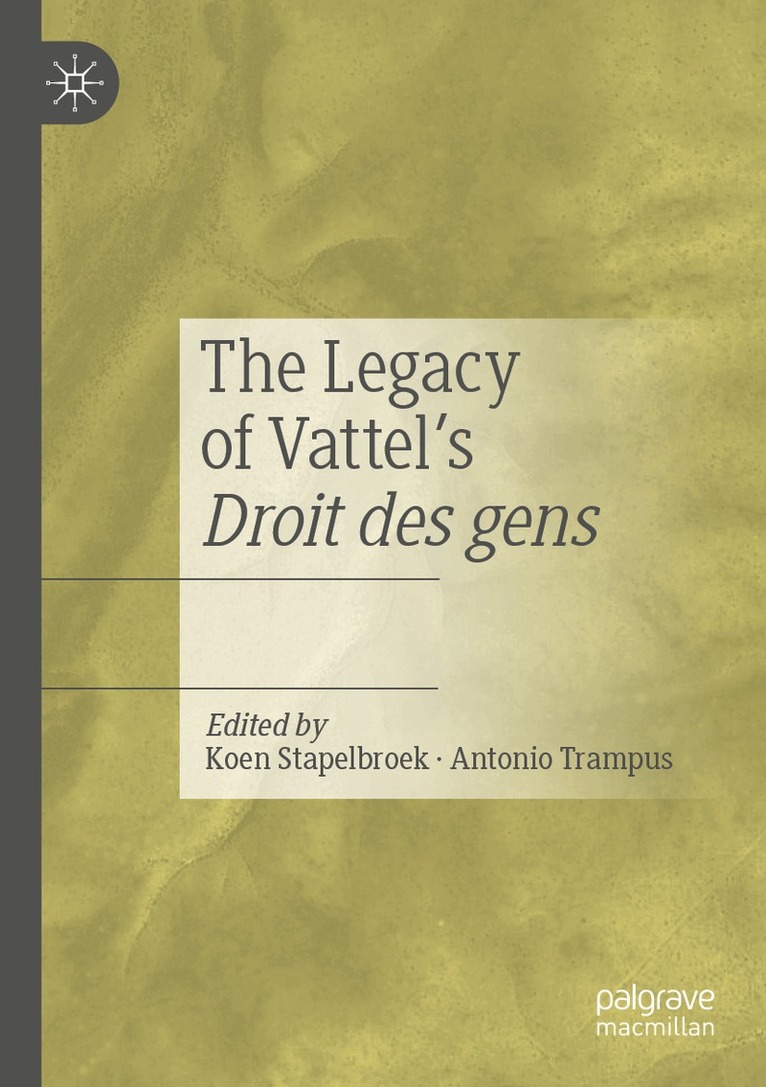
Legacy of Vattel's Droit des gens
Av Antonio Trampus, Koen Stapelbroek
E-bok, 2019
750 kr
Lägg i varukorg
This edited collection offers a reassessment of the complicated legacy of Emer de Vattel’s Droit des gens , first published in 1758. One of the most influential books in the history of international law and a major reference point in the fields of international relations theory and political …
Legacy of Vattel's Droit des gens
Av Koen Stapelbroek, Antonio Trampus
Häftad, 2020
647 kr
Lägg i varukorg
This edited collection offers a reassessment of the complicated legacy of Emer de Vattel’s Droit des gens, first published in 1758. One of the most influential books in the history of international law and a major reference point in the fields of international relations theory and political …
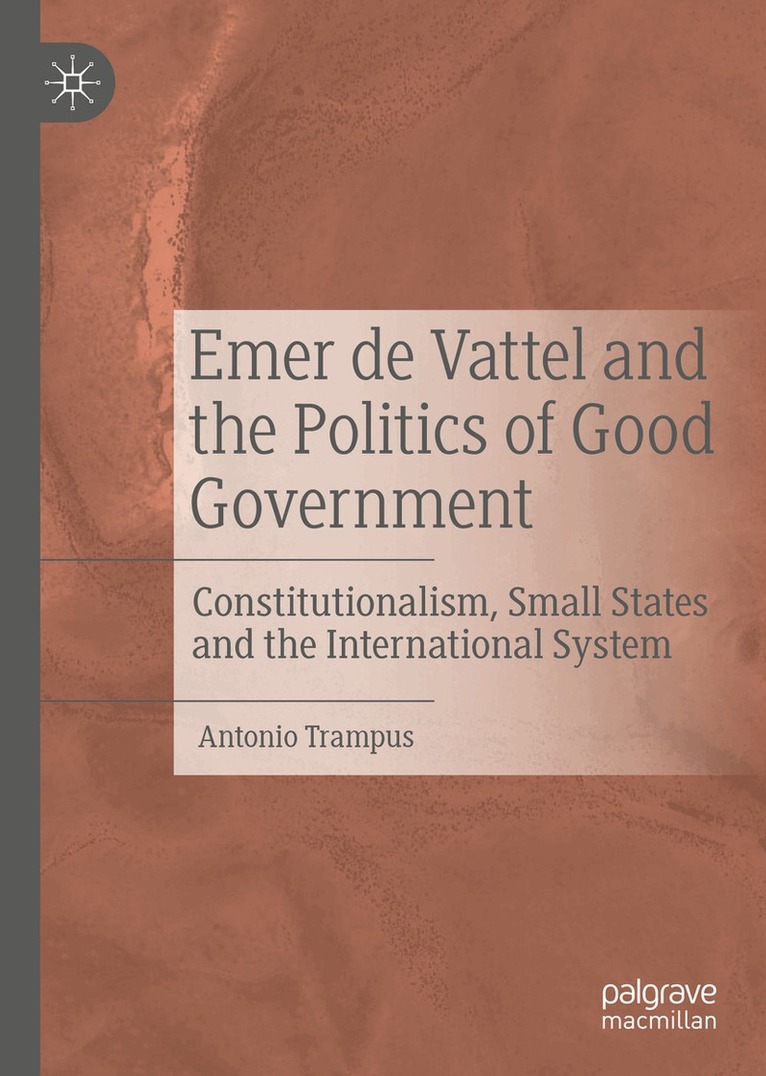
Emer de Vattel and the Politics of Good Government
Constitutionalism, Small States and the International System
Inbunden, 2020
1018 kr
Lägg i varukorg
This book explores the history of the international order in the eighteenth and nineteenth century through a new study of Emer de Vattel’s Droit des gens (1758). Drawing on unpublished sources from European archives and libraries, the book offers an in-depth account of the reception of Vattel’s …
Emer de Vattel and the Politics of Good Government
Constitutionalism, Small States and the International System
E-bok, 2020
1192 kr
Lägg i varukorg
This book explores the history of the international order in the eighteenth and nineteenth century through a new study of Emer de Vattel’s Droit des gens (1758). Drawing on unpublished sources from European archives and libraries, the book offers an in-depth account of the reception of Vattel’s …
Emer de Vattel and the Politics of Good Government
Constitutionalism, Small States and the International System
Häftad, 2021
1018 kr
Lägg i varukorg
This book explores the history of the international order in the eighteenth and nineteenth century through a new study of Emer de Vattel’s Droit des gens (1758). Drawing on unpublished sources from European archives and libraries, the book offers an in-depth account of the reception of Vattel’s …
Ecrits Politiques - Commentaire Sur l'Ouvrage de Filangieri
Av Benjamin Constant, Kurt Kloocke m. fl.
Inbunden, 2012
3992 kr
Lägg i varukorg
Ecrits politiques – Commentaire sur l’ouvrage de Filangieri
Av Antonio Trampus, Kurt Kloocke
E-bok, 2012
3530 kr
Lägg i varukorg
Ce tome XXVI, consacré au dernier grand texte de théorie politique publié du vivant de Constant, le Commentaire sur l’ouvrage de Filangieri (1822–1824), offre le texte critique de l’édition originale, avec les variantes du manuscrit reconstitué partiellement, des commentaires qui se proposent de …