• Fri frakt över 249 kr
  • •
  • Snabba leveranser
  • •
  • Billiga böcker
Kundservice

Du är på sajten för privatpersoner.

Företag, bibliotek eller offentlig verksamhet?

Du handlar på classic.bokus.com, där alla dina funktioner finns intakta.
Till classic.bokus.com
Bokus logotyp. Gå till startsidan.
  • Erbjudanden
  • Nyheter
  • Student
  • Topplistor
  • Barn & ungdom
  • Bokus Play
  • E-böcker
  • Pocketböcker
  • Spel & pussel

Må bättre, för mindre! Upp till 50% rabatt på hälsoböcker

Sidfot

Mina sidor

    Hjälp

    • Kundservice
    • Vanliga frågor och svar
    • Frakt och leverans
    • Retur vid ångerrätt
    • Reklamera vara
    • Betalning
    • Köpvillkor
    • Allmänna villkor
    • Information om webbplatsens tillgänglighet

    Om Bokus

    • Om oss
    • Pressrum
    • För studenter
    • För företag
    • För bibliotek och offentlig verksamhet
    • För leverantörer
    • Hållbarhet

    Populärt

    • Aktuella erbjudanden
    • Presentkort
    • Studentlitteratur
    • Nya böcker
    • Topplistor
    • Signerade böcker
    • Engelska böcker

    Inspiration

    • Boktips
    • BookTok
    • Populära bokserier
    • Barnbokskaraktärer
    • Populära författare
    Logotyp för Bokus
    Följ oss på Facebook (extern länk)Följ oss på Instagram (extern länk)Följ oss på YouTube (extern länk)Följ oss på TikTok (extern länk)
    bokus @ CookiesAnpassa cookiesIntegritetspolicyKöpvillkor
    Till Citymail hemsida (extern länk)Till Budbee hemsida (extern länk)Till Postnord hemsida (extern länk)Till Schenker hemsida (extern länk)Till Early Bird hemsida (extern länk)Till Walleys hemsida (extern länk)
    1. Historia och arkeologi
    2. Historia
    3. Europas historia

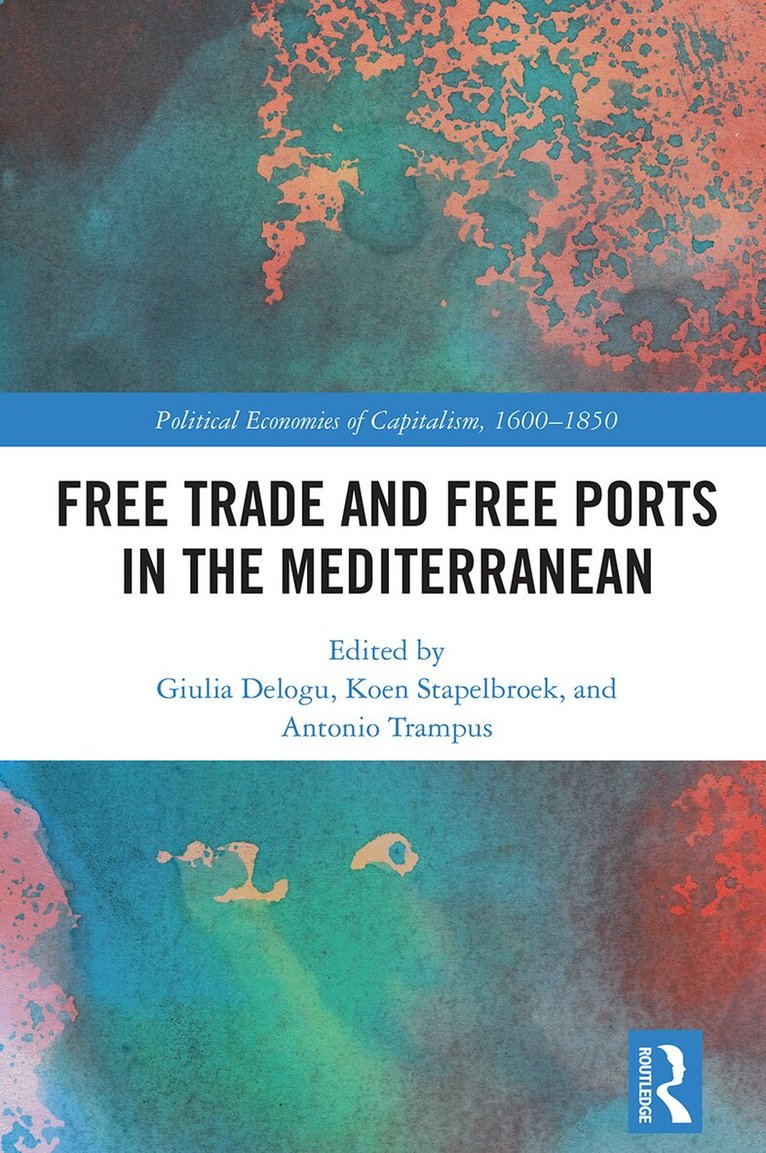
    Free Trade and Free Ports in the Mediterranean

    AvGiulia Delogu,Koen Stapelbroek

    Inbunden, Engelska, 2024

    Del i serien Political Economies of Capitalism, 1600-1850

    2 117 kr

    Beställningsvara. Skickas inom 10-15 vardagar. Fri frakt över 249 kr.

    Beskrivning

    How did free trade emerge in early-modern times? How did the Mediterranean as a specific region – with its own historical characteristics – produce a culture in which the free port appeared? What was the relation between the type of free trade created in early-modern Italy and the development of global trade and commercial competition between states for hegemony in the eighteenth century? And how did the position of the free port, originally a Mediterranean ‘invention’, develop over the course of time? The contributions to this volume address these questions and explain the institutional genealogy of the free port.Free Trade and Free Ports in the Mediterranean analyses the atypical history and conditions of the Mediterranean region in contradistinction with other regions as an explanation for how and why free ports arose there. This volume engages with the diffusion of free ports from a Mediterranean to a global phenomenon, whilst staying focused on how this diffusion was experienced in the Mediterranean itself. The contributions to this volume bring together the traditional issues of religious openness and tolerance in physically separated areas and the role of consuls and governors, via fiscal techniques, architectural and administrative aspects, with questions about geopolitical balance and primacy.The book will be of interest to scholars in a wide range of historical sub-disciplines (early modern, Mediterranean, global economic, political, and institutional, just to mention a few) and to students wishing to perfect their knowledge of the Mediterranean and its global interconnections, and of the origins of free trade.

    Produktinformation

    • Utgivningsdatum:2024-07-12
    • Mått:156 x 234 x 24 mm
    • Vikt:453 g
    • Format:Inbunden
    • Språk:Engelska
    • Serie:Political Economies of Capitalism, 1600-1850
    • Antal sidor:280
    • Förlag:Taylor & Francis Ltd
    • ISBN:9781032069289

    Utforska kategorier

    • Europas historia inom Historia och arkeologi
    • Ekonomisk historia inom Ekonomi och Ledarskap
    • Transportindustri inom Ekonomi och Ledarskap

    Mer om författaren

    Giulia Delogu is Assistant Professor of Early Modern History at Ca’ Foscari University of Venice. Her main research interest is political communication and the reciprocal influences between information and institutional changes. A second research field is the construction of images of economic and political power starting from the case of Napoleon. Her latest monograph is L’emporio delle parole. Costruire l’informazione nei porti franchi d’età moderna (2017). She published several articles in Past & Present, History of European Ideas, Studi Storici, Rivista Storica Italiana, and Società e Storia.Koen Stapelbroek is Professor of Humanities and Dean of the College of Arts, Society and Education at James Cook University. He received his PhD from the University of Cambridge (2004) and published widely in the field of European eighteenth-century political thought and intellectual history. His research focuses on the history of political thought, global aspects of political economy and trade, as well as their legal, cultural, and institutional dynamics.Antonio Trampus is Professor of Early Modern History at Ca’ Foscari University of Venice. His scholarly interests cover European and International history from the seventeenth to the early nineteenth century, and the impact of Enlightenment’s legacy in the Mediterranean area, in Europe, and in the Americas. He is interested particularly in the free ports of the Adriatic and Mediterranean. His recent publications include the edited volume, with Koen Stapelbroek, The Legacy of Vattel’s Droit des gens (2019), and Emer de Vattel and the Politics of Good Government: Constitutionalism, Small States and the International System (2021).

    Innehållsförteckning

    • Chapter 1The history of Mediterranean free ports as the invention of free trade?Koen Stapelbroek and Antonio TrampusChapter 2Ports and free ports in the Old World: political economy in the Mediterranean and the Indian Ocean (1500–1750)Corey TazzaraChapter 3What is a free port? The shaping of the concept in dictionaries, edicts, and governanceGiulia DeloguChapter 4Free ports in a controlled market: Ancona, Livorno, Genoa, and Trieste in the eighteenth-century Italian grain tradeGiulio OngaroChapter 5Territorial control, economic provision, and republican order: the free port of Genoa from the sixteenth to the eighteenth centuryPaolo CalcagnoChapter 6English perspectives on Genova and Livorno: rivalry and complementarity between two eighteenth-century free portsDanilo PedemonteChapter 7The free port of Nice-Villafranca and Savoy maritime politics in the seventeenth and eighteenth centuriesLuca Lo Basso Chapter 8‘Dire straits’: the free ports of Tangier and Gibraltar in the English MediterraneanFrancesca SavoldiChapter 9The British debate on Mediterranean free ports: Livorno, Gibraltar, and Port Mahon (1712–1783)Antonella AlimentoChapter 10A ‘source of gold and prosperity’? The Neapolitan free-port debate from the fifteenth to the nineteenth centuryAntonio IodiceChapter 11The free port of Messina in the ancien régime: spaces, institutions, and practicesIda Fazio and Rita FotiChapter 12Free trade and the ghost story of the Bourbon alliance: Spain, free ports, and the Mediterranean Sea (1648–1765)Edward Jones CorrederaChapter 13The evils of ‘beguiling Liberty’: a comparative perspective on free ports in a manuscript by Manuel María Gutiérrez (1830)Marcella AgliettiChapter 14The Habsburg portchain: a decentralised empire in the eighteenth centuryDavid Do PaçoChapter 15The evolution of the free port of Trieste from 1717 to the presentDaniele Andreozzi