Political Economies of Capitalism, 1600-1850 – serie
Visar alla böcker i serien Political Economies of Capitalism, 1600-1850. Handla med fri frakt och snabb leverans.
13 produkter
13 produkter
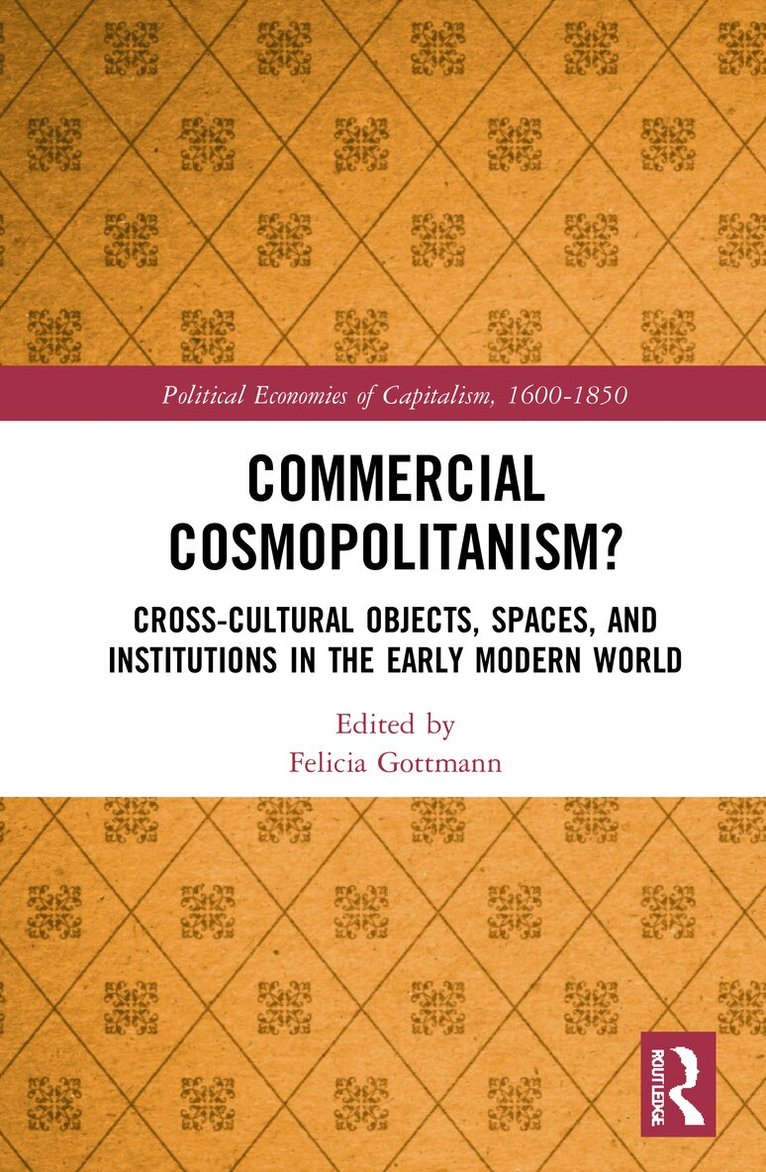
Commercial Cosmopolitanism?
Cross-Cultural Objects, Spaces, and Institutions in the Early Modern World
Inbunden, Engelska, 2021
2 176 kr
Skickas inom 10-15 vardagar
This book showcases the wide variety of commercial cosmopolitan practices that arose from the global economic entanglements of the early modern period.Cosmopolitanism is not only a philosophical ideal: for many centuries it has also been an everyday practice across the globe. The early modern era saw hitherto unprecedented levels of economic interconnectedness. States, societies, and individuals reacted with a mixture of commercial idealism and commercial anxiety, seeking at once to exploit new opportunities for growth whilst limiting its disruptive effects. In highlighting the range of commercial cosmopolitan practices that grew out of early modern globalisation, the book demonstrates that it provided robust alternatives to the universalising western imperial model of the later period. Deploying a number of interdisciplinary methodologies, the kind of ‘methodological cosmopolitanism’ that Ulrich Beck has called for, chapters provide agency-centred evaluations of the risks and opportunities inherent in the ambiguous role of the cosmopolitan, who, often playing on and mobilising a number of identities, operated in between and outside of different established legal, social, and cultural systems.The book will be important reading for students and scholars working at the intersection of economic, global, and cultural history.
2 430 kr
Skickas inom 10-15 vardagar
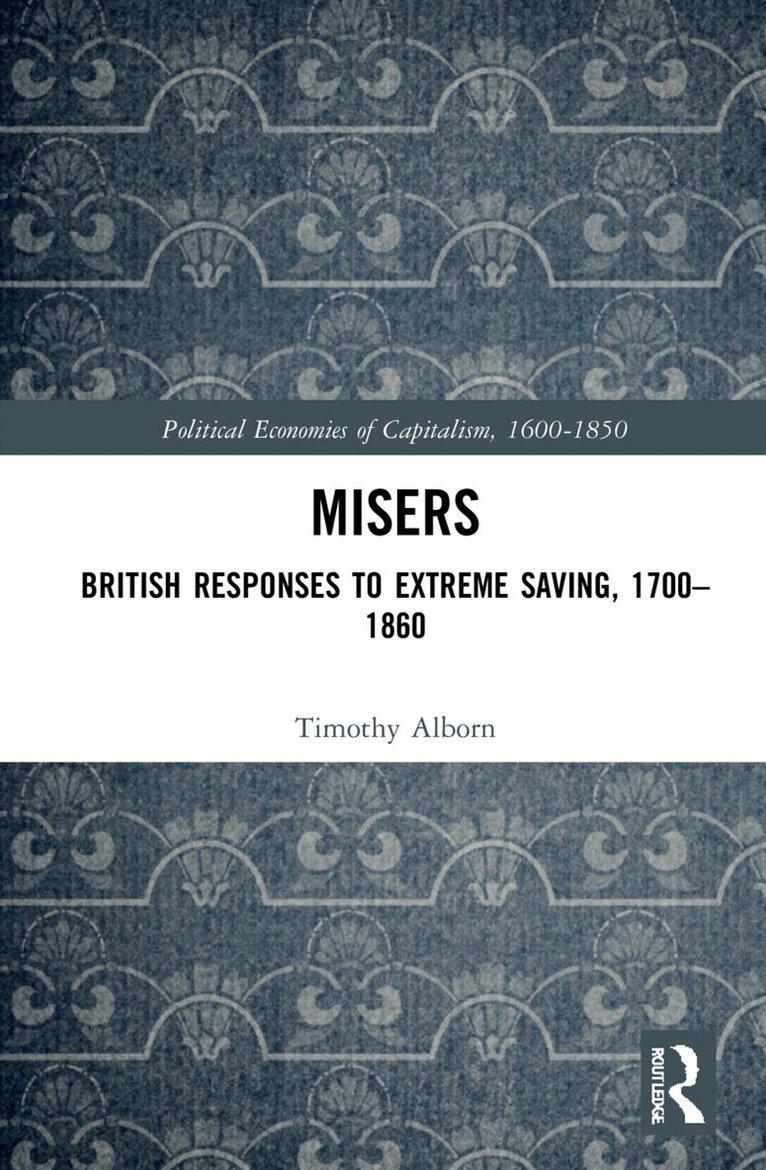
This volume uses the extreme case of misers to examine interlocking categories that undergirded the emergence of modern British society, including new perspectives on charity, morality, and marriage; new representations of passion and sympathy; and new modes of saving, spending, and investment.Misers surveys this class of people—as invented and interpreted in sermons, poems, novels, and plays; analyzed by economists and philosophers; and profiled in obituaries and biographies—to explore how British attitudes about saving money shifted between 1700 and 1860. As opposed to the century before, the nineteenth century witnessed a new appreciation for misers, as economists credited them with adding to the nation's stock of capital and novelists newly imagined their capacity to empathize with fellow human beings. These characters shared the spotlight with real people who posthumously donned that label, populating into a cottage industry of miser biographies by the 1850s. By the time A Christmas Carol appeared in 1843, many Victorians had come to embrace misers as links that connected one generation’s extreme saving with the next generation’s virtuous spending.With a broad chronological period, this volume is useful for students and scholars interested in representation of misers in eighteenth- and nineteenth-century Britain.
595 kr
Skickas inom 10-15 vardagar
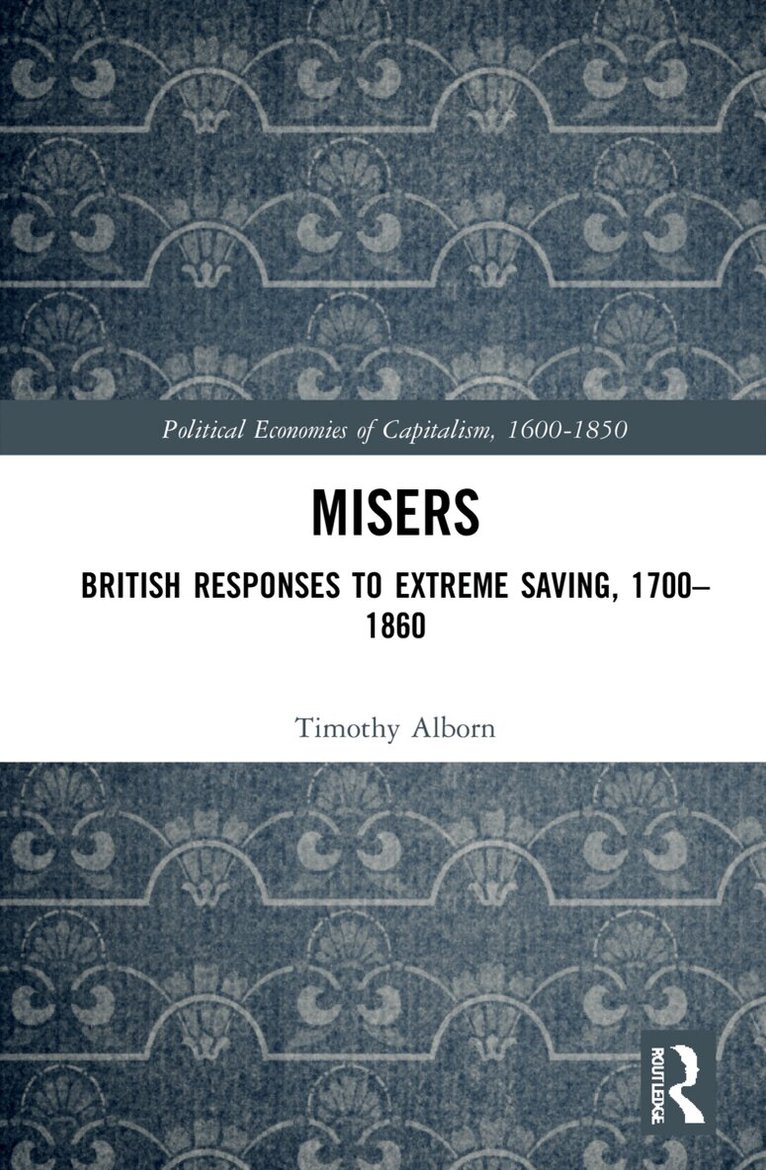
This volume uses the extreme case of misers to examine interlocking categories that undergirded the emergence of modern British society, including new perspectives on charity, morality, and marriage; new representations of passion and sympathy; and new modes of saving, spending, and investment.Misers surveys this class of people—as invented and interpreted in sermons, poems, novels, and plays; analyzed by economists and philosophers; and profiled in obituaries and biographies—to explore how British attitudes about saving money shifted between 1700 and 1860. As opposed to the century before, the nineteenth century witnessed a new appreciation for misers, as economists credited them with adding to the nation's stock of capital and novelists newly imagined their capacity to empathize with fellow human beings. These characters shared the spotlight with real people who posthumously donned that label, populating into a cottage industry of miser biographies by the 1850s. By the time A Christmas Carol appeared in 1843, many Victorians had come to embrace misers as links that connected one generation’s extreme saving with the next generation’s virtuous spending.With a broad chronological period, this volume is useful for students and scholars interested in representation of misers in eighteenth- and nineteenth-century Britain.
Commercial Cosmopolitanism?
Cross-Cultural Objects, Spaces, and Institutions in the Early Modern World
Häftad, Engelska, 2022
651 kr
Skickas inom 10-15 vardagar
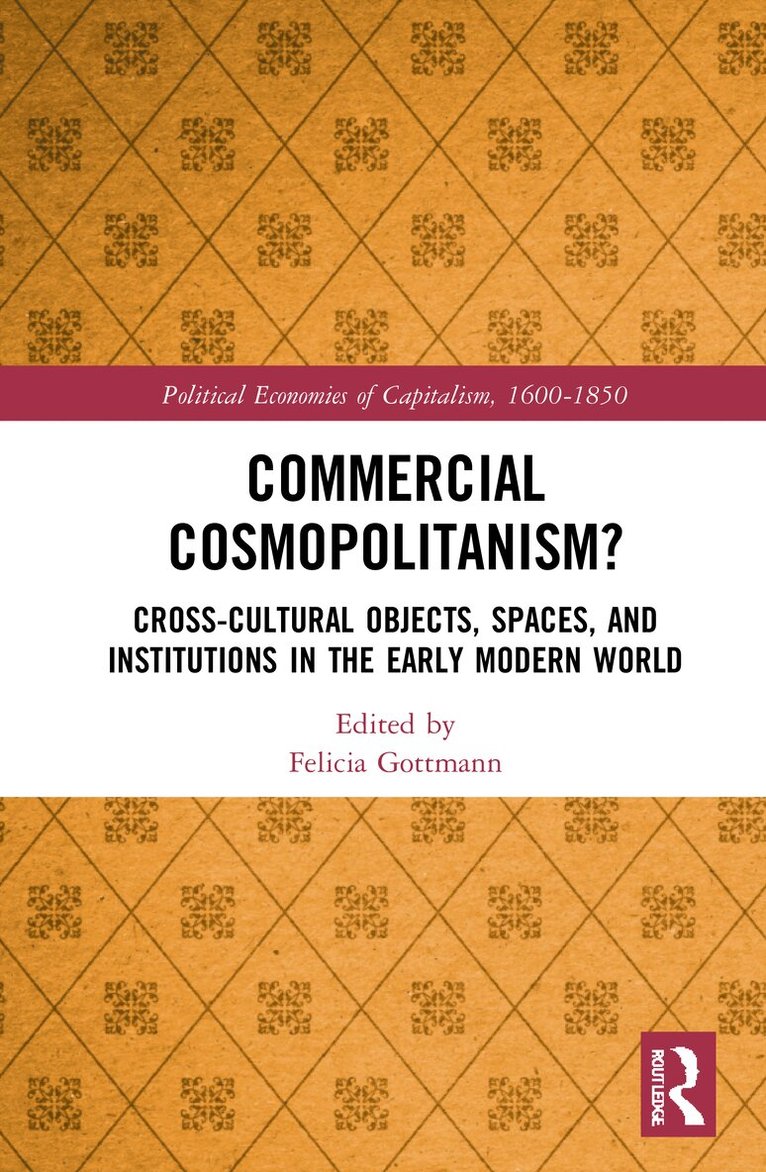
This book showcases the wide variety of commercial cosmopolitan practices that arose from the global economic entanglements of the early modern period.Cosmopolitanism is not only a philosophical ideal: for many centuries it has also been an everyday practice across the globe. The early modern era saw hitherto unprecedented levels of economic interconnectedness. States, societies, and individuals reacted with a mixture of commercial idealism and commercial anxiety, seeking at once to exploit new opportunities for growth whilst limiting its disruptive effects. In highlighting the range of commercial cosmopolitan practices that grew out of early modern globalisation, the book demonstrates that it provided robust alternatives to the universalising western imperial model of the later period. Deploying a number of interdisciplinary methodologies, the kind of ‘methodological cosmopolitanism’ that Ulrich Beck has called for, chapters provide agency-centred evaluations of the risks and opportunities inherent in the ambiguous role of the cosmopolitan, who, often playing on and mobilising a number of identities, operated in between and outside of different established legal, social, and cultural systems.The book will be important reading for students and scholars working at the intersection of economic, global, and cultural history.
651 kr
Skickas inom 10-15 vardagar
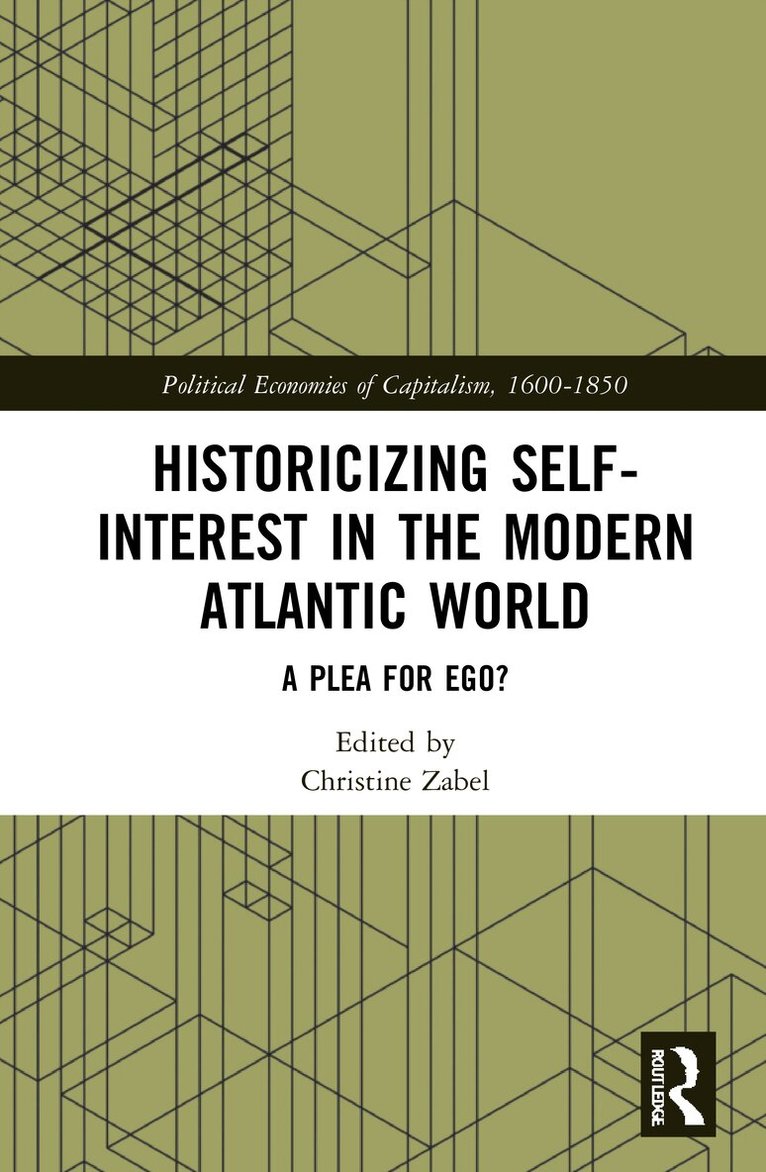
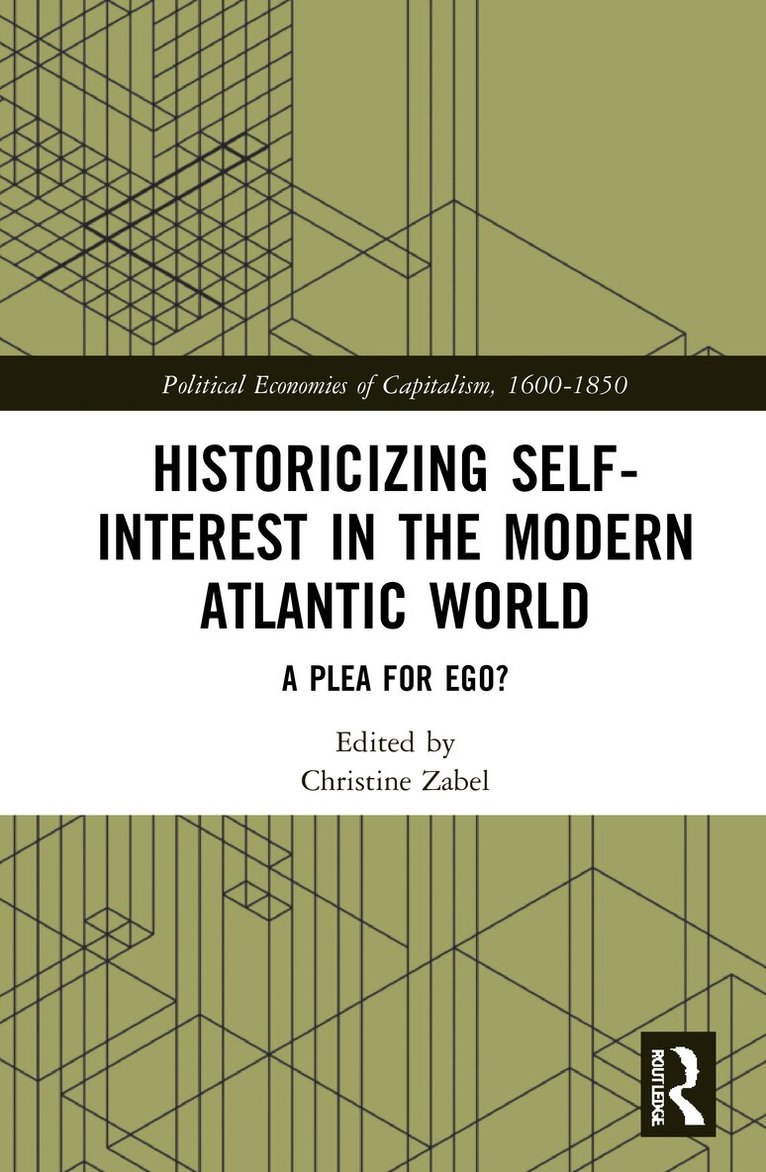
This volume historicizes the use of the notion of self-interest that at least since Bernard de Mandeville and Adam Smith’s theories is considered a central component of economic theory.Having in the twentieth century become one of the key-features of rational choice models, and thus is seen as an idealized trait of human behavior, self-interest has, despite Albert O. Hirschman’s pivotal analysis of self-interest, only marginally been historicized. A historicization(s) of self-interest, however, offers new insights into the concept by asking why, when, for what reason and in which contexts the notion was discussed or referred to, how it was employed by contemporaries, and how the different usages developed and changed over time. This helps us to appreciate the various transformations in the perception of the notion, and also to explore how and in what ways different people at different times and in different regions reflected on or realized the act of considering what was in their best interest. The volume focuses on those different usages, knowledges, and practices concerned with self-interest in the modern Atlantic World from the seventeenth to twentieth centuries, by using different approaches, including political and economic theory, actuarial science, anthropology, or the history of emotions.Offering a new perspective on a key component of Western capitalism, this is the ideal resource for researches and scholars of intellectual, political and economic history in the modern Atlantic World.
2 176 kr
Skickas inom 10-15 vardagar
This volume historicizes the use of the notion of self-interest that at least since Bernard de Mandeville and Adam Smith’s theories is considered a central component of economic theory.Having in the twentieth century become one of the key-features of rational choice models, and thus is seen as an idealized trait of human behavior, self-interest has, despite Albert O. Hirschman’s pivotal analysis of self-interest, only marginally been historicized. A historicization(s) of self-interest, however, offers new insights into the concept by asking why, when, for what reason and in which contexts the notion was discussed or referred to, how it was employed by contemporaries, and how the different usages developed and changed over time. This helps us to appreciate the various transformations in the perception of the notion, and also to explore how and in what ways different people at different times and in different regions reflected on or realized the act of considering what was in their best interest. The volume focuses on those different usages, knowledges, and practices concerned with self-interest in the modern Atlantic World from the seventeenth to twentieth centuries, by using different approaches, including political and economic theory, actuarial science, anthropology, or the history of emotions.Offering a new perspective on a key component of Western capitalism, this is the ideal resource for researches and scholars of intellectual, political and economic history in the modern Atlantic World.
1 966 kr
Skickas inom 10-15 vardagar
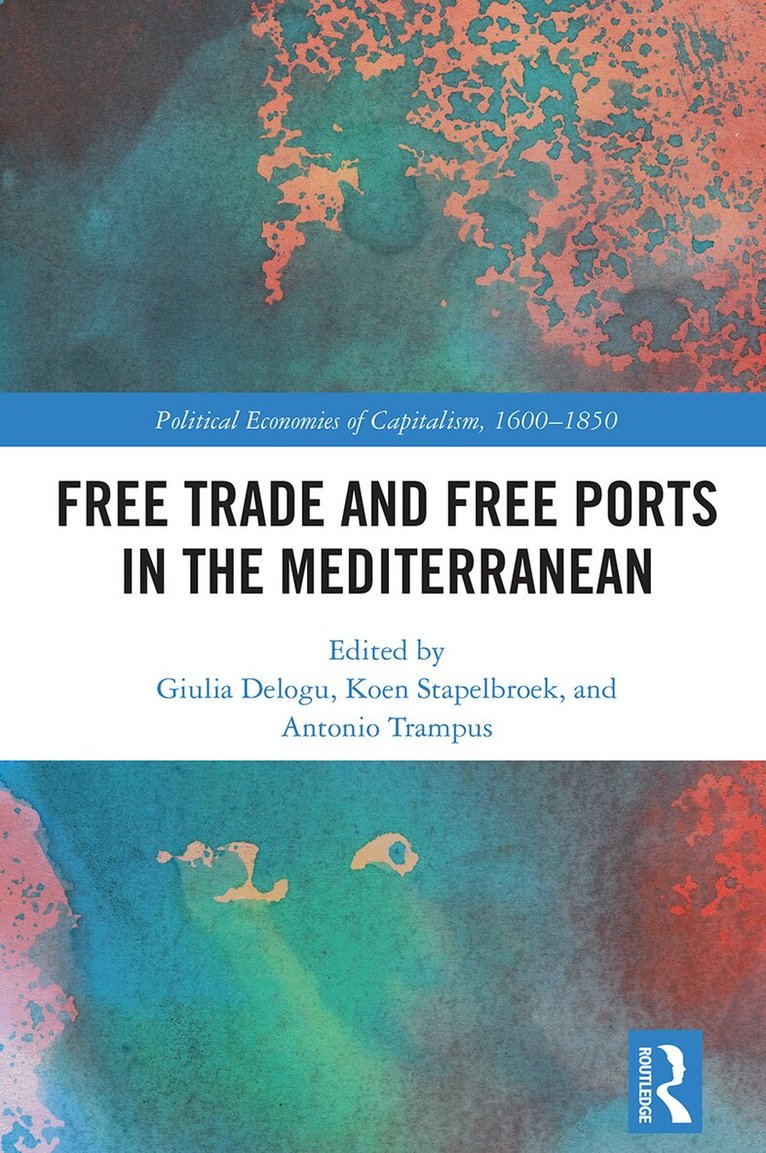
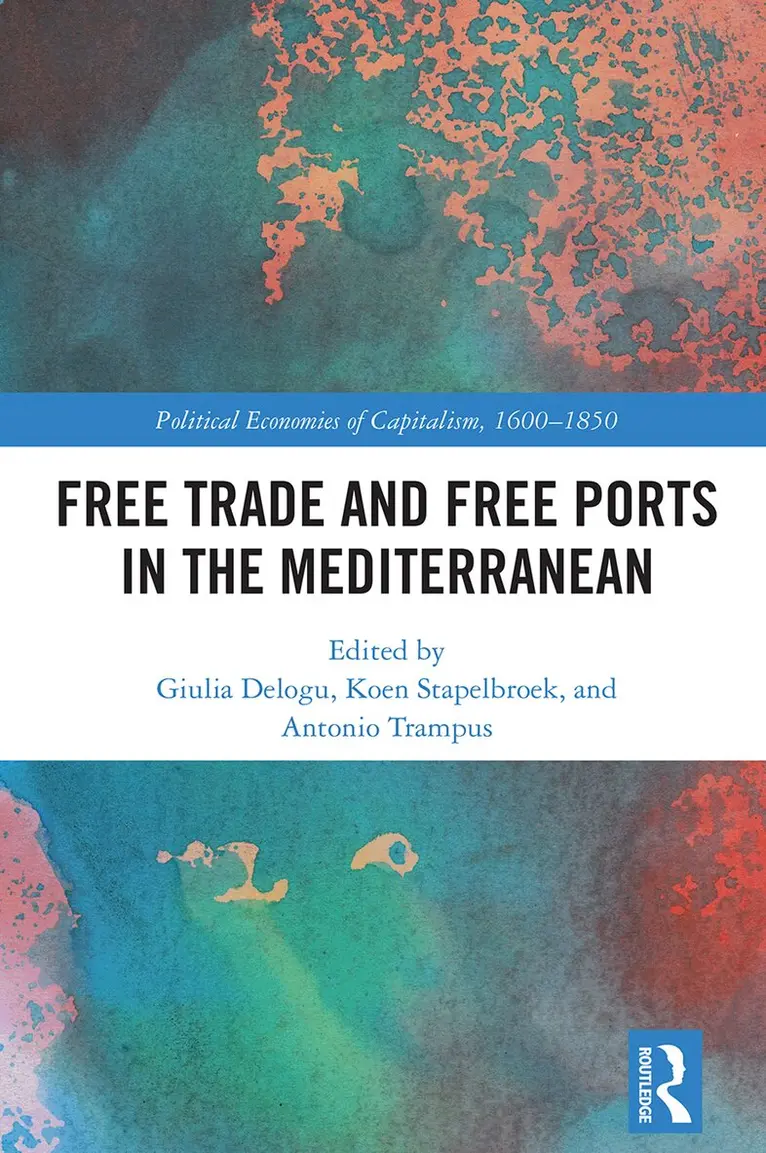
How did free trade emerge in early-modern times? How did the Mediterranean as a specific region – with its own historical characteristics – produce a culture in which the free port appeared? What was the relation between the type of free trade created in early-modern Italy and the development of global trade and commercial competition between states for hegemony in the eighteenth century? And how did the position of the free port, originally a Mediterranean ‘invention’, develop over the course of time? The contributions to this volume address these questions and explain the institutional genealogy of the free port.Free Trade and Free Ports in the Mediterranean analyses the atypical history and conditions of the Mediterranean region in contradistinction with other regions as an explanation for how and why free ports arose there. This volume engages with the diffusion of free ports from a Mediterranean to a global phenomenon, whilst staying focused on how this diffusion was experienced in the Mediterranean itself. The contributions to this volume bring together the traditional issues of religious openness and tolerance in physically separated areas and the role of consuls and governors, via fiscal techniques, architectural and administrative aspects, with questions about geopolitical balance and primacy.The book will be of interest to scholars in a wide range of historical sub-disciplines (early modern, Mediterranean, global economic, political, and institutional, just to mention a few) and to students wishing to perfect their knowledge of the Mediterranean and its global interconnections, and of the origins of free trade.
Political Reason and the Language of Change
Reform and Improvement in Early Modern Europe
Inbunden, Engelska, 2022
2 176 kr
Skickas inom 10-15 vardagar
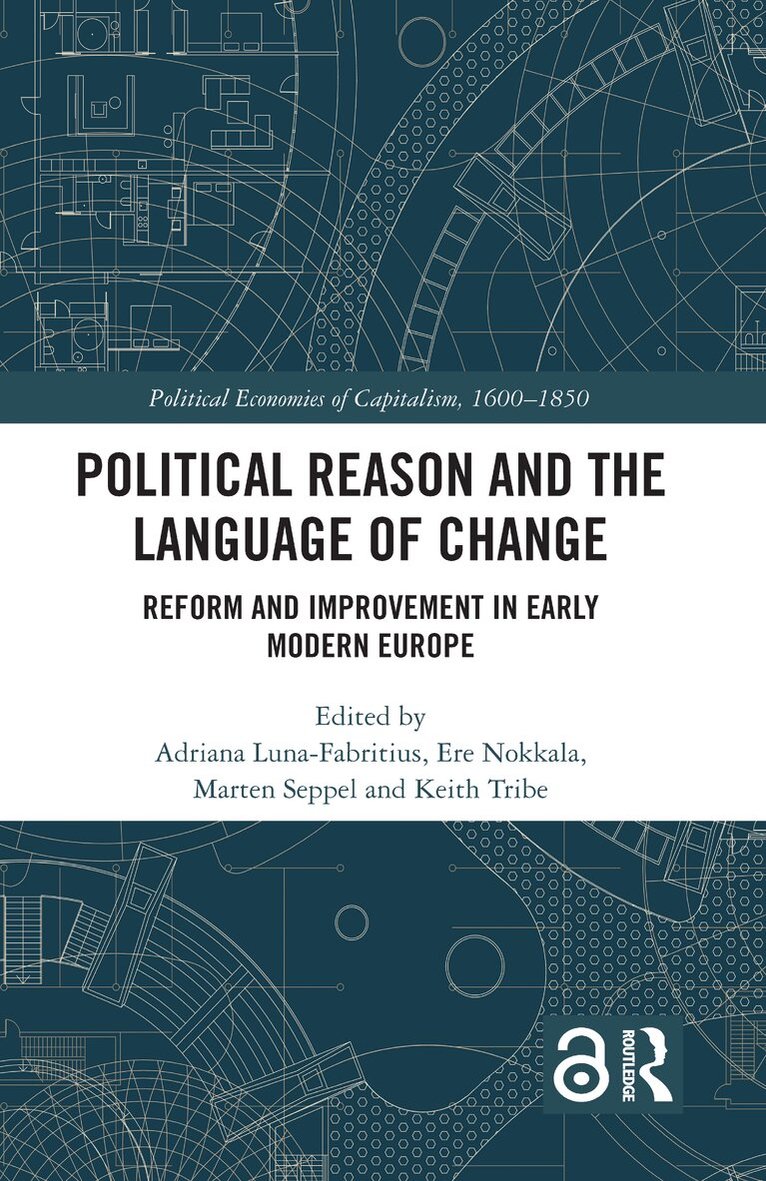
This collection of essays re-examines ideas of change and movements for change in early modern Europe without presuming that "progressive" change was the outcome of "reforms"."Reform" today implies rational, incremental change to public institutions and procedures. "Improvement" has a more general application, emphasising the positive outcome to which "reform" is oriented. But the language of reform is today used of historical personalities and movements that did not themselves use the term, and who in many cases were not necessarily seeking the progressive change that we would understand today. The activities of "reform" were embedded in contemporary politics, and while "improvement" was part of a contemporary vocabulary, its real presence has been obscured by the range of natural languages in which it was expressed. Contributors to this volume seek to establish what was meant by contemporary usage. Bringing together scholars of Russia, Southern, Western, Central and Northern Europe, this collection sheds new light on both common and divergent features of a political process too often treated as a uniform movement towards modernity.This volume is a useful resource for students and scholars interested in Enlightenment studies, intellectual history, and conceptual history in early modern Europe.The Open Access version of this book, available at http://www.taylorfrancis.com, has been made available under a Creative Commons Attribution-Non Commercial-No Derivatives (CC-BY-NC-ND) 4.0 license.
Political Reason and the Language of Change
Reform and Improvement in Early Modern Europe
Häftad, Engelska, 2024
595 kr
Skickas inom 10-15 vardagar
This collection of essays re-examines ideas of change and movements for change in early modern Europe without presuming that "progressive" change was the outcome of "reforms"."Reform" today implies rational, incremental change to public institutions and procedures. "Improvement" has a more general application, emphasising the positive outcome to which "reform" is oriented. But the language of reform is today used of historical personalities and movements that did not themselves use the term, and who in many cases were not necessarily seeking the progressive change that we would understand today. The activities of "reform" were embedded in contemporary politics, and while "improvement" was part of a contemporary vocabulary, its real presence has been obscured by the range of natural languages in which it was expressed. Contributors to this volume seek to establish what was meant by contemporary usage. Bringing together scholars of Russia, Southern, Western, Central and Northern Europe, this collection sheds new light on both common and divergent features of a political process too often treated as a uniform movement towards modernity.This volume is a useful resource for students and scholars interested in Enlightenment studies, intellectual history, and conceptual history in early modern Europe.The Open Access version of this book, available at http://www.taylorfrancis.com, has been made available under a Creative Commons Attribution-Non Commercial-No Derivatives (CC-BY-NC-ND) 4.0 license.
2 036 kr
Skickas inom 10-15 vardagar
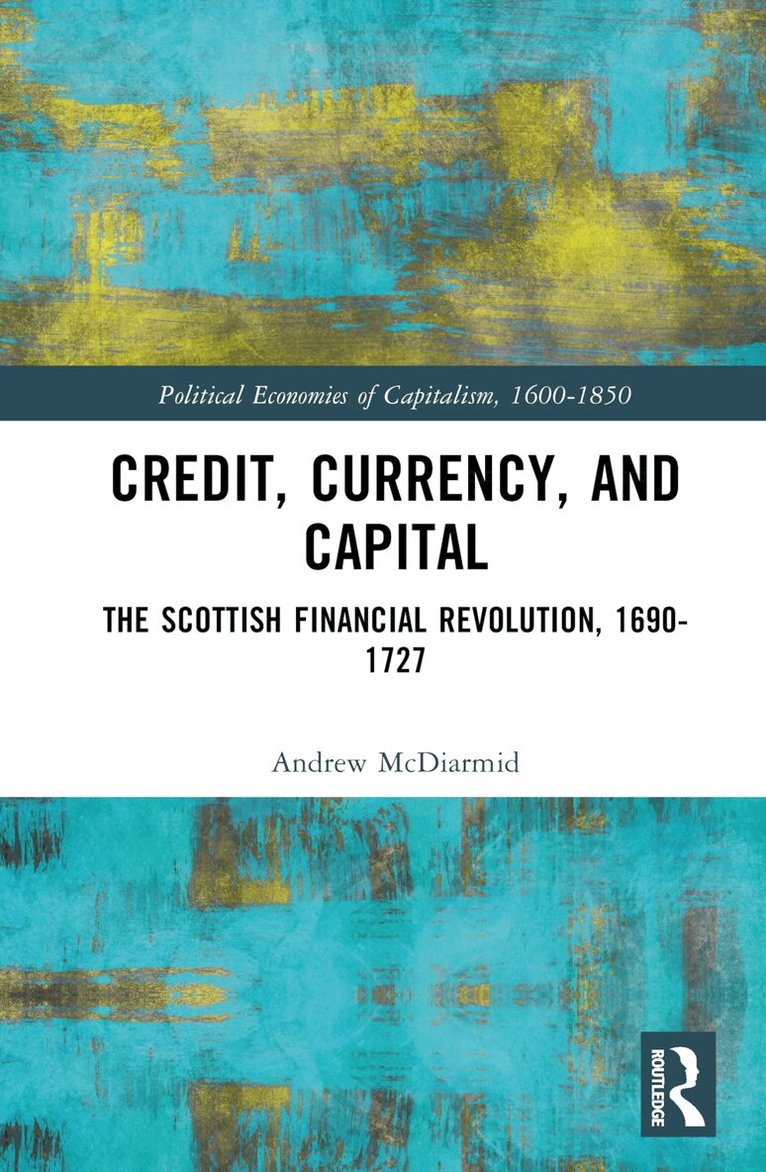
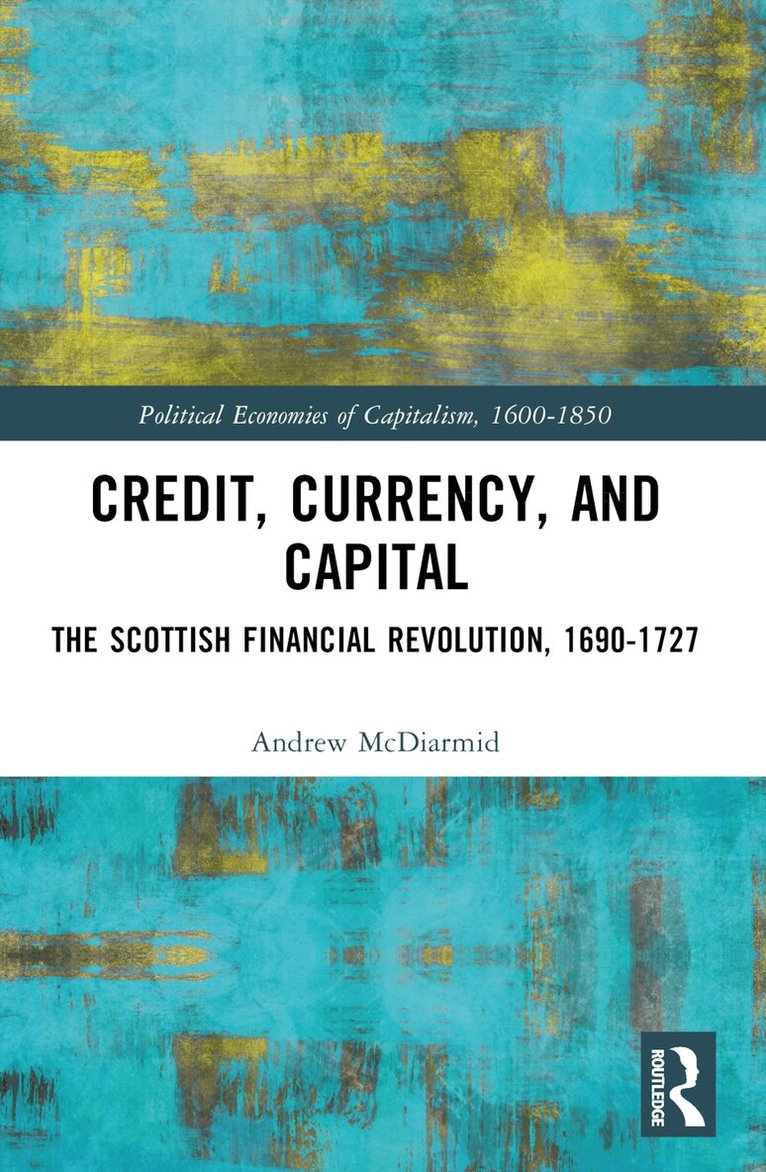
The years 1690–1727 represented a period of significant change for Scotland. It was a time of grand colonial endeavours and financial innovation, punctuated by bouts of economic turmoil and constitutional and political uncertainty. The infamous Darien Scheme, the establishment of the Bank of Scotland and the Royal Bank of Scotland, the Anglo-Scots Union, the Hanoverian Succession, and the Jacobite rising of 1715, all occurred during this short time span. Therefore, it was not only a period that presented Scotland with opportunities but also a period in which the country ultimately lost its autonomy. It was also during these years, and against this unsettled backdrop, that the Scottish Financial Revolution commenced. The complexity of the Scottish situation during the late seventeenth and the early eighteen centuries has historically made the identification of a Scottish Financial Revolution difficult. This monograph, the first dedicated to the topic, addresses this problem and provides a model for identifying and understanding the revolution through the economic, political, and constitutional contexts of the period. Using examples of financial developments and innovation driven by Scotsmen in Scotland, Europe, and the colonies, this work defines the Scottish Financial Revolution as a series of developments which took place in Scotland when political circumstances allowed, but which also occurred outwith Scotland through the agency of members of the Scottish diaspora. This monograph is therefore the story of how Scotsmen at home and abroad contributed to financial debate and development between 1690 and 1727.Credit, Currency, and Capital: The Scottish Financial Revolution, 1690–1727 will appeal to students and scholars interested in the history of Economics and Finance. It will also be of interest to those studying the history of the Anglo-Scots Union and the complex relationship between Scotland and England.
595 kr
Skickas inom 10-15 vardagar
The years 1690–1727 represented a period of significant change for Scotland. It was a time of grand colonial endeavours and financial innovation, punctuated by bouts of economic turmoil and constitutional and political uncertainty. The infamous Darien Scheme, the establishment of the Bank of Scotland and the Royal Bank of Scotland, the Anglo-Scots Union, the Hanoverian Succession, and the Jacobite rising of 1715, all occurred during this short time span. Therefore, it was not only a period that presented Scotland with opportunities but also a period in which the country ultimately lost its autonomy. It was also during these years, and against this unsettled backdrop, that the Scottish Financial Revolution commenced. The complexity of the Scottish situation during the late seventeenth and the early eighteen centuries has historically made the identification of a Scottish Financial Revolution difficult. This monograph, the first dedicated to the topic, addresses this problem and provides a model for identifying and understanding the revolution through the economic, political, and constitutional contexts of the period. Using examples of financial developments and innovation driven by Scotsmen in Scotland, Europe, and the colonies, this work defines the Scottish Financial Revolution as a series of developments which took place in Scotland when political circumstances allowed, but which also occurred outwith Scotland through the agency of members of the Scottish diaspora. This monograph is therefore the story of how Scotsmen at home and abroad contributed to financial debate and development between 1690 and 1727.Credit, Currency, and Capital: The Scottish Financial Revolution, 1690–1727 will appeal to students and scholars interested in the history of Economics and Finance. It will also be of interest to those studying the history of the Anglo-Scots Union and the complex relationship between Scotland and England.
2 176 kr
Skickas inom 10-15 vardagar
The Florentine traveler, merchant, and academician Filippo Sassetti was one of the premier economic thinkers of the late Renaissance. Well known for his ethnographic observations, Sassetti was also a commercial writer of the highest caliber—at once an original thinker and a remarkable witness to how Europeans even at the margins of empire were beginning to reconceptualize power and wealth.Unique among commercial theorists of the period, Sassetti offers a first-hand perspective on commerce in both the Mediterranean and the Indian Ocean. This volume translates (for the first time) the Discourse on Mediterranean Trade and a selection of the principal Indian Letters, with extensive historical notes. These are preceded by a lengthy essay positioning Sassetti as a figure in late Renaissance political economy. It makes the case that Sassetti was an early theorist of what might be termed the pragmatic tradition of free trade—in his case, a project linked to his analysis of commercial institutions in the Mediterranean and the Indian Ocean.Provoking an invaluable overview of trade in the Indian Ocean in the late sixteenth century, this volume is an excellent specialist text for postgraduate students and professional historians.
595 kr
Skickas inom 10-15 vardagar
The Florentine traveler, merchant, and academician Filippo Sassetti was one of the premier economic thinkers of the late Renaissance. Well known for his ethnographic observations, Sassetti was also a commercial writer of the highest caliber—at once an original thinker and a remarkable witness to how Europeans even at the margins of empire were beginning to reconceptualize power and wealth.Unique among commercial theorists of the period, Sassetti offers a first-hand perspective on commerce in both the Mediterranean and the Indian Ocean. This volume translates (for the first time) the Discourse on Mediterranean Trade and a selection of the principal Indian Letters, with extensive historical notes. These are preceded by a lengthy essay positioning Sassetti as a figure in late Renaissance political economy. It makes the case that Sassetti was an early theorist of what might be termed the pragmatic tradition of free trade—in his case, a project linked to his analysis of commercial institutions in the Mediterranean and the Indian Ocean.Provoking an invaluable overview of trade in the Indian Ocean in the late sixteenth century, this volume is an excellent specialist text for postgraduate students and professional historians.