Ere Nokkala – författare
Visar alla böcker från författaren Ere Nokkala. Handla med fri frakt och snabb leverans.
9 produkter
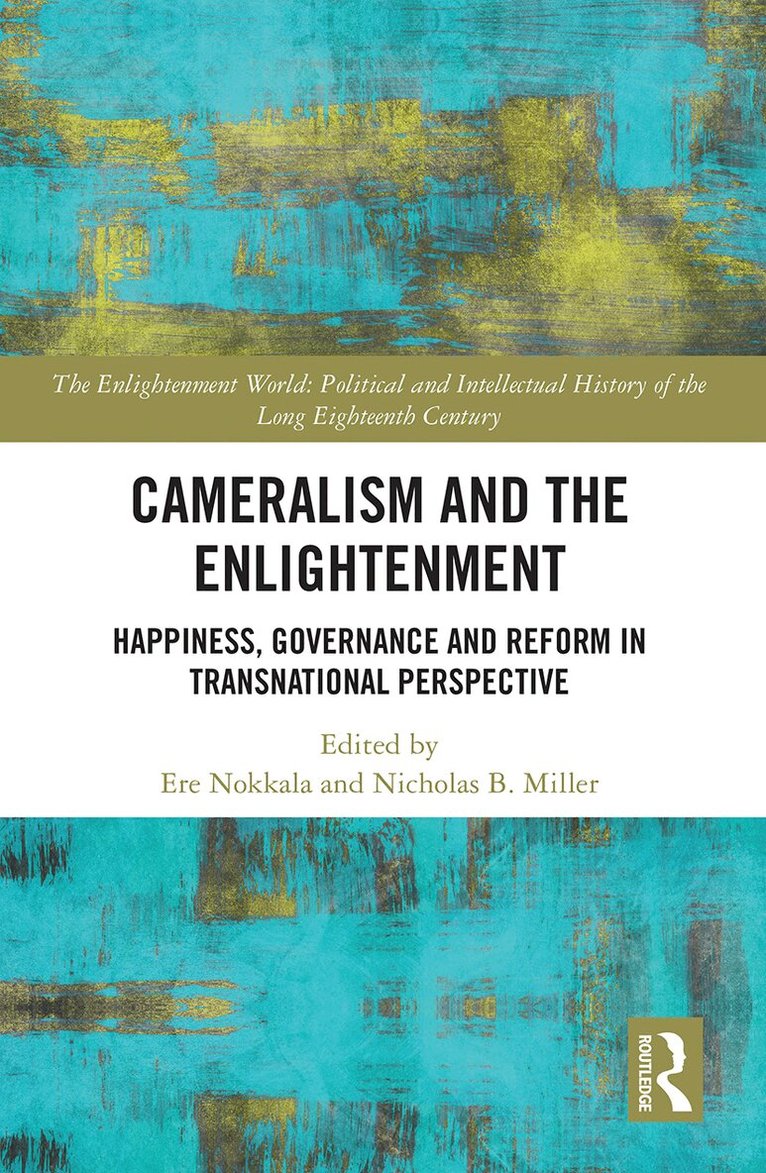
Cameralism and the Enlightenment
Happiness, Governance and Reform in Transnational Perspective
Av Ere Nokkala, Nicholas B. Miller
Inbunden, 2019
2510 kr
Lägg i varukorg
Cameralism and the Enlightenment reassesses the relationship between two key phenomena of European history often disconnected from each other. It builds on recent insights from global history, transnational history and Enlightenment studies to reflect on the dynamic interactions of cameralism, an …
Cameralism and the Enlightenment
Happiness, Governance and Reform in Transnational Perspective
Av Nicholas B. Miller, Ere Nokkala
E-bok, 2019
856 kr
Lägg i varukorg
Cameralism and the Enlightenment reassesses the relationship between two key phenomena of European history often disconnected from each other. It builds on recent insights from global history, transnational history and Enlightenment studies to reflect on the dynamic interactions of cameralism, an …
Cameralism and the Enlightenment
Happiness, Governance and Reform in Transnational Perspective
Av Nicholas B. Miller, Ere Nokkala
E-bok, 2019
838 kr
Lägg i varukorg
Cameralism and the Enlightenment reassesses the relationship between two key phenomena of European history often disconnected from each other. It builds on recent insights from global history, transnational history and Enlightenment studies to reflect on the dynamic interactions of cameralism, an …
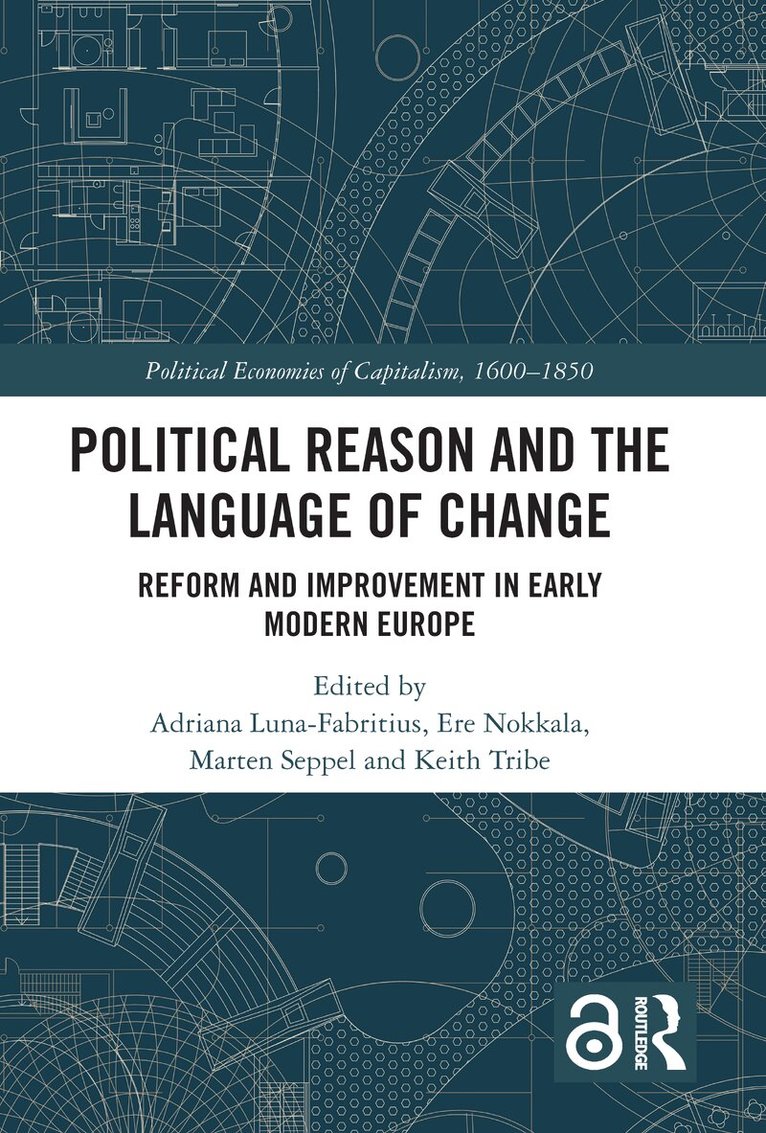
Political Reason and the Language of Change
Reform and Improvement in Early Modern Europe
Av Adriana Luna-Fabritius, Ere Nokkala m. fl.
Inbunden, 2022
2585 kr
Lägg i varukorg
This collection of essays re-examines ideas of change and movements for change in early modern Europe without presuming that "progressive" change was the outcome of "reforms"."Reform" today implies rational, incremental change to public institutions and procedures. "Improvement" has a more general …
Political Reason and the Language of Change
Reform and Improvement in Early Modern Europe
Av Adriana Luna-Fabritius, Ere Nokkala m. fl.
Häftad, 2024
667 kr
Lägg i varukorg
This collection of essays re-examines ideas of change and movements for change in early modern Europe without presuming that "progressive" change was the outcome of "reforms"."Reform" today implies rational, incremental change to public institutions and procedures. "Improvement" has a more general …
Cameralism and the Enlightenment
Happiness, Governance and Reform in Transnational Perspective
Av Ere Nokkala, Nicholas B. Miller
Häftad, 2021
705 kr
Lägg i varukorg
Cameralism and the Enlightenment reassesses the relationship between two key phenomena of European history often disconnected from each other. It builds on recent insights from global history, transnational history and Enlightenment studies to reflect on the dynamic interactions of cameralism, an …
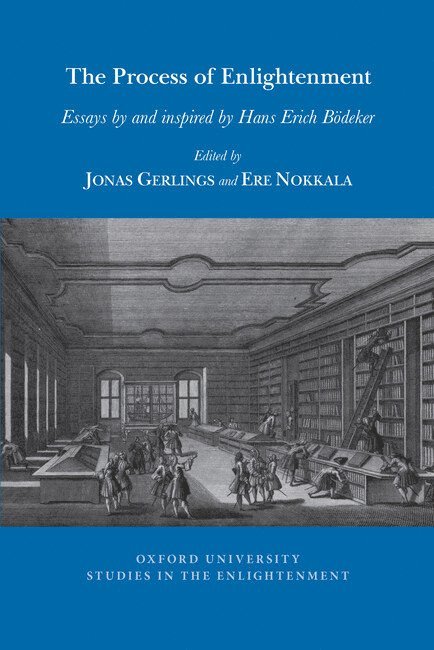
Process of Enlightenment
Essays by and inspired by Hans Erich Bödeker
Av Ere Nokkala
Häftad, 2024
1702 kr
Lägg i varukorg
The historiographical concept “Enlightenment” has for a long time wavered between the idea of a single unified Enlightenment and the notion of multiple competing enlightenments. This volume revisits this seeming contradiction by asserting that the Enlightenment should be understood as a shared …
Die Natur Und Das Wesen Der Staaten
Av Johann Heinrich Gottlob Von Justi, Ere Nokkala m. fl.
Inbunden, 2026
1926 kr
Lägg i varukorg
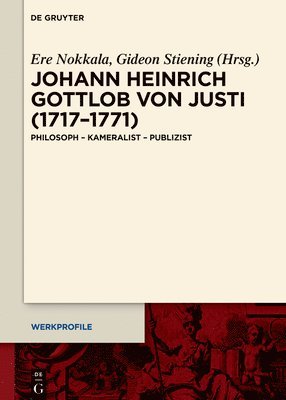
Johann Heinrich Gottlob Von Justi (1717-1771)
Philosoph - Kameralist - Publizist
Av Ere Nokkala, Gideon Stiening
Inbunden, 2025
1644 kr
Lägg i varukorg
Johann Heinrich Gottlob von Justi (1717–1771) zählt zu den Inauguratoren der Polizei-, Verwaltungs- und Wirtschaftswissenschaften im Zeitalter der Aufklärung. In einer Reihe von Grundlagenwerken hat er diese politische Theorie entworfen und weiter entwickelt. Darüber hinaus publizierte Justi als …