John T. Lett – författare
Visar alla böcker från författaren John T. Lett. Handla med fri frakt och snabb leverans.
14 produkter
14 produkter
E-bok
PDF, Engelska, 2013756 kr
Läs direkt efter köp
Advances in Radiation Biology, Volume 12: Relative Radiation Sensitivities of Human Organ Systems covers articles on the response of selected human organ and tissue systems to exposure to ionizing radiation. The book presents articles on the relative radiosensitivities of the thymus, spleen, lymphohemopoietic systems, small and large intestines, oral cavity, larynx, pharynx, and esophagus. The text also includes articles on the relative radiation sensitivity of the integumentary system, as well as the relative radiosensitivity of the human lung and fetal tissues. The tolerance of the central and peripheral nervous system to therapeutic irradiation is also encompassed. Radiation biologists, oncologists, physicians, pediatricians, and medical students will find the book useful.
E-bok
Engelska, 2013779 kr
Läs direkt efter köp
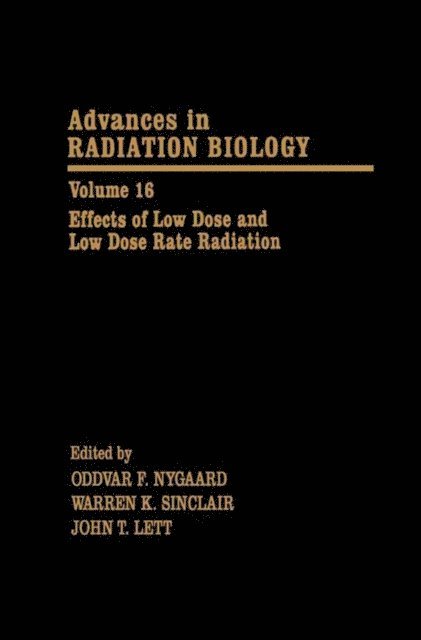
Advances in Radiation Biology, Volume 6: Effects of Low Dose and Low Dose Rate Radiation examines the biological effects of low dose and low dose rate ionizing radiation on a broad scale, covering various articles from microdosimetry to analyses of human responses. Estimates of the effects on humans from low doses or from sustained exposures to low dose rates of ionizing radiations are of critical importance for the assessment of radiation risks under occupational and environmental conditions. This book consists of such knowledge that is essential for radiation protection and governmental regulatory activities pertaining to radiation exposure. This volume is intended for radiobiologists, radiation epidemiologists, radiation physicists, radiation safety personnel, health officials, and individuals involved in regulatory activities.
E-bok
PDF, Engelska, 2013779 kr
Läs direkt efter köp
Advances in Radiation Biology: Relative Radiation Sensitivities of Human Organ Systems, Part III, is the third volume of the series "Relative Radiation Sensitivities of Human Organ Systems." It presents reviews of organ systems not included in the preceding two parts (Advances in Radiation Biology, Volumes 12 and 14). The subject matter contained in the current volume is viewed through the eyes of the radiation therapist. Although the presentations have strong clinical overtones, an effort has been made, wherever possible, also to address the radiobiological bases of radiation sensitivity of organs. The book contains seven chapters and begins with a study on radiation damage to the kidney. This is followed by separate chapters on inherent or intrinsic radiosensitivity of human cells; the impact of brachytherapy (i.e., short-distance radiation treatment using photon radiation) on tumors; and human tissue tolerance to fast neutron radiotherapy. Subsequent chapters deal with normal tissue effects of combined hyperthermia and radiotherapy; the impact of ionizing radiation on the successive stages of human development in utero; and developments in theoretical knowledge and practical applications of ionizing radiations which have taken place in a little less than a century.
E-bok
Engelska, 2013756 kr
Läs direkt efter köp
Advances in Radiation Biology, Volume 12, provides an overview of the state of knowledge in the field of radiation biology. Environmental matters are continuing to produce surprises and remain sources of concern. The safe disposal of radioactive waste still is a major problem facing the nuclear power industry. A possible solution is discussed here. New information about the survivors from radiation exposure at Hiroshima and Nagasaki has emphasized the consequences of brain damage in the developing embryo, the importance of late radiation carcinogenesis, and the roles played by age and sex in human radiation responses. It also is prompting an increasing number of scientists involved in radiation protection to question the use of small animal models to quantify late radiation effects in humans. Contributions to this volume deal with experimental and other aspects of those problems. Finally, increasing confirmation of the dose rate response for densely ionizing radiations has highlighted the hazard they pose to humans in the terrestrial and extraterrestrial environments. Therefore, the intention of agencies in the United States and elsewhere to generate better funded and more scientifically perspicacious programs of space radiation biology is welcome. Possible interests of the military in that regard are also considered.
E-bok
Engelska, 2013756 kr
Läs direkt efter köp
Advances in Radiation Biology, Volume 11, provides an overview of the state of knowledge in the field of radiation biology. The book contains eight chapters and begins with a study on ADP-ribose in DNA repair. This is followed by separate chapters on the inhibition of DNA repair; the photochemistry and photobiology of furocoumarins and their applications in biology and medicine; radiation risk from combined exposures to ionizing radiations and chemicals; and in vitro studies of drug-radiation interactions. Subsequent chapters deal with free-radical processes in radiation and chemical carcinogenesis; heavy-ion tissue radiobiology; and radon concentrations in the environment and their impact on health.
E-bok
Engelska, 2013756 kr
Läs direkt efter köp
Advances in Radiation Biology, Volume 10, provides an overview of the state of knowledge in the field of radiation biology. The book contains seven chapters and opens with a study on DNA repair phenomena that have been explored through the use of viruses as probes. This is followed by separate chapters on the behavior of the long-lived synthetic elements and their natural analogs in food chains; the physical and clinical basis for the use of ultrasound to induce local hyperthermia in human tumors; and the role of pH changes in the etiology of thermal cell killing and the potential of low pH as an adjuvant to hyperthermia. Subsequent chapters deal with the effects of accelerated heavy charged particles on various normal tissue systems; the effect of ionizing radiations on connective tissue; and solid tumor response to combined radiotherapy and chemotherapy.
E-bok
Engelska, 2013756 kr
Läs direkt efter köp
Advances in Radiation Biology, Volume 9, provides an overview of the state of knowledge in radiation biology. The book contains nine chapters and begins with a study on the ways in which physical and chemical agents might trigger "regulatory dysfunction" and how these agents might interact with each other. This is followed by separate chapters on the mechanisms underlying changes in vascular function after doses of radiation in the therapeutic range and their role in the development of late effects in normal tissues; the future of hypoxic cell sensitizers in the clinical setting; DNA strand break formation by ionizing radiation; and major pathways which result in radiation-induced loss of cellular proliferative capacity. Subsequent chapters deal with the solid-state radiation chemistry of DNA; radiosensitivity of proliferating mammalian cells; the use of microwave/radiofrequency energy cancer treatment; and the decline of basic radiobiology.
E-bok
Engelska, 2013756 kr
Läs direkt efter köp
Advances in Radiation Biology, Volume 8, provides an overview of the state of knowledge in the field of radiation biology. The book contains nine chapters and opens with a study on aspects of oxygen enhancement ratio and relative biological effectiveness that are relevant to neutron therapy. This is followed by separate chapters on the clinical application of negative pi mesons; the clinical features and cellular and biochemical defects in human diseases, with an emphasis on defects in DNA metabolism, particularly DNA repair; recombination in eukaryotes; and the principal mechanisms of DNA damage and repair in higher plants. Subsequent chapters deal with the effect of oxygen on the repair of radiation damage by cells and tissues; the effects of ionizing radiation on mammalian cells; heritable lesions affecting populations of irradiated mammalian cells; and environmental impact of tritium.
E-bok
Engelska, 2013756 kr
Läs direkt efter köp
Advances in Radiation Biology, Volume 7, provides an overview of the state of knowledge in the field of radiation biology. The book contains six chapters and opens with a study on the exploitation of the unique properties of purified lesion-recognizing enzymes as the basis of assays that monitor the repair of DNA lesions in vivo. This is followed by separate chapters on the effects of radiation on living eukaryotic cells; the ecological effects of ionizing radiation; and the applicability of bacterial models of DNA repair and recovery to UV-irradiated mammalian cells. Subsequent chapters focus on acute radiation effects on the adult nervous system and the repair of DNA modified by cytotoxic, mutagenic, and carcinogenic chemicals.
E-bok
Engelska, 2013756 kr
Läs direkt efter köp
Advances in Radiation Biology, Volume 6, provides an overview of the state of knowledge in the field of radiation biology. The book contains eight chapters and opens with a study on the nature of radiation effects on nucleic acid metabolism in mammalian cells. This is followed by separate chapters on the nature of UV effects on transcriptional functions; interrelationships between ionizing radiation, protein synthesis, and the physiological expressions of radiation damage; and correlation of DNA repair activities and cellular effects in irradiated mammalian cells. Subsequent chapters deal with the interaction of heat and radiation on an in vitro and an in vivo system; the role of hyperthermia for cancer therapy; thermal potentiation of mammalian cell killing; and autologous stem-cell banks for restoring hemopoiesis.
E-bok
Engelska, 2013756 kr
Läs direkt efter köp
Advances in Radiation Biology, Volume 5 focuses on the various phases of development in radiation biology. This book discusses the radiobiological implications of statistical variations in energy deposition by ionizing radiations; fundamental physics of energy deposition; and radiological assessment of nuclear power stations. The environmental transport of released radionuclides; effects of continuous irradiation on animal populations; and radiation-induced life-shortening and premature aging are also deliberated. This text likewise covers the production of radiation damage in a heterogeneous system; radical identification by EPR; redistribution of cells through the division cycle; and iso-effect formulas. This publication is valuable to radiation biologists, including those interested in radiobiology.
E-bok
Engelska, 2013763 kr
Läs direkt efter köp
Advances in Radiation Biology, Volume 4 provides wide-ranging analyses of progress in the various phases of radiation biology. This book discusses the repair processes for photochemical damage in mammalian cells; S-phase recovery or postreplication repair; enzymes involved in the repair of DNA; and reinsertion of nucleotides. The mutation induction in mice; dominant visible mutations; experimental radiation carcinogenesis; and dose-effect relationships are also deliberated. This text likewise covers the toxicology of plutonium; effects of ionizing radiation on terrestrial plant communities; and radiation sensitivities of plant communities. This publication is beneficial to radiation biologists, as well as students and researchers conducting work on radiobiology.
E-bok
Engelska, 20131 008 kr
Läs direkt efter köp
Advances in Radiation Biology, Volume 17: DNA and Chromatin Damage Caused by Radiation outlines the different biological reactions to radiation. This book discusses the linear energy transfer and energy loss; DNA breaks and track structure; DNA radicals from water radicals; and radiation-induced strand breaks in isolated DNA. The radiation damage to DNA and its nearby environment; thiol radioprotectors and mechanism of action; radiolysis of water and track reactions; and computer simulation of higher order structure of DNA are also elaborated. This publication likewise covers the concept of chromatin structure; DNA supercoiling studied by sedimentation; measurement of radiation-induced DNA breakage; and analysis of damage in interphase cells. This volume is a useful reference to biologists and students concerned with DNA and chromatin damage caused by radiation.
E-bok
PDF, Engelska, 2013779 kr
Läs direkt efter köp
Advances in Radiation Biology, Volume18: Relative Radiation Sensitivities of Human Organ Systems, Part IV focuses on the sensitivity of certain human organ systems to radiation exposure. This book discusses the radiation sensitivity of the prostate and radiation therapy of its tumors; clinical radiobiology and normal-tissue morbidity after breast cancer treatment; and approach to optimal therapy and normal-tissue sparing. The fractionation sensitivity of mammalian tissues; trends for improving radiation sensitivity by counteracting chronic and acute hypoxia; and predictive assays in radiation therapy are also elaborated. This publication likewise covers the basic cellular radiobiology and its significance for radiation therapy and classical theoretical approaches to cellular radiosensitivity. This volume is beneficial to clinicians and students intending to gain knowledge of the radiation sensitivities of human organ systems.