John W. Bennett – författare
Visar alla böcker från författaren John W. Bennett. Handla med fri frakt och snabb leverans.
24 produkter
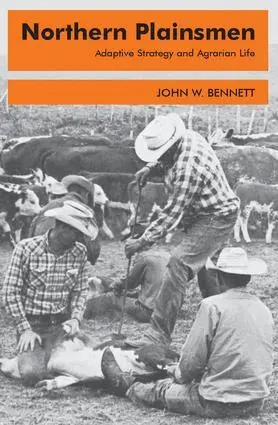
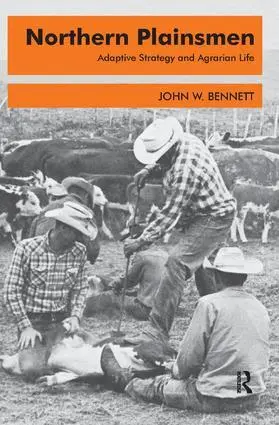
Northern Plainsmen
Adaptive Strategy and Agrarian Life
Häftad, 2007
762 kr
Lägg i varukorg
A study of a rural region and plural society, this book is a distinctive contribution to anthropology, in that it brings the conceptual framework of that discipline to bear on a contemporary agrarian society and its historical development, rather than on peasant or tribal peoples; cultural ecology, …
Economics of Socialism After World War Two
1945-1990
Häftad, 2008
748 kr
Lägg i varukorg
The most comprehensive and contemporary source available on socialist economic systems, this book employs economic data from eight East European countries and Russia to provide readers with a thorough, accurate picture of formerly Communist economies. J. Wilczynski carefully analyzes the major …
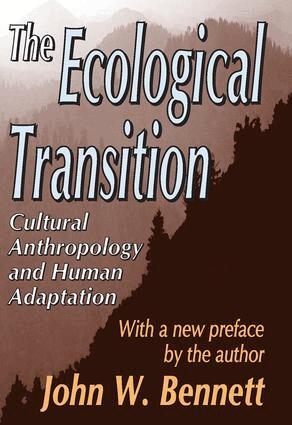
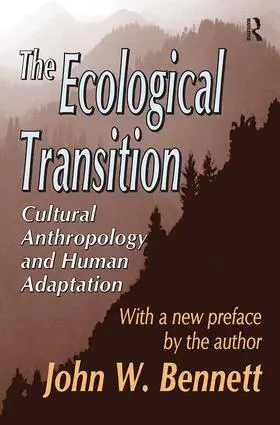
Ecological Transition
Cultural Anthropology and Human Adaptation
Häftad, 2003
793 kr
Lägg i varukorg
Written during the height of the ecology movement, The Ecological Transition is a stunning interdisciplinary work. It combines anthropology, ecology, and sociology to formulate an understanding of cultural-environmental relationships. While anthropologists have been studying relationships between …
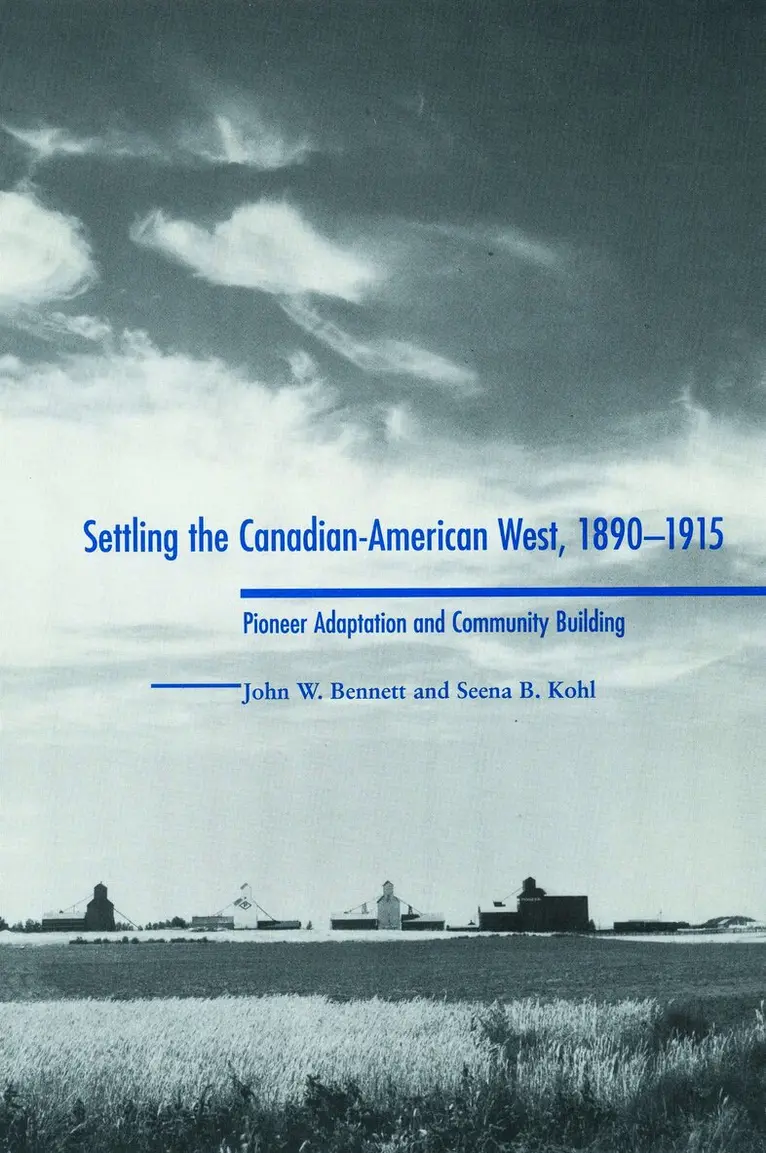
Settling the Canadian-American West, 1890-1915
Pioneer Adaptation and Community Building
Av John W. Bennett, Seena B. Kohl
Inbunden, 1995
762 kr
Lägg i varukorg
This "anthropological history" tells the story of homesteading and community organization in the Canadian-American West through personal reminiscences and locally written histories. John W. Bennett and Seena B. Kohl interpret those stories through the lenses of history and social science, and they …
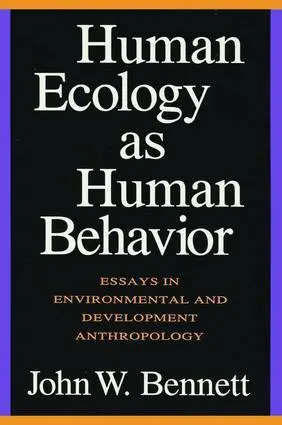
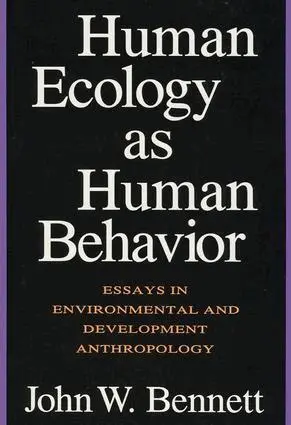
Human Ecology as Human Behavior
Essays in Environmental and Developmental Anthropology
Inbunden, 2017
2506 kr
Lägg i varukorg
Human interaction with the natural environment has a dual character. By turning increasing quantities of natural substances into physical resources, human beings might be said to have freed themselves from the constraints of low-technology survival pressures. However, the process has generated a …
Northern Plainsmen
Adaptive Strategy and Agrarian Life
Inbunden, 2017
2506 kr
Lägg i varukorg
A study of a rural region and plural society, this book is a distinctive contribution to anthropology, in that it brings the conceptual framework of that discipline to bear on a contemporary agrarian society and its historical development, rather than on peasant or tribal peoples; cultural ecology, …
Ecological Transition
Cultural Anthropology and Human Adaptation
Inbunden, 2017
2506 kr
Lägg i varukorg
Written during the height of the ecology movement, The Ecological Transition is a stunning interdisciplinary work. It combines anthropology, ecology, and sociology to formulate an understanding of cultural-environmental relationships. While anthropologists have been studying relationships between …
Economics of Socialism After World War Two
1945-1990
Inbunden, 2017
2581 kr
Lägg i varukorg
The most comprehensive and contemporary source available on socialist economic systems, this book employs economic data from eight East European countries and Russia to provide readers with a thorough, accurate picture of formerly Communist economies. J. Wilczynski carefully analyzes the major …
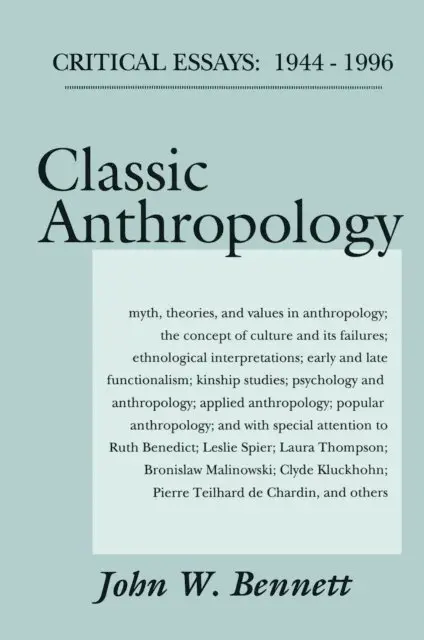
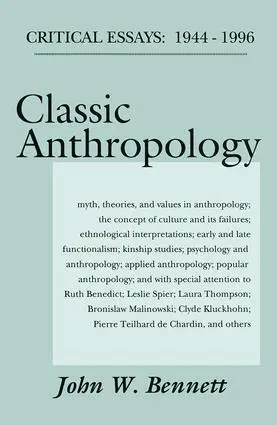
Classic Anthropology
Critical Essays, 1944-96
E-bok, 2017
1022 kr
Lägg i varukorg
Classic anthropology is Bennett''''s label for the work produced by anthropologists between 1915 and 1955. In this book, Bennett criticises classic anthropology for ne glecting the contemporary world and modern societies. ''
Classic Anthropology
Critical Essays, 1944-96
E-bok, 2017
1022 kr
Lägg i varukorg
Classic anthropology is Bennett''''s label for the work produced by anthropologists between 1915 and 1955. In this book, Bennett criticises classic anthropology for ne glecting the contemporary world and modern societies. ''
Economics of Socialism After World War Two
1945-1990
E-bok, 2017
890 kr
Lägg i varukorg
The most comprehensive and contemporary source available on socialist economic systems, this book employs economic data from eight East European countries and Russia to provide readers with a thorough, accurate picture of formerly Communist economies. J. Wilczynski carefully analyzes the major …
Economics of Socialism After World War Two
1945-1990
E-bok, 2017
910 kr
Lägg i varukorg
The most comprehensive and contemporary source available on socialist economic systems, this book employs economic data from eight East European countries and Russia to provide readers with a thorough, accurate picture of formerly Communist economies. J. Wilczynski carefully analyzes the major …
Ecological Transition
Cultural Anthropology and Human Adaptation
E-bok, 2017
915 kr
Lägg i varukorg
Written during the height of the ecology movement, The Ecological Transition is a stunning interdisciplinary work. It combines anthropology, ecology, and sociology to formulate an understanding of cultural-environmental relationships. While anthropologists have been studying relationships between …
Ecological Transition
Cultural Anthropology and Human Adaptation
E-bok, 2017
935 kr
Lägg i varukorg
Written during the height of the ecology movement, The Ecological Transition is a stunning interdisciplinary work. It combines anthropology, ecology, and sociology to formulate an understanding of cultural-environmental relationships. While anthropologists have been studying relationships between …
Northern Plainsmen
Adaptive Strategy and Agrarian Life
E-bok, 2017
881 kr
Lägg i varukorg
A study of a rural region and plural society, this book is a distinctive contribution to anthropology, in that it brings the conceptual framework of that discipline to bear on a contemporary agrarian society and its historical development, rather than on peasant or tribal peoples; cultural ecology, …
Northern Plainsmen
Adaptive Strategy and Agrarian Life
E-bok, 2017
901 kr
Lägg i varukorg
A study of a rural region and plural society, this book is a distinctive contribution to anthropology, in that it brings the conceptual framework of that discipline to bear on a contemporary agrarian society and its historical development, rather than on peasant or tribal peoples; cultural ecology, …
Human Ecology as Human Behavior
Essays in Environmental and Developmental Anthropology
E-bok, 2017
901 kr
Lägg i varukorg
Human interaction with the natural environment has a dual character. By turning increasing quantities of natural substances into physical resources, human beings might be said to have freed themselves from the constraints of low-technology survival pressures. However, the process has generated a …
Human Ecology as Human Behavior
Essays in Environmental and Developmental Anthropology
E-bok, 2017
901 kr
Lägg i varukorg
Human interaction with the natural environment has a dual character. By turning increasing quantities of natural substances into physical resources, human beings might be said to have freed themselves from the constraints of low-technology survival pressures. However, the process has generated a …
Ecological Transition
Cultural Anthropology and Human Adaptation
Av John W. Bennett, Cyril S. Belshaw
E-bok, 2016
807 kr
Lägg i varukorg
The Ecological Transition studies the relationships between humans and the physical environment. It also assesses some converging approaches in cultural anthropology, including cultural ecology, economic anthropology, social exchange, and behavioral adaptation.Comprised of ten chapters, this book …
Ecological Transition
Cultural Anthropology and Human Adaptation
Av John W. Bennett, Cyril S. Belshaw
E-bok, 2014
789 kr
Lägg i varukorg
The Ecological Transition: Cultural Anthropology and Human Adaptation covers various concerns about human interaction with the physical environment. The title tackles how social factors are implicated in human-nature interrelationships. The text first details the concept of ecological transition, …
Classic Anthropology
Critical Essays, 1944-96
Inbunden, 1997
2513 kr
Lägg i varukorg
Classic anthropology is Bennett''s label for the work produced by anthropologists between 1915 and 1955. In this book, Bennett criticises classic anthropology for ne glecting the contemporary world and modern societies. '
Human Ecology as Human Behavior
Essays in Environmental and Developmental Anthropology
Häftad, 1995
764 kr
Lägg i varukorg
Human interaction with the natural environment has a dual character. By turning increasing quantities of natural substances into physical resources, human beings might be said to have freed themselves from the constraints of low-technology survival pressures. However, the process has generated a …