
Jon Birger SkjA¦rseth – författare
Visar alla böcker från författaren . Handla med fri frakt och snabb leverans.
2 produkter
2 produkter
E-bok
Engelska, 2016925 kr
Läs direkt efter köp
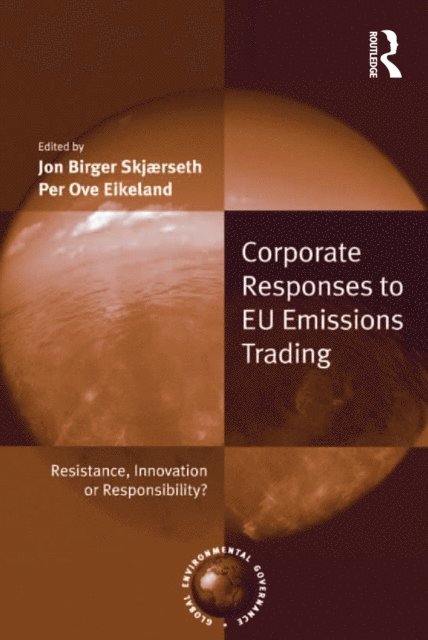
The European Union (EU) aims to put Europe on track toward a low-carbon economy. In this striking challenge, the EU Emissions Trading System (EU ETS) has been singled out as the Union’s key climate policy instrument, ultimately aimed as a model for a global carbon market. The learning effect of the EU ETS could thus be tremendous. This study explores how the EU ETS actually works on the ground, affecting corporate climate strategies. It covers general sector responses as well as systematic comparative studies of companies across the sectors. The latter enables improved understanding of causal effects and the role of interaction between different policy instruments and other factors that impact corporate climate strategies. The study explores a broad set of mechanisms at play potentially linking the EU ETS to company climate strategies. These include how corporate norms of responsibility are affected by the EU ETS and how economic incentives provide opportunities for innovation. The book’s main contribution lies in its systematic examination of corporate responses to the EU ETS from a broad empirical and analytical social science perspective covering companies in all main EU ETS sectors: electric power, oil, cement, steel and pulp and paper.
E-bok
PDF, Engelska, 2016925 kr
Läs direkt efter köp
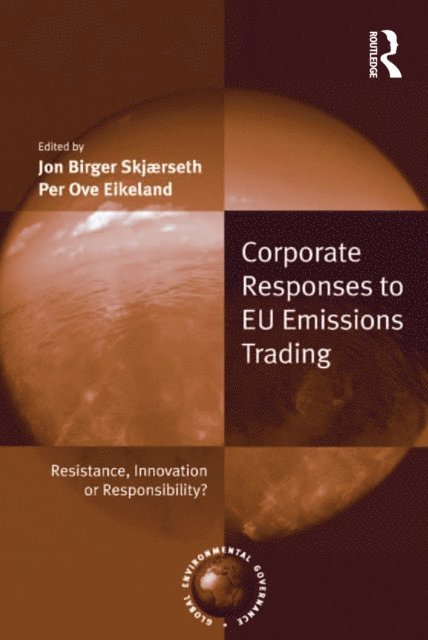
The European Union (EU) aims to put Europe on track toward a low-carbon economy. In this striking challenge, the EU Emissions Trading System (EU ETS) has been singled out as the Union’s key climate policy instrument, ultimately aimed as a model for a global carbon market. The learning effect of the EU ETS could thus be tremendous. This study explores how the EU ETS actually works on the ground, affecting corporate climate strategies. It covers general sector responses as well as systematic comparative studies of companies across the sectors. The latter enables improved understanding of causal effects and the role of interaction between different policy instruments and other factors that impact corporate climate strategies. The study explores a broad set of mechanisms at play potentially linking the EU ETS to company climate strategies. These include how corporate norms of responsibility are affected by the EU ETS and how economic incentives provide opportunities for innovation. The book’s main contribution lies in its systematic examination of corporate responses to the EU ETS from a broad empirical and analytical social science perspective covering companies in all main EU ETS sectors: electric power, oil, cement, steel and pulp and paper.