Jon Towlson - Böcker
Visar alla böcker från författaren Jon Towlson. Handla med fri frakt och snabb leverans.
9 produkter
9 produkter
1 069 kr
Skickas inom 7-10 vardagar
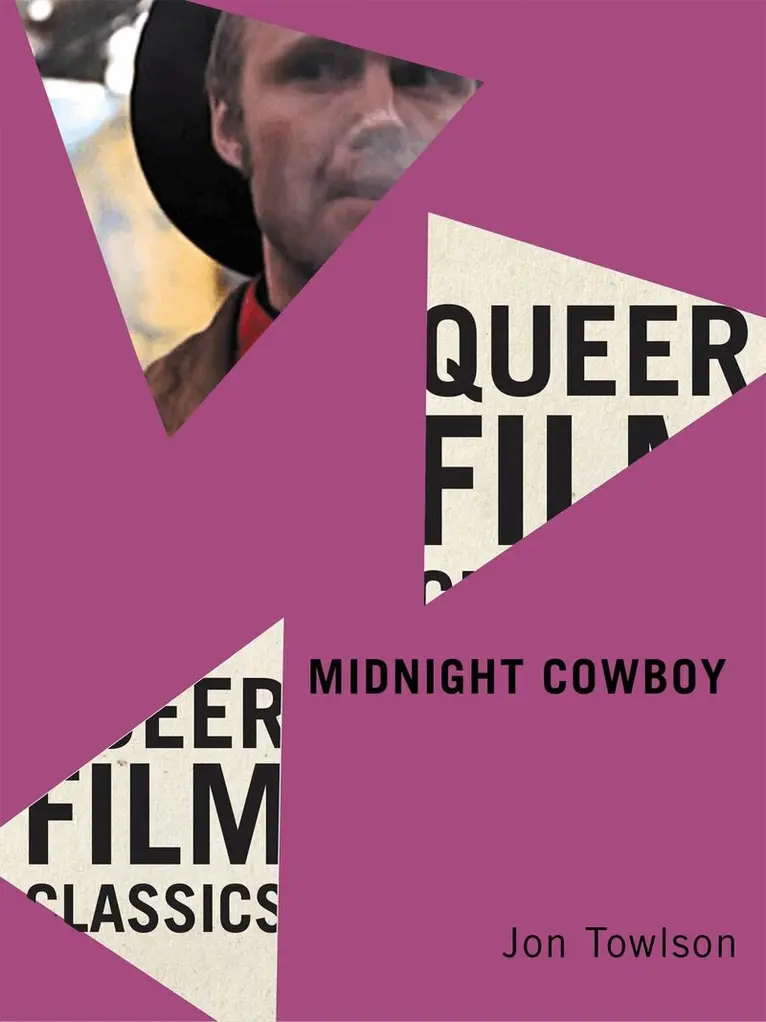
Midnight Cowboy – the story of a small-town stud’s attempt to make it big as a hustler on the streets of 1960s New York – is an indisputably iconic film. Though recognized in terms of its early adoption of Nouvelle Vague cinematography and editing techniques, and renowned for an Oscar win in spite of controversy over its X-rating, Midnight Cowboy has yet to be understood as a classic of queer cinema.Jon Towlson reclaims Midnight Cowboy as a queer text by addressing John Schlesinger as a gay author and filmmaker and providing a fresh perspective on the film’s relationship to the 1965 James Leo Herlihy novel from which it was adapted. Offering a nuanced and personal view of the film’s relevance to queer experience and queer friendship, Towlson also considers Midnight Cowboy’s production and reception and its place in Schlesinger’s filmography. Depictions of sixties New York counterculture and 42nd Street hustlers offer an opportunity for reassessment, particularly in the film's relationship to male prostitution, male relationships, and sexual identity.By shifting the perspective away from previous interpretations of Midnight Cowboy as homophobic and problematic, Towlson argues for a new interpretation of the film as a proto-queer buddy movie and a critical forerunner to films such as My Own Private Idaho and Brokeback Mountain.
220 kr
Skickas inom 10-15 vardagar
Midnight Cowboy – the story of a small-town stud’s attempt to make it big as a hustler on the streets of 1960s New York – is an indisputably iconic film. Though recognized in terms of its early adoption of Nouvelle Vague cinematography and editing techniques, and renowned for an Oscar win in spite of controversy over its X-rating, Midnight Cowboy has yet to be understood as a classic of queer cinema.Jon Towlson reclaims Midnight Cowboy as a queer text by addressing John Schlesinger as a gay author and filmmaker and providing a fresh perspective on the film’s relationship to the 1965 James Leo Herlihy novel from which it was adapted. Offering a nuanced and personal view of the film’s relevance to queer experience and queer friendship, Towlson also considers Midnight Cowboy’s production and reception and its place in Schlesinger’s filmography. Depictions of sixties New York counterculture and 42nd Street hustlers offer an opportunity for reassessment, particularly in the film's relationship to male prostitution, male relationships, and sexual identity.By shifting the perspective away from previous interpretations of Midnight Cowboy as homophobic and problematic, Towlson argues for a new interpretation of the film as a proto-queer buddy movie and a critical forerunner to films such as My Own Private Idaho and Brokeback Mountain.
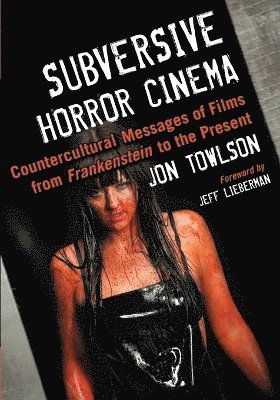
Subversive Horror Cinema
Countercultural Messages of Films from Frankenstein to the Present
Häftad, Engelska, 2014
462 kr
Skickas inom 5-8 vardagar
Horror cinema flourishes in times of ideological crisis and national trauma--the Great Depression, the Cold War, the Vietnam era, post-9/11--and this critical text argues that a succession of filmmakers working in horror--from James Whale to Jen and Sylvia Soska--have used the genre, and the shock value it affords, to challenge the status quo during these times. Spanning the decades from the 1930s onward it examines the work of producers and directors as varied as George A. Romero, Pete Walker, Michael Reeves, Herman Cohen, Wes Craven and Brian Yuzna and the ways in which films like Frankenstein (1931), Cat People (1942), The Woman (2011) and American Mary (2012) can be considered "subversive."
377 kr
Skickas inom 5-8 vardagar
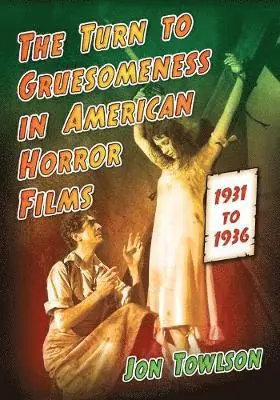
Critics have traditionally characterized classic horror by its use of shadow and suggestion. Yet the graphic nature of early 1930s films only came to light in the home video/DVD era. Along with gangster movies and "sex pictures," horror films drew audiences during the Great Depression with sensational content.Exploiting a loophole in the Hays Code, which made no provision for on-screen "gruesomeness," studios produced remarkably explicit films that were recut when the Code was more rigidly enforced from 1934.This led to a modern misperception that classic horror was intended to be safe and reassuring to audiences.The author examines the 1931 to 1936 "happy ending" horror in relation to industry practices and censorship. Early works like Murders in the Rue Morgue (1932) and The Raven (1935) may be more akin to The Texas Chain Saw Massacre (1974) and Hostel (2005) than many critics believe.
492 kr
Skickas inom 5-8 vardagar
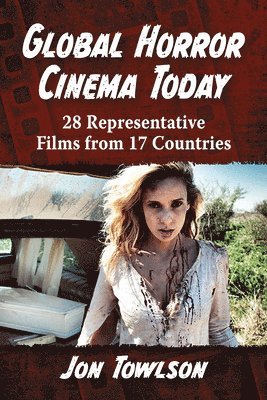
The horror film is thriving worldwide. Filmmakers in countries as diverse as the USA, Australia, Israel, Spain, France, Great Britain, Iran, and South Korea are using the horror genre to address the emerging fears and anxieties of their cultures. This book investigates horror cinema around the globe with an emphasis on how the genre has developed in the past ten years. It closely examines 28 international films, including It Follows (2014), Grave (Raw, 2016), Busanhaeng (Train to Busan, 2016), and Get Out (2016), with discussions of dozens more. Each chapter focuses on a different country, analyzing what frightens the people of these various nations and the ways in which horror crosses over to international audiences.
1 425 kr
Skickas inom 7-10 vardagar
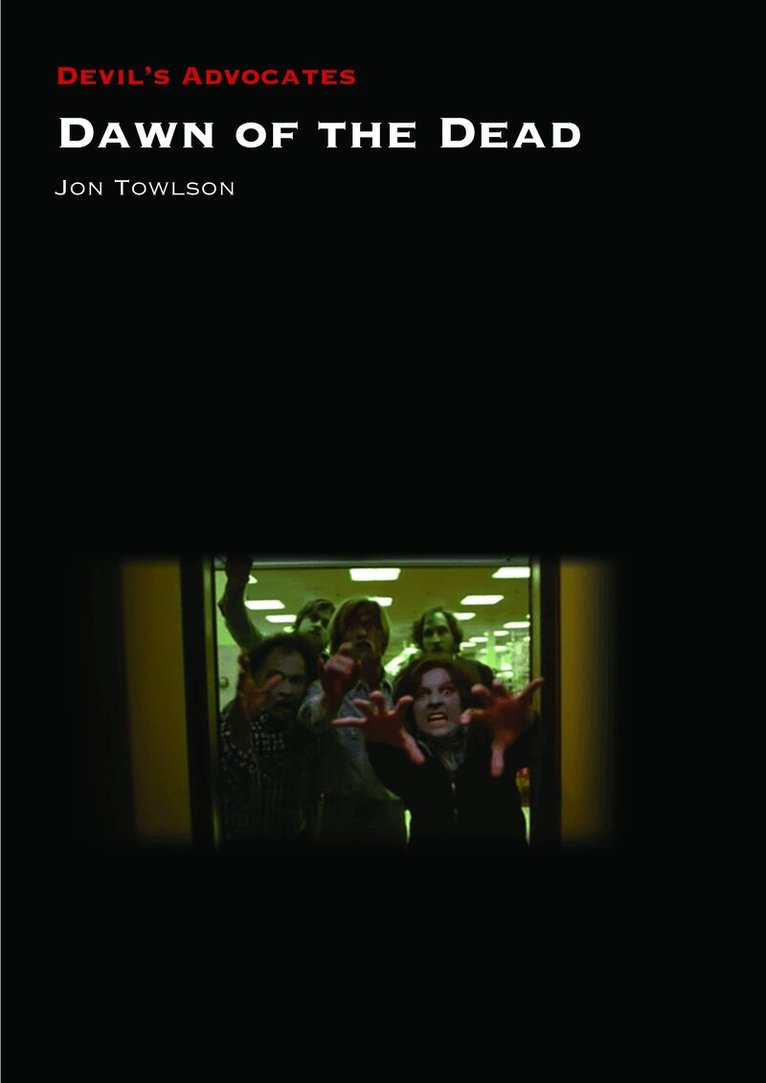
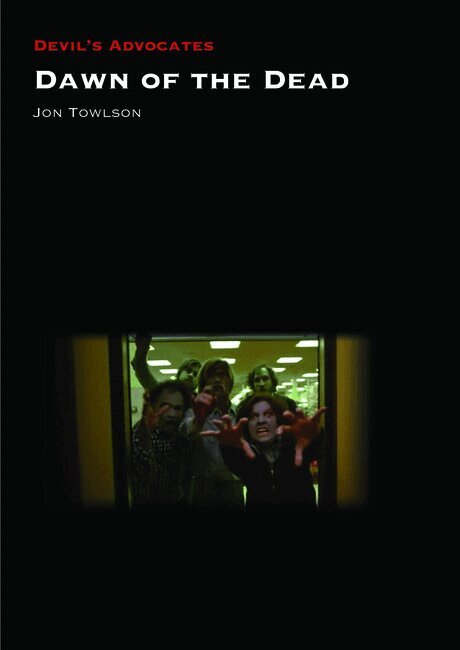
George A. Romero’s Dawn of the Dead (1978) is celebrated both as a ‘splatter’ movie and as a satire of 1970s consumerism. One of the most financially successful independent films ever produced, Dawn of the Dead presented a strong vision to audiences of the time in terms of its excessive, often shocking violence. It challenged censorship internationally and caused controversy in the United States and the UK. The film created problems with distributors because of its length and its graphic content; with the MPAA who awarded it an ‘X’ in America (a rating usually reserved for pornography); with the BBFC in the UK who completely recut it; and in various European territories where it was released in several versions. Arguably, excess is at the heart of Dawn of the Dead, integral to its meaning: not only in its scenes of gore, its in-your-face social satire and its gaudy pop-kitsch style but in the production history of the film itself. This Devil’s Advocate explores the various ways in which Romero took Dawn of the Dead into areas of extremity during its scripting, production and distribution; and the responses of industry, censorship bodies, reviewers and audiences of the time to the film’s excesses. Taking the approach of a micro-historical study, Jon Towlson offers a close analysis of the film’s production context to explore the cultural significance of Dawn of the Dead as a ‘rebel text’ and an example of oppositional cinema.
353 kr
Skickas inom 7-10 vardagar
George A. Romero’s Dawn of the Dead (1978) is celebrated both as a ‘splatter’ movie and as a satire of 1970s consumerism. One of the most financially successful independent films ever produced, Dawn of the Dead presented a strong vision to audiences of the time in terms of its excessive, often shocking violence. It challenged censorship internationally and caused controversy in the United States and the UK. The film created problems with distributors because of its length and its graphic content; with the MPAA who awarded it an ‘X’ in America (a rating usually reserved for pornography); with the BBFC in the UK who completely recut it; and in various European territories where it was released in several versions. Arguably, excess is at the heart of Dawn of the Dead, integral to its meaning: not only in its scenes of gore, its in-your-face social satire and its gaudy pop-kitsch style but in the production history of the film itself. This Devil’s Advocate explores the various ways in which Romero took Dawn of the Dead into areas of extremity during its scripting, production and distribution; and the responses of industry, censorship bodies, reviewers and audiences of the time to the film’s excesses. Taking the approach of a micro-historical study, Jon Towlson offers a close analysis of the film’s production context to explore the cultural significance of Dawn of the Dead as a ‘rebel text’ and an example of oppositional cinema.
333 kr
Skickas inom 7-10 vardagar
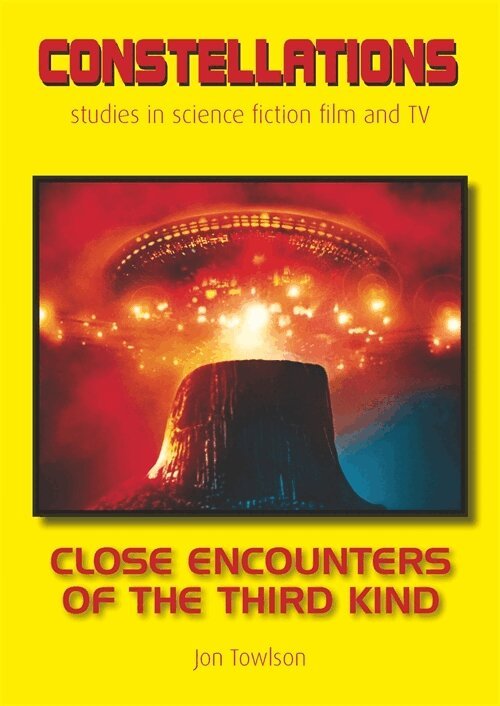
For many, Close Encounters of the Third Kind (CE3K) is not so much a movie as a religious experience. On its release in 1977, CE3K virtually redefined the science fiction film, shifting it away from spaceships, laser guns, and bug-eyed monsters into a modified form of science fiction that John Wyndham once called 'logical fantasy'. What would it be like if extra-terrestrials made contact with people on Earth? How would it feel? Like 2001: A Space Odyssey (1968), Steven Spielberg's primary inspiration, CE3K is concerned with mankind's evolution towards the stars, towards a state of transcendence. But Spielberg's vision hinges not so much on cool scientific intellect being the key to our next stage of evolution, as on the necessary development of emotional intelligence. To that end, we must regain our childlike curiosity for what lies beyond the skies, we must recover our capacity to experience wonder. Intensity of emotion is inherent to the film's meaning, and the aim of this book is to explore this in detail. Along the way it delves into the film's production history, explores Spielberg's remarkable cinematic realization of the film (including a comparison study of the three different release versions), and considers in detail how CE3K fits into the Spielberg oeuvre.
255 kr
Skickas inom 7-10 vardagar
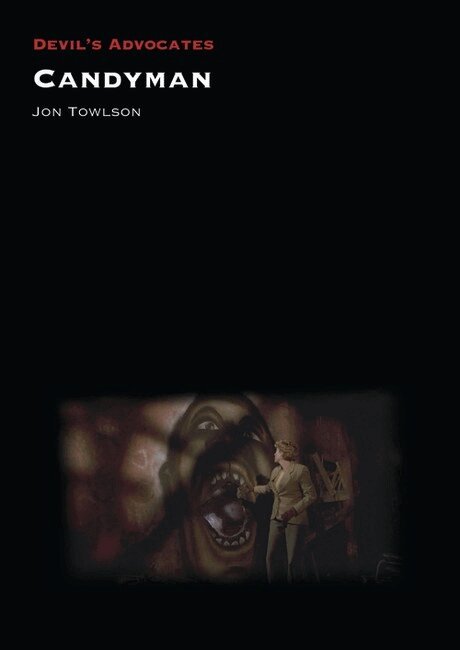
When Candyman was released in 1992, Roger Ebert gave it his thumbs up, remarking that the film was “scaring him with ideas and gore, rather than just gore.” Indeed, Candyman is almost unique in 1990s horror cinema in that it tackles its sociopolitical themes head on. As critic Kirsten Moana Thompson has remarked, Candyman is "the return of the repressed as national allegory": the film’s hook-handed killer of urban legend embodies a history of racism, miscegenation, lynching, and slavery, "the taboo secrets of America’s past and present."In this book, Jon Towlson considers how Candyman might be read both as a "return of the repressed" during the George H. W. Bush era, and as an example of nineties neoconservative horror. He traces the project’s development from its origins as a Clive Barker short story ("The Forbidden"); discusses the importance of its gritty real-life Cabrini-Green setting; and analyzes the film’s appropriation (and interrogation) of urban myth. The two official sequels (Candyman: Farewell to the Flesh [1995] and Candyman: Day of the Dead [1999]) are also considered, plus a number of other urban myth-inspired horror movies such as Bloody Mary (2006) and films in the Urban Legend franchise. The book features an in-depth interview with Candyman’s writer-director Bernard Rose.