Jonah Salz - Böcker
Visar alla böcker från författaren Jonah Salz. Handla med fri frakt och snabb leverans.
4 produkter
4 produkter
2 097 kr
Skickas inom 7-10 vardagar
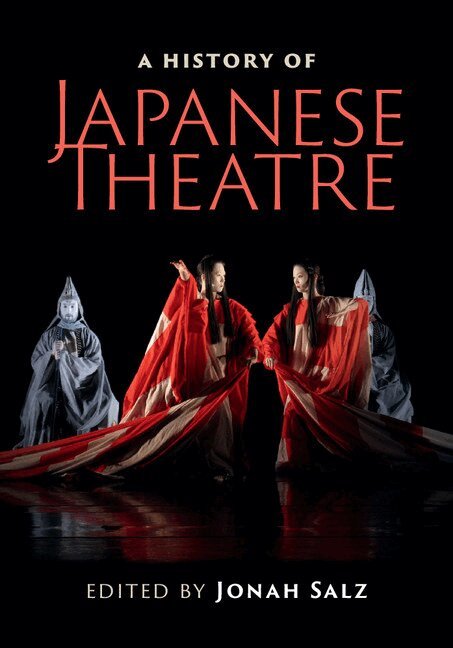
Japan boasts one of the world's oldest, most vibrant and most influential performance traditions. This accessible and complete history provides a comprehensive overview of Japanese theatre and its continuing global influence. Written by eminent international scholars, it spans the full range of dance-theatre genres over the past fifteen hundred years, including noh theatre, bunraku puppet theatre, kabuki theatre, shingeki modern theatre, rakugo storytelling, vanguard butoh dance and media experimentation. The first part addresses traditional genres, their historical trajectories and performance conventions. Part II covers the spectrum of new genres since Meiji (1868-), and Parts III to VI provide discussions of playwriting, architecture, Shakespeare, and interculturalism, situating Japanese elements within their global theatrical context. Beautifully illustrated with photographs and prints, this history features interviews with key modern directors, an overview of historical scholarship in English and Japanese, and a timeline. A further reading list covers a range of multimedia resources to encourage further explorations.
538 kr
Skickas inom 7-10 vardagar
Japan boasts one of the world's oldest, most vibrant and most influential performance traditions. This accessible and complete history provides a comprehensive overview of Japanese theatre and its continuing global influence. Written by eminent international scholars, it spans the full range of dance-theatre genres over the past fifteen hundred years, including noh theatre, bunraku puppet theatre, kabuki theatre, shingeki modern theatre, rakugo storytelling, vanguard butoh dance and media experimentation. The first part addresses traditional genres, their historical trajectories and performance conventions. Part II covers the spectrum of new genres since Meiji (1868-), and Parts III to VI provide discussions of playwriting, architecture, Shakespeare, and interculturalism, situating Japanese elements within their global theatrical context. Beautifully illustrated with photographs and prints, this history features interviews with key modern directors, an overview of historical scholarship in English and Japanese, and a timeline. A further reading list covers a range of multimedia resources to encourage further explorations.
228 kr
Kommande
The first book to provide a comprehensive introduction to the formulaic characters, plots, and staging of the comic form of Japanese drama, kyogen.It spans its history up to the present day, traces its evolution and its spread in the 20th century and situates it within a comparative comedy context. A 600-year-old classical comic form, kyogen plays feature spirited physical gags, rapid-fire banter, poetry, song, and dance. Plots vary from situational comedy and slapstick farce to fantasy. Kyogen actors also appear in noh, the lyric dance-theatre, as go-betweens and narrators.The books explores how kyogen was originally an independent art, and how since becoming paired with noh as samurai “ceremonial entertainment” in the 17th century, its satire became gentle, the movements stylized, the properties and costumes elegant. It goes on to illuminate how, after World War II, kyogen enjoyed a renaissance. Scholars pointed out its native anti-authoritarianism, comparing them to Aristophanic comedies, Shakespeare’s clowns, and commedia dell’arte. Kyogen actors taught at Japanese theatre academies and professional troupes, occasionally asked to interpret Shakespeare, Beckett, and contemporary plays showing the threats of nuclear war and climate change.This book shines a spotlight on kyogen as performance, describing popular characters and plots, the training trajectory from childhood to maturity, and the organizational structure of this guild-like comic cottage industry. A comparative approach situates kyogen’s classical comedies within a global dramatic comedy context.
655 kr
Kommande
The first book to provide a comprehensive introduction to the formulaic characters, plots, and staging of the comic form of Japanese drama, kyogen.It spans its history up to the present day, traces its evolution and its spread in the 20th century and situates it within a comparative comedy context. A 600-year-old classical comic form, kyogen plays feature spirited physical gags, rapid-fire banter, poetry, song, and dance. Plots vary from situational comedy and slapstick farce to fantasy. Kyogen actors also appear in noh, the lyric dance-theatre, as go-betweens and narrators.The books explores how kyogen was originally an independent art, and how since becoming paired with noh as samurai “ceremonial entertainment” in the 17th century, its satire became gentle, the movements stylized, the properties and costumes elegant. It goes on to illuminate how, after World War II, kyogen enjoyed a renaissance. Scholars pointed out its native anti-authoritarianism, comparing them to Aristophanic comedies, Shakespeare’s clowns, and commedia dell’arte. Kyogen actors taught at Japanese theatre academies and professional troupes, occasionally asked to interpret Shakespeare, Beckett, and contemporary plays showing the threats of nuclear war and climate change.This book shines a spotlight on kyogen as performance, describing popular characters and plots, the training trajectory from childhood to maturity, and the organizational structure of this guild-like comic cottage industry. A comparative approach situates kyogen’s classical comedies within a global dramatic comedy context.