Jonathan A. Knee – författare
Visar alla böcker från författaren Jonathan A. Knee. Handla med fri frakt och snabb leverans.
10 produkter
10 produkter
Inbunden, Engelska, 2006
1 175 kr
Skickas inom 3-6 vardagar
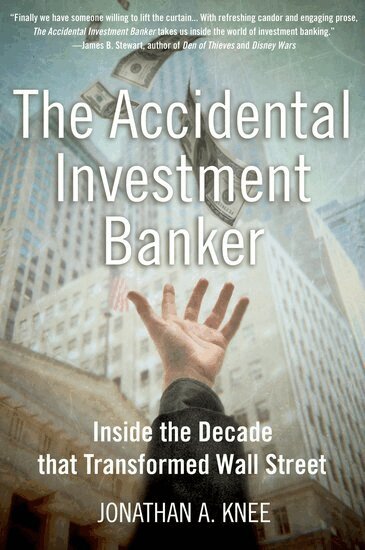
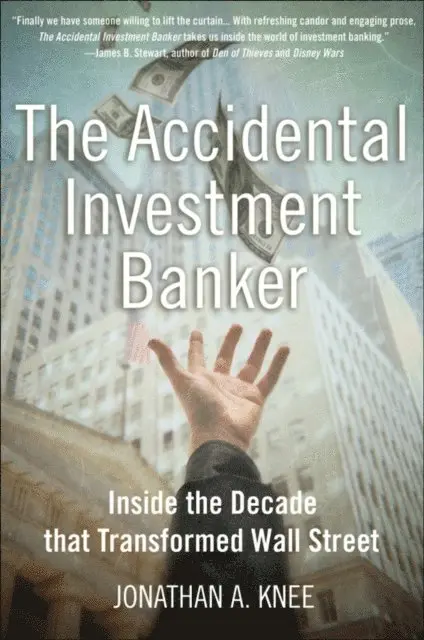
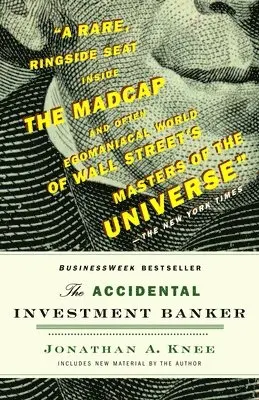
Jonathan A. Knee had a ringside seat during the go-go, boom-and-bust decade and into the 21st century, at the two most prestigious investment banks on Wall Street-Goldman Sachs and Morgan Stanley. In this candid and irreverent insider's account of an industry in free fall, Knee captures an exhilarating era of fabulous deal-making in a free-wheeling Internet economy-and the catastrophe that followed when the bubble burst. Populated with power players, back stabbers, celebrity bankers, and godzillionaires, here is a vivid account of the dramatic upheaval that took place in investment banking. Indeed, Knee entered an industry that was typified by the motto "first-class business in a first-class way" and saw it transformed in a decade to a free-for-all typified by the acronym IBG, YBG ("I'll be gone, you'll be gone"). Increasingly mercenary bankers signed off on weak deals, knowing they would leave them in the rear-view mirror. Once, investment bankers prospered largely on their success in serving the client, preserving the firm, and protecting the public interest.Now, in the "financial supermarket" era, bankers felt not only that each day might be their last, but that their worth was tied exclusively to how much revenue they generated for the firm on that day-regardless of the source. Today, most young executives feel no loyalty to their firms, and among their clients, Knee finds an unprecedented but understandable level of cynicism and distrust of investment banks. Brimming with insight into what investment bankers actually do, and told with biting humor and unflinching honesty, The Accidental Investment Banker offers a fascinating glimpse behind the scenes of the most powerful companies on Wall Street.
E-bok
PDF, Engelska, 2006520 kr
Läs direkt efter köp
Jonathan A. Knee had a ringside seat during the go-go, boom-and-bust decade and into the 21st century, at the two most prestigious investment banks on Wall Street--Goldman Sachs and Morgan Stanley. In this candid and irreverent insider''s account of an industry in free fall, Knee captures an exhilarating era of fabulous deal-making in a free-wheeling Internet economy--and the catastrophe that followed when the bubble burst.Populated with power players, back stabbers, celebrity bankers, and godzillionaires, here is a vivid account of the dramatic upheaval that took place in investment banking. Indeed, Knee entered an industry that was typified by the motto "first-class business in a first-class way" and saw it transformed in a decade to a free-for-all typified by the acronym IBG, YBG ("I''ll be gone, you''ll be gone"). Increasingly mercenary bankers signed off on weak deals, knowing they would leave them in the rear-view mirror. Once, investment bankers prospered largely on their success in serving the client, preserving the firm, and protecting the public interest. Now, in the "financial supermarket" era, bankers felt not only that each day might be their last, but that their worth was tied exclusively to how much revenue they generated for the firm on that day--regardless of the source. Today, most young executives feel no loyalty to their firms, and among their clients, Knee finds an unprecedented but understandable level of cynicism and distrust of investment banks.Brimming with insight into what investment bankers actually do, and told with biting humor and unflinching honesty, The Accidental Investment Banker offers a fascinating glimpse behind the scenes of the most powerful companies on Wall Street.
E-bok
Engelska, 2006520 kr
Läs direkt efter köp
Jonathan A. Knee had a ringside seat during the go-go, boom-and-bust decade and into the 21st century, at the two most prestigious investment banks on Wall Street--Goldman Sachs and Morgan Stanley. In this candid and irreverent insider''s account of an industry in free fall, Knee captures an exhilarating era of fabulous deal-making in a free-wheeling Internet economy--and the catastrophe that followed when the bubble burst.Populated with power players, back stabbers, celebrity bankers, and godzillionaires, here is a vivid account of the dramatic upheaval that took place in investment banking. Indeed, Knee entered an industry that was typified by the motto "first-class business in a first-class way" and saw it transformed in a decade to a free-for-all typified by the acronym IBG, YBG ("I''ll be gone, you''ll be gone"). Increasingly mercenary bankers signed off on weak deals, knowing they would leave them in the rear-view mirror. Once, investment bankers prospered largely on their success in serving the client, preserving the firm, and protecting the public interest. Now, in the "financial supermarket" era, bankers felt not only that each day might be their last, but that their worth was tied exclusively to how much revenue they generated for the firm on that day--regardless of the source. Today, most young executives feel no loyalty to their firms, and among their clients, Knee finds an unprecedented but understandable level of cynicism and distrust of investment banks.Brimming with insight into what investment bankers actually do, and told with biting humor and unflinching honesty, The Accidental Investment Banker offers a fascinating glimpse behind the scenes of the most powerful companies on Wall Street.
Inbunden, Engelska, 2016
290 kr
Skickas inom 5-8 vardagar
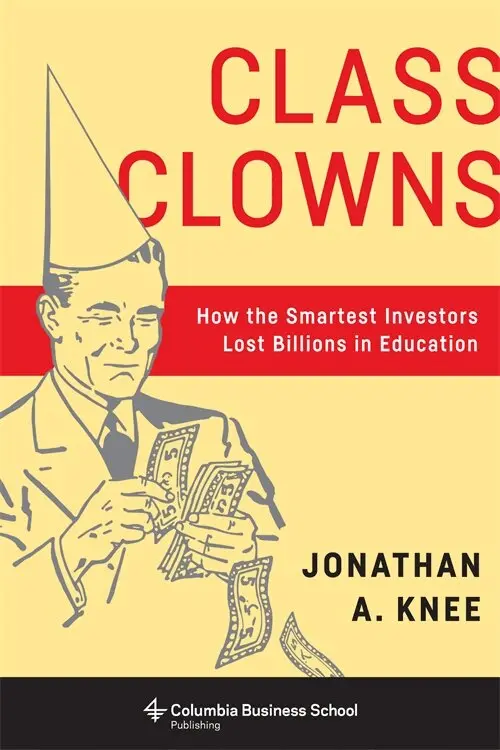
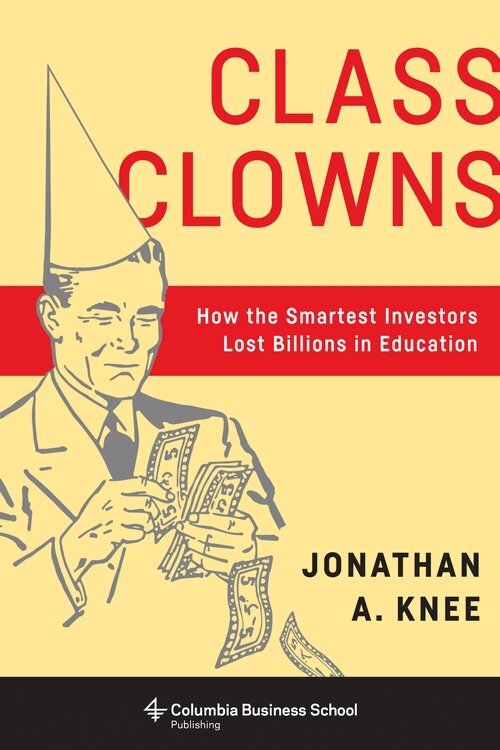
The past thirty years have seen dozens of otherwise successful investors try to improve education through the application of market principles. They have funneled billions of dollars into alternative schools, online education, and textbook publishing, and they have, with surprising regularity, lost their shirts. In Class Clowns, professor and investment banker Jonathan A. Knee dissects what drives investors' efforts to improve education and why they consistently fail. Knee takes readers inside four spectacular financial failures in education: Rupert Murdoch's billion-dollar effort to reshape elementary education through technology; the unhappy investors-including hedge fund titan John Paulson-who lost billions in textbook publisher Houghton Mifflin; the abandonment of Knowledge Universe, Michael Milken's twenty-year mission to revolutionize the global education industry; and a look at Chris Whittle, founder of EdisonLearning and a pioneer of large-scale transformational educational ventures, who continues to attract investment despite decades of financial and operational disappointment.Although deep belief in the curative powers of the market drove these initiatives, it was the investors' failure to appreciate market structure that doomed them. Knee asks: What makes a good education business? By contrasting rare successes, he finds a dozen broad lessons at the heart of these cautionary case studies. Class Clowns offers an important guide for public policy makers and guardrails for future investors, as well as an intelligent expose for activists and teachers frustrated with the repeated underperformance of these attempts to shake up education.
Häftad, Engelska, 2020
167 kr
Skickas inom 5-8 vardagar
The past thirty years have seen dozens of otherwise successful investors try to improve education through the application of market principles. They have funneled billions of dollars into alternative schools, online education, and textbook publishing, and they have, with surprising regularity, lost their shirts.In Class Clowns, professor and investment banker Jonathan A. Knee dissects what drives investors' efforts to improve education and why they consistently fail. Knee takes readers inside four spectacular financial failures in education: Rupert Murdoch's billion-dollar effort to reshape elementary education through technology; the unhappy investors—including hedge fund titan John Paulson—who lost billions in textbook publisher Houghton Mifflin; the abandonment of Knowledge Universe, Michael Milken's twenty-year mission to revolutionize the global education industry; and a look at Chris Whittle, founder of EdisonLearning and a pioneer of large-scale transformational educational ventures, who continues to attract investment despite decades of financial and operational disappointment.Although deep belief in the curative powers of the market drove these initiatives, it was the investors' failure to appreciate market structure that doomed them. Knee asks: What makes a good education business? By contrasting rare successes, he finds a dozen broad lessons at the heart of these cautionary case studies. Class Clowns offers an important guide for public policy makers and guardrails for future investors, as well as an intelligent exposé for activists and teachers frustrated with the repeated underperformance of these attempts to shake up education.
Inbunden, Engelska, 2021
266 kr
Skickas inom 5-8 vardagar
E-bok
Engelska, 2021104 kr
Läs direkt efter köp
Häftad, Engelska, 2007
300 kr
Skickas inom 3-6 vardagar
E-bok
Engelska, 200985 kr
Läs direkt efter köp
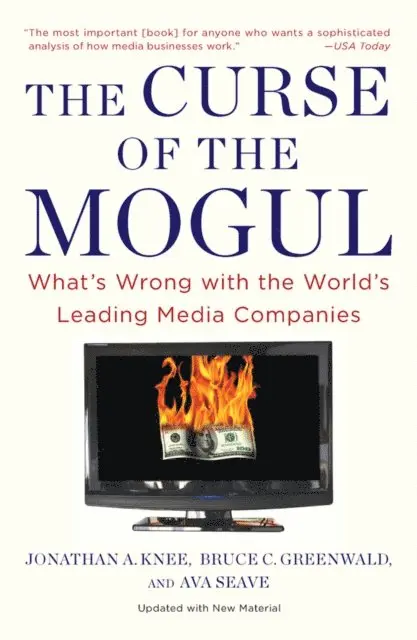
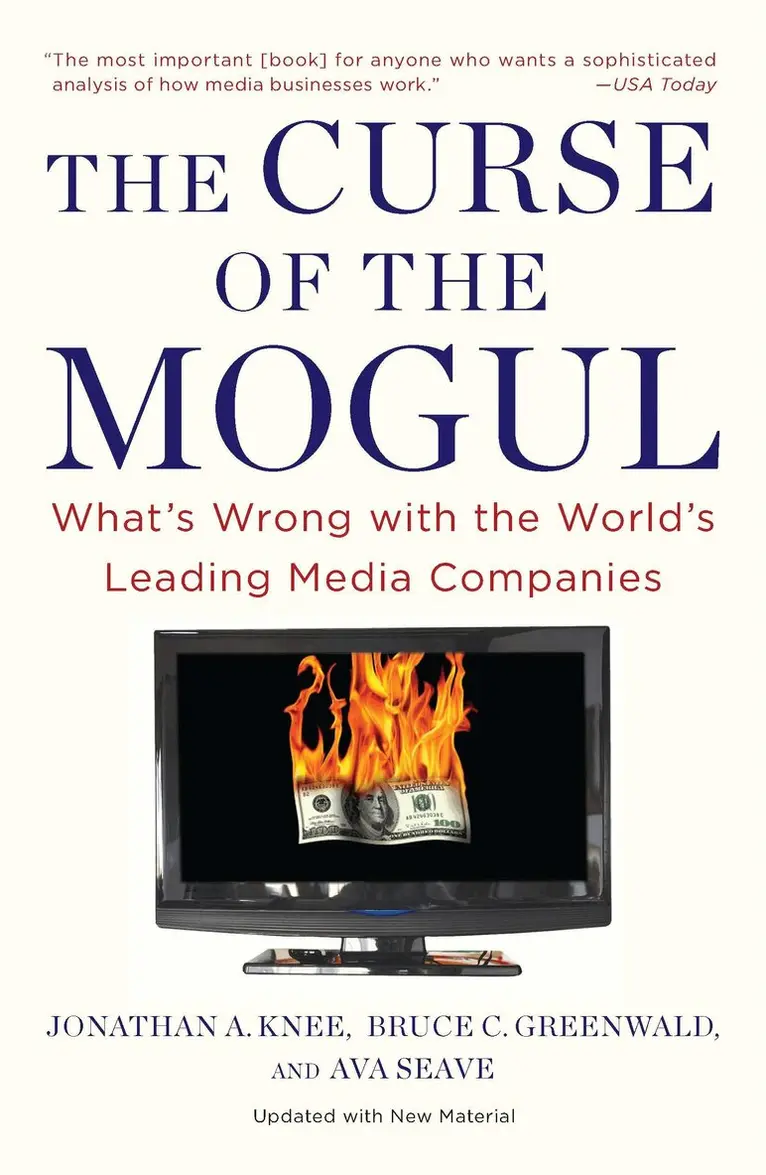
If Rupert Murdoch and Sumner Redstone are so smart, why are their stocks long-term losers? We live in the age of big Media, with the celebrity moguls telling us that "content is king." But for all the excitement, glamour, drama, and publicity they produce, why can''t these moguls and their companies manage to deliver better returns than you''d get from closing your eyes and throwing a dart? The Curse of the Mogul lays bare the inexcusable financial performance beneath big Media''s false veneer of power. By rigorously examining individual media businesses, the authors reveal the difference between judging a company by how many times its CEO is seen in SunValley and by whether it generates consistently superior profits. The book is packed with enough sharp-edged data to bring the most high-flying, hot-air filled mogul balloon crashing down to earth.
Häftad, Engelska, 2011
228 kr
Skickas inom 5-8 vardagar