Jonathan D. Cohen - Böcker
Visar alla böcker från författaren Jonathan D. Cohen. Handla med fri frakt och snabb leverans.
6 produkter
6 produkter
418 kr
Skickas inom 5-8 vardagar
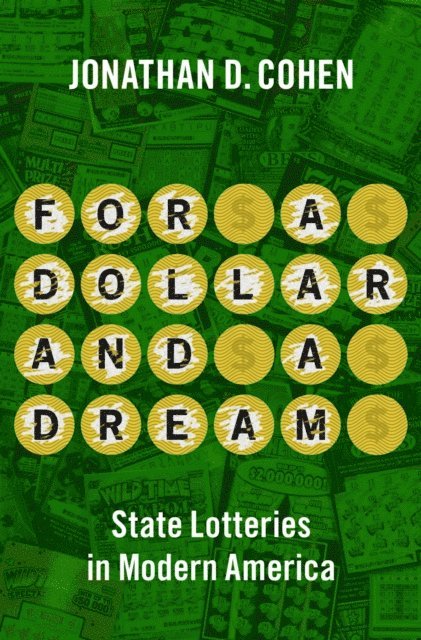
This first comprehensive history of America's lottery obsession explores the spread of state lotteries and how players and policymakers alike got hooked on wishful dreams of an elusive jackpot.Every week, one in eight Americans place a bet on the dream of a life-changing lottery jackpot. Americans spend more on lottery tickets annually than on video streaming services, concert tickets, books, and movie tickets combined.The story of lotteries in the United States may seem straightforward: tickets are bought predominately by poor people driven by the wishful belief that they will overcome infinitesimal odds and secure lives of luxury. The reality is more complicated. For a Dollar and a Dream shows how, in an era of surging inequality and stagnant upward mobility, millions of Americans turned to the lottery as their only chance at achieving the American Dream. Gamblers were not the only ones who bet on betting. As voters revolted against higher taxes in the late twentieth century, states saw legalized gambling as a panacea, a way of generating a new source of revenue without cutting public services or raising taxes. Even as evidence emerged that lotteries only provided a small percentage of state revenue, and even as data mounted about their appeal to the poor, states kept passing them and kept adding new games, desperate for their longshot gamble to pay off. Alongside stories of lottery winners and losers, Jonathan Cohen shows how gamblers have used prayer to help them win a jackpot, how states tried to pay for schools with scratch-off tickets, and how lottery advertising has targeted lower income and nonwhite communities.For a Dollar and a Dream charts the untold history of the nation's lottery system, revealing how players and policymakers alike got hooked on hopes for a gambling windfall.
2 096 kr
Skickas inom 10-15 vardagar
There are many ways to approach the understanding of consciousness. Questions about these ways have occupied philosophers and metaphysicians for centuries. During the early growth of cognitive science the problem of consciousness remained taboo, but an increasing number of studies have either implicitly or explicitly begun to bear on its nature. These have been inspired by a number of different different original questions, and focus on a variety of different empirical phenomena. Thus, studies of implicit memory, subliminal processing, strategic versus automatic processing, allocation of attention, and differences between information processes in the awake versus dreaming state all share a common assumption of a particular quality or state -- awakeness, awareness, alertness, namely consciousness -- that somehow can be distinguished from another type of state or states in which the subject is not aware of the information being processed. What distinguishes the cognitive psychological and cognitive neuroscience approach to the question of consciousness from that of philosophy and metaphysics is scientific methodology: a set of tools that permit the empirical study of a phenomenon in an objective and reproducible way. Recent developments in both the empirical and theoretical methodologies of these fields have made it possible to begin to study the phenomenon associated with -- if not directly underlying -- consciousness in a scientific fashion. This volume tries to resolve the difficulties associated with the scientific investigation of consciousness. The intent is to explore the extent to which consciousness can be the target of direct scientific inquiry, to get on the table some of the relevant work, and consider the degree to which this research can help inform our understanding of consciousness. It brings together a group of cognitive and neuroscientists to share relevant recent research in the fields of cognitive science and neuroscience and to determine whether any new strategies for the scientific pursuit of this question can be developed. A long-term goal is the development of a unified understanding of consciousness, scientific as well as philosophical perspectives. This volume takes the first step toward building the necessary local bridges.
1 072 kr
Skickas inom 10-15 vardagar
There are many ways to approach the understanding of consciousness. Questions about these ways have occupied philosophers and metaphysicians for centuries. During the early growth of cognitive science the problem of consciousness remained taboo, but an increasing number of studies have either implicitly or explicitly begun to bear on its nature. These have been inspired by a number of different different original questions, and focus on a variety of different empirical phenomena. Thus, studies of implicit memory, subliminal processing, strategic versus automatic processing, allocation of attention, and differences between information processes in the awake versus dreaming state all share a common assumption of a particular quality or state -- awakeness, awareness, alertness, namely consciousness -- that somehow can be distinguished from another type of state or states in which the subject is not aware of the information being processed. What distinguishes the cognitive psychological and cognitive neuroscience approach to the question of consciousness from that of philosophy and metaphysics is scientific methodology: a set of tools that permit the empirical study of a phenomenon in an objective and reproducible way. Recent developments in both the empirical and theoretical methodologies of these fields have made it possible to begin to study the phenomenon associated with -- if not directly underlying -- consciousness in a scientific fashion. This volume tries to resolve the difficulties associated with the scientific investigation of consciousness. The intent is to explore the extent to which consciousness can be the target of direct scientific inquiry, to get on the table some of the relevant work, and consider the degree to which this research can help inform our understanding of consciousness. It brings together a group of cognitive and neuroscientists to share relevant recent research in the fields of cognitive science and neuroscience and to determine whether any new strategies for the scientific pursuit of this question can be developed. A long-term goal is the development of a unified understanding of consciousness, scientific as well as philosophical perspectives. This volume takes the first step toward building the necessary local bridges.
371 kr
Skickas inom 7-10 vardagar
Gambling, the risky enterprise of chance, is one of America’s favorite pastimes. Office March Madness brackets, a day at the race track, a friendly wager, the random ridiculous Super Bowl prop bet, bingo night, or the latest media frenzy over the Powerball jackpot—all emphasize the ubiquity of this major economic force and cultural phenomenon. Approximately 70 percent of Americans regularly engage in some form of betting, amounting to over $140 billion in combined casino and lottery revenue every year. A hundred years ago, however, legal gambling was a rarity in the United States. A fresh take on the history of modern American gambling, All In provides a closer look at the shifting economic, cultural, religious, and political conditions that facilitated gambling’s expansion and prominence in American consumerism and popular culture. In its pages a diverse range of essays covering commercial and Native American casinos, sports betting, lotteries, bingo, and more piece together a picture of how gambling became so widespread over the course of the twentieth century.Drawing from a range of academic disciplines, this collection explores five aspects of American gambling history: crime, advertising, politics, religion, and identity.In doing so, All In illuminates the on-the-ground debates over gambling’s expansion, the failed attempts to thwart legalized betting, and the consequences of its present ubiquity in the United States.
344 kr
Skickas inom 7-10 vardagar
Bruce Springsteen might be the quintessential American rock musician but his songs have resonated with fans from all walks of life and from all over the world. This unique collection features reflections from a diverse array of writers who explain what Springsteen means to them and describe how they have been moved, shaped, and challenged by his music. Contributors to Long Walk Home include novelists like Richard Russo, rock critics like Greil Marcus and Gillian Gaar, and other noted Springsteen scholars and fans such as A. O. Scott, Peter Ames Carlin, and Paul Muldoon. They reveal how Springsteen's albums served as the soundtrack to their lives while also exploring the meaning of his music and the lessons it offers its listeners. The stories in this collection range from the tale of how "Growin' Up" helped a lonely Indian girl adjust to life in the American South to the saga of a group of young Australians who turned to Born to Run to cope with their country's 1975 constitutional crisis. These essays examine the big questions at the heart of Springsteen's music, demonstrating the ways his songs have resonated for millions of listeners for nearly five decades. Commemorating the Boss's seventieth birthday, Long Walk Home explores Springsteen's legacy and provides a stirring set of testimonials that illustrate why his music matters.
153 kr
Skickas inom 5-8 vardagar
Inside America’s preventable sports-gambling debacleIn 2018, the United States Supreme Court opened the floodgates for states to legalize betting on sports. Eager for revenue, almost forty states have done so. The result is the explosive growth of an industry dominated by companies like FanDuel and DraftKings. One out of every five American adults gambled on sports in 2023, amounting to $121 billion, more than they spent on movies and video games combined.The rise of online sports gambling—the immediacy of betting with your phone, the ability of the companies to target users, the dynamic pricing and offers based on how good or bad of a gambler you are—has produced a public health crisis marked by addiction and far too many people, particularly young men, gambling more than they can afford to lose. Under intense lobbying from the gaming industry, states have created a system built around profit for sportsbooks, not the well-being of players.In Losing Big, historian Jonathan D. Cohen lays out the astonishing emergence of online sports gambling, from sportsbook executives drafting legislation to an addicted gambler confessing their $300,000 losses. Sports gambling is here to stay, and the stakes could not be higher. Losing Big explains how this brewing crisis came to be, and how it can be addressed before new generations get hooked.“Losing Big demonstrates how legalized sports betting became a gigantic business, a ceaselessly annoying marketing presence, and a genuine danger to hundreds of thousands of people.” —Daniel Okrent, author and inventor of Rotisserie League Baseball