Jonathan Schwabish – författare
Visar alla böcker från författaren Jonathan Schwabish. Handla med fri frakt och snabb leverans.
7 produkter
7 produkter
909 kr
Skickas inom 5-8 vardagar
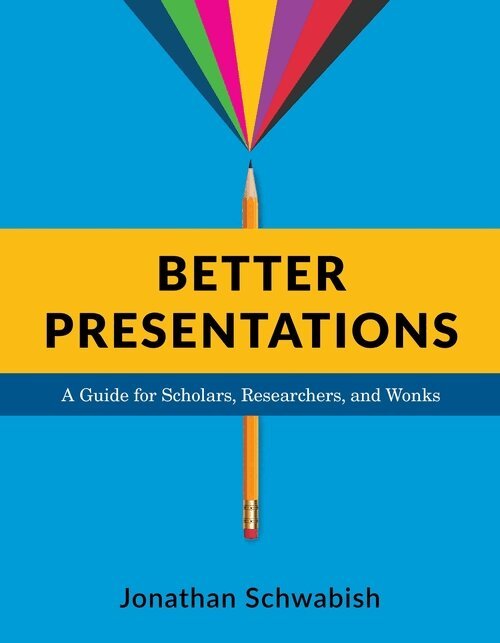
Whether you are a university professor, researcher at a think tank, graduate student, or analyst at a private firm, chances are that at some point you have presented your work in front of an audience. Most of us approach this task by converting a written document into slides, but the result is often a text-heavy presentation saddled with bullet points, stock images, and graphs too complex for an audience to decipher-much less understand. Presenting is fundamentally different from writing, and with only a little more time, a little more effort, and a little more planning, you can communicate your work with force and clarity. Designed for presenters of scholarly or data-intensive content, Better Presentations details essential strategies for developing clear, sophisticated, and visually captivating presentations. Following three core principles-visualize, unify, and focus-Better Presentations describes how to visualize data effectively, find and use images appropriately, choose sensible fonts and colors, edit text for powerful delivery, and restructure a written argument for maximum engagement and persuasion.With a range of clear examples for what to do (and what not to do), the practical package offered in Better Presentations shares the best techniques to display work and the best tactics for winning over audiences. It pushes presenters past the frustration and intimidation of the process to more effective, memorable, and persuasive presentations.
321 kr
Skickas
Whether you are a university professor, researcher at a think tank, graduate student, or analyst at a private firm, chances are that at some point you have presented your work in front of an audience. Most of us approach this task by converting a written document into slides, but the result is often a text-heavy presentation saddled with bullet points, stock images, and graphs too complex for an audience to decipher-much less understand. Presenting is fundamentally different from writing, and with only a little more time, a little more effort, and a little more planning, you can communicate your work with force and clarity. Designed for presenters of scholarly or data-intensive content, Better Presentations details essential strategies for developing clear, sophisticated, and visually captivating presentations. Following three core principles-visualize, unify, and focus-Better Presentations describes how to visualize data effectively, find and use images appropriately, choose sensible fonts and colors, edit text for powerful delivery, and restructure a written argument for maximum engagement and persuasion.With a range of clear examples for what to do (and what not to do), the practical package offered in Better Presentations shares the best techniques to display work and the best tactics for winning over audiences. It pushes presenters past the frustration and intimidation of the process to more effective, memorable, and persuasive presentations.
297 kr
Skickas inom 5-8 vardagar
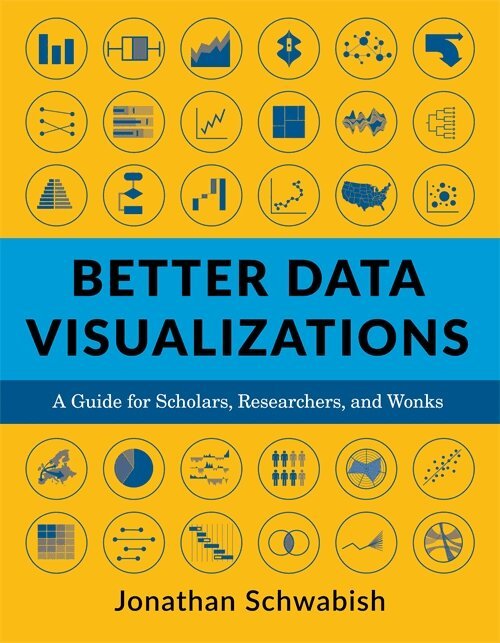
Now more than ever, content must be visual if it is to travel far. Readers everywhere are overwhelmed with a flow of data, news, and text. Visuals can cut through the noise and make it easier for readers to recognize and recall information. Yet many researchers were never taught how to present their work visually. This book details essential strategies to create more effective data visualizations. Jonathan Schwabish walks readers through the steps of creating better graphs and how to move beyond simple line, bar, and pie charts. Through more than five hundred examples, he demonstrates the do’s and don’ts of data visualization, the principles of visual perception, and how to make subjective style decisions around a chart’s design. Schwabish surveys more than eighty visualization types, from histograms to horizon charts, ridgeline plots to choropleth maps, and explains how each has its place in the visual toolkit. It might seem intimidating, but everyone can learn how to create compelling, effective data visualizations. This book will guide you as you define your audience and goals, choose the graph that best fits for your data, and clearly communicate your message.
1 434 kr
Kommande
Data shape how we understand the world—and how the world treats people. Yet data are never neutral. From redlining maps that entrenched racial segregation to charts that quietly reinforce stereotypes, the ways data are collected, analyzed, and visualized can produce real and lasting harm.Thoughtful Data is a guide to practicing data work ethically, empathetically, and inclusively. Drawing on interviews with nearly 150 experts across research, journalism, design, data science, and policy, Jonathan Schwabish and Alice Feng argue that foregrounding equity is not at odds with rigor but is essential to it. They invite readers to reconsider the everyday decisions embedded in data projects—from language choices and category definitions to visual defaults and framing—and to reflect on how those decisions affect the people represented in the data and those who consume it.Thoughtful Data provides a framework for critical thinking and intentional practice across the full data lifecycle: collection, analysis, and communication. It situates data visualization within broader debates about equity, trust, power, and accountability while remaining practical and accessible to nonspecialists. This book equips readers with the tools to recognize bias, question defaults, engage communities, and communicate in ways that respect human dignity—helping ensure that data are used not just accurately but responsibly.
396 kr
Kommande
Data shape how we understand the world—and how the world treats people. Yet data are never neutral. From redlining maps that entrenched racial segregation to charts that quietly reinforce stereotypes, the ways data are collected, analyzed, and visualized can produce real and lasting harm.Thoughtful Data is a guide to practicing data work ethically, empathetically, and inclusively. Drawing on interviews with nearly 150 experts across research, journalism, design, data science, and policy, Jonathan Schwabish and Alice Feng argue that foregrounding equity is not at odds with rigor but is essential to it. They invite readers to reconsider the everyday decisions embedded in data projects—from language choices and category definitions to visual defaults and framing—and to reflect on how those decisions affect the people represented in the data and those who consume it.Thoughtful Data provides a framework for critical thinking and intentional practice across the full data lifecycle: collection, analysis, and communication. It situates data visualization within broader debates about equity, trust, power, and accountability while remaining practical and accessible to nonspecialists. This book equips readers with the tools to recognize bias, question defaults, engage communities, and communicate in ways that respect human dignity—helping ensure that data are used not just accurately but responsibly.
387 kr
Skickas inom 10-15 vardagar
This book closes the gap between what people think Excel can do and what they can achieve in the tool. Over the past few years, recognition of the importance of effectively visualizing data has led to an explosion of data analysis and visualization software tools. But for many people, Microsoft Excel continues to be the workhorse for their data visualization needs, not to mention the only tool that many data workers have access to. Although Excel is not a specialist data visualization platform, it does have strong capabilities. The default chart types do not need to be the limit of the tool’s data visualization capabilities, and users can extend its features by understanding some key elements and strategies. Data Visualization in Excel provides a step-by-step guide to creating more advanced and often more effective data visualizations in Excel and is the perfect guide for anyone who wants to create better, more effective, and more engaging data visualizations.
1 162 kr
Skickas inom 10-15 vardagar
This book closes the gap between what people think Excel can do and what they can achieve in the tool. Over the past few years, recognition of the importance of effectively visualizing data has led to an explosion of data analysis and visualization software tools. But for many people, Microsoft Excel continues to be the workhorse for their data visualization needs, not to mention the only tool that many data workers have access to. Although Excel is not a specialist data visualization platform, it does have strong capabilities. The default chart types do not need to be the limit of the tool’s data visualization capabilities, and users can extend its features by understanding some key elements and strategies. Data Visualization in Excel provides a step-by-step guide to creating more advanced and often more effective data visualizations in Excel and is the perfect guide for anyone who wants to create better, more effective, and more engaging data visualizations.