
Jonathan Sklar – författare
Visar alla böcker från författaren Jonathan Sklar. Handla med fri frakt och snabb leverans.
6 produkter
6 produkter
1 932 kr
Skickas inom 10-15 vardagar
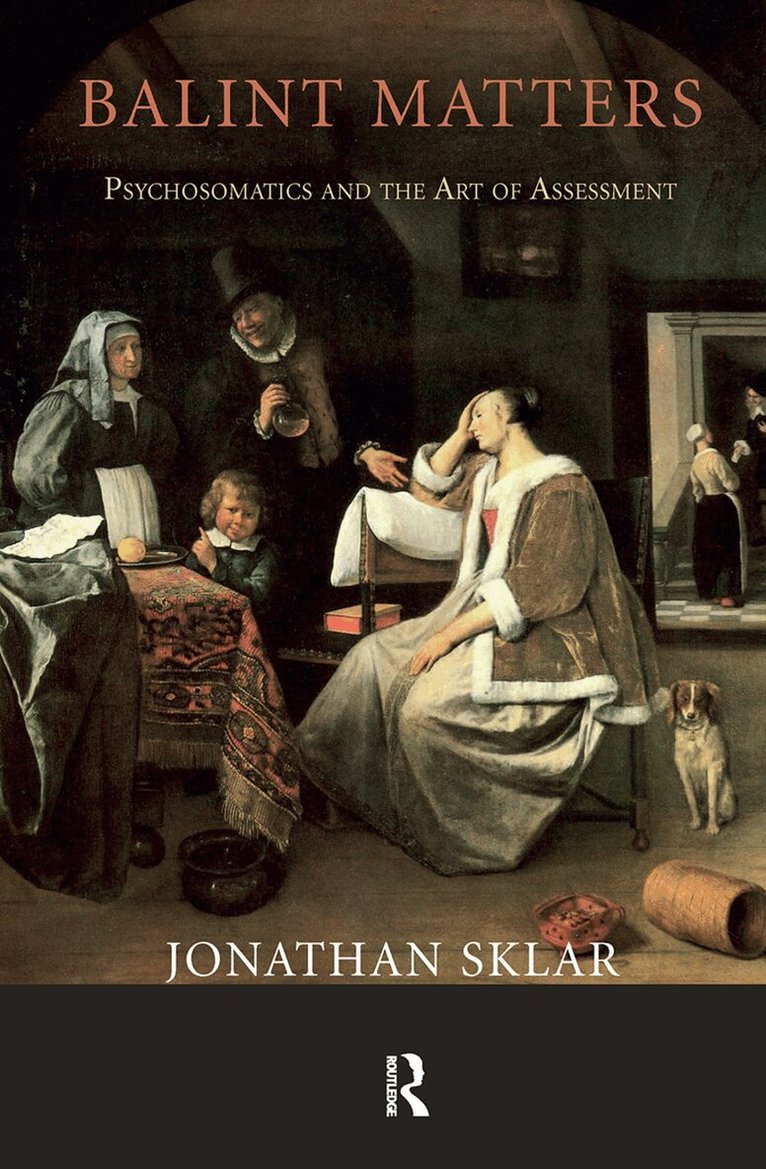
This book explores the life and theories of Michael Balint, who kept alive Ferenczi's analytic traditions in Budapest and brought them to London, where they became a vital part of the Independent Group's theory and practice. Balint's theoretical understanding of regression, 'new beginnings', 'basic fault', as well as his profound impact on medicine, are all described. The work in the Balint groups by general practitioners, psychiatrists, and physicians are explored. Whole person and psychosomatic medicine, championed by Balint, is contrasted with today's more compartmentalised approach to medicine, including the increasing separation of the GP from the family.In the second part of the book Dr Sklar reflects on the complex tasks involved in psychodynamic assessment. Vignettes illustrate the importance of understanding the forces in family dynamics, the value of an early memory and a dream, and the sexual life of the patient. The author argues that Balint's ideas are of particular significance to us today, in our world of quick fixes and the overspecialisation of medicine.
1 799 kr
Skickas inom 10-15 vardagar
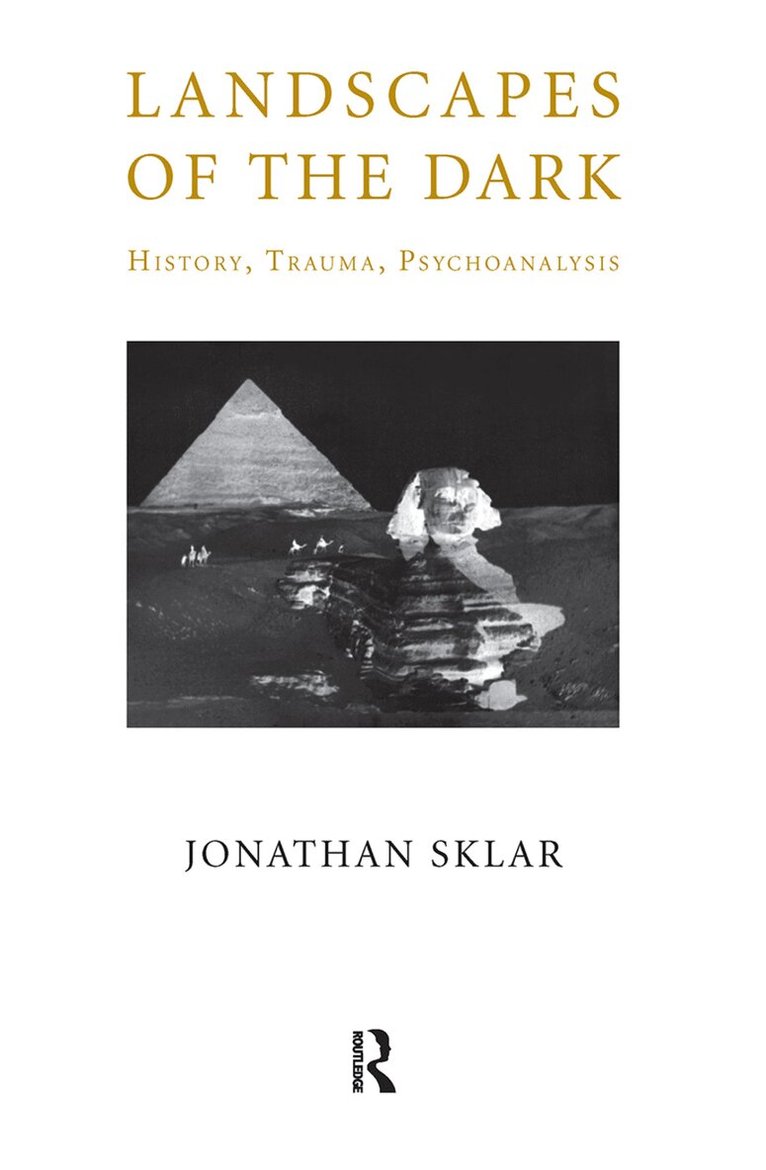
In this important new collection of essays, Jonathan Sklar argues that the founding tension between Freud's commitment to interpretation and Ferenczi's extra parameter of 'being in the experience' has a central place/key role to play in contemporary psychoanalytic debate, and that this tension can best be understood by returning to the place of trauma in psychoanalysis. Taking this debate into the heart of the clinical setting, a set of extensive, penetrating and often disturbing case studies examine the evocation of the real as early trauma for many patients and its subsequent mental development - a case of schizophrenia, a man with a severe Tic (spasmodic Torticollis), and a neurotic with a somatic resistance to ending a long analysis.
528 kr
Skickas inom 10-15 vardagar
This book explores the life and theories of Michael Balint, who kept alive Ferenczi's analytic traditions in Budapest and brought them to London, where they became a vital part of the Independent Group's theory and practice. Balint's theoretical understanding of regression, 'new beginnings', 'basic fault', as well as his profound impact on medicine, are all described. The work in the Balint groups by general practitioners, psychiatrists, and physicians are explored. Whole person and psychosomatic medicine, championed by Balint, is contrasted with today's more compartmentalised approach to medicine, including the increasing separation of the GP from the family.In the second part of the book Dr Sklar reflects on the complex tasks involved in psychodynamic assessment. Vignettes illustrate the importance of understanding the forces in family dynamics, the value of an early memory and a dream, and the sexual life of the patient. The author argues that Balint's ideas are of particular significance to us today, in our world of quick fixes and the overspecialisation of medicine.
411 kr
Skickas
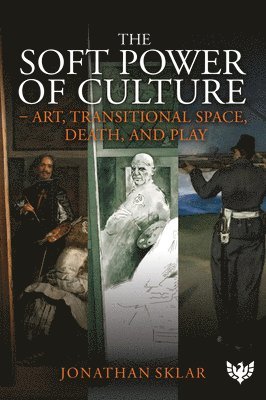
The book contains 26 colour illustrations, including 23 stunning artworks to deepen the appreciation of all the arts bring.Totalitarian governments emerge from the same unconscious sadomasochistic structures that are found in the analysis of traumatised patients. Since the earliest times, art has been used as propaganda both to uphold the status quo and to subvert it. The arts as a whole connect with the individual and can open eyes and change minds. Culture is a valuable tool and one where the lack was felt keenly during lockdown when galleries, music halls, and theatres were closed. Culture begins in the child’s mind. For Winnicott, it is located in the potential space between the individual and the environment as the child’s mind develops its unconsciousness and capacities for play. And the ability to play, or not, is connected to the freedom to think own’s own thoughts or, by preference, to follow the leader.Jonathan Sklar investigates these themes and more through twelve stunning chapters. These include discussions of Francis Bacon’s meditations on sadomasochism, linked to his fears of the rise of Hitler, and of today’s world with debate seemingly missing and, in its place, the political entrenchment of hatred. There is a discourse on Cézanne’s apples, always in process of falling, and a chapter on the adventuresome British painter William Tillyer, examining his art to understand the necessity for his creative drive. Sklar reflects on the analysis of a heroin addict, re-examines Freud’s seminal paper ‘A child is being beaten’ in relation to maternal sadism, meditates on psychosis and the true self, and considers the origins of sadomasochism and early trauma in the treatment of a schizophrenic woman. A chapter of ‘early Covid writings’ includes contributions from Endre Koritar, Victoria Hamilton, Philip Hewitt, Danielle Knafo, Drew Tillotson, Marcelo N. Viñar, and Wang Qian, and explores emptiness and holding on to creativity. The Bloomsbury Group and the early evolution of independence in the British Psychoanalytical Society is the focus of the penultimate chapter, and the book ends with thoughts about dancing bears – discussing our present-day problems of inner and outer reality in individuals and in societies.Reinforced with playful appearances by Velázquez, Goya, Klee, Picasso, Arendt, Benjamin, Brecht, Huysmans, Shostakovich, Bollas, Bion, Forrester, Milner, and Enid Balint, another thread running through the book is of holding one’s nerve, being alive in the moment, and realising that enactment in clinical work can be another royal road to the unconscious. Yet another is how culture can speak to hard-core power: Picasso found a way of focusing his pain(ting) Guernica to evermore pin the fascist crime to the town destroyed by the Luftwaffe. Today’s crimes can also be addressed in such ways: Putin’s destruction of Ukraine, totalitarian states of mind conglomerating in all continents, and the crisis of global warming.The emptiness of the missing from early traumatic states of mind often cannot be replaced because it was never present. Yet the gap can be filled with metaphor as in storytelling, in art, music, literature, and myths, as processes to sustain recovery and new beginnings. Read The Soft Power of Culture: Art, Transitional Space, Death and Play to open your eyes and change your mind on all that culture brings.
488 kr
Skickas inom 10-15 vardagar
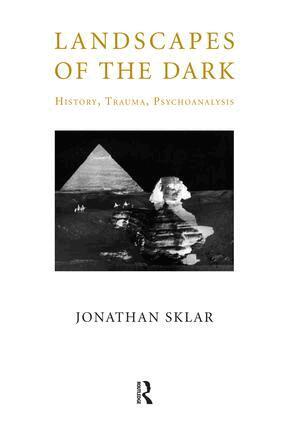
In this important new collection of essays, Jonathan Sklar argues that the founding tension between Freud's commitment to interpretation and Ferenczi's extra parameter of 'being in the experience' has a central place/key role to play in contemporary psychoanalytic debate, and that this tension can best be understood by returning to the place of trauma in psychoanalysis. Taking this debate into the heart of the clinical setting, a set of extensive, penetrating and often disturbing case studies examine the evocation of the real as early trauma for many patients and its subsequent mental development - a case of schizophrenia, a man with a severe Tic (spasmodic Torticollis), and a neurotic with a somatic resistance to ending a long analysis.
300 kr
Skickas inom 5-8 vardagar
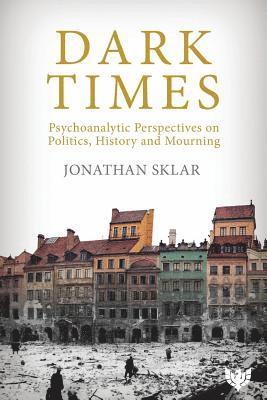
Today sees the rise of nationalism, the return of totalitarian parties in Europe to electoral success, and the rise of the alt-right and white supremacists in the US. Thus, there is urgency for psychoanalysts, with their understanding of cruelty, sadomasochism, perversion, and other mental mechanisms, to speak out. Jonathan Sklar has risen to the challenge with this timely, thought-provoking, and, at times, upsetting work. Dark Times starts with a look at European history in terms of monuments and mourning, before moving into storytelling and the elision of thought and history at this current time, including harrowing detail of the brutalities inflicted by ISIS on the Yazidi, and concludes with a meditation on the relationship between cruelty in the early environment and hatred of the other within society, with particular focus on racism in the US.Sklar goes against the grain of brief sound bites, which are an aid to quickly pass over painful knowledge. Instead, he goes into detail to give extremely dark, horrid occurrences, and the human beings on the receiving end, respect and understanding, which enables the reader greater access to allowing unconscious things to be made more conscious, highlighting the quality of humanity in human beings. Also, listening to these stories enables us to become more aware, not only of what is going on over there, but also what is happening here, because in our increasingly joined-up world, here is always implicated and affected too.By ridding ourselves of the illusions of our political times, we can find greater freedom to think, develop, challenge, and create hope, for the future of our children and our grandchildren, as well as for ourselves. Dark Times is a timely, thought-provoking, and, at times, upsetting work that is a must- read for all those looking for a deeper understanding of today’s world.