Jordan Sand - Böcker
Visar alla böcker från författaren Jordan Sand. Handla med fri frakt och snabb leverans.
6 produkter
6 produkter
312 kr
Skickas inom 10-15 vardagar
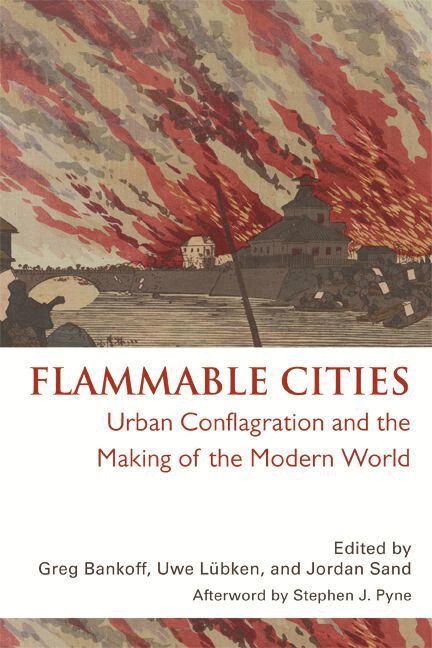
In most cities today, fire has been reduced to a sporadic and isolated threat. But throughout history the constant risk of fire has left a deep and lasting imprint on almost every dimension of urban society. This volume, the first truly global study of urban conflagration, shows how fire has shaped cities throughout the modern world, from Europe to the imperial colonies, major trade entrep\u00f4ts, and non-European capitals, right up to such present-day megacities as Lagos and Jakarta. Urban fire may hinder commerce or even spur it; it may break down or reinforce barriers of race, class, and ethnicity; it may serve as a pretext for state violence or provide an opportunity for displays of state benevolence. As this volume demonstrates, the many and varied attempts to master, marginalize, or manipulate fire can turn a natural and human hazard into a highly useful social and political tool.
614 kr
Skickas inom 7-10 vardagar
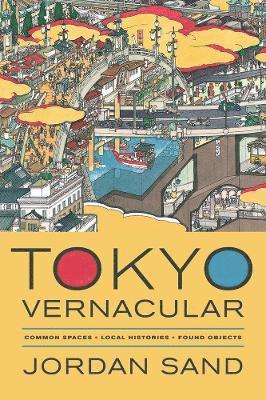
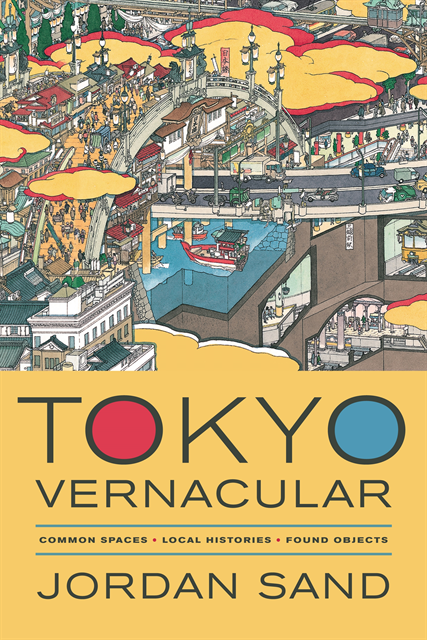
Preserved buildings and historic districts, museums and reconstructions have become an important part of the landscape of cities around the world. Beginning in the 1970s, Tokyo participated in this trend. However, repeated destruction and rapid redevelopment left the city with little building stock of recognized historical value. Late twentieth-century Tokyo thus presents an illuminating case of the emergence of a new sense of history in the city's physical environment, since it required both a shift in perceptions of value and a search for history in the margins and interstices of a rapidly modernizing cityscape. Scholarship to date has tended to view historicism in the postindustrial context as either a genuine response to loss, or as a cynical commodification of the past. The historical process of Tokyo's historicization suggests other interpretations.Moving from the politics of the public square to the invention of neighborhood community, to oddities found and appropriated in the streets, to the consecration of everyday scenes and artifacts as heritage in museums, Tokyo Vernacular traces the rediscovery of the past - sometimes in unlikely forms - in a city with few traditional landmarks. Tokyo's rediscovered past was mobilized as part of a new politics of the everyday after the failure of mass politics in the 1960s. Rather than conceiving the city as national center and claiming public space as national citizens, the post-1960s generation came to value the local places and things that embodied the vernacular language of the city, and to seek what could be claimed as common property outside the spaces of corporate capitalism and the state.
290 kr
Skickas inom 7-10 vardagar
Preserved buildings and historic districts, museums and reconstructions have become an important part of the landscape of cities around the world. Beginning in the 1970s, Tokyo participated in this trend. However, repeated destruction and rapid redevelopment left the city with little building stock of recognized historical value. Late twentieth-century Tokyo thus presents an illuminating case of the emergence of a new sense of history in the city's physical environment, since it required both a shift in perceptions of value and a search for history in the margins and interstices of a rapidly modernizing cityscape. Scholarship to date has tended to view historicism in the postindustrial context as either a genuine response to loss, or as a cynical commodification of the past. The historical process of Tokyo's historicization suggests other interpretations.Moving from the politics of the public square to the invention of neighborhood community, to oddities found and appropriated in the streets, to the consecration of everyday scenes and artifacts as heritage in museums, Tokyo Vernacular traces the rediscovery of the past - sometimes in unlikely forms - in a city with few traditional landmarks. Tokyo's rediscovered past was mobilized as part of a new politics of the everyday after the failure of mass politics in the 1960s. Rather than conceiving the city as national center and claiming public space as national citizens, the post-1960s generation came to value the local places and things that embodied the vernacular language of the city, and to seek what could be claimed as common property outside the spaces of corporate capitalism and the state.
Del 24 - Asia Pacific Modern
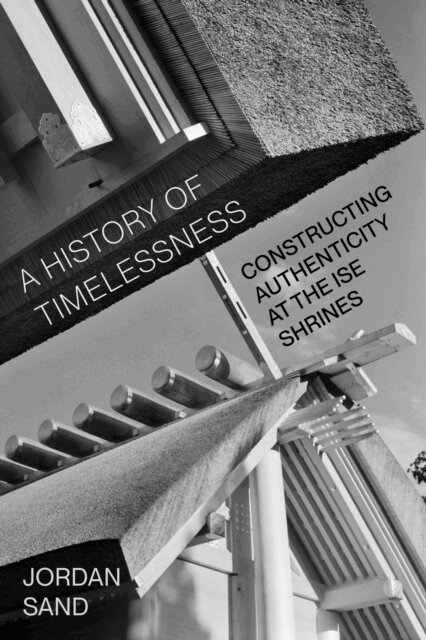
History of Timelessness
Constructing Authenticity at the Ise Shrines
Inbunden, Engelska, 2026
983 kr
Kommande
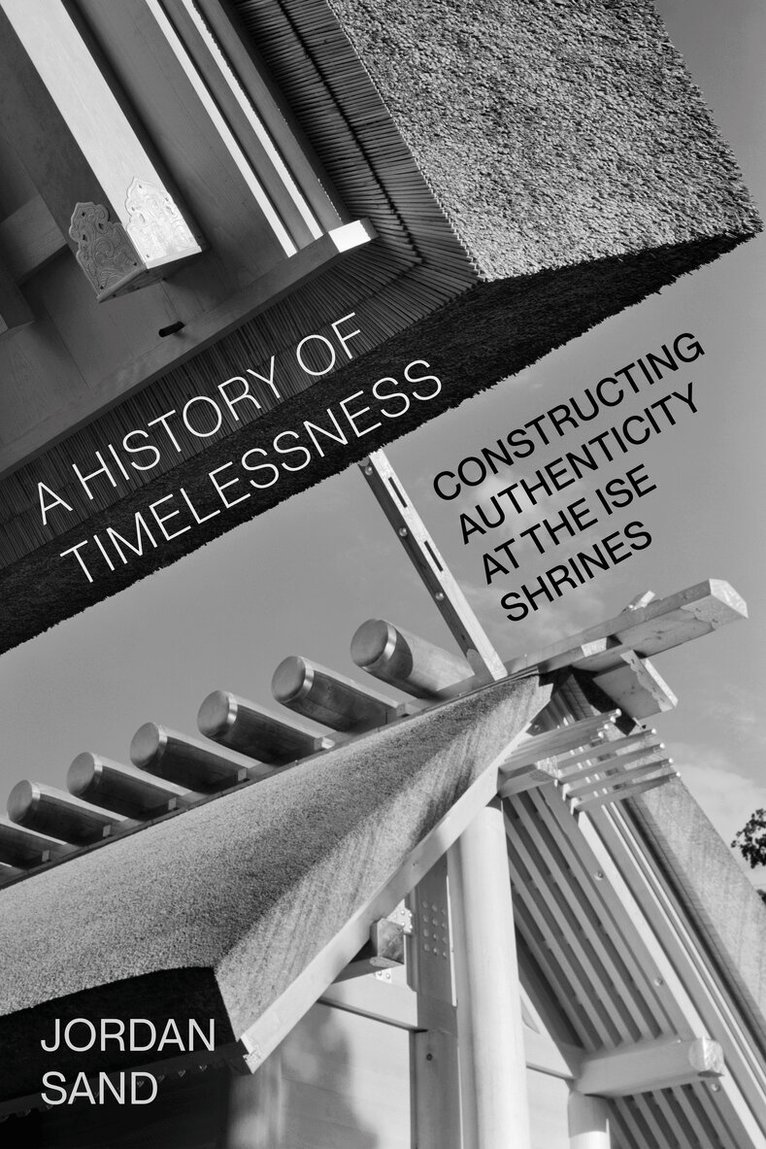
Every twenty years for over a millennium, the Ise shrines have been rebuilt from the ground up, and hundreds of shrine treasures replaced. At Ise, the aspiration to timelessness that is the essence of all monuments has been pursued through endless repetition rather than construction in durable materials. Spanning from Ise's prehistoric beginnings to the present, A History of Timelessness explores the manifold circulation of goods this massive enterprise has engendered, as well as the political and ideological purposes the ritual rebuilding has served. In the late nineteenth century, the state took control of the shrines and recast them as an embodiment of modern imperial power. Yet, rather than resolving their status, nationalization awakened new anxieties around Ise's permanence and ephemerality and new contests over shrine buildings and materials. Through an exploration of Ise's tumultuous history, Jordan Sand rethinks the temporality of monuments and the materiality of the state.
Del 24 - Asia Pacific Modern
History of Timelessness
Constructing Authenticity at the Ise Shrines
Häftad, Engelska, 2026
373 kr
Kommande
Every twenty years for over a millennium, the Ise shrines have been rebuilt from the ground up, and hundreds of shrine treasures replaced. At Ise, the aspiration to timelessness that is the essence of all monuments has been pursued through endless repetition rather than construction in durable materials. Spanning from Ise's prehistoric beginnings to the present, A History of Timelessness explores the manifold circulation of goods this massive enterprise has engendered, as well as the political and ideological purposes the ritual rebuilding has served. In the late nineteenth century, the state took control of the shrines and recast them as an embodiment of modern imperial power. Yet, rather than resolving their status, nationalization awakened new anxieties around Ise's permanence and ephemerality and new contests over shrine buildings and materials. Through an exploration of Ise's tumultuous history, Jordan Sand rethinks the temporality of monuments and the materiality of the state.
Del 223 - Harvard East Asian Monographs
House and Home in Modern Japan
Architecture, Domestic Space, and Bourgeois Culture, 1880-1930
Häftad, Engelska, 2005
290 kr
Skickas inom 7-10 vardagar
A house is a site, the bounds and focus of a community. It is also an artifact, a material extension of its occupants’ lives. This book takes the Japanese house in both senses, as site and as artifact, and explores the spaces, commodities, and conceptions of community associated with it in the modern era.As Japan modernized, the principles that had traditionally related house and family began to break down. Even where the traditional class markers surrounding the house persisted, they became vessels for new meanings, as housing was resituated in a new nexus of relations. The house as artifact and the artifacts it housed were affected in turn. The construction and ornament of houses ceased to be stable indications of their occupants’ social status, the home became a means of personal expression, and the act of dwelling was reconceived in terms of consumption. Amid the breakdown of inherited meanings and the fluidity of modern society, not only did the increased diversity of commodities lead to material elaboration of dwellings, but home itself became an object of special attention, its importance emphasized in writing, invoked in politics, and articulated in architectural design. The aim of this book is to show the features of this culture of the home as it took shape in Japan.